Prime-seq, efficient and powerful bulk RNA sequencing
Aleksandar Janjic, Lucas E. Wange, Johannes W. Bagnoli, Johanna Geuder, Phong Nguyen, Daniel Richter, Beate Vieth, Binje Vick, Irmela Jeremias, Christoph Ziegenhain, Ines Hellmann, Wolfgang Enard

TL;DR
Prime-seq is a cost-effective bulk RNA sequencing method that performs as well as standard methods but at a fraction of the cost.
Contribution
Prime-seq is introduced as a fourfold more cost-efficient bulk RNA-seq method compared to TruSeq.
Findings
Prime-seq performs equivalently to TruSeq but with significantly lower library costs.
Intronic reads are confirmed to originate from RNA using the Prime-seq method.
A direct RNA isolation step is validated for use with Prime-seq.
Abstract
Cost-efficient library generation by early barcoding has been central in propelling single-cell RNA sequencing. Here, we optimize and validate prime-seq, an early barcoding bulk RNA-seq method. We show that it performs equivalently to TruSeq, a standard bulk RNA-seq method, but is fourfold more cost-efficient due to almost 50-fold cheaper library costs. We also validate a direct RNA isolation step, show that intronic reads are derived from RNA, and compare cost-efficiencies of available protocols. We conclude that prime-seq is currently one of the best options to set up an early barcoding bulk RNA-seq protocol from which many labs would profit. The online version contains supplementary material available at 10.1186/s13059-022-02660-8.
Genes, proteins, chemicals, diseases, species, mutations and cell lines named across the full text — each resolved to its canonical identifier and authoritative record.
Click any figure to enlarge with its caption.
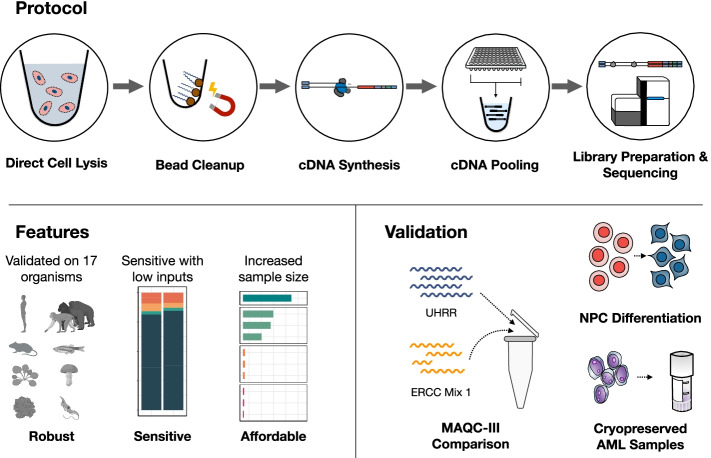 Figure 1
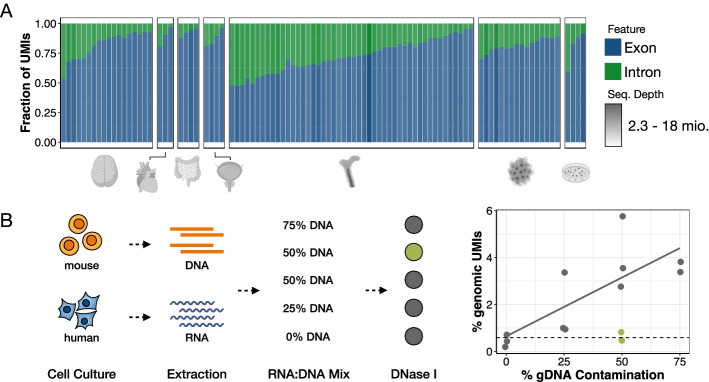 Figure 2
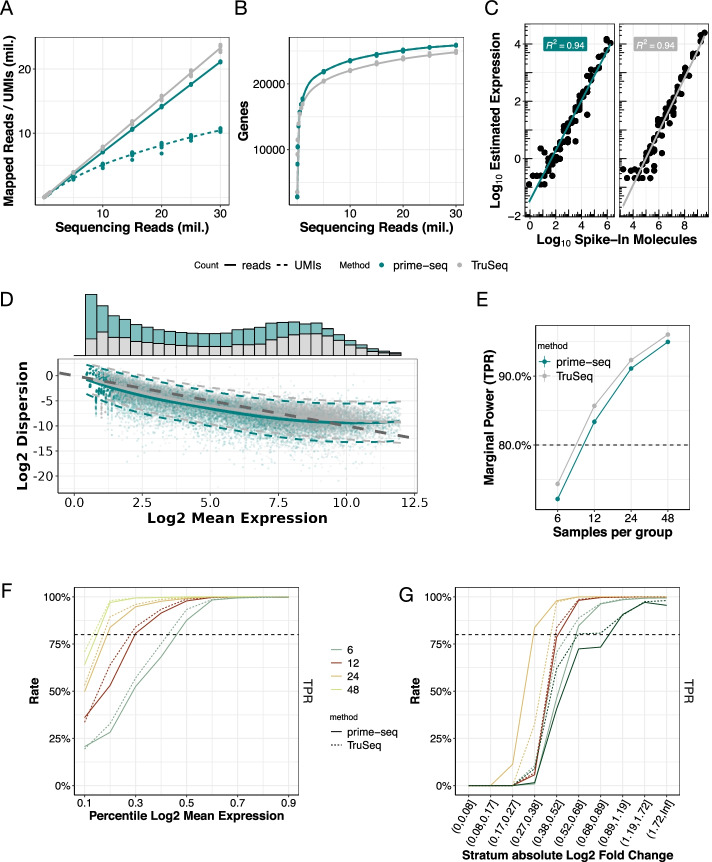 Figure 3
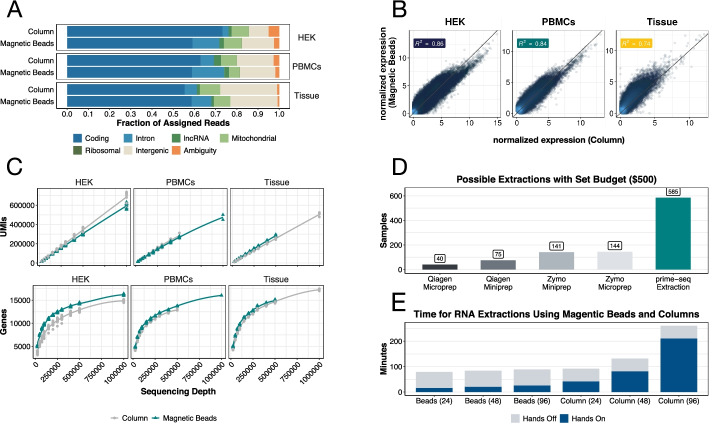 Figure 4
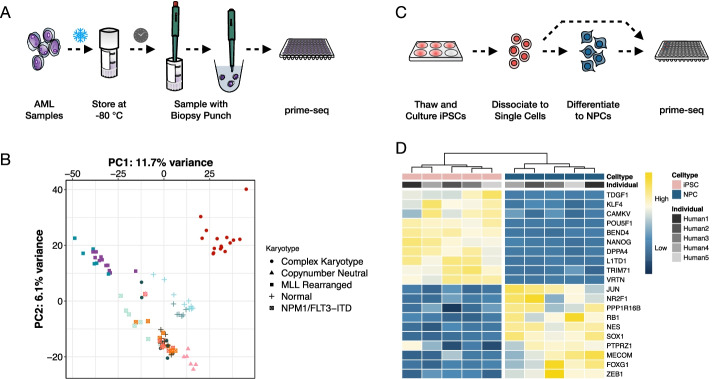 Figure 5
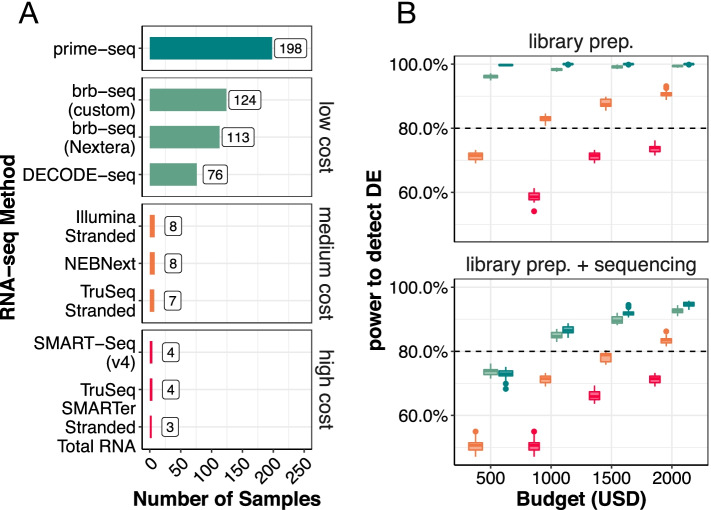 Figure 6
Peer Reviews
No public reviews on file for this paper yet. If you reviewed it on a platform where reviews are public (OpenReview, ICLR, NeurIPS, ICML), you can paste yours below so the community can read it here.
Videos
No videos yet. Explain this paper in a talk, walkthrough, or lecture? Add one.
Taxonomy
TopicsSingle-cell and spatial transcriptomics · Genomics and Phylogenetic Studies · Cancer-related molecular mechanisms research