Fluoride adsorption on γ − Fe2O3 nanoparticles
Lakmal Jayarathna, Athula Bandara, W.J. Ng, Rohan Weerasooriya

TL;DR
This study explores how γ-Fe2O3 nanoparticles efficiently remove fluoride from water, showing high adsorption rates and explaining the chemical mechanism involved.
Contribution
The paper introduces γ-Fe2O3 nanoparticles as an effective material for fluoride removal and explains the adsorption mechanism through experimental and theoretical methods.
Findings
γ-Fe2O3 nanoparticles achieved 95 ± 3% fluoride removal within 15 minutes.
Fluoride adsorption was higher at lower pH levels due to hydroxyl group interactions.
FT-IR and DFT results confirmed inner-sphere complex formation between fluoride and nanoparticles.
Abstract
Fluoride contamination of groundwater, both anthropogenic and natural, is a major problem worldwide and hence its removal attracted much attention to have clean aquatic systems. In the present work, removal of fluoride ions from drinking water tested using synthesized γ-Fe2O3 nanoparticles. Nanoparticles were synthesized in co-precipitation method. The prepared particles were first characterized by X-ray diffraction (XRD) and Transmission Electron Microscope (TEM). Density functional theory (DFT) calculations on molecular cluster were used to model infrared (IR) vibrational frequencies and inter atomic distances. The average size of the particles was around 5 nm initially and showed a aggregation upon exposure to the atmosphere for several hours giving average particle size of around 5–20 nm. Batch adsorption studies were performed for the adsorption of fluoride and the results…
Genes, proteins, chemicals, diseases, species, mutations and cell lines named across the full text — each resolved to its canonical identifier and authoritative record.
Click any figure to enlarge with its caption.
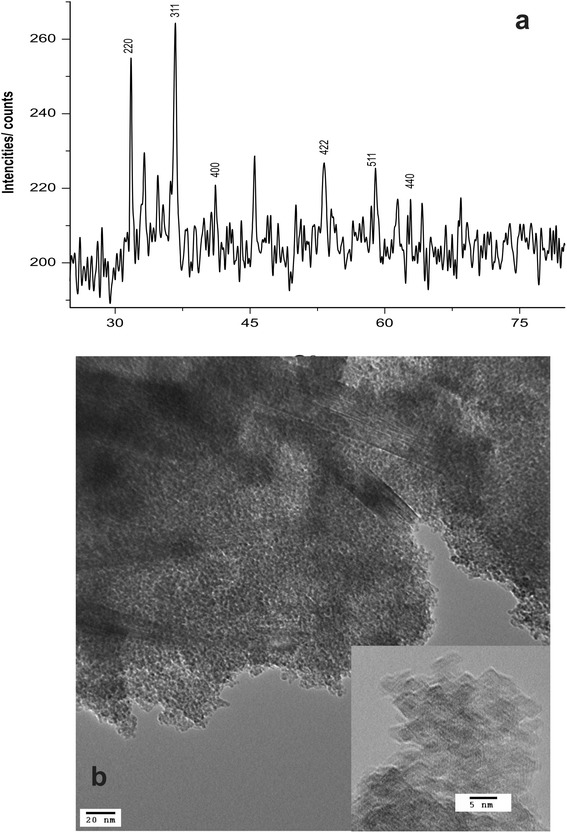 Figure 1
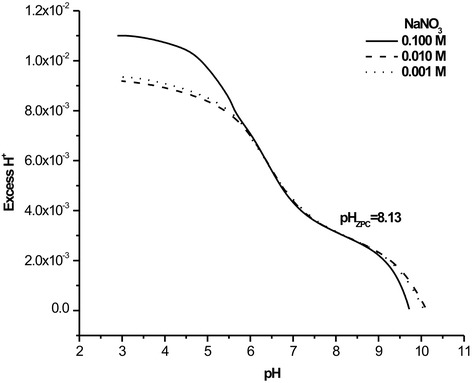 Figure 2
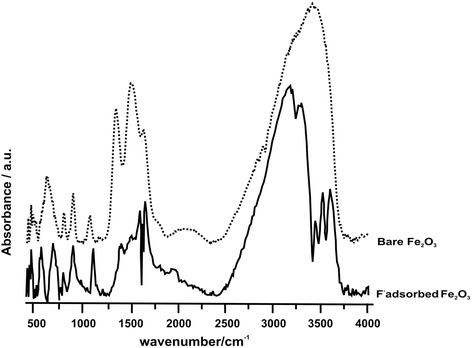 Figure 3
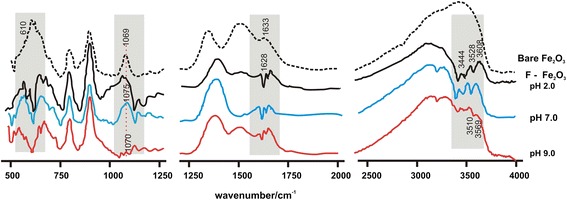 Figure 4
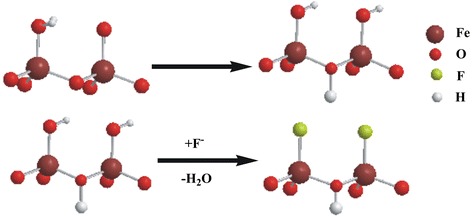 Figure 5
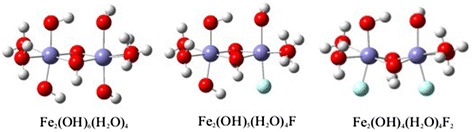 Figure 6
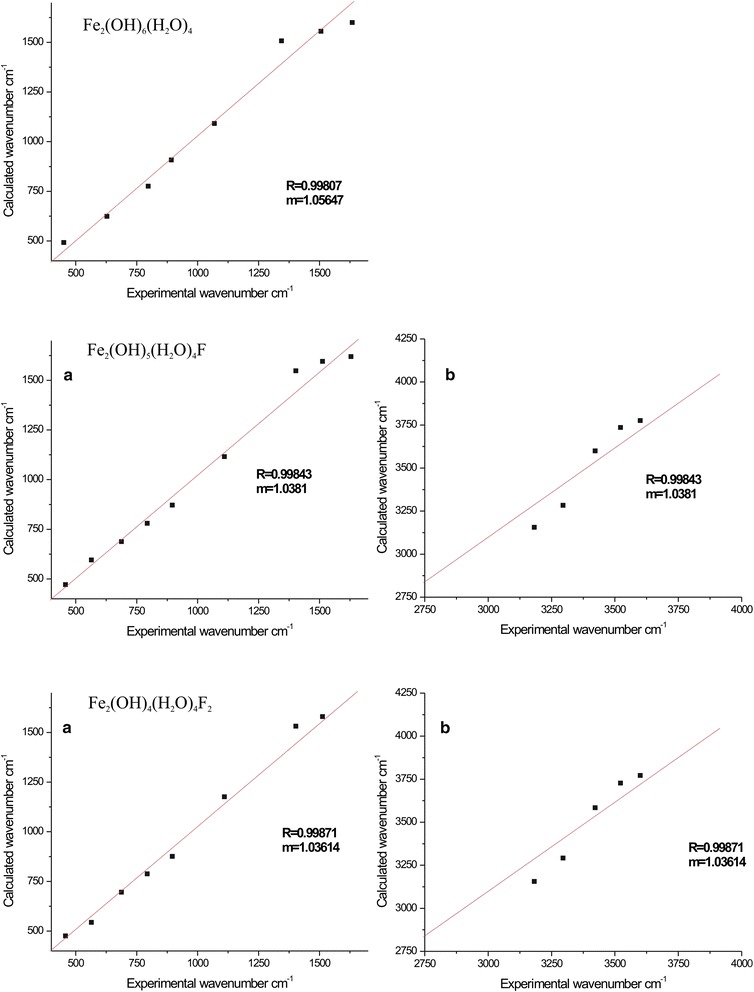 Figure 7
Peer Reviews
No public reviews on file for this paper yet. If you reviewed it on a platform where reviews are public (OpenReview, ICLR, NeurIPS, ICML), you can paste yours below so the community can read it here.
Videos
No videos yet. Explain this paper in a talk, walkthrough, or lecture? Add one.
Taxonomy
TopicsFluoride Effects and Removal · Fluoride Effects and Removal · Inorganic Fluorides and Related Compounds