Association study of the CSN2 gene with milk yield in the Sapera goat
Santiananda Arta Asmarasari, Galih Ari Wirawan Siregar, Ferdy Saputra, Lisa Praharani, Zultinur Muttaqin, Diana Andrianita Kusumaningrum, Nurul Azizah, Wisri Puastuti, Dwi Yulistiani, Supardi Rusdiana, Anneke Anggraeni, Suyatno Suyatno, Teguh Ari Prabowo, Nurul Pratiwi

TL;DR
This study examines how a specific gene variant affects milk production in Sapera goats.
Contribution
The study identifies a statistically significant SNP in the CSN2 gene influencing milk yield in Sapera goats.
Findings
SNP g.8946C > T significantly affects milk yield (p < 0.05).
Milk yield is influenced by parity and days in milk (p < 0.01).
The CC genotype is associated with higher milk yield but lacks additive or dominance effects.
Abstract
This research was conducted to assess the influence of CSN2 exon 7 milk production and the additive and dominance effects. DNA was isolated from 64 goats that possessed the CSN2 gene and subjected to a polymerase chain reaction and genotyping by Sanger sequencing.Genotype effect can be assessed through analysis of variance and the generalized linear model, which can estimate additive and dominance effects. Dairy traits are greatly influenced by the crucial role played by the CSN2 gene. The influence of SNP g.8946C > T on milk yield (MY) is statistically significant (p < 0.05). Nevertheless, the impact of SNP g.8956G > A on MY is not statistically significant. Furthermore, the MY of Sapera goats is affected by both Parity (p <0.01) and days in milk (p < 0.01). The CC genotype demonstrates a higher MY without noticeable additive or dominance effects. Evaluating the SNP g.8946C > T…
Genes, proteins, chemicals, diseases, species, mutations and cell lines named across the full text — each resolved to its canonical identifier and authoritative record.
Click any figure to enlarge with its caption.
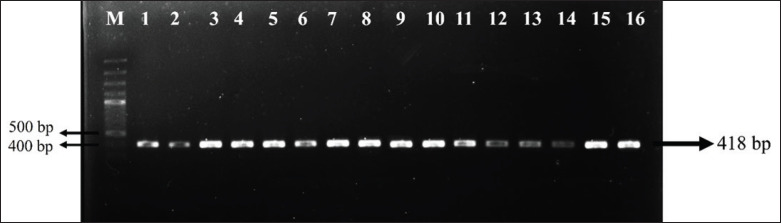 Figure 1
| g.8946C > T | g.8956G > A | ||||
|---|---|---|---|---|---|
| Genotype ( | CC (13) | CT (28) | TT (23) | GG (41) | GA (23) |
| MY (kg/day) | 1.028 ± 0.456a | 0.753 ± 0.339b | 0.81 ± 0.3ab | 0.833 ± 0.388a | 0.831 ± 0.333a |
| Parity | DIM | Additive | Dominance |
|---|---|---|---|
| 0.185 ± 0.063** | 0.002 ± 0.001** | 0.044 ± 0.078 | −0.045 ± 0.165 |
| Trait | SNP | Comparison | Cohens_d | N1 | N2 | Power | Total |
|---|---|---|---|---|---|---|---|
| MY | g.8946 C > T |
| 0.725 | 13 | 28 | 0.558 | 62 |
| MY | g.8946 C > T |
| 0.561 | 13 | 23 | 0.349 | 102 |
| MY | g.8946 C > T |
| −0.198 | 28 | 23 | 0.106 | 800 |
| MY | g.8956 G > A |
| −0.006 | 23 | 41 | 0.050 | 828454 |
| Trait | Haplotype |
| Mean ± SE |
|
|---|---|---|---|---|
| MY |
| 7 | 1.155 ± 0.212 | 0.212 |
| MY |
| 6 | 0.879 ± 0.109 | 0.212 |
| MY |
| 8 | 0.873 ± 0.159 | 0.212 |
| MY |
| 15 | 0.789 ± 0.060 | 0.212 |
| MY |
| 9 | 0.761 ± 0.091 | 0.212 |
| MY |
| 19 | 0.750 ± 0.085 | 0.212 |
Peer Reviews
No public reviews on file for this paper yet. If you reviewed it on a platform where reviews are public (OpenReview, ICLR, NeurIPS, ICML), you can paste yours below so the community can read it here.
Videos
No videos yet. Explain this paper in a talk, walkthrough, or lecture? Add one.
Taxonomy
TopicsMilk Quality and Mastitis in Dairy Cows · Genetic and phenotypic traits in livestock · Effects of Environmental Stressors on Livestock
Introduction
Goat milk has gained popularity as a medicinal food due to its composition and nutritional value, including protein, minerals, vitamins, amino acids, and fatty acids, which can help boost the body’s resistance to respiratory diseases like COVID-19 compared to cow’s milk [1]. Furthermore, goat milk is considered safe for consumption by lactose intolerants due to its lower lactose content and unique digestibility [2].
In Indonesia, goat’s milk has a niche market and is less popular than cow’s milk. However, the demand for goat’s milk in Indonesia, particularly during and after the COVID-19 pandemic, has been increasing; however, its supply remains significantly lower [3]. This makes goat milk prices significantly higher than those of cow’s milk, even five to seven times higher [4].
Generally, goat milk originates from Etawah-grade (PE) goats, a local breed, crossbreeding between Etawah goats and Indonesian indigenous goats (Kacang goats). The milk production of this local breed is low, with a daily yield of 0.8–1.5 l [5]. Indonesia has introduced an exotic dairy goat breed, such as the Saanen. Based on microsatellite information, Saanen and PE goats exhibit a significant genetic difference [6,7]. Therefore, crossbreeding between Saanen and PE could potentially improve the milk production of local goats [8], resulting in a new dairy goat breed called Sapera, with an average milk production of 1.47 l/d [3].
Milk contains two primary proteins: Casein and Whey. Casein is a type of protein found in milk, containing up to 80% of the protein in goat milk, and plays several roles in nutrition and body health. Casein contains nine essential amino acids, including histidine, valine, threonine, tryptophan, lysine, leucine, isoleucine, methionine, and phenylalanine, and provides calcium for maintaining bone health. Compared to bovine milk, goat milk has higher quality and variations in composition, including lower αs1-casein and higher β-casein levels, smaller fat globules, medium-chain fatty acids, and higher mineral levels [9-11].
The encoding of casein involves four genes: alpha-S1 (CSN1S1), alpha-S2 (CSN1S2), beta (CSN2), and kappa (CSN3) [12]. Beta-casein, encoded by the CSN2 gene, makes up approximately half of the total protein found in Sarda goat milk. This protein plays a vital role in the manufacturing properties of milk, particularly in the formation and stabilization of micelles in Dutch dairy goats [13]. The Goat CSN2 promoter region has been associated with the absence of beta-casein in milk [14].
The CSN2 locus has been known to influence the percentage of milk protein, milk fat, milk production, and the content of free fatty acids [15]. Previous research conducted by Deviandini et al*.* [16] has found SNPs in CSN2 that influence lactose and salt content in Sapera goats. However, the effect of CSN2 on milk yield (MY) in Sapera goats has never been studied, which is necessary to support the molecular information of an Indonesian new dairy goat breed and to complete the understanding of milk quality related to the CSN2 gene. Therefore, this study was conducted to investigate the influence of CSN2 exon 7 on MY and its additive and dominance effects in Sapera goats. This study will provide a genetic basis for marker-assisted selection of Sapera goats, enhancing productivity, sustainability, and economic returns in tropical dairy goat farming.
Materials and Methods
Ethical approval
This research was approved for ethical clearance by the Animal Welfare Animal Ethics Committee of the Agricultural Research and Development Center, registered under Balitbangtan/Balitnak/Rm/11/21.
Animals
A total of 64 Sapera goats had blood taken from the jugular vein. The blood was stored in 10 ml EDTA Vacutainer tubes. The extraction of DNA from whole blood samples was performed using the Geneaid DNA extraction kit (Geneaid Biotech., Taiwan). The phenotypes collected for analysis were parity, days in milk (DIM), and MY. MY was recorded as daily yield (kg/day), averaged from two consecutive collections in the morning (5:00–6:00 a.m.) and afternoon (3.00–4.00 p.m.).
DNA extraction and polymerase chain reaction (PCR)
The primer for exon 7 of the CSN2 gene was designed based on sequences available in GenBank under the accession number AJ011018. The amplified product length from a forward primer (5'- GGC ACA GTC TCT AGT CTA TC -'3) and reverse primer (5'- CCT TTC TGC TGT ACC AGG AG -'3) was confirmed to be 418 bp. DNA was extracted using a commercially based kit to maintain high-quality genomic DNA that can be amplified. DNA concentration was determined using a spectrophotometer for both confirmation of concentration and purity before amplification by PCR.
DNA amplification was performed using the PCR method in an Applied Biosystem 9700 (Thermo Fisher Scientific, US). All PCR runs were carried out in a final volume of 25 μl, to which 2 μl of DNA, 6.1 μl of nuclease-free water, 0.3 μl of reverse primer, 0.3 μl of forward primer, and 16 μl of μl MyTaq HS Redmix (Bioline, UK) were added. Thermal cycling conditions for PCR were pre-denatured at 95°C for 5 min, with 35 cycles of denaturation for 15 sec, annealing at 60°C for 15 sec, and extension at 72°C for 10 sec, followed by final extension at 72°C for 1 min. These conditions were then optimized from preliminary experiments to achieve maximum yield and specificity of the target amplicon, as reported in the literature.
Post-amplification, the quality of the PCR products was assessed using agarose gel electrophoresis, followed by visualization under ultraviolet light to confirm the presence of the expected 418 bp band (Fig. 1). The amplicon was sequenced using the services provided by 1st Base, located in Selangor, Malaysia, to ensure accurate identification of nucleotide variations.
The visualization of the CSN2 gene exon 7 in the Sapera goat.
Statistical analysis
Power analysis was conducted to determine the required sample size to detect a statistically significant effect. The analysis was performed using the power package in R 4.3.1 [17]. Data analysis was conducted using R 4.3.1 [17], where the analysis of variance function was employed to compare the mean values, followed by the least significant difference post hoc range test. The statistical model for the association of CSN2 genotype was
where Y ijk was MY, μ was the population mean, p i was the parity effect, d k was the DIM effect, g i was the genotype effect, and ε_ijk_ was an error.
The generalized linear model was used to analyze the additive and dominance effects:
where y is the MY,μ is the intercept, C_pp_ is the covariate coefficient of parity, C_ii_ is the covariate coefficient of DIM, C_aa_ is the covariate coefficient of additive effect, the C_dd_ is the covariate coefficient of dominance effect, and e is the residual standard error.
Results
The findings indicated a significant effect (p < 0.05) of SNP g.8946C > T on milk production. (Table 1). The milk production of the CC genotype at SNP g.8946C > T outperforms the CT and TT genotypes. The MY is not significantly influenced by the SNP g.8956G > A. The DIM in this study were 223 ± 58 days with a parity of 1.95 ± 0.74. Meanwhile, the average milk production per population was 0.83 ± 0.37 kg/day.
The parity, DIM, additive effects, and dominance effects on the average MY are shown in Table 2. The data show that the MY is significantly (p < 0.01) influenced by parities and DIM. Data on the additive and dominance effect showed no significant differences between MY with the C allele and those with the T allele.
Table 3 shows the power analysis for SNP Effects on Milk Production Traits. Table 4 shows Haplotype Associations with MY in Sapera Goats. The power analysis revealed distinct differences between SNP1 and SNP2 in their associations with productive and reproductive traits. For SNP1, moderate-to-large effect sizes were observed in MY and parity, particularly in the comparisons between CC versus CT and CC versus TT genotypes. However, the current sample sizes were insufficient to achieve adequate statistical power, with most comparisons showing power below 0.6. For instance, MY showed an effect size of d = 0.725 for CC versus CT, yet only reached a power of 0.56, indicating that at least 51 animals per genotype group would be required to achieve 80% power. Similarly, parity exhibited moderate effect sizes (0.53–0.55), but observed power remained below 0.42. In contrast, DIM showed only small effect sizes across all genotype comparisons, with power below 0.20.
Discussion
This study aimed to investigate the impact of the CSN2 exon 7 on milk production, focusing on the identified SNPs g.8946C > T and g.8956G > A. The g.8946C > T SNP was found to be a non-synonymous mutation that alters the amino acid sequence from alanine (GCA) to valine (GTA) at position 177. In contrast, the g.8956G > A SNP is a synonymous mutation, preserving the amino acid glutamine at position 180. This distinction among the mutations is significant, given that non-synonymous mutations are more likely to affect phenotypic traits due to altering protein structure and function. Functional differentiation is a concept of great biological significance. Non-synonymous mutations are more likely to affect protein conformation, stability, or intermolecular interactions, thereby influencing phenotypic traits.
Conversely, synonymous mutations tend to have reduced or context-dependent effects, often mediated through changes in codon usage or mRNA stability [18]. The presence of four established mutations in the CSN2 exon 7, at amino acid residues 58, 166, 167, and 177 [19], as identified in previous research, further establishes the genetic heterogeneity in this region. The β-casein, which is encoded by CSN2, plays a significant role in milk’s calcium transport and micelle-forming processes [14]. Structural modifications, such as the substitution of alanine with valine (Ala�Val), may influence hydrophobic interactions and the conformation of local structures, potentially leading to alterations in micelle dimensions and the efficiency of secretion. Such alterations can disrupt the equilibrium between the volume of milk produced and the partitioning of solids. Indeed, previous research has demonstrated that genetic variation within the CSN2 gene is correlated with the compositional and technological attributes of milk across various goat breeds [12,13].
Consequently, the functional polymorphism g.8946C > T aligns with established biological mechanisms that connect casein variants to lactation performance. This study suggests practical value in using SNP g.8946C > T as a potential molecular marker. Interestingly, our findings align with earlier research by Deviandini et al*.* [16], who also identified the significance of the g. 8946C > T SNP in milk production traits. The prevalence of the CC genotype, particularly in Banat’s White Dairy Goat Breeds, is 0.73 and is associated with superior dairy performance [20]. The broader literature further supports this result: in Awassi sheep, CSN2 genotypes were strongly linked to MY and composition [21,22], while in Sarda goats, casein loci have repeatedly been implicated in fat and protein yields [12]. Taken together, these data emphasize the importance of exon 7 as a hotspot for functional polymorphism within the casein cluster.
The investigation revealed that while the genotype had an observable influence on milk production, the additive and dominance effects associated with these SNPs were not statistically significant. This lack of highly additive or dominant effects suggests that other loci or environmental influences are more significant in regulating milk production. Additionally, the stronger effect of haplotypes at CSN1S1 and CSN3 compared to those at CSN1S2 and CSN2 underscores the complex interaction of several genetic factors in regulating milk traits. This level of complexity is also evident in the findings for the impact of the CSN2 gene on milk protein and fat in Sarda and Awassi goat breeds, again supporting the role of several loci in overall milk production traits [12,21].
In addition, the significant effect of parity and DIM on milk production discovered in this study aligns with published literature. Parity increase is generally found to be associated with increased MY, as multiparous animals tend to exhibit improved lactation performance compared to primiparous animals [23]. They have improved physiological adaptation and lactation experience. Our results indicate that lactation stage, particularly in goats with four or more parities, increases total MY, further supporting this argument, which concurs with the finding of Gafsi et al*.* [24].
Furthermore, the outcomes in the first 100 days of lactation, with higher MYs, underscore the importance of first lactation performance, which is essential for achieving the highest overall milk production [25]. Genetic merit is key during the initial phase, the essence behind the need for genetic improvement initiatives, and the traits that support the first lactation [26]. Management practices, such as kidding season and feeding, have significant effects on dairy goat performance, interacting with parity and DIM. Optimistic nutritional management improves MY, persistency, and metabolic health, and multiparous goats also utilize feed more efficiently compared to primiparous goats [5].
In conclusion, this study brings important contributions to the genetic origin of milk production traits in goats. The contribution of the CSN2 exon 7 gene and its SNPs to milk yield, in addition to the pivotal influence of parity and DIM, highlights the complex nature of dairy production. Future studies should continue to investigate these relationships, perhaps with increased sample sizes and phenotypic diversity to gain further insight into the intricate genetic architecture of milk production traits.
Two mutations were identified in this study, specifically at amino acid positions 177 and 180. In Czech Dairy Goat Breeds, it is known that the CC genotype in mutation 8946 has the highest frequency of 0.496 [27]. In Indian sheep, CSN2 is known to have 15 CSN2 protein variations and 21 non-synonymous SNPs [28]. The diversity of the CSN2 gene in sheep is greater than in goats.
Although the genotype had an influence, the additive and dominance effects were not significant. Furthermore, Haplotypes at the CSN1S1 and CSN3 loci have a greater effect on dairy traits than those at the CSN1S2 and CSN2 loci [29]. The milk protein and fat composition in Sarada goats is influenced by the CSN2 gene [12]. In Awassi goats, the CA genotype is linked to significant milk production of 165.2 ± 22.0 kg, with CSN2 playing a crucial role [21]. CSN1S1 and CSN3 in Norwegian goats have an additive effect on fat percentage, protein percentage, and MY. Notably, the dominance effect is particularly significant in protein and fat percentage [30]. Another study concluded that the CSN3 variants have a slight impact on daily milk production [31].
The study revealed that both parity and DIM had a significant impact on MY. The milk quantity is influenced by both parity and breed, as those that have given birth multiple times tend to yield a greater MY [22,32]. The extended lactation length of goats, especially those at parity ≥4, leads to a notable increase in milk production [33]. Moreover, DIM had an impact on the MY. The initial 60 days of lactation demonstrated a higher MY, which can be attributed to the genetic merit and the sustainable milk production in Syrian Damascus goats [34].
Conclusion
The CC genotype yields more milk than other genotypes. However, no additive or dominant effects are observed. A large quantity of samples and phenotypes is required for the assessment of the g.8946C > T SNP. Additionally, parity and DIM have a strong impact on MY, indicating that animals with higher parity or longer lactation periods tend to produce more milk. This study highlights the importance of understanding both genetic variation and non-genetic factors, such as parity and DIM, in improving milk production performance. The variation in the CSN2 gene, particularly SNP g.8946C > T, can serve as a reference for genetic selection to enhance milk production in the future. The identification of g.8946C > T as a potentially informative marker provides a valuable reference for marker-assisted and genomic-assisted selection in tropical dairy goat systems.
The reference list from the paper itself. Each links out to its DOI / PubMed record.
- 1Navamniraj KN Sivasabari K Indu JA Krishnan D Anjali MR Akhil PR et al.Beneficial impacts of goat milk on the nutritional status and general well-being of human beings: anecdotal evidence J Exp Biol Agric 202311115 https://doi.org/10.18006/2023.11(1).1.15
- 2Panta R paswan VK gupta PK kohar DN Goat’s milk (GM), a booster to human immune system against diseases Goat Science - Environment, Health and Economy Intech Open 2021 London, United Kingdomhttps://doi.org/10.5772/intechopen.97623
- 3Sumarmono J Current goat milk production, characteristics, and utilization in Indonesia IOP Conf Ser Earth Environ Sci 20221041012082 https://doi.org/10.1088/1755-1315/1041/1/012082
- 4Ningsih DR Zaini M Analisis usaha susu kambing di XYZJ Manaj Agribisnis Terapan 20231118
- 5Praharani L Anggraeni A Rusdiana S Milk production and lactation length of F 2 Anglo Nubian × Etawah grade does IOP Conf Ser Earth Environ Sci 2021788012006 https://doi.org/10.1088/1755-1315/788/1/012006
- 6Susilorini TE Wulandari D Furqon A Septian WA Saputra F Suyadi S Genetic diversity of various goat breeds in East Java based on DNA microsatellite Markers Trop Anim Sci J 202245324754 https://doi.org/10.5398/tasj.2022.45.3.247
- 7Suyadi S Murtika IL Susilorini TE Septian WA Saputra F Furqon A Genetic diversity of goats in East Java through analysis of the cytochrome B and cytochrome oxidase I genes in mitochondrial DNA Small Ruminant Res 2022209106659 https://doi.org/10.1016/j.smallrumres.2022.106659
- 8Erduran H Dag B Determination of factors affecting milk yield, composition and udder morphometry of hair and cross-bred dairy goats in a semi-intensive system J Dairy Res 20218832659 https://doi.org/10.1017/S 00220299210006373439283810.1017/S 0022029921000637 · doi ↗ · pubmed ↗