A platform to design and optimise fluorogenic scFvs for detection of interleukin 33
Abigail E. Reese, Utsa Karmakar, Margherita Restori, Marcela A. Hermoso, George M. Church, Erkin Kuru, Marc Vendrell

TL;DR
This paper introduces a new platform to design and optimize biosensors for detecting interleukin-33, a protein involved in inflammation.
Contribution
The novel contribution is a chemical platform combining protein labeling and deep-learning to optimize fluorogenic scFvs for IL-33 detection.
Findings
The platform identified BS-7 as a biosensor for detecting human IL-33 in cell supernatants.
The method enables wash-free detection, improving the efficiency of IL-33 measurement.
Abstract
Direct measurement of interleukin-33 (IL-33) in biological systems is critical for understanding its role in inflammatory diseases. In this work, we have developed a platform for the discovery and optimisation of fluorogenic biosensors that are built from scFv protein scaffolds. Our approach combined site-specific fluorophore labelling and deep-learning protein design to identify BS-7 as a biosensor for wash-free detection of human IL-33 in cell supernatants. We developed a chemical platform combining protein labelling and fluorophore identification to accelerate the optimisation of fluorogenic scFvs.
Genes, proteins, chemicals, diseases, species, mutations and cell lines named across the full text — each resolved to its canonical identifier and authoritative record.
Click any figure to enlarge with its caption.
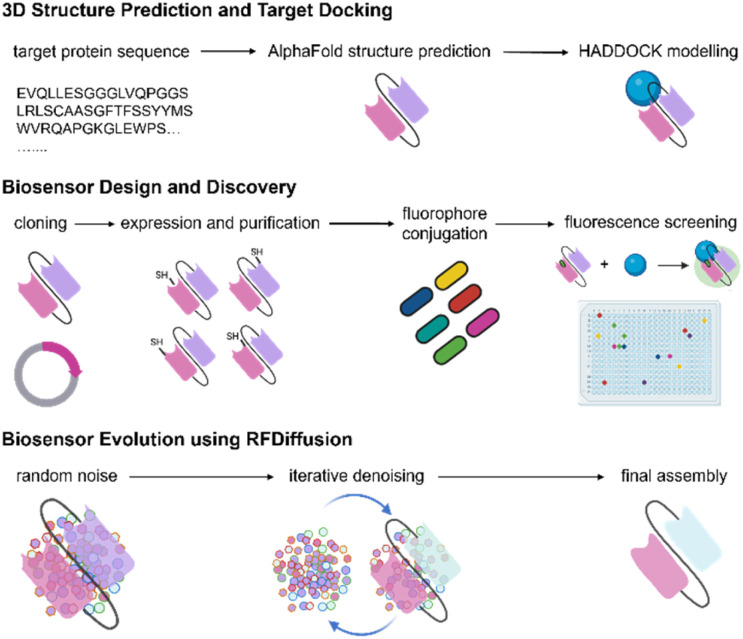 Figure 1
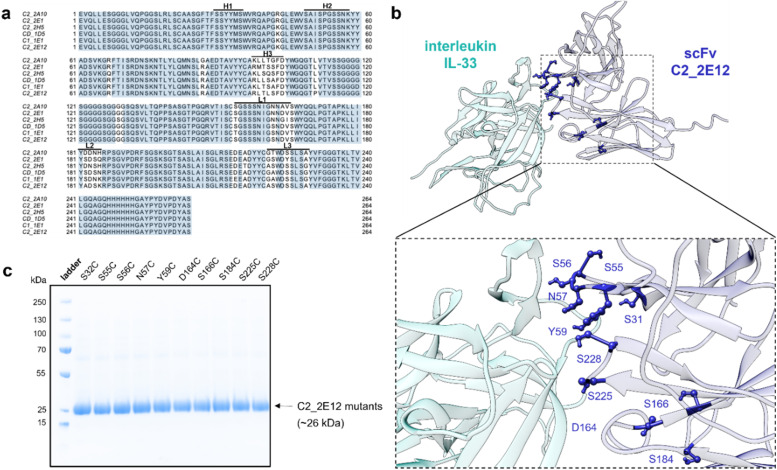 Figure 2
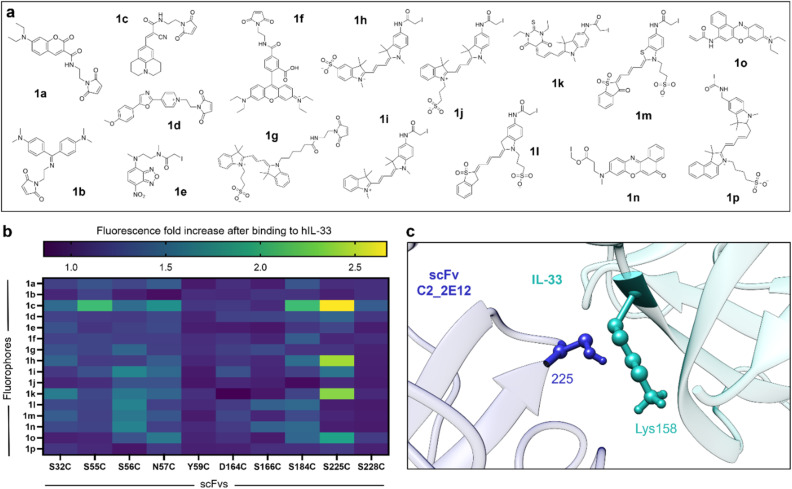 Figure 3
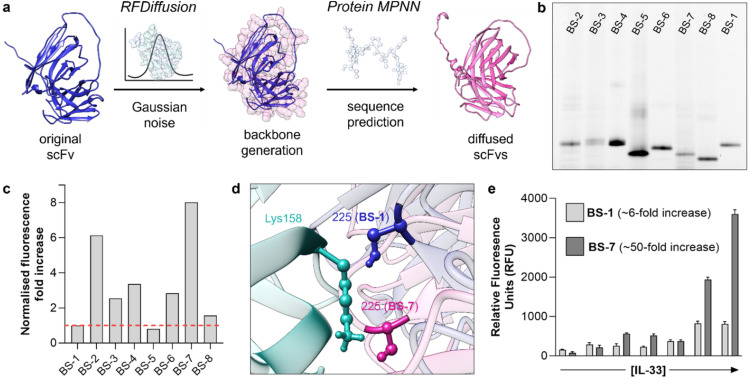 Figure 4
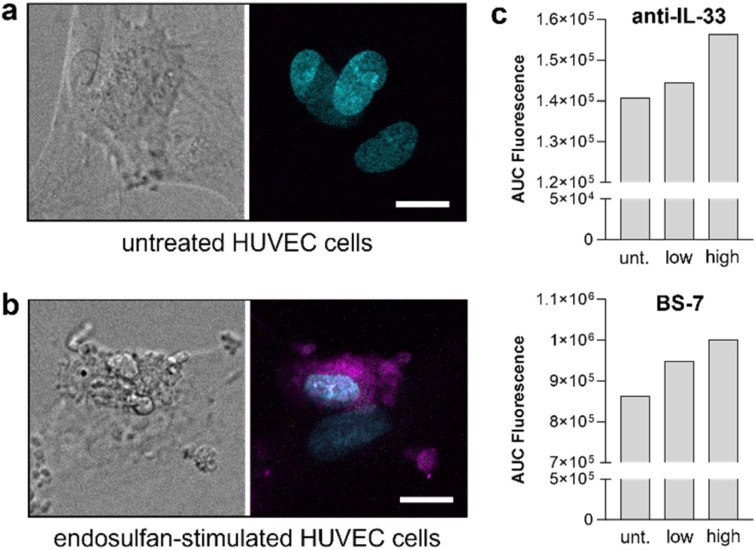 Figure 5
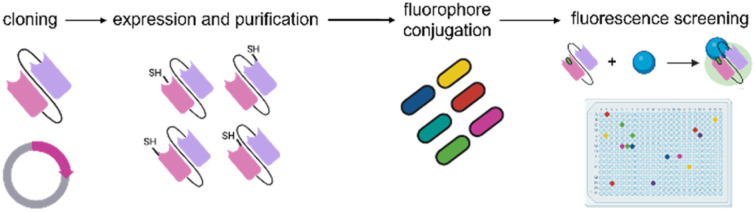 Figure 6
Peer Reviews
No public reviews on file for this paper yet. If you reviewed it on a platform where reviews are public (OpenReview, ICLR, NeurIPS, ICML), you can paste yours below so the community can read it here.
Videos
No videos yet. Explain this paper in a talk, walkthrough, or lecture? Add one.
Taxonomy
TopicsIL-33, ST2, and ILC Pathways · Eosinophilic Esophagitis · Immune Cell Function and Interaction