Natural warning signals unexpectedly shape human metamemory ratings but not image recognition success
Federico De Filippi, Olivier Penacchio, Akira R. O’Connor, Julie M. Harris

TL;DR
This study shows that bold warning signals in animals make people think they'll remember them better, but don't actually help with recognition later.
Contribution
The study reveals that aposematic signals influence human metamemory but not recognition memory, introducing the concept of 'memorability' in visual signals.
Findings
Aposematic patterns led to higher metamemory ratings but not better recognition memory.
Observers consistently remembered or forgot the same aposematic images, suggesting intrinsic memorability.
Effective warning signals may rely more on initial perception than on memory recall.
Abstract
Although the bold warning signals of prey (known as aposematic) have been shown to facilitate predator learning through repeated encounters, it remains unclear to what extent their visual patterns and colours support memory retention. Here, we tested whether aposematic species appear more memorable to human observers, and whether they have an intrinsic advantage in being recognised from memory—even after a single exposure. Observers viewed images of aposematic and non-aposematic butterflies and moths, judged how likely they were to remember each one (metamemory rating), and later completed a test distinguishing previously seen species from novel ones (recognition memory). While aposematic patterns elicited higher metamemory ratings upon first sight, we found no evidence that they were more likely to be recognised when seen again. Despite this apparent metacognitive failure, for…
Genes, proteins, chemicals, diseases, species, mutations and cell lines named across the full text — each resolved to its canonical identifier and authoritative record.
Click any figure to enlarge with its caption.
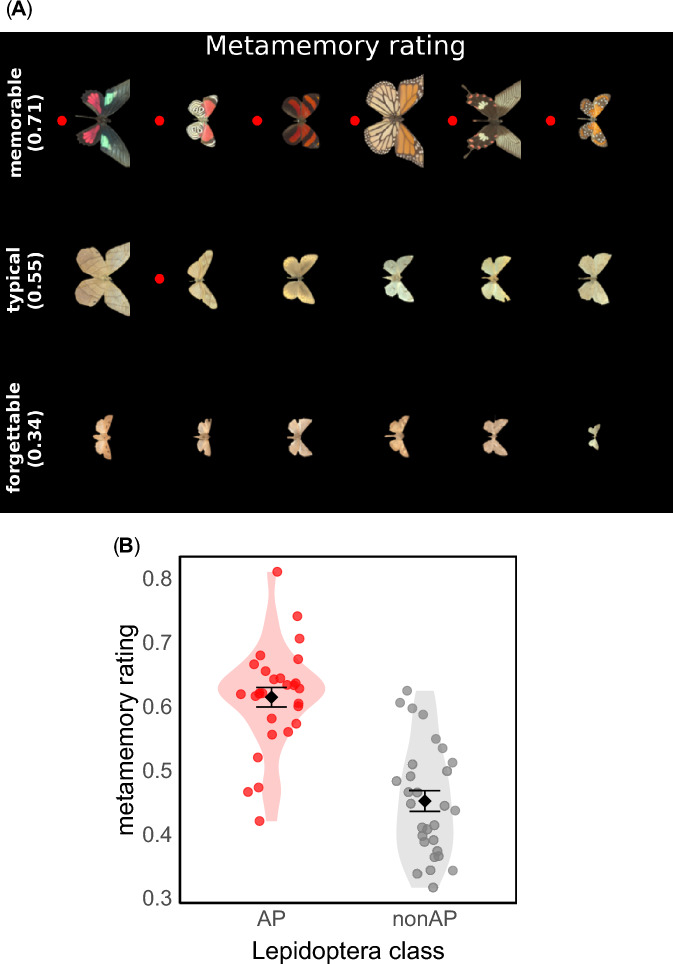 Figure 1
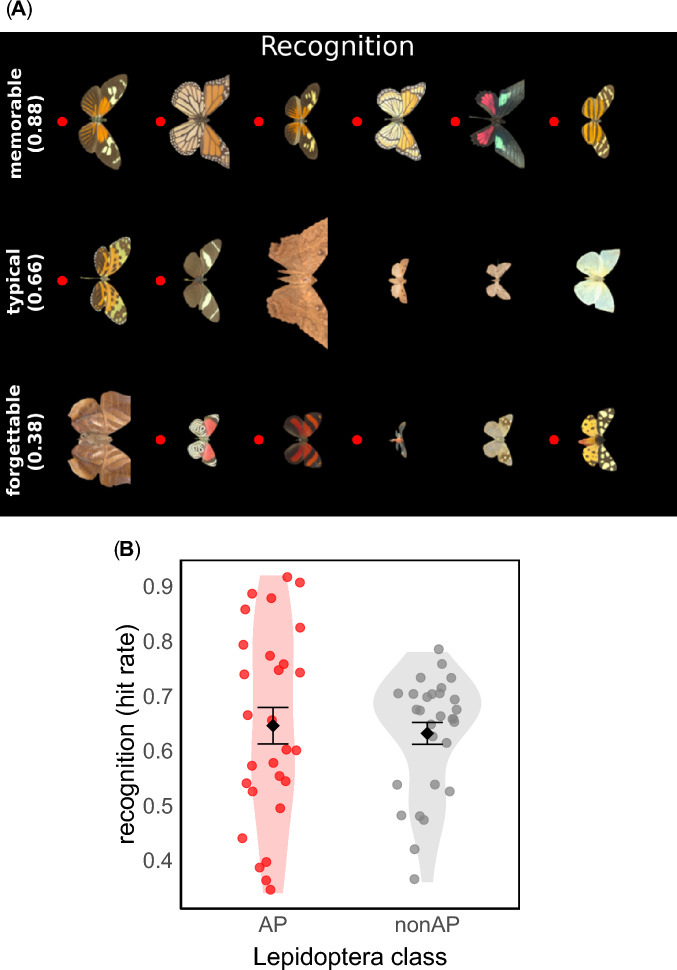 Figure 2
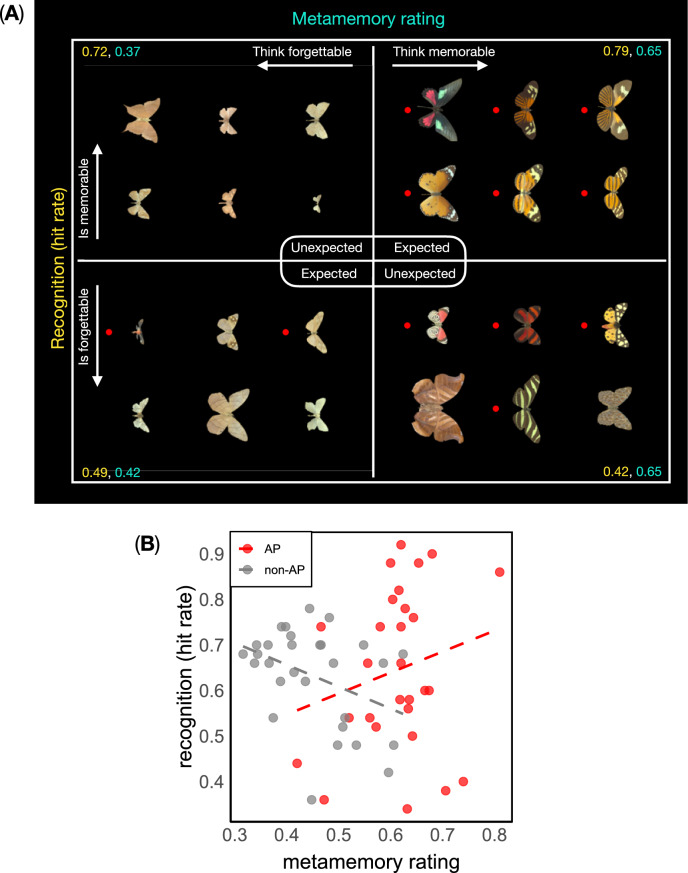 Figure 3
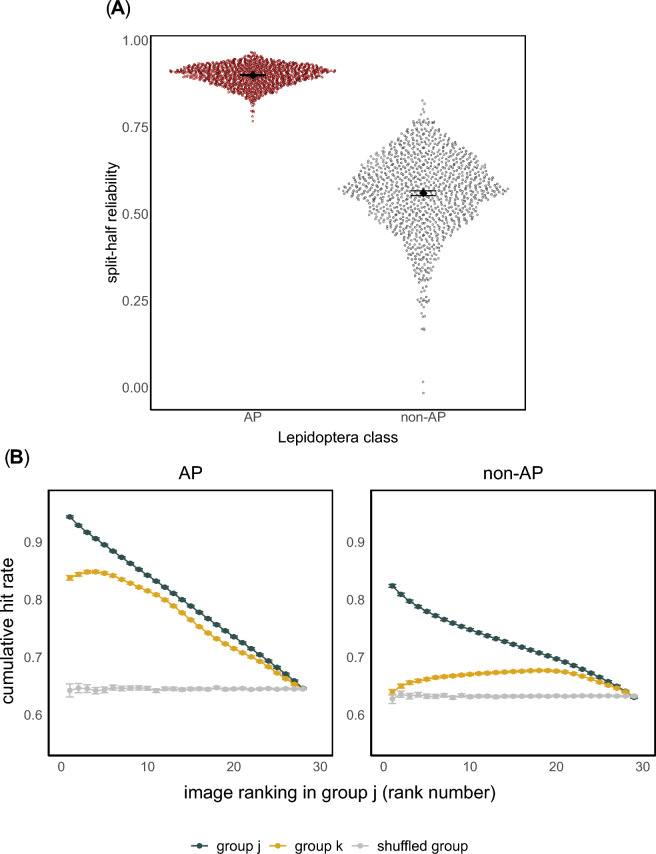 Figure 4
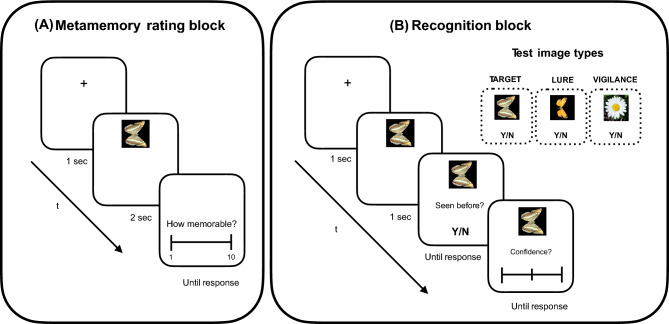 Figure 5
Peer Reviews
No public reviews on file for this paper yet. If you reviewed it on a platform where reviews are public (OpenReview, ICLR, NeurIPS, ICML), you can paste yours below so the community can read it here.
Videos
No videos yet. Explain this paper in a talk, walkthrough, or lecture? Add one.
Taxonomy
TopicsFace Recognition and Perception · Memory Processes and Influences · Multisensory perception and integration