Evidence for virus-associated recapping behaviour in honey bees (Apis mellifera) with differential detection sensitivity between varroa-resistant and non-resistant colonies
Amélie Noël, Cathelijne G. A. Boer, Séverine D. Kotrschal, Joachim R. de Miranda, Naomi Keehnen, Barbara Locke

TL;DR
This study shows that viruses may influence honey bees' recapping behavior, which could help colonies resist Varroa mites and viral infections.
Contribution
The study provides new evidence that viruses, not just mites, may trigger recapping behavior in honey bees.
Findings
Recapping behavior is associated with brood viral infections in honey bees.
Worker bees may detect virus-induced changes and adjust recapping behavior accordingly.
The relationship between viruses and recapping differs between varroa-resistant and non-resistant colonies.
Abstract
Social immunity is vital for protecting honey bee colonies from pathogens and parasites. Among these threats, the parasitic mite Varroa destructor is particularly devastating, both by weakening parasitized bees and by transmitting several potentially lethal viruses, most notably Deformed Wing Virus (DWV). To counteract varroa and the damage caused by viral epidemics, honey bees exhibit complex, socially organized hygienic behaviours, including Varroa Sensitive Hygiene (VSH), in which workers detect and remove varroa infested brood. A related behaviour, known as recapping, involves workers opening, inspecting, and re-sealing brood cells. While the triggers for VSH are increasingly understood, the factors driving recapping remain largely unexplored, especially the potential role of brood viral infections. This study investigates the relationship between brood viral infections and…
Genes, proteins, chemicals, diseases, species, mutations and cell lines named across the full text — each resolved to its canonical identifier and authoritative record.
Click any figure to enlarge with its caption.
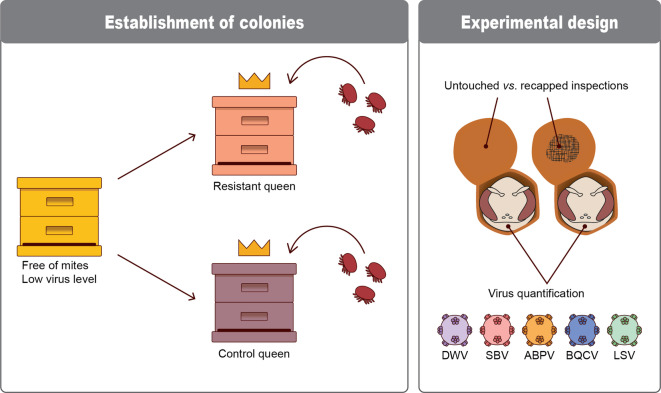 Figure 1
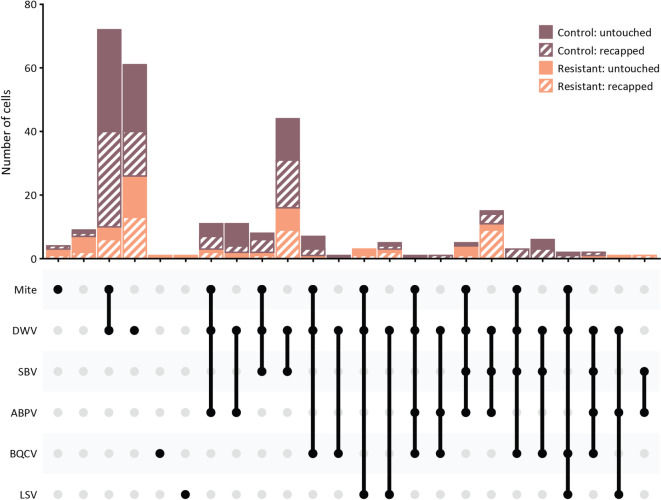 Figure 2
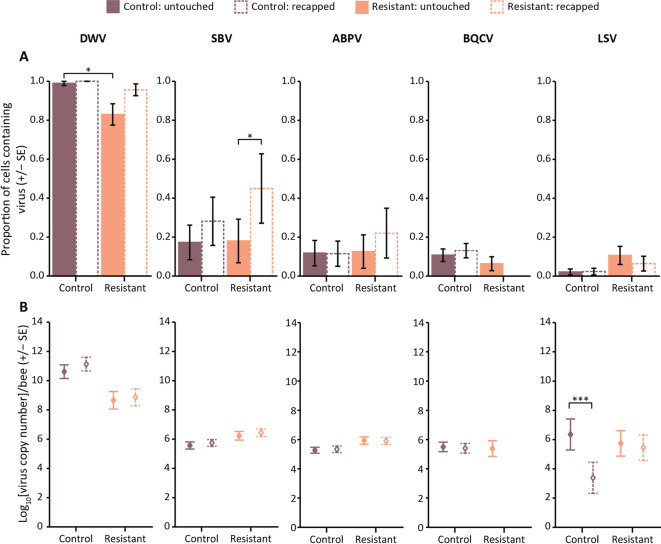 Figure 3
Peer Reviews
No public reviews on file for this paper yet. If you reviewed it on a platform where reviews are public (OpenReview, ICLR, NeurIPS, ICML), you can paste yours below so the community can read it here.
Videos
No videos yet. Explain this paper in a talk, walkthrough, or lecture? Add one.
Taxonomy
TopicsInsect and Pesticide Research · Insect and Arachnid Ecology and Behavior · Plant and animal studies