Physiological and Metabolic Mechanisms of Penicillium sclerotigenum-Induced Postharvest Rot in Lichuan Yam (Dioscorea polystachya Turcz.)
Xiaoxiao Sun, Zhichao Wang, Yun Huang, Liya Zhang, Yuchang Zhu, Dazhai Zhou, Kun Xiong, Yan Qin, Kelin Li

TL;DR
This study identifies how the fungus Penicillium sclerotigenum causes rot in Lichuan yams by disrupting water and nutrient balance and altering metabolic pathways.
Contribution
The study reveals the physiological and metabolic mechanisms by which Penicillium sclerotigenum induces postharvest rot in Lichuan yams.
Findings
Penicillium sclerotigenum disrupts water-retaining structures, increasing weight loss and reducing water activity in yams.
The infection alters carbon-nitrogen metabolism, affecting starch, sugar, and protein levels in the host.
Metabolomics showed changes in sugars, organic acids, and secondary metabolites, with enriched sugar and amino acid pathways.
Abstract
Postharvest decay results in substantial losses during yam storage. This study isolated microorganisms from decayed Lichuan yams and investigated deterioration mechanisms using physiological assays and UPLC-MS/MS. Among six isolates, Penicillium sclerotigenum was identified as the primary pathogen. Infection disrupted water-retaining structures, leading to increased weight loss and reduced water activity. It also disrupted carbon-nitrogen metabolism, leading to fluctuations in starch, sugar, and protein content. Although host defense responses were activated via phenolic accumulation and the upregulation of peroxidase (POD) and polyphenol oxidase (PPO) activities, sustained infection resulted in severe membrane lipid peroxidation. Metabolomics revealed alterations in sugars, organic acids, and secondary metabolites, with the specific enrichment of sugar and amino acid pathways. Thus, P.…
Genes, proteins, chemicals, diseases, species, mutations and cell lines named across the full text — each resolved to its canonical identifier and authoritative record.
Click any figure to enlarge with its caption.
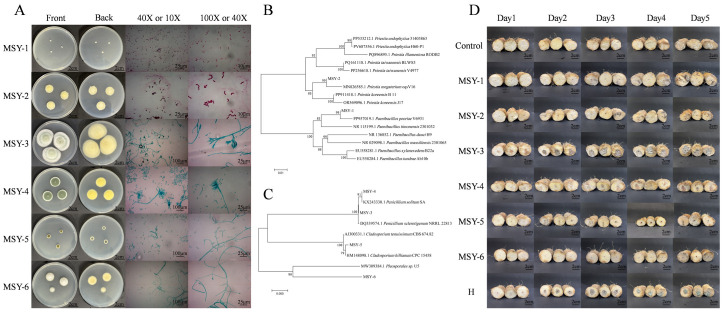 Figure 1
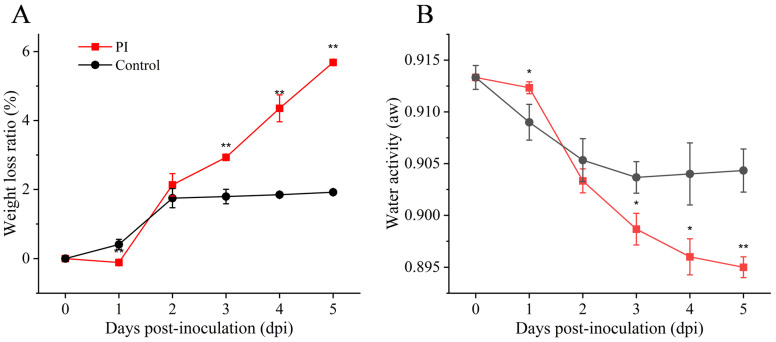 Figure 2
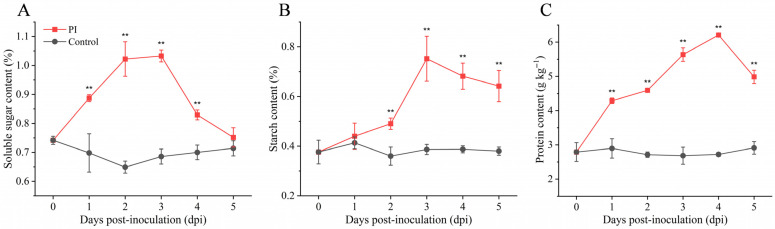 Figure 3
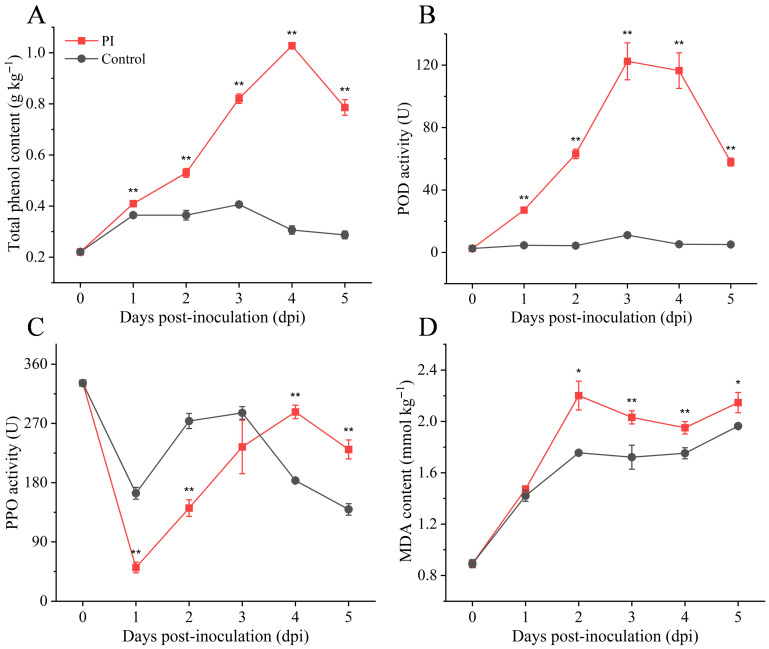 Figure 4
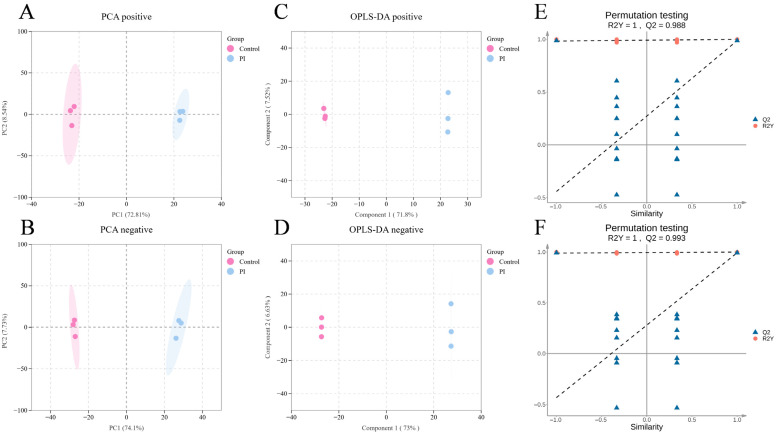 Figure 5
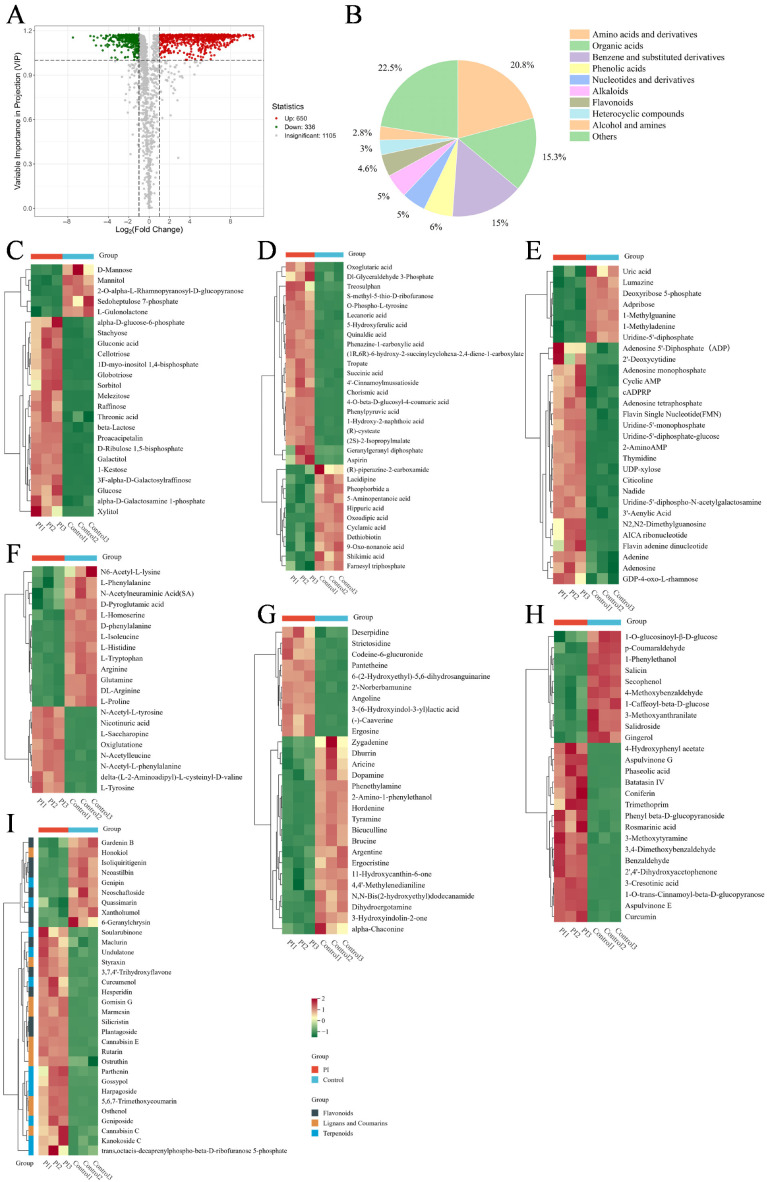 Figure 6
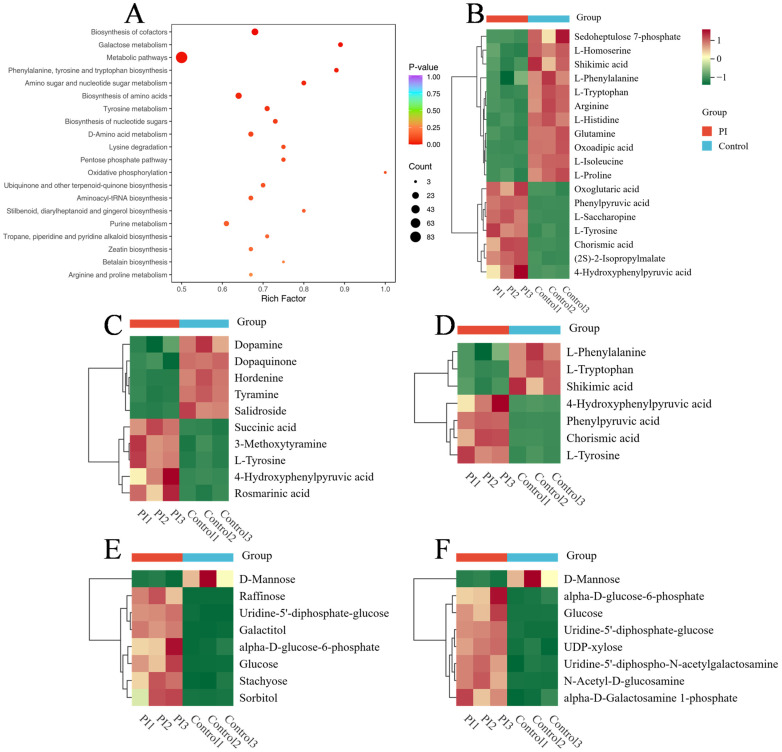 Figure 7
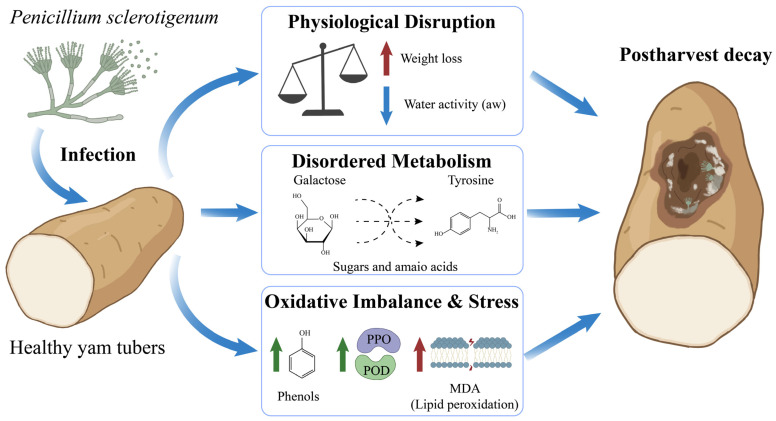 Figure 8
Peer Reviews
No public reviews on file for this paper yet. If you reviewed it on a platform where reviews are public (OpenReview, ICLR, NeurIPS, ICML), you can paste yours below so the community can read it here.
Videos
No videos yet. Explain this paper in a talk, walkthrough, or lecture? Add one.
Taxonomy
TopicsPotato Plant Research · Food composition and properties · Plant-Microbe Interactions and Immunity