Potential for Distribution Expansion of Stephanitis chinensis in China Based on MaxEnt Model
Hongyan Jiang, Yizhe Wang, Shichun Chen, Shuran Liao, Tingxu Chen, Xiaoqing Wang

TL;DR
This study predicts how climate change will expand the habitat of the tea lace bug in China, helping to prepare for its spread and protect tea crops.
Contribution
The study identifies key climate factors and predicts future distribution shifts of the tea lace bug using the MaxEnt model.
Findings
The tea lace bug's suitable habitats are currently concentrated in East and South Asia, covering 28.58% of China's land area.
Future climate change will cause the bug's distribution to expand northward and shift northeastward in China.
Key environmental factors influencing its distribution include precipitation and temperature variables like Bio18, Bio6, Bio12, and Bio4.
Abstract
Stephanitis chinensis (tea lace bug) is a major pest in China’s southwest tea region, with recent outbreaks severely impacting the profitability of spring tea. To clarify its distribution dynamics under current and future climate change, this study used the MaxEnt model and ArcGIS to predict its distribution and dominant environmental factors. The results show that the key factors are Bio18, Bio6, Bio12, and Bio4. Currently, this species’ suitable habitats are mainly in East and South Asia. In China, suitable habitats account for 28.58% of the total area, with high-suitability regions concentrated in the Guizhou, Chongqing, Sichuan, Hubei, Hunan, Shaanxi, and Jiangsu provinces. Future climate conditions will expand its distribution northward, with the center shifting northeastward. This study provides a basis for monitoring and controlling high-risk regions to ensure tea production…
Genes, proteins, chemicals, diseases, species, mutations and cell lines named across the full text — each resolved to its canonical identifier and authoritative record.
Click any figure to enlarge with its caption.
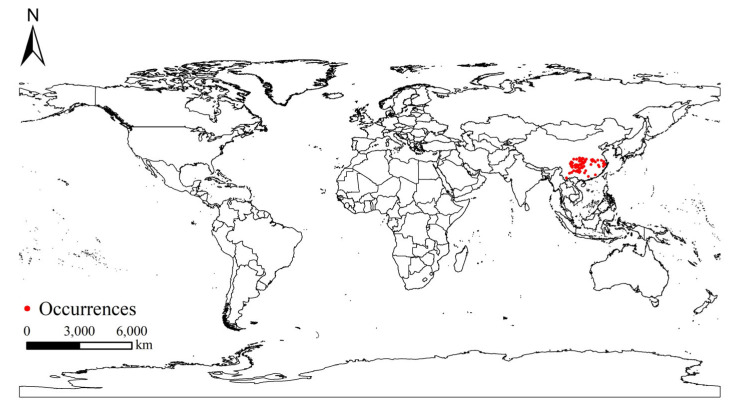 Figure 1
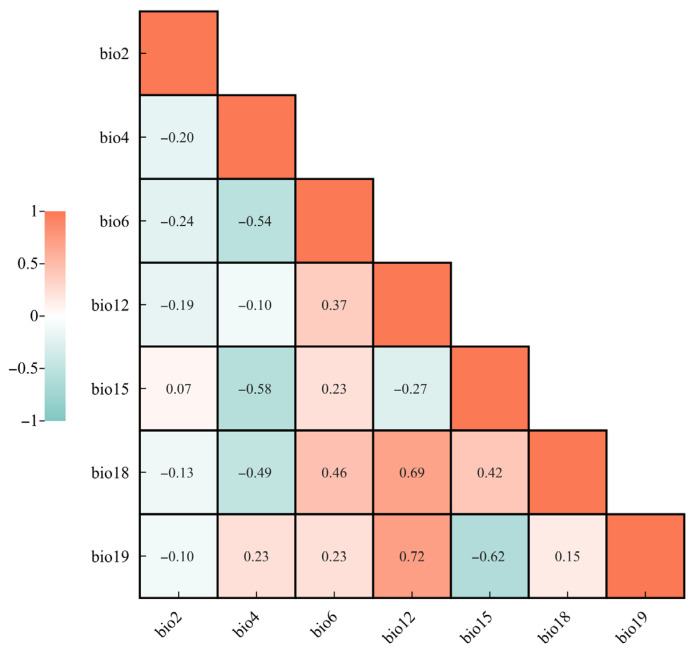 Figure 2
 Figure 3
 Figure 4
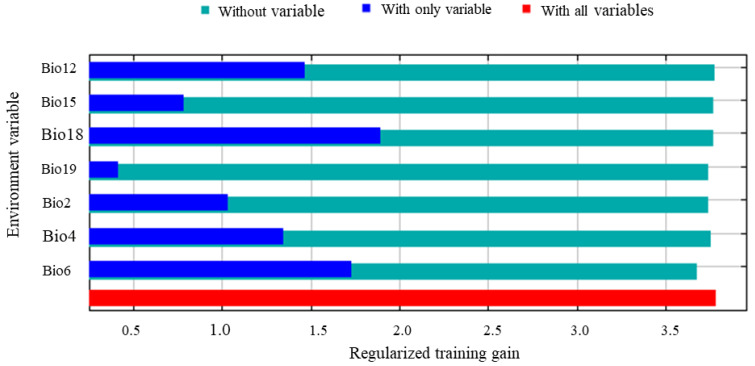 Figure 5
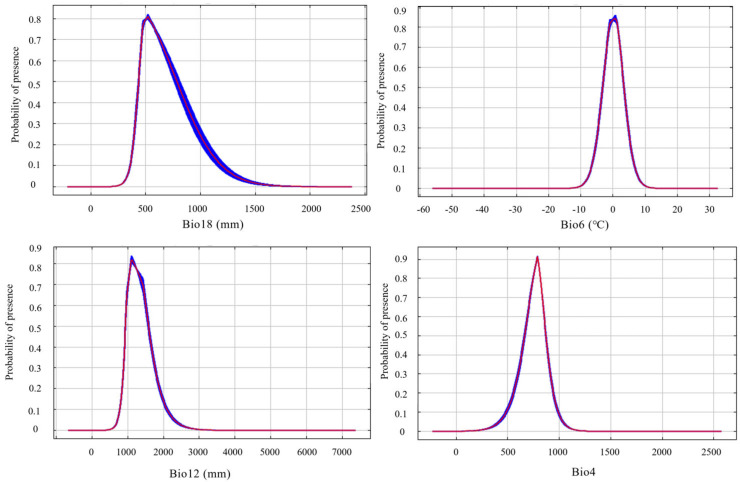 Figure 6
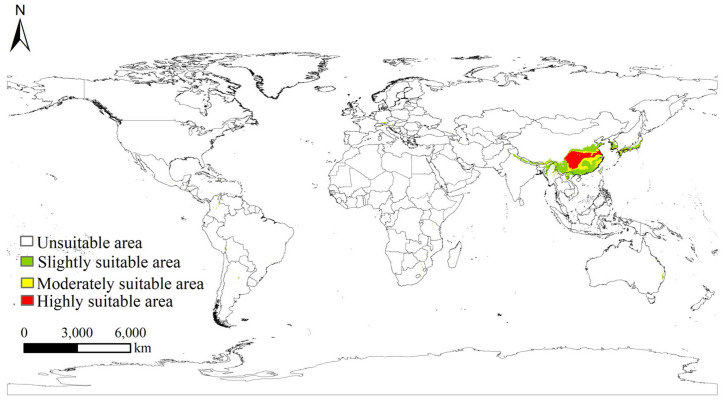 Figure 7
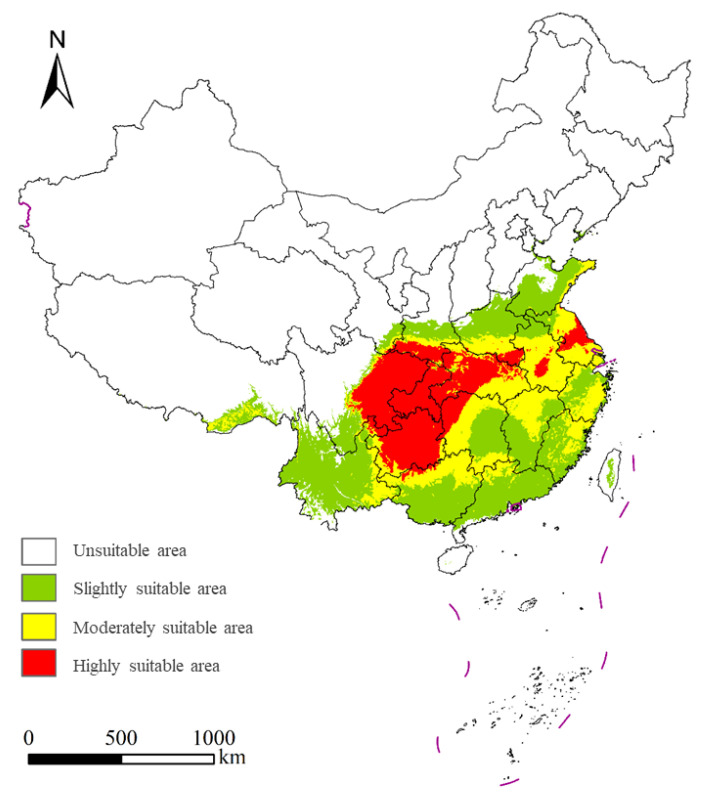 Figure 8
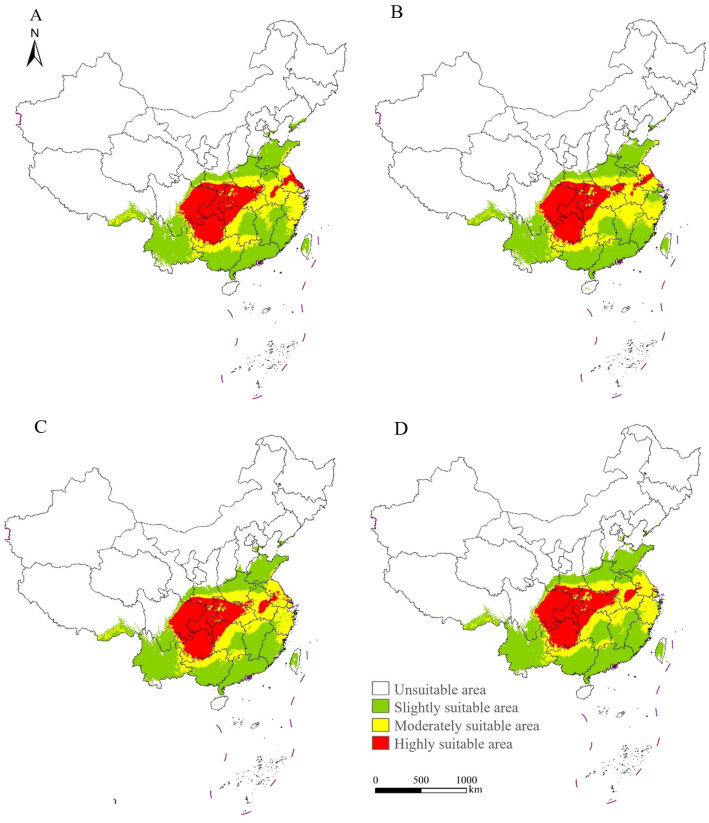 Figure 9
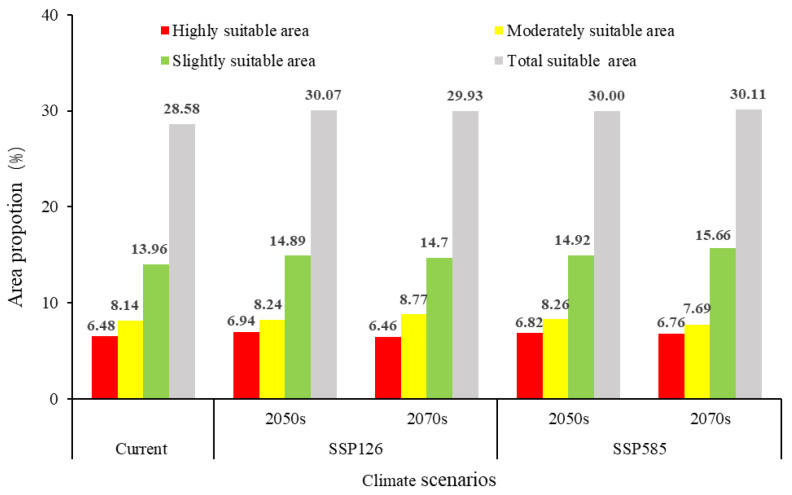 Figure 10
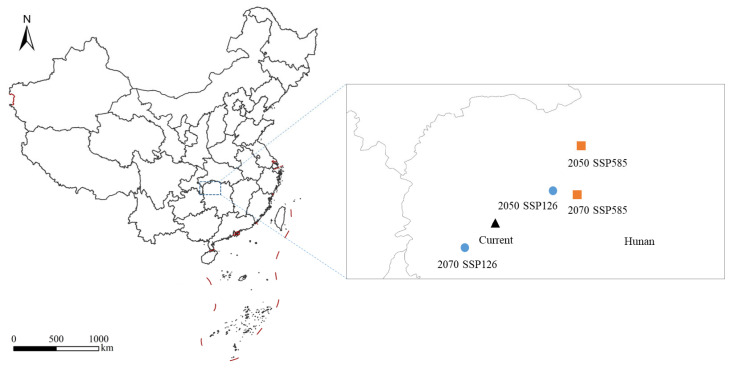 Figure 11
Peer Reviews
No public reviews on file for this paper yet. If you reviewed it on a platform where reviews are public (OpenReview, ICLR, NeurIPS, ICML), you can paste yours below so the community can read it here.
Videos
No videos yet. Explain this paper in a talk, walkthrough, or lecture? Add one.
Taxonomy
TopicsSpecies Distribution and Climate Change · Forest Insect Ecology and Management · Research on scale insects