Renal Tubule-Specific Deletion of Nephrocystin 3 (Nphp3) Causes Infantile Nephronophthisis-like Phenotypes in Mice
Xuanjin Du, Chunyan Wang, Ye Fang, Gangqi Wang, Yihui Zhai, Qian Shen, Xiaoshan Tang, Hong Xu

TL;DR
A new mouse model with kidney-specific deletion of Nphp3 mimics infantile nephronophthisis, showing early kidney cysts and fibrosis, and responds to drug treatments.
Contribution
A renal tubule-specific Nphp3 knockout mouse model was created that better replicates infantile nephronophthisis in humans.
Findings
The mouse model exhibits early-onset renal cysts and progressive fibrosis, mirroring infantile nephronophthisis.
Treatments with tolvaptan and CI-1040 reduced cyst growth and improved kidney morphology.
The model has a shortened lifespan and high urinary protein levels, reflecting severe kidney disease.
Abstract
Patients with nephronophthisis caused by nephrocystin 3 (NPHP3) variants rapidly progress to end-stage kidney disease. However, existing Nphp3 mouse models fail to fully recapitulate the characteristics of this disease. We generated a renal tubule-specific Nphp3 knockout mouse model that more accurately mirrors the human disease course. The mouse model was first validated by confirming the loss of Nphp3 protein expression in renal tubules. Comprehensive phenotypic analyses were then performed to assess both renal and extrarenal manifestations. The origin of renal cysts was investigated, and the underlying mechanisms were further validated. We successfully generated a renal tubule-specific Nphp3 knockout mouse model (Cdh16-Cre; Nphp3flox/flox). These mice exhibited a markedly shortened lifespan (5–8 weeks) and developed key features of infantile nephronophthisis, including early-onset…
Genes, proteins, chemicals, diseases, species, mutations and cell lines named across the full text — each resolved to its canonical identifier and authoritative record.
Click any figure to enlarge with its caption.
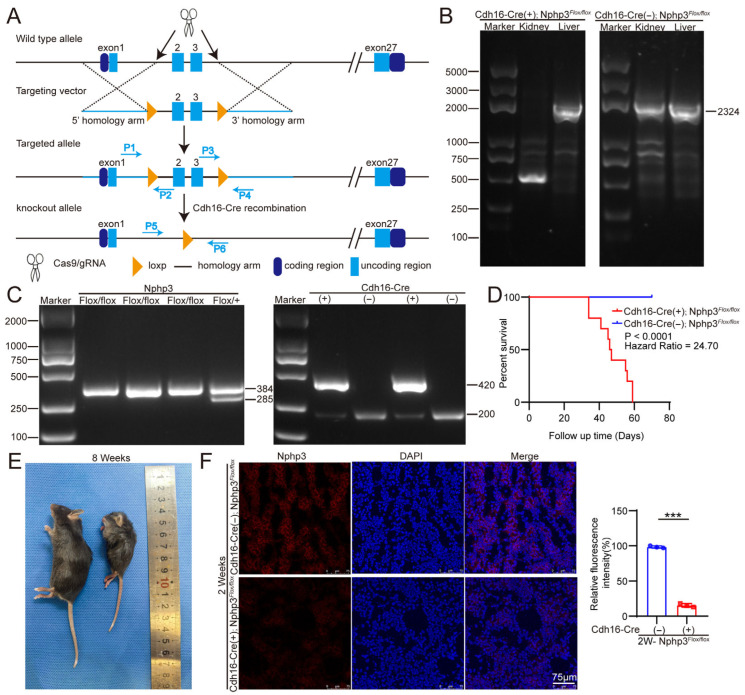 Figure 1
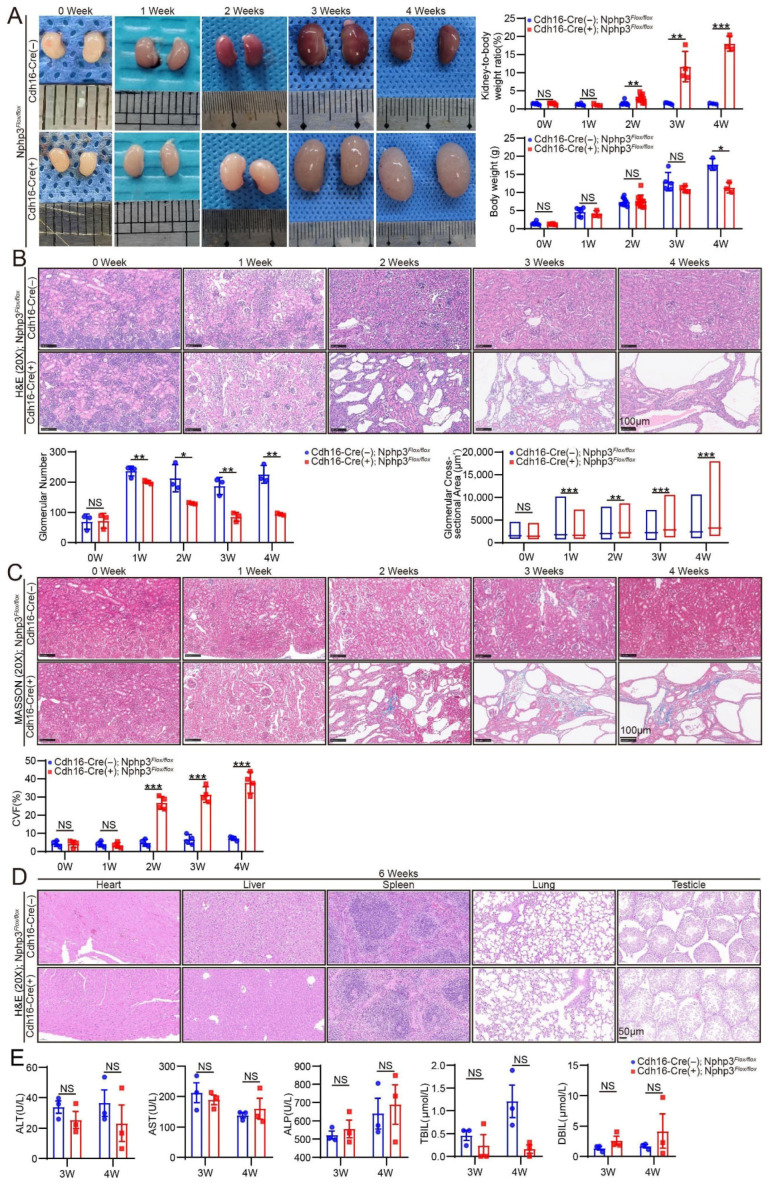 Figure 2
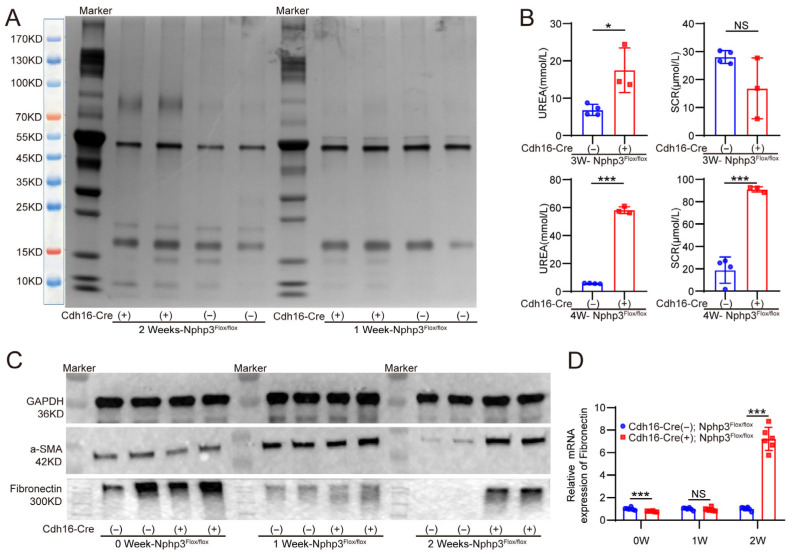 Figure 3
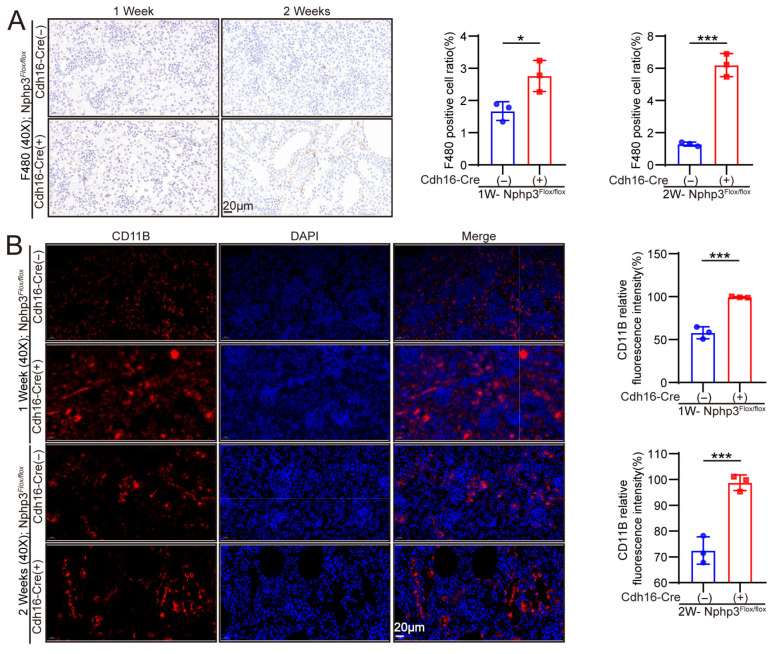 Figure 4
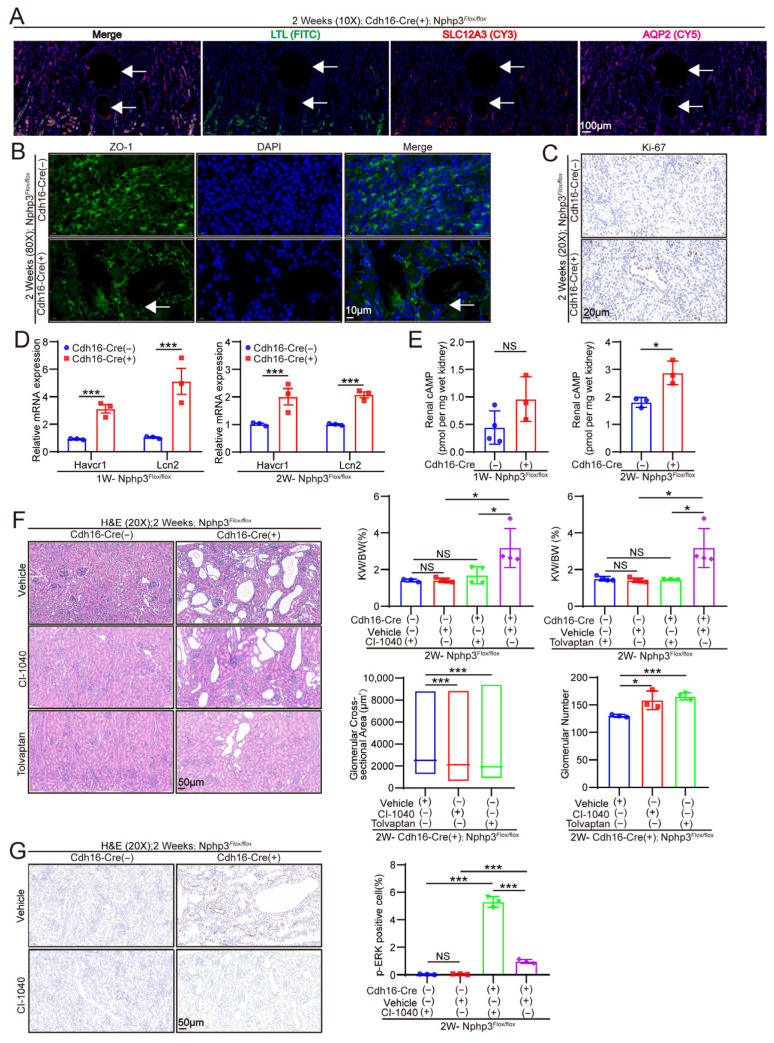 Figure 5
Peer Reviews
No public reviews on file for this paper yet. If you reviewed it on a platform where reviews are public (OpenReview, ICLR, NeurIPS, ICML), you can paste yours below so the community can read it here.
Videos
No videos yet. Explain this paper in a talk, walkthrough, or lecture? Add one.
Taxonomy
TopicsGenetic and Kidney Cyst Diseases · Biomedical Research and Pathophysiology · Cellular transport and secretion