ABT Promotes Adventitious Root Formation in Mulberry Cuttings by Coordinating Hormonal Homeostasis and Defense Priming
Zhen Qin, Tiantian Wang, Ziyi Song, Hao Dou, Chaobing Luo, Xiu Zhang, Huijuan Sun, Bingyang Zhang, Yaru Hou, Shihao Sun, Chenbo Tan, Jin’e Quan, Zhaojun Liu

TL;DR
ABT improves rooting in mulberry cuttings by balancing hormones and preparing for defense, offering insights for better propagation in forest trees.
Contribution
The study reveals how ABT enhances rooting by coordinating hormonal balance and defense priming in mulberry cuttings.
Findings
ABT upregulates GH3 and modulates ERF1/2 to balance auxin and ethylene signaling during rooting.
ABT reduces cell-wall rigidity and activates EXPA11 to promote root primordium emergence.
PR-1 and WRKY/RPM1 suggest ABT primes defense responses while supporting root elongation.
Abstract
Mulberry (Morus alba) is an economically important forest tree species, yet cutting propagation is constrained by low adventitious rooting efficiency. Although ABT, a composite rooting promoter, can improve cutting survival, its molecular basis remains unclear. Here, cuttings of the cultivar Qiangsang 1 were treated with ABT, NAA, or IAA (200–1000 mg/L) and subjected to transcriptome profiling to elucidate how ABT enhances rooting. Hormone-related analyses showed that ABT upregulated GH3 (auxin-amido synthetase) at days 0 and 20, implicating auxin homeostasis. ERF1/2 (ethylene response factors) exhibited a temporal oscillation, with induction at day 10 followed by repression from days 20 to 30, consistent with a shift from developmental programs to defense-related processes. In parallel, JAZ (jasmonate ZIM-domain) genes were downregulated at day 0 and subsequently upregulated; together…
Genes, proteins, chemicals, diseases, species, mutations and cell lines named across the full text — each resolved to its canonical identifier and authoritative record.
Click any figure to enlarge with its caption.
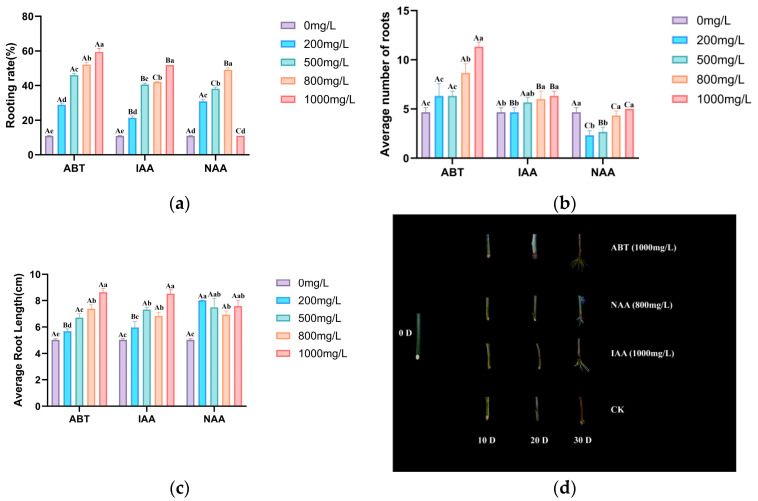 Figure 1
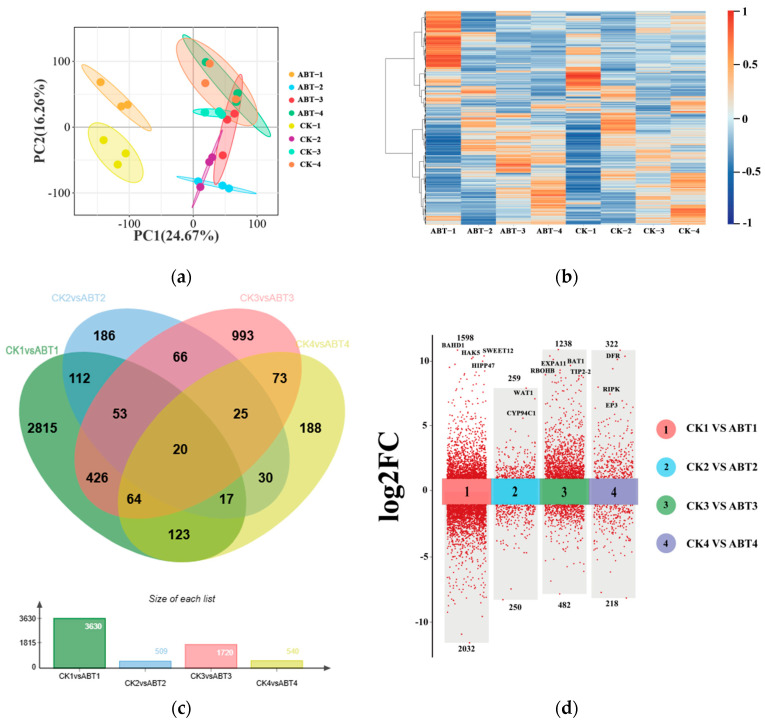 Figure 2
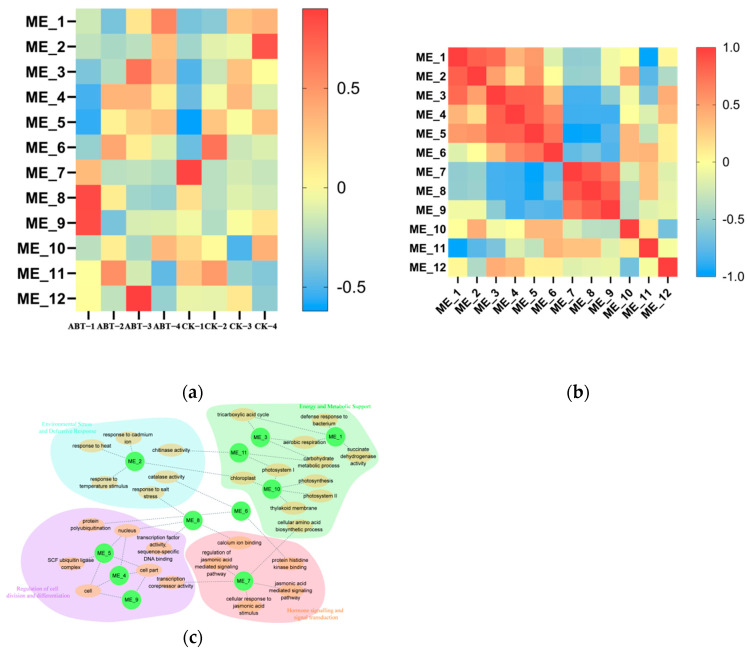 Figure 3
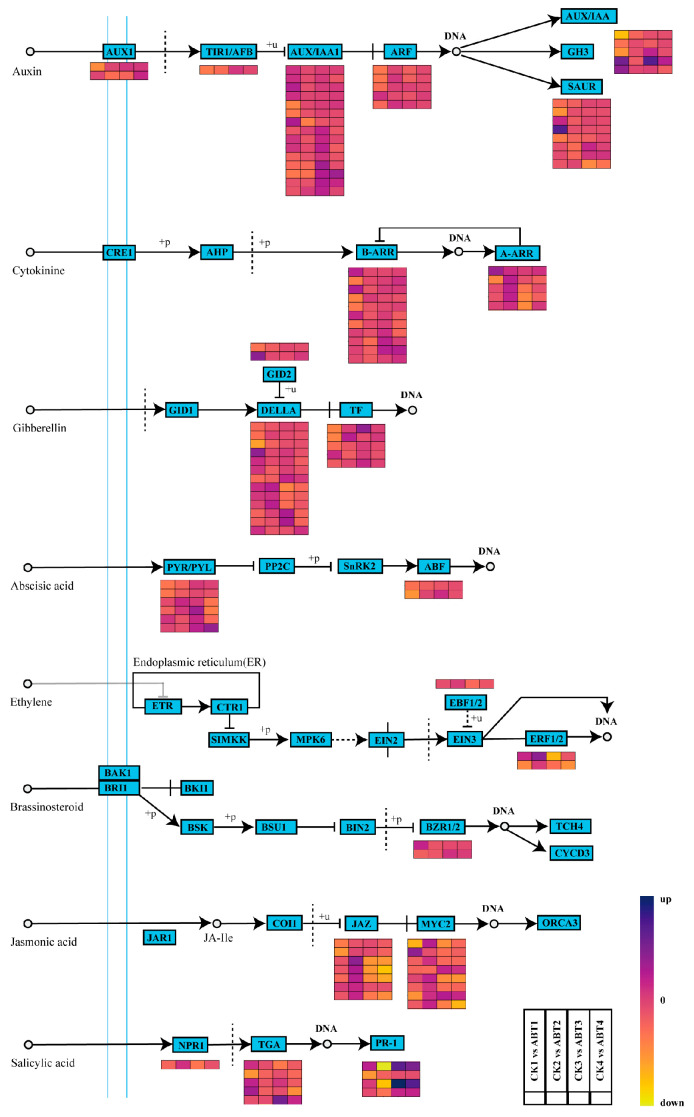 Figure 4
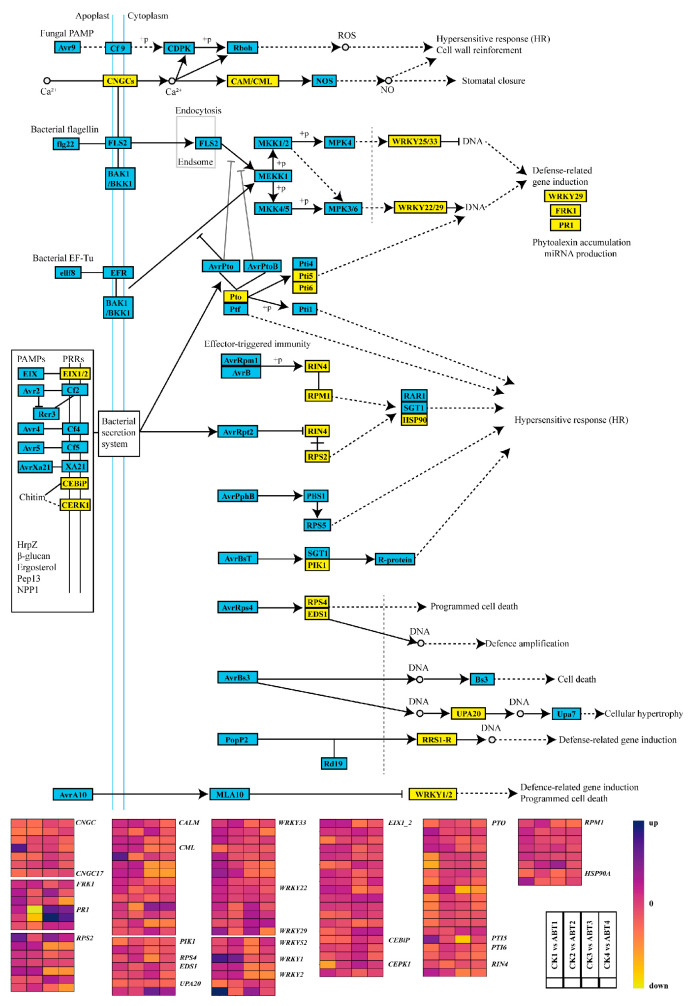 Figure 5
Peer Reviews
No public reviews on file for this paper yet. If you reviewed it on a platform where reviews are public (OpenReview, ICLR, NeurIPS, ICML), you can paste yours below so the community can read it here.
Videos
No videos yet. Explain this paper in a talk, walkthrough, or lecture? Add one.
Taxonomy
TopicsPlant Molecular Biology Research · Plant tissue culture and regeneration · Light effects on plants