A small-molecule stabilizer of the calpastatin–calpain-2 complex restores mitochondrial function and mitigates neurodegeneration
Di Hu, Xiaoyan Sun, Yutong Shang, Kathleen Lundberg, Drew J. Adams, Xin Qi

TL;DR
A new small molecule stabilizes a key protein complex to restore mitochondrial function and reduce neurodegeneration in diseases like Huntington's and tauopathy.
Contribution
A36 is a brain-penetrant molecule that selectively stabilizes the CAST–calpain-2 complex without inhibiting GSK3, offering a novel therapeutic strategy.
Findings
A36 normalizes mitochondrial function and reduces oxidative stress in patient-derived neurons and mouse models.
In vivo, A36 reduces neurodegeneration, mutant huntingtin aggregation, and motor deficits in HD mice.
A36 lowers phosphorylated tau and neuroinflammation in tauopathy mouse models.
Abstract
Mitochondrial dysfunction and dysregulated proteolysis drive Huntington’s disease (HD), tauopathy, and related neurodegenerative disorders. Calpain-2, a Ca2+-activated protease restrained by calpastatin (CAST), is pathologically overactivated, yet no therapies directly target this axis. We identify A36, a brain-penetrant small molecule derived from CHIR99021 that selectively stabilizes the CAST–calpain-2 complex without inhibiting GSK3. A36 acts as a protein-protein interaction stabilizer, enhancing CAST–calpain-2 binding, preventing CAST degradation, and thereby limiting calpain-2 activation and mitochondrial damage. In patients with HD induced pluripotent stem cell–derived neurons and mutant mouse striatal neurons, A36 normalized mitochondrial morphology and membrane potential, reduced oxidative stress, and improved survival. In vivo, A36 displayed favorable pharmacokinetics and…
Genes, proteins, chemicals, diseases, species, mutations and cell lines named across the full text — each resolved to its canonical identifier and authoritative record.
Click any figure to enlarge with its caption.
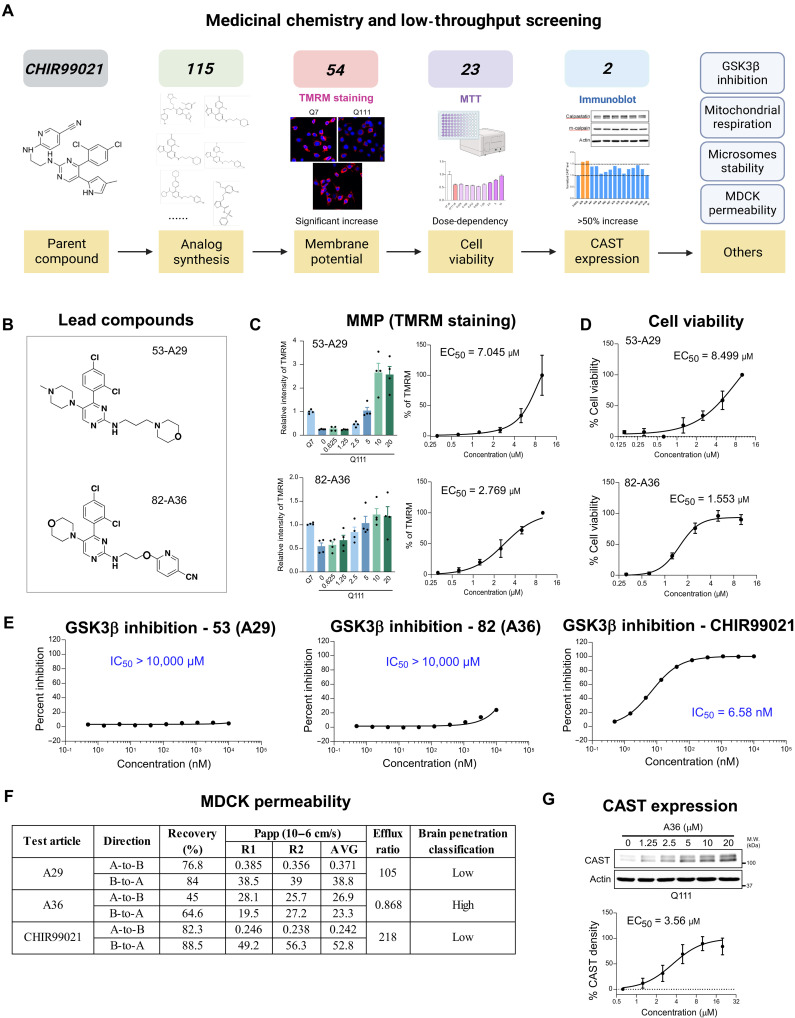 Figure 1
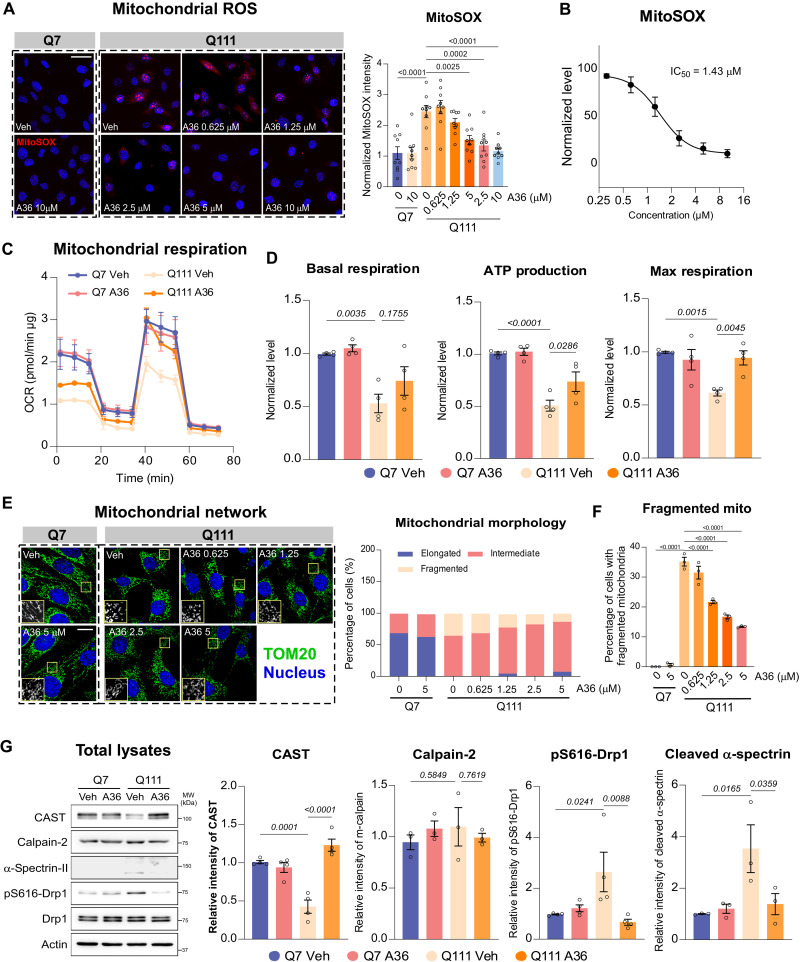 Figure 2
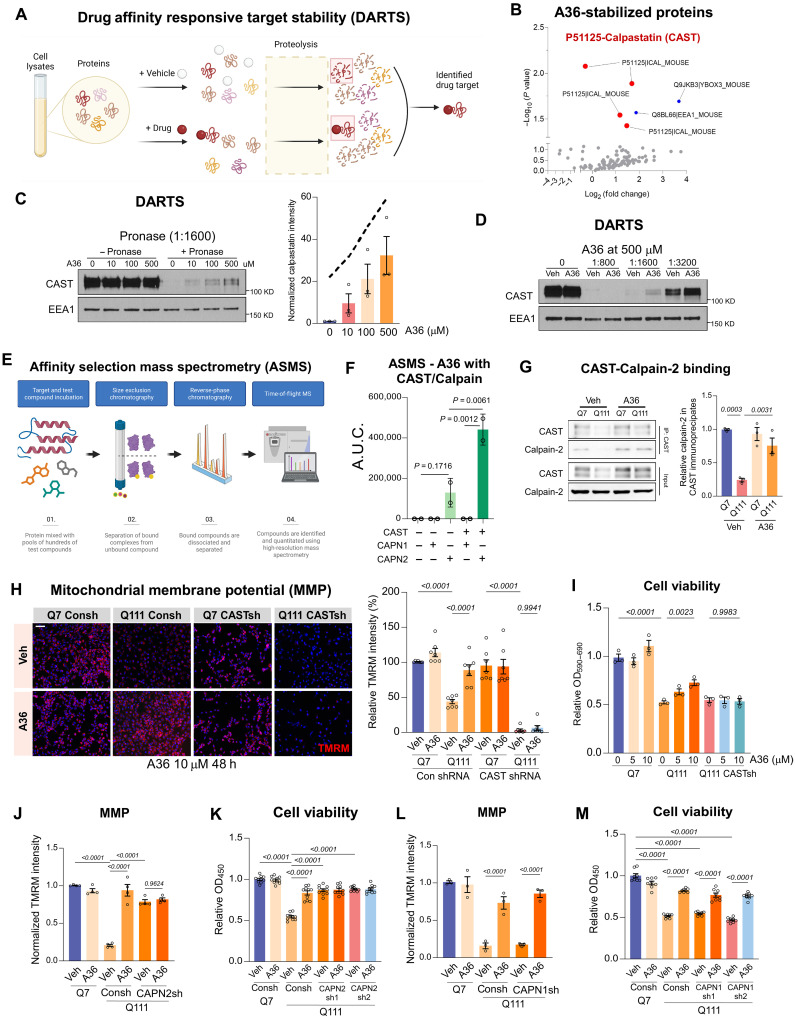 Figure 3
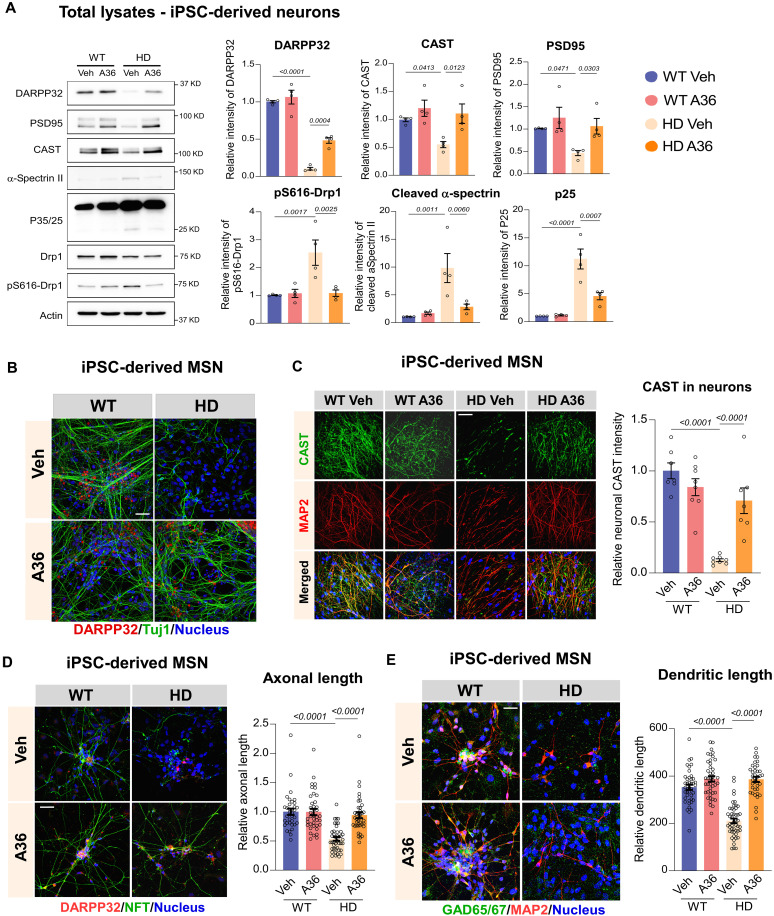 Figure 4
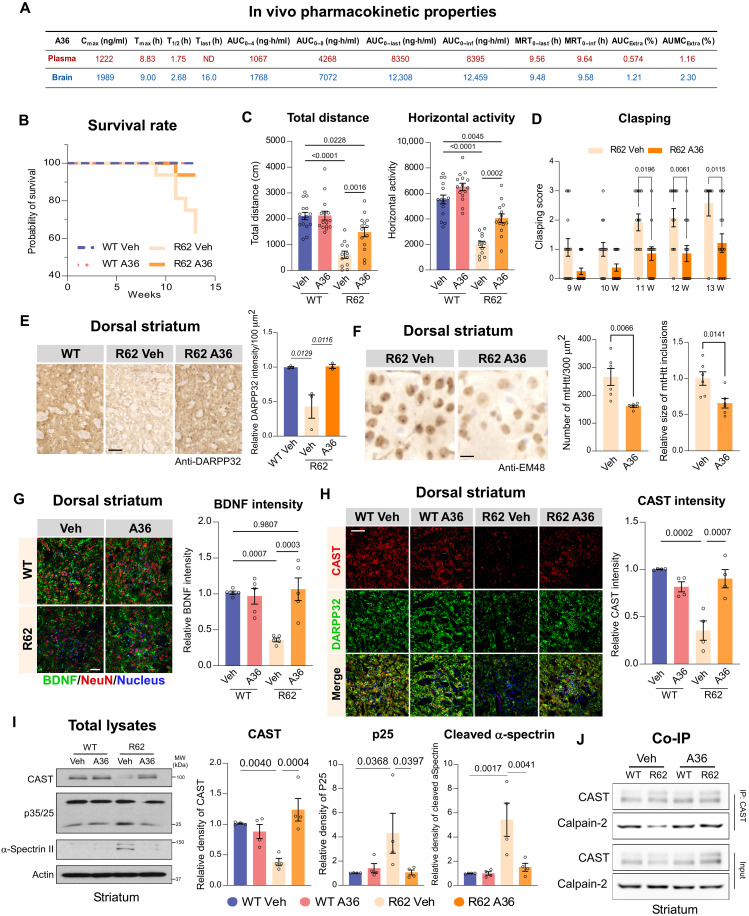 Figure 5
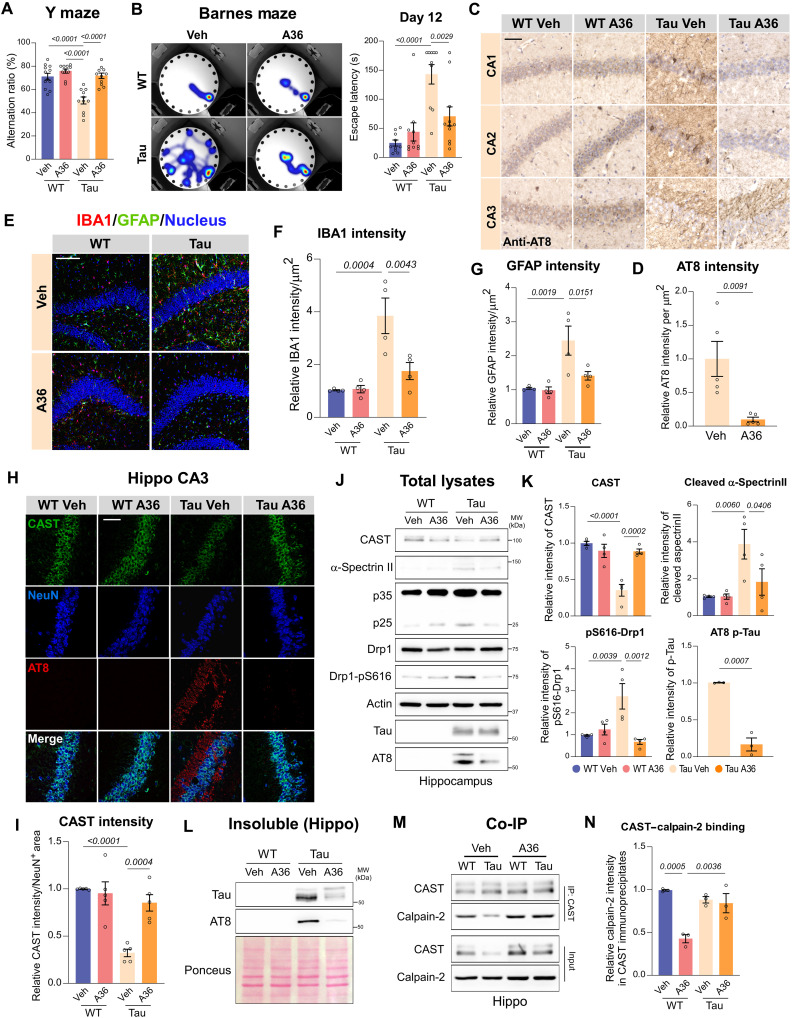 Figure 6
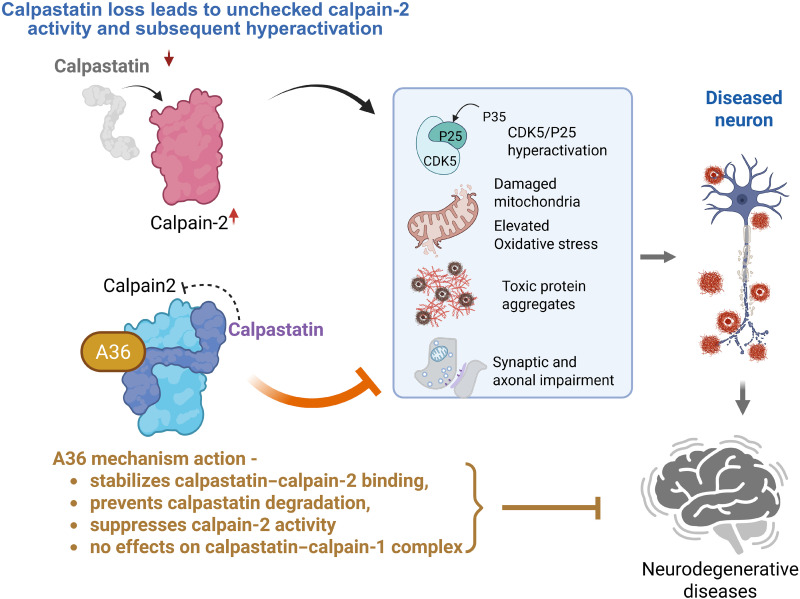 Figure 7
Peer Reviews
No public reviews on file for this paper yet. If you reviewed it on a platform where reviews are public (OpenReview, ICLR, NeurIPS, ICML), you can paste yours below so the community can read it here.
Videos
No videos yet. Explain this paper in a talk, walkthrough, or lecture? Add one.
Taxonomy
TopicsCalpain Protease Function and Regulation · Genetic Neurodegenerative Diseases · Muscle Physiology and Disorders