DNase I as a probe for unpolymerized actin: revisiting a classic tool for nuclear actin research
Anika Göpel, Laura Bauer, Dörthe M. Katschinski, Anke Zieseniss

TL;DR
This paper reviews DNase I as a tool to detect unpolymerized actin in cells, focusing on its use in nuclear actin research and practical considerations for accurate results.
Contribution
The paper revisits DNase I's molecular basis and provides practical guidance for its use in detecting unpolymerized actin in fixed cells.
Findings
DNase I binds to unpolymerized actin and can detect monomeric actin in fixed cells.
Fixation conditions strongly influence DNase I staining outcomes and signal distribution.
Divalent cations and enzymatic activity affect DNase I binding and DNA interactions.
Abstract
Actin is a key component of the cytoskeleton and also plays diverse roles within the cell nucleus. While polymerized F-actin can be detected using a wide range of probes, reliable methods to identify unpolymerized (“G-”) actin in fixed cells are relatively limited. Fluorescently labeled DNase I has long served as a high-affinity probe for monomeric actin and has recently gained renewed interest in nuclear actin research. Here, we briefly review established methods for visualizing actin in the cytoplasm and nucleus and revisit the history and molecular basis of the DNase I–actin interaction that forms the basis for DNase I staining. We then highlight practical considerations for interpreting DNase I fluorescence signals, such as its binding to filament pointed ends, the influence of divalent cations on its enzymatic activity and DNA binding, and protocol-dependent variations. Notably,…
Genes, proteins, chemicals, diseases, species, mutations and cell lines named across the full text — each resolved to its canonical identifier and authoritative record.
Click any figure to enlarge with its caption.
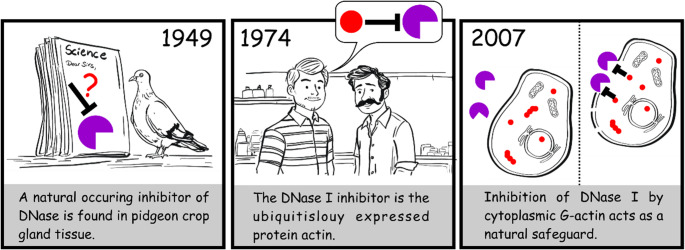 Figure 1
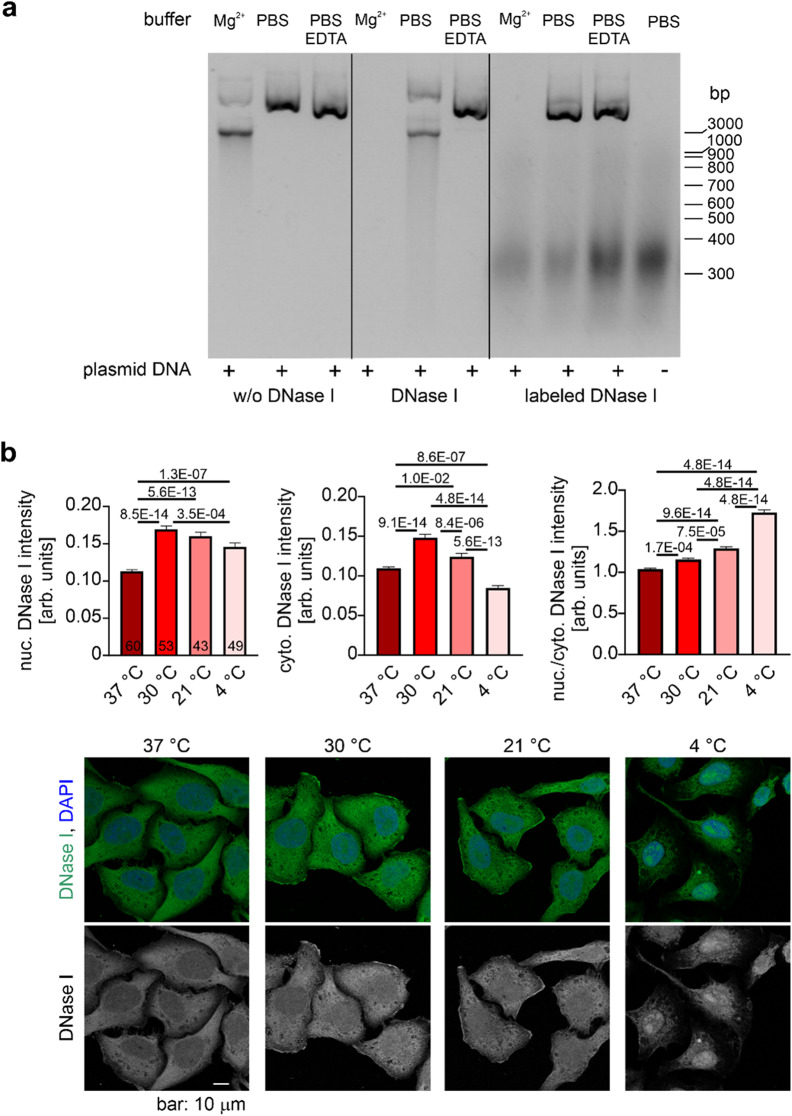 Figure 2
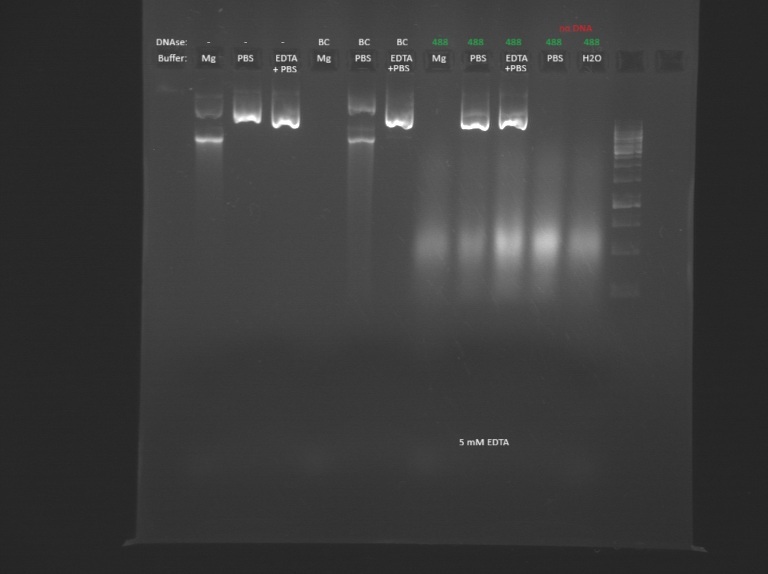 Figure 3
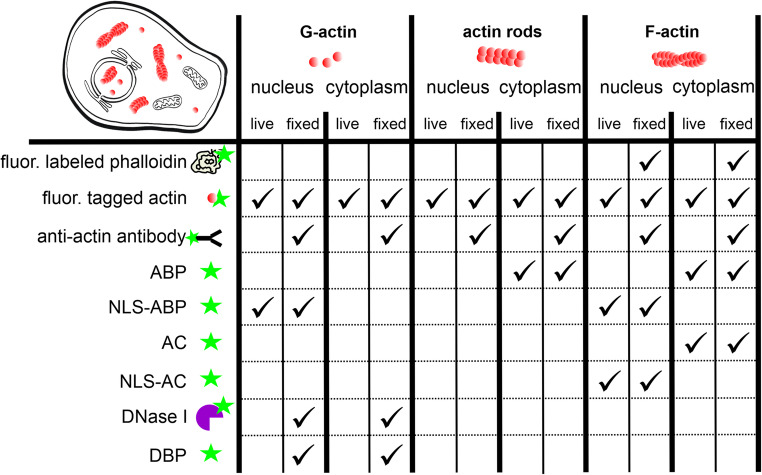 Figure 4
Peer Reviews
No public reviews on file for this paper yet. If you reviewed it on a platform where reviews are public (OpenReview, ICLR, NeurIPS, ICML), you can paste yours below so the community can read it here.
Videos
No videos yet. Explain this paper in a talk, walkthrough, or lecture? Add one.
Taxonomy
TopicsCardiomyopathy and Myosin Studies · Nuclear Structure and Function · Cellular Mechanics and Interactions