Fine-mapping, candidate gene identification, and marker development for the apple scab resistance gene Rvi2
Elena López-Girona, Chris Kirk, Cecilia H Deng, Anže Švara, Awais Khan, Vincent G M Bus, David Chagné, Richard K Volz

TL;DR
Researchers identified a key gene region in apples that provides resistance to scab disease and developed a marker to help breed resistant apple varieties.
Contribution
The study fine-mapped the Rvi2 resistance gene and identified a retrotransposon insertion containing an FPPS gene linked to resistance.
Findings
The Rvi2 resistance gene is located within a 10,041 bp LTR-RT insertion.
An FPPS gene within the retrotransposon is closely linked to Rvi2 and may regulate defense genes.
A structural variant marker derived from this region was validated and used in marker-assisted selection.
Abstract
Breeding elite apple cultivars with scab resistance is a key global goal, as reliance on fungicides is unsustainable. The causal fungus, Venturia inaequalis, evolves rapidly, threatening cultivars with single-gene resistance. Since the 1980s, breeding programmes have introduced novel resistance sources via backcrossing. Here, we generated a haplotype-phased genome assembly of Russian apple R12740-7A and an Oxford Nanopore assembly of the Rvi2-resistance accession TSR34T15, enabling detailed dissection of the Rvi2 resistance locus. Fine-mapping using a ‘Royal Gala’ × TSR34T15 segregating family delimited Rvi2 to a narrow genomic interval, within which we identified a 10 041 bp long terminal repeat retrotransposon (LTR-RT) insertion—an insert-based structural variant (SV) strongly linked with Rvi2. Notably, this LTR-RT harbours an FPPS gene, a member of the farnesyl…
Genes, proteins, chemicals, diseases, species, mutations and cell lines named across the full text — each resolved to its canonical identifier and authoritative record.
Click any figure to enlarge with its caption.
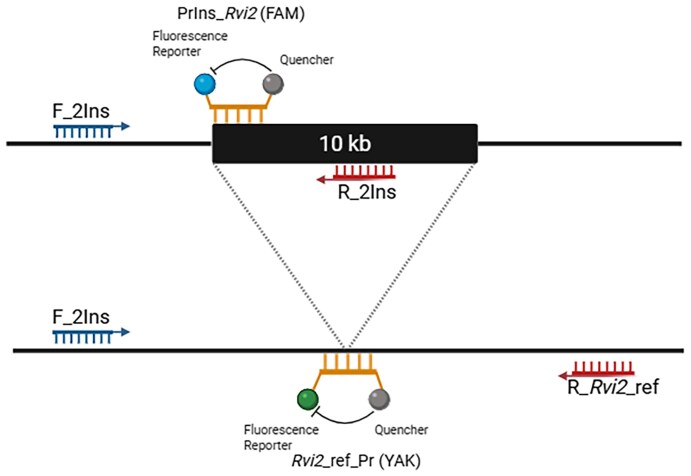 Fig. 1
 Fig. 2
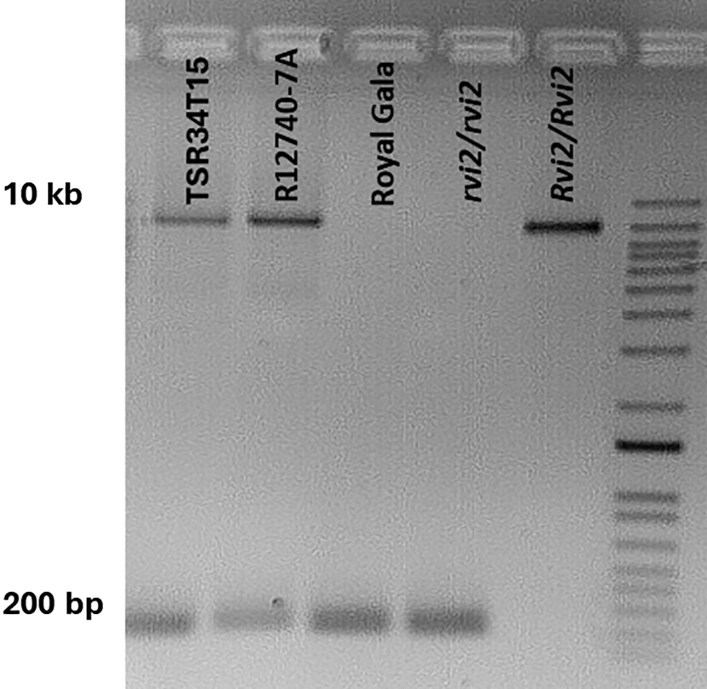 Fig. 3
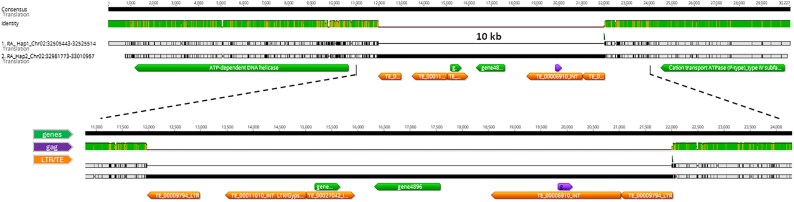 Fig. 4
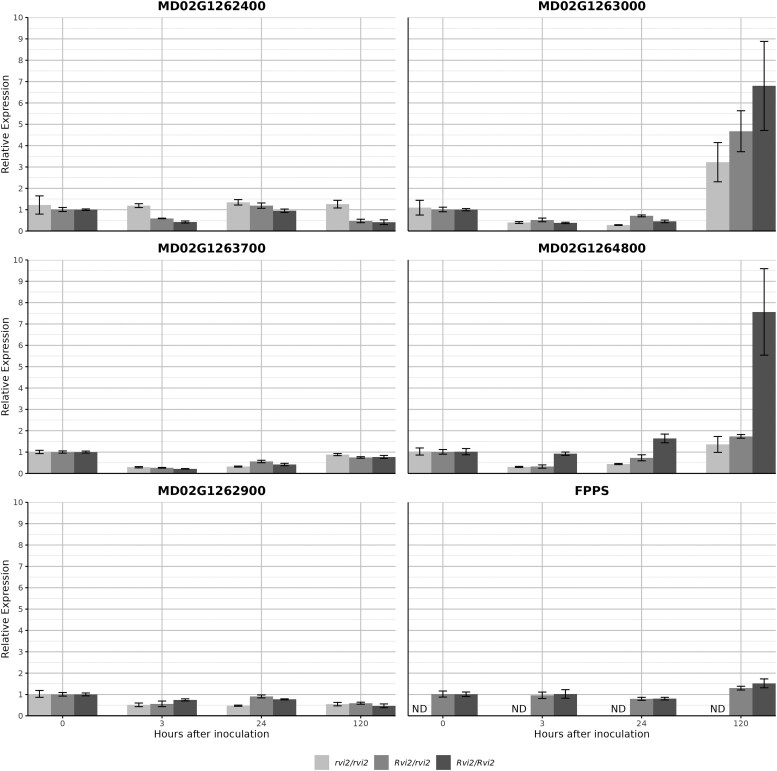 Fig. 5
| Name | Sequence | Tm (°C) |
|---|---|---|
| F_2Ins | GGACTTACCTTTTTTCGGCTTATC | 61.9 |
| R_ | CCAGGTAGACGTGATTGTGAG | 61.9 |
| R_2Ins | CAACACCTTACGGAGATCGAATC | 62.6 |
|
| CGTC | 64.8 |
| PrIns_ |
| 67.1 |
| Female parent | Male parent | No. of seedlings | Segregation | ||||
|---|---|---|---|---|---|---|---|
| Total | R | S | 0 | χ2 |
| ||
| ‘Royal Gala' | TSR34T15 | 361 | 159 | 195 | 7 | 3.661 | 0.055 |
| Selection A ( | ‘Royal Gala' | 110 | 50 | 60 | 0 | 0.90909 | 0.340 |
| Metric | Rhap1 | Rhap2 | Rp |
|---|---|---|---|
| No. of seqs | 17 chromosomes + 467 contigs | 17 chromosomes + 455 contigs | 17 chromosomes + 79 contigs |
| N50 | 39 037 833 | 38 314 341 | 37 988 491 |
| Shortest | 10 351 | 11 771 | 23 137 |
| Longest | 14 330 285.00 | 14 127 199.00 | 14 330 285.00 |
| Total length | 683 574 724.00 | 655 742 921.00 | 682 154 938.00 |
| LAI | 21.30 | 21.00 | 22.00 |
| Count of genes | 50 270 | 48 426 | 49 541 |
| mRNA | 57 150 | 55 115 | 55 902 |
| rRNA | 89 | 12 | 92 |
| tRNA | 1016 | 421 | 1010 |
| % genome that is exons | 9.43 | 9.42 | 9.28 |
| % genome that is genes | 15.74 | 15.96 | 15.41 |
| % genome that is introns | 10.03 | 10.31 | 9.57 |
| BUSCO eudicots n:2326 | C:96.1% [S:50.9%, D:45.2%], F:1.0%, M:2.9% | C:96.0% [S:52.0%, D:44.0%], F:0.9%, M:3.1% | C:95.7% [S:51.7%, D:44.0%], F:1.2%, M:3.1% |
| BUSCO embriophyta n:1614 | C:96.5% [S:52.9%, D:43.6%], F:1.2%, M:2.3% | C:96.3% [S:53.2%, D:43.1%], F:1.1%, M:2.6% | C:95.7% [S:53.5%, D:42.2%], F:1.5%, M:2.8% |
| Marker | Position | Genotype | ||||||||||
|---|---|---|---|---|---|---|---|---|---|---|---|---|
|
| 30 748 692 |
|
| m | m | m | m | m | m | m |
| m |
|
| 30 960 778 |
|
|
| m | m | m | m | m | m |
| m |
|
| 31 055 136 |
|
|
| m | m |
|
| m | m | m | m |
|
| 31 573 921 |
|
|
|
|
|
|
|
|
| m | m |
| SSR_MDC016328_315 | 31 630 783 |
|
|
|
|
| m | m | m | m | m | m |
| AHI15IL | 31 686 648 |
|
|
|
|
| m | m | m | m | m | m |
|
| 31 730 000 |
|
|
|
|
| m | m | m | m | m | m |
|
| 31 777 875 |
|
|
|
|
| m | m | m | m | m | m |
|
| 31 780 921 |
|
|
|
|
| m | m | m | m | m | m |
|
| 31 934 769 | m | m | m | m | m |
|
| m |
|
|
|
|
|
|
|
|
|
|
|
|
|
|
|
| |
- —New Zealand
- —Ministry of Business, Innovation and Employment (MBIE)10.13039/501100004629
- —Strategic Science Investment Fund (SSIF)
Peer Reviews
No public reviews on file for this paper yet. If you reviewed it on a platform where reviews are public (OpenReview, ICLR, NeurIPS, ICML), you can paste yours below so the community can read it here.
Videos
No videos yet. Explain this paper in a talk, walkthrough, or lecture? Add one.
Taxonomy
TopicsFungal Plant Pathogen Control · Plant Disease Resistance and Genetics · Plant Physiology and Cultivation Studies
Introduction
Apple scab, caused by the fungus Venturia inaequalis, is a major disease of apple (Malus domestica) and requires intensive fungicide management. Breeding elite cultivars with scab resistance is the preferred long-term strategy to reduce pesticide use and control the disease. However, resistance can be overcome by rapid evolution of the pathogen’s virulence (Caffier et al., 2014), which can accumulate through its annual sexual cycle, posing a significant threat to current cultivars that predominantly rely on single-gene resistance (Bastiaanse et al., 2016). Therefore, developing elite cultivars with multiple resistance genes as well as desirable fruit qualities is a high priority for pome fruit breeding programmes worldwide.
To date, 19 resistance genes for V. inaequalis (Rvi genes) have been described (Patocchi et al., 2020; Khan and Korban, 2022; Khan et al., 2024). However, candidate genes have been identified only for Rvi1, Rvi6, Rvi12, Rvi15, Rvi17, and Vhc1 (Parisi et al., 1993; Belfanti et al., 2004; Malnoy et al., 2008; Bus et al., 2009, 2011; Joshi et al., 2011; Jänsch et al., 2014; Schouten et al., 2014; Cova et al., 2015; Padmarasu et al., 2018; Papp et al., 2020; Švara et al., 2024). Among these, only Rvi6 (Vf) and Rvi15 (Vr2), recently shown to be the same gene as Rvi4 (Vh4) (Peil et al., 2023), have been functionally validated as a receptor kinase and a Toll Interleukin-1 Receptor–Nucleotide-Binding Site–Leucine-Rich Repeats (TIR-NBS-LRR) gene, respectively (Bus et al., 2011; Padmarasu et al., 2018).
The apple breeding programme at the Bioeconomy Science Institute, New Zealand (formerly Plant & Food Research and HortResearch), began developing scab-resistant cultivars in the early 1980s by introducing founders carrying Rvi6 resistance (Peil et al., 2023). This led to the release of two cultivars carrying only this resistance gene, namely ‘PremA34’ and the open-release ‘PremA25’. However, many scab resistance genes, including Rvi6, show differential interactions with pathogen races: some virulences persist over time while others have emerged more recently (Parisi et al., 1993; Xu et al., 2008; Caffier et al., 2014; Papp et al., 2020; Patocchi et al., 2020; Peil et al., 2023). To address this, and to identify new resources of disease resistance, a pre-breeding programme was launched at the Institute in 1993 to identify new sources of disease resistance, leading to the introgression and pyramiding of multiple resistance genes through backcrossing (Bus et al., 2000). Developing more durable resistance via gene pyramiding requires genetic mapping of resistance loci (Williams and Kuc, 1969) and the validation of markers for marker-assisted selection (MAS) (Khan and Korban, 2022; Khan et al., 2024).
The Rvi2 (Vh2) gene was first introduced into the Bioeconomy Science Institute breeding programme via pollen from accession PRI 2375-5 of the Purdue–Rutgers–Illinois programme in the USA (Bus et al., 2000), which was used to create family A068. This family was an F_3_ from the non-differential accession OR42T175 (PRI 442-23) (Williams and Kuc, 1969) and an F_5_ of Russian apple R12740-7A (M. pumila), a key source of Rvi4 (Vh4) and Rvi2 for scab resistance in apple breeding programmes worldwide. It also contains Rvi19 (Gardiner et al., 2007) and might have more genes associated with scab resistance (Dayton et al., 1953). The full-sib A068T03T079× A068R03T013 family led to two key selections, A185R09T174 and A185R09T179 (Bus et al., 2005b), with which gene pyramiding with Rvi6 commenced in the Institute breeding programme in 2003 (Volz et al., 2023).
In apple–Venturia interactions, stellate necrosis (SN) is a characteristic resistance phenotype in which browning or necrotic sports radiate outward in a star-shaped or stellate pattern from the infection site, often accompanied by autofluorescence of surrounding epidermal cells when observed under blue-range fluorescence (Bus et al., 2011). The SN-conditioning Rvi2 gene was first mapped to the distal end of linkage group (LG) 2 using two seedling progenies, ‘Sciglo’ × A068R03T057 and ‘Royal Gala’ × TSR34T15. TSR34T15 (PRI 384-1; OR42T173) is an F_2_ selection from Russian apple R12740-7A (Bus et al., 2005a), received as differential host X2250 from Y. Lespinasse, INRAE, Angers, France, and therefore carrying the Rvi2 resistance. Rvi2 mapped above the simple sequence repeat (SSR) marker CH05e03 (Liebhard et al., 2002) and the OPL19 SCAR marker in TSR34T15, but below them in A068R03T057 (Bus et al., 2005b). Later, Jänsch et al. (2015) positioned Rvi2 below the CH05e03 SSR, but above OPL19 SCAR using a ‘Golden Delicious’ × TSR34T15 segregating population (Bus et al., 2005a) and developed two single-nucleotide polymorphism (SNP) markers (FBsnRvi2-7 and FBsnRvi2-8), located ∼1.2 cM from the locus. The SNP FBsnRvi2-7 was later converted into a quantitative PCR (qPCR) assay by Chagné et al. (2019), who reported co-segregation with Rvi2 in the tested germplasm. However, the 1.2 cM distance suggests that these markers from Jänsch et al. (2015) and Chagné et al. (2019) might not be universally effective for all germplasm, as recombination could occur within the targeted locus. Thus, a more accurate, high-throughput, and broadly applicable marker remains necessary for efficient screening and MAS of Rvi2.
Advances in long-read sequencing have made whole-genome sequencing more feasible and accurate, enabling complete assembly and haplotyping, even in heterozygous species such as apple (Zhang et al., 2019; Sun et al., 2020; Khan et al., 2022; Mansfeld et al., 2023). Haplotyped whole-genome assembly methodology detects all variant types, including structural variants (SVs), which is crucial when identifying causative variants for traits, whether they are SNPs or SVs. Resistance genes are often found in tandem clusters, which are prone to gene loss or gain through natural and/or artificial selection (McHale et al., 2012; Barragan and Weigel, 2021). Recombination and unequal crossing-over can generate novel resistance (R) genes that provide fitness advantage against new pathogens. At the same time, in the absence of a pathogen, redundant R genes can be lost to avoid fitness costs. Consequently, R gene clusters are hotspots for SVs owing to their dynamic evolution under changing pathogen pressures. Similar structural diversity patterns have been documented in R gene clusters in Arabidopsis (Botella et al., 1998; Guo et al., 2011; Barragan et al., 2019; Jiao and Schneeberger, 2020), soybean (Ashfield et al., 2012), barley (Muñoz-Amatriaín et al., 2013), and humans (Conrad et al., 2010). In apple, a cluster of 19 copy number variants (CNVs) has been identified at the top of chromosome 2 (Boocock et al., 2015), overlapping with major apple scab resistance loci (Bus et al., 2004, 2005b; Patocchi et al., 2004) such as Rvi4/Rvi15 (Peil et al., 2023). Additionally, Rvi2 is part of a cluster with three other major scab R genes [Rvi2, Rvi11 (Vbj), Rvi8 (Vh8); Jiao and Schneeberger, 2020] along with race-specific QTLs (Bus et al., 2004). Another V. inaequalis resistance cluster is the Vf locus, comprising four R genes (HcrVf1, HcrVf2, HcrVf3, and HcrVf4) (Vinatzer et al., 2001), Vf2ARD (Boudichevskaia et al., 2009), and Vd3 (Soriano et al., 2009). Haplotyped whole-genome assembly enables detection and characterization of such variants and opens new avenues for understanding genetic resistance in apple and other complex genomes.
Here, we fine-mapped the apple Rvi2 locus using long-read sequencing to generate a haplotyped-phased genome assembly of Russian apple R12740-7A, the source of the Rvi2 resistance. An Oxford Nanopore assembly of the Rvi2-resistance accession TSR34T15 was also produced. We identified a long terminal repeat retrotransposon associated with the Rvi2 resistance phenotype, offering a valuable tool for implementing MAS.
Materials and methods
Plant material and scab phenotyping
For the fine-mapping of Rvi2, a segregating F_1_ population of 361 seedlings from a Malus domestica ‘Royal Gala’× TSR34T15 cross was grown in a glasshouse at the Bioeconomy Science Institute, Havelock North, New Zealand (39°40′S, 176°53′E). The seedlings were inoculated with a conidial suspension of Venturia inaequalis isolate MNH120 and incubated as described by Bus et al. (2005b). Disease phenotyping was conducted in the third week post-inoculation using the scale developed by Chevalier et al. (1991), with an additional class for stellate necrosis (SN). The resistance phenotypes were classified as: scab resistant, when SN conditioned by the Rvi2 gene was observed (R = Class 2, SN); scab susceptible, when extensive sporulation occurred (S = Class 4); and asymptomatic (no symptoms = Class 0), probably due to inoculation failure.
To validate the marker assay, trees from 239 advanced selections and commercial apple cultivars within the Bioeconomy Science Institute breeding programme in Havelock North were tested (Supplementary Table S1). Among these, 116 were confirmed to have the Rvi2 resistance gene based on their pedigree and previous observation of leaf SN resistance reactions on 1-month-old seedlings under optimized glasshouse conditions (Bus et al., 2005b), and/or segregation for the SN reaction in progenies produced by crossing with a scab-susceptible parent. For the remaining 123 selections/cultivars, the absence of the Rvi2 gene was assumed because their parents and ancestors were also known to lack it. Additionally, an F_1_ population of 110 seedlings derived from a cross between selection A (an Rvi2 + Rvi6 Bioeconomy Science Institute breeding selection) and ‘Royal Gala’ was genotyped and phenotyped for Rvi2 resistance as previously described (Bus et al., 2005b).
Genotyping and genetic linkage mapping
SNP array
Genomic DNA was extracted from leaves of 188 out of the total of 361 seedlings and progenitors from the ‘Royal Gala’ × TSR34T15 cross using a NucleoSpin®96 Plant II Kit (Macherey-Nagel). The DNA quality was checked using Nanodrop 1000 (ThermoFisher Scientific), quantified using PicoGreen^®^ (Invitrogen) on an Infinite^®^ 200 PRO plate reader (Tecan), and then hybridized to the International RosBREED SNP Consortium (IRSC) apple 8k SNP array v1 (Chagné et al., 2012), following the Illumina Infinium^®^ HD Assay Ultra protocol. The array was scanned using an Illumina HiScan, and the Genotyping Module of the Illumina GenomeStudio™ software was used to normalize the sample intensity values, transform them into allele calls, and perform genotype clustering and filtering. The automatic genotype clustering mode determined the cluster positions for AA, AB, and BB genotypes for each marker. Markers that showed more than three well-defined clusters (probably because of the annealing to paralog genomic regions) were removed. To ensure high-quality SNP calling, stringent quality parameters were applied: GenCall ≥0.15, GenTrain score ≥0.50, minor allelic frequency (MAF) ≥0.15, and call rate ≥80%. Manual editing was performed for markers showing significant (P<0.05) deviations from the expected Mendelian ratios or for which one of the parental genotypes was missing.
Linkage map construction
A genetic linkage for the Rvi2 resistant parent TSR34T15 derived from the segregating F_1_ ‘Royal Gala’ × TSR34T15 population was constructed using JoinMap v5.0 (Stam, 1993), prioritizing the use of the backcross-type markers (ab × aa) over the intercross markers (ab × ab). Linkage groups were determined with a minimum LOD score of 5, and map distances were calculated using the Kosambi function (Kosambi, 1943; Vinod, 2011). The resulting genetic linkage map was visualized with MapChart v2.32 (Voorrips, 2002).
Genome sequencing of Russian apple R12740-7a and TSR34T15
Sample collection and DNA isolation
Intact, young, fully expanded leaves (20 g) were collected from Russian apple (M. pumila) R12740-7A and its F_2_ selection derivative TSR34T15 for sequencing as they both carry the Rvi2 locus. Samples for R12740-7A were obtained from the research orchard at the USDA ARS Plant Germplasm Resources Unit at Cornell AgriTech in Geneva, NY, USA, while TSR34T15 samples were collected from the orchard at the Bioeconomy Science Institute, Havelock North, New Zealand. For TSR34T15, nuclear genomic DNA was extracted from isolated nuclei as described previously (López-Girona et al., 2020). The R12740-7A samples were shipped on dry ice to the DNA Sequencing and Genotyping Center at the University of Delaware, USA, where high-molecular-weight DNA was extracted.
Genome sequencing and assembly of TSR34T15
The extracted nuclear genomic DNA (∼45 µg) was sent to the Biomolecular Resource Facility at the John Curtin School of Medical Research (Australian National University, Canberra) for Oxford Nanopore PromethION sequencing. After purification with AMPure XP beads (0.3 volume ratio; Beckman Coulter, Inc.), ∼7.4 µg of DNA was used to prepare a library with a SQK-LSK110 Kit (Oxford Nanopore Technologies, ONT). The final library had a concentration of 28.6 ng µl^−1^ (686.40 ng of DNA molecules), a mean size of 59.4 kb and 17.51 fmol, and was sequenced on a single flow cell (FLO-PRO002) for 1d 19 h, and 50 min, with base-calling performed by Guppy (v5.0.7; ONT).
Quality assessment was conducted before and after base-calling using MinIONQC (Lanfear et al., 2019) and NanoPlot (De Coster et al., 2018). Reads were corrected with Canu v2.1.1 (Koren et al., 2017) and used to generate 21-mers for genome size and heterozygosity estimates with Jellyfish 2.2.10 (Marçais and Kingsford, 2011) and GenomeScope2 (Ranallo-Benavidez et al., 2020). De novo assembly was performed using Flye v.2.8.3 (Kolmogorov et al., 2019), Shasta v.0.7.0 (Shafin et al., 2020), and Canu v2.1.1. Flye and Shasta assemblies were polished with Medaka (v1.4.3; https://github.com/nanoporetech/medaka) and Racon v1.4.7 (Vaser et al., 2017). Scaffold statistics were produced using the assemblathon_stats_v1.1.pl script (https://github.com/ucdavis-bioinformatics/assemblathon2-analysis) (Bradnam et al., 2013), and genome completeness was assessed with the embryophyte_odb10 (1614 genes) dataset from Benchmarking Universal Single-Copy Orthologs (BUSCO). Contigs were re-sorted into primary and haploid sets using Purge Haplotigs (Roach et al., 2018) (version 1.1.1; settings ‘LOW=5 MID=27 HIGH=72’. The curated assembly was scaffolded with RagTag (Alonge et al., 2022) using alignments against the ‘Golden Delicious’ reference genome (GDDH13v1.1) (Daccord et al., 2017) and the homozygous HFTH1 genome (Zhang et al., 2019) via nucmer (Kurtz et al., 2004) to produce ‘agp’ files, which were then processed with agptools (https://github.com/WarrenLab/agptools) to generate the final assembly. Final quality checks were performed on the assembly, using assemblathon_stats and BUSCO both before and after scaffolding.
Sequencing and phased assembly of Russian apple R12740-7a
High-molecular-weight DNA was used to prepare a SMRTbell library following protocols outlined previously (Khan et al., 2022) and sequenced on a Pacific BioSciences (PacBio) Sequel II platform. Additionally, Illumina Hi-C chromatin conformation capture was performed using a Dovetail Genomics Omni-C Kit, with sequencing on an Illumina NovaSeq 6000 platform (PE150 reads) at the DNA Sequencing & Genotyping Center, University of Delaware’s. HiFi data quality was assessed with FastQC v0.12.1. (https://www.bioinformatics.babraham.ac.uk/projects/fastqc/) and read length distribution was checked with ‘gt seqstat’ in GenomeTools (Alonge et al., 2022). K-mer analysis and heterozygosity estimation were conducted using Jellyfish (Marçais and Kingsford, 2011) and GenomeScope (Ranallo-Benavidez et al., 2020). Genome assembly was performed with hifiasm (Cheng et al., 2021), and gfa files were converted into fasta using awk (Aho et al., 1979) and compressed with pigz (http://zlib.net/pigz). Quality checks followed the AssemblyQC pipeline (Rashid et al., 2024), validating file formats, removing adapters, detecting duplicate sequences, screening contaminants, assessing telomeres, and evaluating completeness using BUSCO (Simão et al., 2015) and LAI (Ou et al., 2018). PacBio adaptor sequences were removed, and contigs classified as Buchnera aphidicola and Aphis gossypii were discarded. Synteny analysis against the HFTH1 genome (Zhang et al., 2019) was done using Ragtag (Alonge et al., 2022), with chromosome-scale scaffolds renamed accordingly. The final assembly was annotated using the GenePal pipeline (https://github.com/Plant-Food-Research-Open/genepal), including genome soft-masking with RepeatMasker (Tarailo-Graovac and Chen, 2009) and a pre-build pan-Malus TE library. Gene prediction utilized homologous amino acid sequences from TAIR10 (https://www.arabidopsis.org/) and the high-quality apple assemblies ‘Honeycrisp’ (Khan et al., 2022), HFTH1 (Zhang et al., 2019), GDDH13v1.1 (Daccord et al., 2017), ‘Hanfu’ (Qin et al., 2023), M. fusca (Mansfeld et al., 2023), M. sieversii, M. sylverstris (Sun et al., 2020), and M. prunifolia (Li et al., 2022) retrieved from GDR (Jung et al., 2014). Functional annotation of gene models was performed using EggNOG-mapper (Cantalapiedra et al., 2021) with the eggNOG database 5.0.2 (Huerta-Cepas et al., 2019).
Variant calling for fine-mapping of the Rvi2 locus
ONT long reads from TSR34T15 were corrected with Canu v2.1.1 (Koren et al., 2017) and ‘Gala’ HiFi reads were obtained from NCBI’s SRA database (SRR12031344; https://www.ncbi.nlm.nih.gov/sra/). Both datasets along with the R12740-7A HiFi reads were aligned to the apple genome GDDH13v1.1 (Daccord et al., 2017) using minimap2 v2.9 (Li, 2018) with a minimum mapping quality of 30 and at least 10 alternate allele observations. Alignments were visualized in IGV (Robinson et al., 2017), and per-nucleotide coverage was calculated with samtools (v1.9) depth (Danecek et al., 2021).
SNPs and short indels were called with Freebayes v1.3.6 (Garrison and Marth, 2012, Preprint) over the Rvi2 locus as defined by flanking markers from the SNP array-based linkage map. Heterozygous variants unique to TSR34T15 (absent in ‘Royal Gala’) were selected using bcftools (Danecek et al., 2021).
Structural variants (deletions, duplications, inversions, insertions, and translocations) in TSR34T15 ONT reads were detected using Sniffles (Sedlazeck et al., 2018) (sniffles -m file.bam –min_support 3 – vcf file.vcf), and variants within the refined Rvi2 locus were selected using the bcftools software (Danecek et al., 2021).
Marker development for fine-mapping the Rvi2 locus
SNP markers
SNPs that were heterozygous in TSR34T15 and homozygous in ‘Royal Gala’ against the ‘Golden Delicious’ genome GDDH13v1.1 (Daccord et al., 2017) were screened within the Rvi2 region. Primer pairs for high-resolution melting (HRM) analysis were designed as described by Chagné et al., (2008). PCR reactions (10 µl total volume) contained 20 ng genomic DNA (extracted via the CTAB method; Doyle and Doyle, 1987), 2.5 mM MgCl_2_, 200 nM of each primer, and 1× HRM master mix (Roche). These were run on a LightCycler^®^ 480 (Roche Diagnostics) following the PCR programme outlined in López-Girona et al. (2021). Initially, the parental accessions of the ‘Royal Gala’ × TSR34T15 cross were screened, and the identified polymorphic markers were then applied to 173 of 361 seedlings to fine-map the Rvi2 locus.
SSR markers
The ‘Royal Gala’ × TSR34T1 population was screened with SSRs markers, including the CH05e03 marker (Liebhard et al., 2002) and the newly developed marker SSR_MDC016328_315, and the SNP_based AHI15IL TaqMan™ assay (Chagné et al., 2019) derived from the SNP Rvi2-7_W242 (Jänsch et al., 2015). PCR conditions were as described by López-Girona et al. (2021).
INDEL markers
To explore the associations between two specific long terminal repeat retrotransposon (LTR-RT) insertions (7110 bp at Chr02_31670599 and 10 041 bp at Chr02_31730132) and the Rvi2 resistance, we analysed ‘Royal Gala’, TSR34T15, 16 seedlings from their cross (nine susceptible and seven resistant), and R12740-7A. Long-range PCRs were carried out using the following specific primer pairs. For the start of the 7110 bp insertion, 5′-ACCATAGACTTCTGAGGAAT-3′ and 5′-CGATTGCGTGATGATATG-3′; at the end, 5′-CCAACACGTAGACATTGGA-3′ and 5′-GCACTCTTGTGAATGCATAT-3′. For the start of the 10 041 bp insertion, 5′-TCGGATTCTCTCTTCAGTCT-3′ and 5′-CCTTCAAAGATCAAGTCCCA-3′; at the end, 5′-CTTGATCTTGAAGTGGTGGA-3′ and 5′-ACGTGATTGTGAGAAATGGA-3′. The PCR reactions (total volume 10 µl) contained 3 µl 5× PS GXL Buffer, 1.2 µl dNTP mix (2.5 mM), 0.2 µl of each primer (10 µM), template DNA (10 ng µl^–1^), 0.3 µl PrimerSTAR^®^ GXL Taq polymerase (2.5 U µl^–1^), and 8.1 µl sterile water. Cycling conditions were: initial denaturation at 98 °C for 10 s; 30 cycles of 98 °C, 10 s; annealing (53 °C for the 7110 bp insertion, 55 °C for the10 025 bp insertion) for 15 s; extension 68 °C (10 s kb^–1^); and a final extension at 68 °C for 2 min. Amplicons were separated by electrophoresis on 1% agarose in 1× TAE buffer.
High-throughput marker assay for Rvi2
To validate the association between the 10 041 bp (Chr02_31730132) LTR-RT insertion and Rvi2 resistance, we developed a 5′-fluorogenic hydrolysis probe assay (termed Rvi2-ELG-10kb, for Enhanced Locus Genotyping for Rvi2 Resistance) to screen 239 apple selections (Supplementary Table S1), 361 seedlings from the ‘Royal Gala’ × TSR34T15 cross, and 110 seedlings from an Rvi2+Rvi6 Bioeconomy Science Institute breeding selection A (Rvi2+Rvi6) × ‘Royal Gala’ cross. The assay employs two probes, namely ‘PrIns_Rvi2 (FAM)’ that targets the insert by spanning the 5′ reference/insert boundary, and ‘Rvi2ref_Pr (YAK)’ that detects the flanking sequence immediately adjacent to the insert. A primer pair (‘F_2Ins’ and ‘RRvi2ref’) amplifies the reference (lacking the insertion), while ‘F_2Ins’, together with ‘R_2Ins’ amplify the insertion allele, which is detected by the insert probe ‘PrInsRvi2 (FAM)’ (Fig. 1; Table 1). This assay distinguishes the three possible genotypes: resistant homozygous (AA), resistant heterozygous (Aa), and susceptible (aa).
Graphic representation of the Rvi2-ELG-10kb assay. This 5′ fluorogenic hydrolysis probe assay targets a large insert highly associated with Rvi2 resistance using two probes and three primer sequences. The latter consist of one forward-primer (‘F_2Ins’) and two reverse-primer sequences (‘R_Rvi2_ref’ and ‘R_2Ins’). The primer pair ‘F_2Ins’ and ‘R_Rvi2_ref’ amplify the reference genome allele, while ‘F_2Ins’ and ‘R_2Ins’ amplify the insert allele. The ‘PrIns_Rvi2 (FAM)’ probe is specific for the 5′ reference/insert boundary and the ‘Rvi2_ref_Pr (YAK)’ probe is specific for the immediate 3′- and 5′-sequences flanking the insert. The probes are designed so that the reporter fluorophores are on the 5′-end and the quencher is on the 3′-end.
PCR reactions were carried out in a total volume of 5 µl, containing 1× LightCycler 480 Probes Master Mix (Roche Diagnostics), 750 nM of each primer (‘F_2Ins’, ‘R_2Ins’, and ‘R_Rvi2_ref’), and 250 nM of each probe [‘Rvi2ref_Pr (YAK)’ and ‘PrInsRvi2 (FAM)’]. The PCR programme used was: 10 min at 95 °C, followed by 45 cycles of 10 s at 95 °C and 90 s at 60 °C. Reactions were run on BioRad Hard-Shell 480 PCR plates (384-well) sealed with BioRad Microseal ‘C’ Film in conjunction with fluorescence measurements using the Roche LightCycler 480 II System in ‘Dual Color Hydrolysis Probe’ detection format [(FAM (465-510) and VIC/HEX/Yellow555 (533–580) filters] and analysed via the end-point genotyping.
Targeted-sequencing enrichment and de novo assembly of Rvi2-associated 10 041 bp LTR-RT insertion
Long-range PCR was performed with PrimerSTAR^®^ GXL DNA Polymerase (TaKaRa) following the protocol in the ‘Marker development’ section but using 5 min extension time. The 10 041 bp fragment was extracted from a 2% agarose gel using a Qiagen QIAquick Gel Extraction Kit (#QIAG28704). Nanopore sequencing libraries were prepared with a SQK-LSK109 ligation kit (ONT). The workflow began with an end-repair and nickase treatment using 3.5 μl Ultra II end-prep reaction buffer, 1.5 μl Ultra II end-prep enzyme mix (NEB), and 24.5 μl of PCR product (>50 ng μl^–1^ or 50–100 fmol), incubated at 20 °C for 5 min then 65 °C for 5 min. After a bead-based clean-up with AMPure XP beads, sequencing adapters were ligated in a reaction containing 30 μl PCR product, 12.5 μl Ligation Buffer (ONT), 5 μl NEBNext Quick T4 DNA Ligase, and 2.5 μl AMX Adapter Mix (ONT), incubated at room temperature for 10 min. A final clean-up using Long Fragment Buffer (ONT) preceded library elution in 7 μl Elution Buffer (ONT) after a 10 min incubation at 37 °C. Libraries were sequenced on a MinION device using a Flongle Flowcell (R.9.4.1).
Base-calling from FAST5 to FASTQ was performed using Guppy v.6.4.4 (ONT) and Dorado v.0.3.0 (https://github.com/nanoporetech/dorado). Read quality was evaluated using NanoPlot v1.1.1 (De Coster et al., 2018), and BAM to FASTQ conversion was done using samtools v.1.9 (Danecek et al., 2021). Reads were filtered for a minimum length of 5 kb and an average quality ≥10 using seqkit v2.4.0, (Shen et al., 2016). Guppy- and Dorado-derived reads were independently de novo assembled using Canu v.2.1.1 using parameters: minReadLength=2000, contigFilter=“2 0 1.0 0.5 0”, useGrid=false, genomeSize=11k with -nanopore-raw flag. Contigs from both assemblies were pairwise aligned using Geneious Primer^®^ 2022.0.1. Additionally, both sets of base-called reads were aligned to their respective Canu contigs using minimap2 v2.9 (Li, 2018) and visualized with IGV 2.10.0 (Robinson et al., 2017).
Haplotype-based characterization of the Rvi2 locus in the Russian apple R12740-7a genome
To identify the haplotype linked to Rvi2 scab resistance, the de novo-assembled 10 041 bp LTR-RT insertion was aligned to both haplotypes of the R12740-7A genome using the Nucmer (Kurtz et al., 2004). Alignment outputs were filtered with delta-filter and converted to a tab-separated file using show-coords. SyRI (Goel et al., 2019) was then employed to pinpoint the location of the insertion between the two haplotypes.
For further characterization of the insertion, HiFi reads from R12740-7A and ‘Gala’, as well as ONT reads from TSR34T15, were aligned to the R12740-7A haplotype carrying the insertion using minimap2 (Li, 2018). The Rvi2 locus coordinates were defined by BLASTing the flanking marker primer sequences (Rvi2_31 573 921 and Rvi2_31 934 769), against R12740-7A.
Small and structural variants within the Rvi2 locus were called, and candidate variants common to R12740-7A and TSR34T15 but absent in ‘Gala’ were identified using Freebayes v1.3.6 (Garrison and Marth, 2012, Preprint). SnpEff v4.3 (Cingolani et al., 2012) was used to predict the functional impact of these variants, classifying them as low (e.g. synonymous), moderate, or high impact (affecting splice-sites or start or stops codons).
Additionally, resistance genes within the Rvi2 locus were annotated using the GenePal pipeline in both R12740-7A haplotypes and in the ‘Gala’ genome. Genes unique to the R12740-7A haplotypes were identified, and the coding sequences of shared genes were compared using multiple sequence alignment in Geneious prime 2022.01.1 (https://www.geneious.com).
Gene expression analysis
Plant material and inoculation
Seedlings at ∼1 month old from a ‘Royal Gala’ × TSR34T15 cross and from a cross between Rvi2 heterozygous parents were inoculated with V. inaequalis isolate MNH120 at 3×10^5^ conidia ml^–1^. Inoculation was performed via mist spraying and incubation under conditions previously described by Gardiner et al. (1996). Based on the Rvi2-ELG-10kb assays, we selected 15 seedlings that were susceptible (lacking the LTR-insertion), 15 that were heterozygous resistant, and 15 that were homozygous resistant. Each sample consisted of a single young leaf (∼100 mg) from a different seedling. Three biological replicates were collected per genotype during the scab inoculation test. Leaf samples were taken at four time points: just before inoculation (0 h) and at 3, 24, and 120 h post-inoculation. These samples were used for expression analysis (4 time points × 3 genotypes × 3 biological replicates = 36 seedlings).
RNA isolation and cDNA synthesis
The collected leaf samples were snap-frozen in an ethanol–dry ice bath and stored at −80 °C. RNA was extracted using a Spectrum Plant Total RNA Kit (Sigma-Aldrich) with an on-column DNase I digestion step, following the manufacturer’s protocol. RNA concentration and quality were assessed using a Qubit RNA BR assay (ThermoFisher) and capillary electrophoresis using an Agilent DNF-471 RNA Kit (15nt). Samples with a quality score >8 were processed for cDNA synthesis using a Superscript IV Kit (ThermoFisher) with Oligo dT priming. Control reactions with no RNA and no RT were included to monitor contamination.
Quantitative real-time PCR analyses
Gene expression analysis was performed using a Roche LightCycler^®^ 480 with Roche SYBR Green 1 Master (Cat. #04707516001). Cycling conditions were 95 °C for 5 min, followed by 45 cycles of 95 °C for 10 s, 64–57 °C (−0.5 °C per cycle) for 10 s and 72 °C for 10 s, with a single acquisition per cycle. Dissociation curve analysis consisted of 95 °C for 5 s, 65 °C for 60 s, and gradual heating to 97 °C with continuous acquisition. The reference and target coding sequences were confirmed by cloning and Sanger sequencing from the seedling background. Intron–exon boundaries were based on the ‘Golden Delicious’ genome GDDH13v1.1 (Daccord et al., 2017). Primers were designed using PrimerQuest (IDT, USA) with at least one primer spanning an intron–exon junction. Negative controls (no cDNA and no RT) were included, and gene expression was normalized using two or three reference genes: LIPID TRANSPORT LIKE-1 (LTL1; MDP0000173025), PHYTOCHROME-ASSOCIATED PROTEIN PHOSPHATASE-3 (MDP0000060858), and CASEIN KINASE SUBUNIT-4 (CKB4; MDP0000095375) (Bowen et al., 2014). Primer efficiencies and relative expression values for three technical replicates per sample were calculated using the Roche 480 Light Cycling software.
The effects of two factors on candidate gene expression were analysed, namely time after V. inaequalis inoculation (0, 3, 24, and 120 h) and the presence of the Rvi2 allele (homozygous/heterozygous by Rvi2-ELG-10kb assay). A two-way ANOVA was performed in R v.2023.12.1 to assess the effects on normalized expression levels. Log-transformation ensured normality and homoscedasticity, with residuals checked using the ‘predictmeans’ R package (http://dx.doi.org/10.32614/CRAN.package.predictmeans). Pairwise comparisons against the baseline (0 h) were conducted using multivariate t-tests and Dunnett’s test.
For genes with non-detectable expression, a binomial generalized linear model was applied, considering Rvi2 allele presence and time as fixed factors. Expression data were visualized using the R package ggplot2 (Wickham, 2016).
Results
Scab phenotyping
Following inoculation with the V. inaequalis isolate MNH120, both the ‘Royal Gala’ × TSR34T15 and the Selection A (Rvi2 + Rvi6) × ‘Royal Gala’ populations, segregating for Rvi2 and Rvi2+Rvi6, respectively, exhibited the distinct SN resistance response characteristic of Rvi2. In the ‘Royal Gala’ × TSR34T15 population (n=361), 159 individuals were classified as resistant, 195 as susceptible, and seven as asymptomatic (Table 2). In the Selection A (Rvi2+Rvi6) × ‘Royal Gala’ population (n=110), 50 showed SN for Rvi2, and 60 were susceptible or showed chlorotic symptoms conditioned by Rvi6. Chi-square analysis confirmed that Rvi2 resistance segregation in both populations followed a 1:1 resistant/susceptible ratio (P < 0.05 ), consistent with the monogenic inheritance of Rvi2 as previously reported (Bus et al., 2005b).
Linkage map construction using the ‘Royal Gala’ × TSR34T15 cross
A subset of 188 seedlings from the total population of 361 of the ‘Royal Gala’ × TSR34T15 progeny were selected, comprising 90 resistant, 94 susceptible, and four asymptomatic individuals together with both parental cultivars, and were genotyped using the International RosBREED (IRSC) apple 8k SNP array v1 (Chagné et al., 2012), which includes 7867 Malus and 921 Pyrus SNPs. Among the SNPs identified, 646 and 515 were polymorphic and segregated in a backcross fashion in ‘Royal Gala’ and TSR34T15, respectively. Additionally, 1748 SNPs were heterozygous in both parents. The polymorphic markers were assigned to the expected 17 linkage groups (LGs), with LG2 in TSR34T15 containing 73 loci, including the Rvi2 trait locus, spanning a genetic distance of 95.3 cM (Fig. 2). The Rvi2 locus was flanked by markers RosBREEDSNP_SNP_GA_30846235_Lg2_263337_MAF20_263337_exon_2 and RosBREEDSNP_SNP_CT_34033084_Lg2_RosCOS1019_MAF20_MDP0000184243_exon. This region corresponds to a physical interval between 27 962 381 bp and 32 257 043 bp on the ‘Golden Delicious’ genome (GDDH13v1.1; Daccord et al., 2017).
Linkage group 2 of TSR34T15, an F2 selection from Russian apple R12740-7A (Malus pumila), showing the genetic map position of the Rvi2 locus. The map was constructed using polymorphic SNP markers from the International RosBREED SNP Consortium (IRSC) apple 8K SNP array v1. Genetic distances (cM) are indicated along the linkage group. ‘Indel’ indicates the long terminal repeat retrotransposon insertion associated with Rvi2 in several apple selections.
Genome assembly of Russian apple R12740-7A
A total of 2 697 310 HiFi reads (38 Gb) were generated, with a read N50 of 14 578 nucleotides (NTs) and a maximum read length of 50 031 NTs. Genome assembly metrics are summarized in Table 3, showing the key characteristics of the primary assembly and phased haplotypes. These include the number of scaffolds, scaffold size range, total assembly size, and the N50 values.
The final curated assembly was free of adapters and non-Malus contaminations. It consisted of 17 chromosomes along with unanchored scaffolds in Rhap1 (682.2 Mb, including 11 gaps of 100 NTs each), Rhap2 (655.7 Mb, 10 gaps) and Rp (683.6 Mb, five gaps). Using the eudicots_odb10 database, BUSCO completeness scores were 98.6, 99.0, and 98.9% for Rhap1, Rhap2, and Rp, respectively. The LAI values were 21.0 for Rhap1, 22.0 for Rhap2, and 21.3 for Rp.
Gene annotation was performed using GenePal and is summarized in Table 3.
Genome assembly of the TSR34T15 Rvi2-resistance accession
We generated a de novo genome assembly for TSR34T15, which is a Rvi2 scab differential host (Bus et al., 2005b). A total of 2.29 million ONT raw sequencing reads were generated, with an average length of 27.12 kb and an N50 of 36.34 kb. Approximately 80% of the reads exceeded 10 kb, providing a total of 62.29 Gb of sequence data. After read correction, 667 233 reads were retained, with an average length of 43.23 kb and an N50 of 45.54 kb, resulting in 28.88 Gb of data. A 21-mer analysis showed 56.63-fold genome coverage, with an estimated genome size of 510 Mb, a heterozygosity rate of 0.69% and a repeat content of 41.56%.
We compared the performance of three widely used genome assemblers, Flye, Shasta, and Canu, using Canu-corrected ONT data. Raw Flye and Shasta assemblies were polished with ONT reads using Medaka or Racon. Assembly statistics are summarized in Supplementary Table S2. Medaka polishing slightly improved the BUSCO scores for the raw Flye assembly, reducing its size by ∼13 Mb without altering scaffolds numbers, while having no effect on the raw Shasta assembly. In contrast, Racon polishing produced shorter assemblies for both Flye and Shasta, with lower BUSCO scores than Medaka. Canu generated the longest assembly (1.62 Gb across 8664 contigs) with the highest N50 (187.24 kb) and BUSCO completeness (98.8%), making it the most complete and accurate choice for further analysis. The Canu assembly was then scaffolded into 17 chromosomes using Ragtag (Alonge et al., 2022), aligning it with the ‘Golden Delicious’ GDDH13v1.1 (Daccord et al., 2017) and HFTH1 genomes (Zhang et al., 2019). The scaffolded genomes measured 560 Mb and 635 Mb, respectively, with BUSCO completeness scores of 83.4% and 88.1%, respectively. The final TSR34T15 assembly, based on the HFTH1 genome was selected for its higher completeness and lower missing BUSCO scores (9.4%). It also showed greater contiguity, with an N50 of 34.1 Mb, consolidating half the genome into just six chromosomes.
Fine mapping of the Rvi2 locus
Our analysis of small variants within the Rvi2 locus (27.9 Mb to 32.3 Mb on chromosome 2 of the ‘Golden Delicious’ GDDH13v1.1 genome) identified 2445 in silico SNPs present in TSR34T15 and R12740-7A but absent in ‘Gala’ alignment files. We selected evenly distributed SNPs across the locus as candidates for SNP-HRM-markers. To validate these markers, we tested the corresponding primer pairs in both parents and a subset of the F_1_ ‘Royal Gala’ × TSR34T15 seedlings. Primer pairs that failed to amplify efficiently or did not yield the expected heterozygous genotype in the scab-resistant TSR34T15 parent (consistent with dominant inheritance) were discarded. Six HRM markers with optimal performance and even distribution within the Rvi2 interval were selected for further genotyping. Additionally, we incorporated two previously established SSR markers (CH05e03 and SSR_MDC016328_315) and one TaqMan marker (AHI15IL). These markers were used to genotype 173 F_1_ seedlings.
Recombination was observed in 12 seedlings, with five classified as resistant and seven as susceptible. Re-phenotyping confirmed their correct classification. The recombination break-points localized the Rvi2 genomic region to a ∼303 kb interval (31 630 783 bp to 31 934 769 bp) specifically between marker SSR_MDC016328_315 and marker Rvi2_31 934 769 on the ‘Golden Delicious’ GDDH13v1.1 genome (Table 4). The lower boundary was defined by five susceptible individuals showing recombination between Rvi2_31 473 921 and Rvi2_31 630 783, while the upper boundary was defined by five resistant and five out of seven susceptible individuals showing recombination between Rvi2_31 780 921 and Rvi2_31 934 769.
We identified a total of 156 structural variants (SVs) within the fine-mapped Rvi2 region on TSR34T15 read alignments against the ‘Golden Delicious’ GDDH13v1.1 reference genome (Daccord et al., 2017). Most were deletions (80, 51.28%) and insertions (54, 34.62%) over 20 base pairs. Additionally, we detected translocation break-points (16, 10.26%), inversions (5, 3.21%), and one duplication (0.64%).
The region contains 41 annotated genes in the GDDH13v1.1 genome, including four with predicted functions in plant defence, one with a structural function, 24 involved in metabolism, and 11 of unknown function (Supplementary Table S3). The defence-related genes were MD02G1262400, encoding a Leucine-Rich Repeat Receptor-Like Kinase (LRR-RLK) involved in immune signalling; MD02G1263000, encoding an amino phospholipid ATPase1 (ALA1), also known as a lipid flippase; MD02G1263700, encoding a Tumour-necrosis Receptor-Associated Factor (TRAF) protein, which regulates immune responses; and MD02G1264800, encoding a TIR-NBS-LRR plant resistance gene associated with pathogen recognition and defence activation. Additionally, MD02G1262900, encoding a DNA helicase, although not a resistance gene, contributes to metabolism and can influence plant defence mechanisms.
Among the 156 SVs identified within the Rvi2 locus for the TSR34T15 ONT-read-alignments against the ‘Golden Delicious’ GDDH13v1.1 reference genome, 16 were predicted to affect four of the five annotated genes related to resistance. MD02G1262900 harboured a 9.8 kb upstream insertion with a predicted modifier effect. MD02G1263000 had multiple variants, namely a 51 bp deletion resulting in a high-impact frameshift, a 32 bp downstream insertion with a modifier effect, and a 3649 bp insertion located between this and another gene (MD02G1263100), also with a modifier effect. MD02G1263700 carried five upstream SVs with modifier effects and a 152 bp coding insertion predicted to cause a high impact stop-gained mutation. Finally, MD02G1264800 showed five upstream SVs with modifier effects and a 72 bp intragenic deletion that induced high-impact disruption (Supplementary Table S4). However, only the 9.8 kb upstream insertion in MD02G1262900 was also detected in the Russian apple accession R12740-7A, where it measured 10 041 bp, and it was absent in non-Rvi2 resistant cultivars such as ‘Gala’, used as a negative control.
Variant-calling was also conducted on the fine-mapped Rvi2 locus using the newly phased diploid Russian apple R12740-7A genome, which is the source of Rvi2 resistance, as the reference. The Rvi2 region spanned chromosome 2, from 32 418 227 bp to 32 693 564 bp on haplotype 1 and 32 748 312 bp to 33 277 842 bp on haplotype 2, with marker positions from the GDDH13v1.1 genome converted to the corresponding coordinates in both haplotypes (Supplementary Table S5). Genotyping analysis using these fine-mapping markers indicated that the Rvi2 allele was present in haplotype 2. Consequently, variant-calling focused solely on this haplotype, which was used as reference genome. Variants were selected based on being heterozygous (0/1) in R12740-7A, either homozygous reference (0/0) or heterozygous (0/1) in TSR34T15, and homozygous alternative (1/1) for ‘Gala’.
A total of 2216 variants were identified in TSR34T15, R12740-7A, and ‘Gala’. Most (2119, 95.62%) were predicted to have a modifier effect (Supplementary Table S6), primarily affecting non-coding regions. In contrast, only two variants (0.09%) were classified as high-impact, 38 (1.72%) as moderate-impact, and 57 (2.57%) as low-impact. The two high-impact variants are predicted to disrupt protein function. The first was a heterozygous 59 bp deletion located at position 32 843 623 on haplotype 2 of Russian apple R12740-7A, resulting in three predicted effects, namely frameshift_variant, stop_lost, and splice_region_variant. This variant affected gene 4884, annotated as an F-box protein. The second was a heterozygous 10 041 bp insertion at position 32 992 843 on haplotype 2, resulting in the predicted in the loss of two genes (4895 and 4896) in accessions where the insertion is absent. These genes were annotated as SWI SNF-related matrix-associated actin-dependent regulator of chromatin subfamily A member 3-like and an FPP/GGPP synthase family member, respectively.
Development and validation of a new Rvi2 marker assay
To investigate the association between the presence of the two high-impact variants and the *Rvi2-*resistance, we performed in silico analyses of several publicly available phased genomes. This ruled out the 59 bp deletion as being linked to resistance and confirmed that only the 10 041 bp insertion was exclusively present in the R12740-7A and TSR34T15 genomes.
Subsequently, we developed a 5′ fluorogenic hydrolysis probe assay, termed Rvi2-ELG-10kb, to detect the 10 041 bp insertion. Screening of 239 apple selections and cultivars with this assay revealed a perfect genotype–phenotype correlation: all 116 Rvi2-resistance selections were heterozygous, while all 123 *Rvi2-*susceptible selections were homozygous for the reference allele (Supplementary Table S1).
The marker assay was further applied to an F_1_ population of 137 seedlings derived from a selection A (Rvi2+Rvi6) × ‘Royal Gala’ cross previously phenotyped for scab resistance. Among these seedlings, 54 exhibited a chlorotic *Rvi6-*resistance response corresponding to a heterozygous genotype for the Rvi6 AHZAHRG marker (Chagné et al., 2019). Of the 77 seedlings showing SN resistance for Rvi2, 50 were heterozygous for the Rvi2-ELG-10kb assay. Combining both markers allowed us to identify 27 SN seedlings that also carried the Rvi6 gene, with their phenotype showing only the SN response owing to the epistasis over the chlorotic response of the Rvi6 plants. All six seedlings with strong sporulating symptoms had homozygous susceptible genotypes for both the Rvi6 and Rvi2 markers.
Sequencing and characterization of an Rvi2-associated LTR-RT insertion
To characterize the sequence content of the insertion, we conducted long-range PCRs to amplify the entire 10 041 bp sequence in TSR34T15, R12740-7A, ‘Royal Gala’, an Rvi2-susceptible seedling, and an Rvi2-resistance and homozygous seedling, as determined by the Rvi2-ELG-10kb assay. TSR34T15 and R12740-7A produced two distinct bands (∼10 kb and ∼200 bp), confirming the presence of the same 10 041 bp insertion sequence on one haplotype and its absence on the other. In contrast, ‘Royal Gala’ and the susceptible seedlings (rvi2/rvi2) showed only the ∼200 bp band, while the homozygous Rvi2-resistance seedling (Rvi2/Rvi2) showed only the ∼10 kb band (Fig. 3), indicating the presence of the insertion on both haplotypes. The Rvi2 homozygous seedlings were identified from a cross between Rvi2 heterozygous parents from the breeding programme using the Rvi2-ELG-10kb assay.
Agarose gel visualization of the long-range PCR products of the long terminal repeat retrotransposon (LRT-RT) insertion associated with Rvi2 in several apple selections. TSR34T15, Russian apple R12740-7A (Malus pumila); ‘Royal Gala’ (M. domestica), and rvi2/rvi2 (susceptible) and Rvi2/Rvi2 (resistant) seedlings. The standards in the last lane range from 100 bp to 15 kb. The 10 kb band corresponds to the presence of the Rvi2-associated LRT-RT and the 200 bp band to its absence.
The larger bands from TSR34T15, R12740-7A, and the homozygous Rvi2-resistance seedling (Rvi2/Rvi2) were excised and sequenced individually using separate Flongle ONT flow cells. Multiple-alignment analyses, using two base-callers per sample, confirmed identical sequence content across all three genotypes, and the consensus sequence was validated by alignment to the R12740-7A genome assembly, locating it on haplotype 2.
The 10 041 bp sequence corresponded to a LTR-RT with two flanking 1001 bp Ty3 LTRs at its 5′- and 3′-ends (TE_00009794 LTRs) and a poorly conserved motif ‘QGXXEXXXXXFXXLXXH’ typical of Retroviridae gag-proteins following the 5′-LTR. Additionally, the two captured genes (gene 4895 and gene 4896) within the insertion were annotated as encoding a Switch/Sucrose on-fermentable (SWI/SNF) ATP-dependent chromatin remodelling complex subunit and a farnesyl pyrophosphate and/or geranylgeranyl pyrophosphate FPP/GGPP synthase family (FPPS), respectively. Three extra single LTRs were also annotated within the insertion (Fig. 4).
Sequence of the long terminal repeat retrotransposon (LRT-RT) insertion site associated with Rvi2 in haplotypes 1 and 2 of the Russian apple R12740-7A genome assembly.
Expression analysis of candidate genes
Based on the functional annotations suggesting roles in disease response within the Rvi2 region of both the ‘Golden Delicious’ genome GDDH13v1.1 (Daccord et al., 2017) and haplotype 2 of the newly assembled R12740-7A genome, we evaluated the relative normalized expression profiles of six candidate genes and identified their physical positions in both genomes (Supplementary Table S7). The analysis considered the effects of time post-scab inoculation and the presence or absence of the Rvi2 allele, as determined by the Rvi2-ELG-10kb assay.
Two candidate loci were gene 4895 and gene 4896, located within the high-impact 10 041 bp insertion. Because gene 4895 spans only 482 bp and encodes a truncated SWI/SNF-related, matrix-associated, actin-dependent chromatin-remodelling factor, it lacks the full complement of functional domains necessary to influence phenotype and was therefore excluded from further analysis, leaving the FPPS gene 4896 as the focus. As expected, in susceptible (rvi2/rvi2) ‘Royal Gala’ × TSR34T15 seedlings this gene was absent and not expressed, while resistant seedlings with heterozygous (Rvi2/rvi2) and homozygous (Rvi2/Rvi2) genotypes retained one and two copies, respectively. Three of the candidate genes (MD02G1263000, MD02G1264800, and FPPS) were significantly influenced by time post-inoculation, with the most notable changes at 120 h (P<0.001; Fig. 5). MD02G1263000 was down-regulated at 3 and 24 h followed by robust up-regulation at 120 h (P<0.0001) in all the genotypes. In contrast, MD02G1264800 showed pronounced early down-regulation in the rvi2/rvi2 and Rvi2/rvi2 genotypes (0–24 h) but only Rvi2/Rvi2 seedlings showed significant up-regulation at 120 h. The FPPS gene maintained stable expression across all time-points in both the Rvi2/rvi2 or rvi2/rvi2 genotypes, with negligible changes.
Gene expression profiles in leaves of apple seedlings of different Rvi2 genotypes following inoculation with Venturia inaequalis. Susceptible (rvi2/rvi2), heterozygous resistant, (Rvi2/rvi2), and homozygous resistant (Rvi2/Rvi2) plants were used and candidate genes found within the Rvi2 locus on haplotype 2 of Russian apple R12740-7A genome were analysed by quantitative real-time PCR. Expression is relative to that in the resistant genotypes, the values of which were set as 1. ND, not detected. FPPS, farnesyl pyrophosphate/geranylgeranyl pyrophosphate (FPP/GGPP) synthase. Data are means (±SE), n=3 biological replicates.
Discussion
The development of cultivars with durable resistance to apple scab (V. inaequalis) is essential to reduce reliance on fungicide and ensure sustainable apple production. In line with this goal, the global apple and pear industry is striving for spray-free orchards through the adoption of sustainable practices. A key strategy involves breeding elite cultivars with multiple resistance genes to enhance durability and minimize the risk of break-down of single-gene resistance (Khan and Korban, 2022; Khan et al., 2024).
This study provides comprehensive insights into the genetic architecture of Rvi2-mediated scab resistance. By integrating phenotyping, high-density linkage mapping, genome assembly, fine-mapping, and candidate gene expression analyses, we have refined the candidate region and elucidated the potential mechanisms.
The Rvi2 gene was initially mapped to a 1.2 cM region on chromosome 2 (Chagné et al., 2019). Using the IRSC Malus SNP array, we confirmed its location on linkage group 2 in a ‘Royal Gala’ × TSR34T15 cross (Fig. 2). We first localized Rvi2 to a 4.3 Mb interval in the ‘Golden Delicious’ genome GDDH13v1.1 (Daccord et al., 2017) and further narrowed it to a ∼330 kb region using fine-mapping with HRM, SSR, and TaqMan markers. This precise localization was critical for identifying candidate genes associated with the resistance.
To explore structural variations at the Rvi2 locus, we generated high-quality genome assemblies for Russian apple R12740-7A and the Rvi2-resistance accession TSR34T15 using PacBio HiFi and Oxford Nanopore Technologies, respectively. These assemblies, validated with BUSCO and LAI scores, provided a robust framework for variant discovery. We identified a 59 bp deletion affecting an F-box gene and a notably large 10 041 bp insertion. This insertion contained two genes, including one from the FPP/GGPP synthase (FPPS) family. This insertion was exclusively found in resistant genotypes (Rvi2/rvi2 and Rvi2/Rvi2) and was validated through a newly developed fluorogenic hydrolysis probe assay (Rvi2-ELG-10kb), which showed perfect correlation with Rvi2-mediated resistance. This marker-assisted selection assay will enhance breeding efficiency and, when combined with markers for Rvi6 or other Rvi genes discovered in the future, it will facilitate gene pyramiding to strengthen resistance durability.
Long-range PCR and sequencing revealed that the insertion is an LTR-RT with two flanking Ty3 LTRs (Fig. 4). Retrotransposons can influence genome evolution and gene regulation by inserting near or within genes and altering local chromatin structure (Tossolini et al., 2025). In this case, the insertion captured two genes: a SWI/SNF ATP-dependent chromatin-remodelling factor and a gene that is part of the farnesyl pyrophosphate/geranylgeranyl pyrophosphate (FPP/GGPP) synthase family (FPPS). Notably, the FPPS gene is located only ∼2 kb from the 3′-UTR of MD02G1263000, suggesting a potential cis-regulatory influence. The MD02G1263000 gene is an amino phospholipid ATPase1 (ALA1), one of the 12 members within the P4 ATPase family; the largest subgroup of P-type ATPases are also called lipid flippases, with early studies indicating their role in plant fitness and tolerance to cold temperatures (Gomès et al., 2000; Poulsen et al., 2008; Nintemann et al., 2019) and more recent studies have reported their involvement in development, reproduction, and signalling events as well as adaptation responses to biotic and abiotic stress (Pichersky and Gershenzon, 2002). Our expression analysis showed that MD02G1263000 was significantly down-regulated at 3 h and 24 h post-inoculation across all genotypes, followed by robust up-regulation at 120 h (Fig. 5). This late-stage up-regulation was strongest in homozygous resistant (Rvi2/Rvi2) seedlings, indicating a dosage effect and its potential role in a late-defence response. MD02G1264800, predicted to belong to the TIR-NBS-LRR class of plant resistance genes, also showed early down-regulation in susceptible (rvi2/rvi2) and heterozygous (Rvi2/rvi2) genotypes; however, significant up-regulation at 120 h post-inoculation was observed only in the homozygous resistant (Rvi2/Rvi2) seedlings. While MD02G1264800 might contribute to defence signalling, its expression pattern does not fully align with the dominant inheritance of Rvi2 resistance, suggesting it is not the primary determinant of resistance, but it might enhance or sustain defence signalling in fully resistant plants. Genes of the FPP/GGPP synthase (FPPS/GPPS) family are central to the synthesis of terpenoid precursors, specifically farnesyl pyrophosphate/diphosphate (FPP) and geranylgeranyl pyrophosphate (GGPP). FPP serves as the direct substrate to produce sesquiterpenes involved in multiple biological functions in plants, including growth regulation and development, signalling in response to biotic and abiotic stress, and defence responses (Pichersky and Gershenzon, 2002). Beyond secondary metabolism, FPP and GGPP are also substrates for protein prenylation (Hála and Žárský, 2019), a post-translational modification that affects the localization and function of numerous proteins, including those involved in signal transduction pathways and biotic and abiotic stress responses. Recent studies support a defence-related role for FPP/GPP-derived metabolites. For example, in tea plants, the alternatively spliced terpene synthase (TPS1-AS) catalyses the formation of geraniol, a monoterpene. Its expression is strongly induced by pathogen infection, and silencing TPS1-AS reduces geraniol accumulation and increases susceptibility to disease, along with down-regulation of the pathogenesis-related defence genes PR1 and PR2, demonstrating a direct role of monoterpene synthesis in plant defence (Jiang et al., 2023). In potato, terpene synthase TPS18 converts FPP into (E,E)-farnesol, a sesquiterpenoid that functions as an elicitor by activating phytosterol biosynthesis and defence gene expression, and transgenic expression of StTPS18 also confers pathogen resistance in tobacco (Dwivedi et al., 2022). In apple, suppression of the α-farnesene synthase gene AFS1, which converts FPP into α-farnesene, reduces α-farnesene accumulation and is associated with lower rates of disease initiation by post-harvest fungal pathogens, although lesion development in successful infections remains comparable (Souleyre et al., 2019).
Although our expression analyses revealed that FPPS remained stably expressed over time in resistant genotypes (Fig. 5), its genomic location within the retrotransposon and its constitutive expression support a model in which it acts in cis to modulate local gene expression, possibly via changes in chromatin structure, signalling, or metabolite production for a rapid activation upon infection. Given that retrotransposons can restructure chromatin and influence gene accessibility, the FPPS-containing insertion could act as a regulatory hub priming neighbouring genes, particularly MD02G1263000, for a rapid and sustained defence response.
Our findings suggest that the Rvi2-associated 10 041 bp insertion, particularly the FPPS gene embedded within it, could play a role in shaping the regulatory landscape of resistance. While MD02G1264800 probably contributes to defence activation, its expression dynamics suggest it is not the primary determinant of resistance. Instead, MD02G1263000 emerges as a strong candidate for mediating Rvi2-dependent scab resistance through its role in membrane dynamics and stress adaptation.
Further functional validation, including use of CRISPR-knockouts, overexpression studies, and chromatin accessibility assays, are needed to elucidate the precise regulatory mechanisms. Metabolomic profiling could also determine whether FPPS influences resistance via isoprenoid-derived signalling molecules. These insights will be invaluable for refining breeding strategies, ultimately accelerating the development of durable scab-resistant apple cultivars.
Conclusion
Breeding elite apple cultivars with durable scab resistance is critical because fungicide reliance is unsustainable, and V. inaequalis rapidly evolves to overcome single-gene resistance. Our study has provided a detailed dissection of the Rvi2 locus by generating haplotype-phased and Oxford Nanopore genome assemblies. Fine-mapping identified a 10 041 bp LTR-RT insertion strongly linked to Rvi2 that harbours an FPPS gene with a potential cis-regulatory role in defence gene priming. We have validated a structural variant marker derived from this insertion, integrating it into marker-assisted selection for breeding resistance to scab. This marker contributes to the rapid identification of scab-resistant seedlings, thereby accelerating the development of resistant apple cultivars and supporting more sustainable apple production.
Supplementary Material
eraf504_Supplementary_Data
The reference list from the paper itself. Each links out to its DOI / PubMed record.
- 1Aho AV, Kernighan BW, Weinberger PJ. 1979. Awk — a pattern scanning and processing language. Software: Practice and Experience 9, 267–279.
- 2Alonge M, Lebeigle L, Kirsche M, Jenike K, Ou S, Aganezov S, Wang X, Lippman ZB, Schatz MC, Soyk S. 2022. Automated assembly scaffolding using Rag Tag elevates a new tomato system for high-throughput genome editing. Genome Biology 23, 258.36522651 10.1186/s 13059-022-02823-7PMC 9753292 · doi ↗ · pubmed ↗
- 3Ashfield T, Egan AN, Pfeil BE, et al 2012. Evolution of a complex disease resistance gene cluster in diploid Phaseolus and tetraploid Glycine. Plant Physiology 159, 336–354.22457424 10.1104/pp.112.195040 PMC 3375969 · doi ↗ · pubmed ↗
- 4Barragan AC, Weigel D. 2021. Plant NLR diversity: the known unknowns of pan-NL Romes. The Plant Cell 33, 814–831.33793812 10.1093/plcell/koaa 002PMC 8226294 · doi ↗ · pubmed ↗
- 5Barragan CA, Wu R, Kim ST, et al 2019. RPW 8/HR repeats control NLR activation in Arabidopsis thaliana. P Lo S Genetics 15, e 1008313.31344025 10.1371/journal.pgen.1008313 PMC 6684095 · doi ↗ · pubmed ↗
- 6Bastiaanse H, Bassett HCM, Kirk C, Gardiner SE, Deng C, Groenworld R, Chagné D, Bus VGM. 2016. Scab resistance in ‘Geneva’ apple is conditioned by a resistance gene cluster with complex genetic control. Molecular Plant Pathology 17, 159–172.25892110 10.1111/mpp.12269 PMC 6638522 · doi ↗ · pubmed ↗
- 7Belfanti E, Silfverberg-Dilworth E, Tartarini S, Patocchi A, Barbieri M, Zhu J, Vinatzer BA, Gianfranceschi L, Gessler C, Sansavini S. 2004. The Hcr Vf 2 gene from a wild apple confers scab resistance to a transgenic cultivated variety. Proceedings of the National Academy of Sciences, USA 101, 886–890.10.1073/pnas.0304808101 PMC 32177614715897 · doi ↗ · pubmed ↗
- 8Boocock J, Chagné D, Merriman TR, Black MA. 2015. The distribution and impact of common copy-number variation in the genome of the domesticated apple, Malus × domestica Borkh. BMC Genomics 16, 848.26493398 10.1186/s 12864-015-2096-x PMC 4618995 · doi ↗ · pubmed ↗