Cutaneous Paraconiothyrium cyclothyrioides Infection in Lung Transplant Recipient, Georgia, USA
Carolyn Mackey, Stephanie Thomas, Lucy S. Witt, Elizabeth Sajewski, Shawn R. Lockhart, Stephanie M. Pouch, Justin Cheeley, Jamie B. MacKelfresh, Jeremy A.W. Gold

TL;DR
A lung transplant recipient in Georgia developed a rare mold infection that was eventually treated with posaconazole after delays.
Contribution
Reports a rare case of Paraconiothyrium cyclothyrioides infection in a transplant patient and highlights diagnostic and treatment challenges.
Findings
The infection was caused by the rare mold Paraconiothyrium cyclothyrioides.
Treatment with posaconazole resolved the infection after significant diagnostic delays.
The case highlights the need for better clinical awareness and diagnostic tools for such infections.
Abstract
We report a cutaneous infection caused by Paraconiothyrium cyclothyrioides, a rare environmental mold, in a lung transplant recipient in Georgia, USA. The infection resolved with posaconazole after substantial diagnostic delays and related side effects. This case underscores the need for improved clinical awareness, diagnostic testing, treatments, and surveillance for such infections.
Genes, proteins, chemicals, diseases, species, mutations and cell lines named across the full text — each resolved to its canonical identifier and authoritative record.
Click any figure to enlarge with its caption.
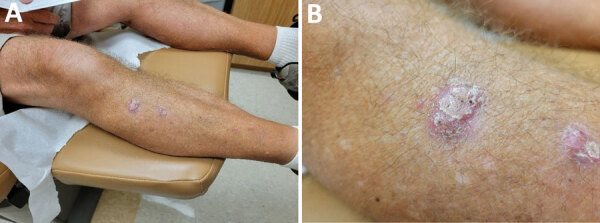 Figure 1
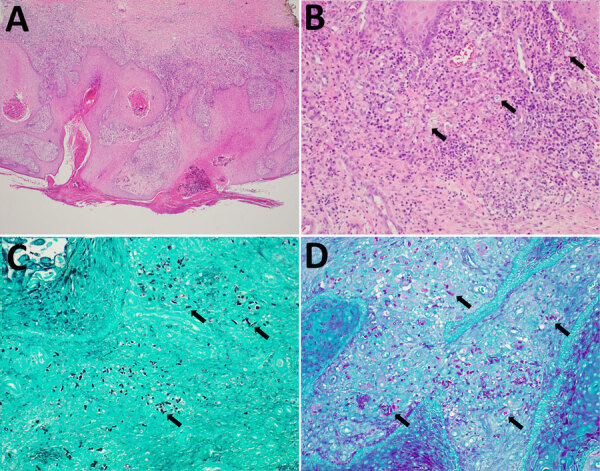 Figure 2
Peer Reviews
No public reviews on file for this paper yet. If you reviewed it on a platform where reviews are public (OpenReview, ICLR, NeurIPS, ICML), you can paste yours below so the community can read it here.
Videos
No videos yet. Explain this paper in a talk, walkthrough, or lecture? Add one.
Taxonomy
TopicsNail Diseases and Treatments · Fungal Infections and Studies · Antifungal resistance and susceptibility