Genetically Similar High-Risk Strains of Carbapenemase-Producing Enterobacterales in Humans and Companion Animals, United States
Lingzi Xiaoli, Allison E. James, Anna L. Stahl, Maho Okumura, Stephen D. Cole, Jaclyn M. Dietrich, Molly M. Leeper, Jordan K. Putney, Maroya Spalding Walters, Richard A. Stanton

TL;DR
This study finds that drug-resistant bacteria in US pets and humans are genetically similar, suggesting possible transmission between them.
Contribution
The study identifies high-risk CP-CRE strains shared between humans and pets in the US, highlighting a One Health concern.
Findings
Most CP-CRE sequences from US companion animals are part of One Health clusters with human isolates.
92% of clustered isolates carry the blaNDM-5 carbapenemase allele.
Closely related subclusters link human and animal isolates geographically, indicating possible transmission.
Abstract
To elucidate the zoonotic potential of carbapenemase-producing carbapenem-resistant Enterobacterales (CP-CRE) in US companion animals (i.e., dogs and cats), we queried the National Center for Biotechnology Pathogen Detection database to identify One Health clusters containing CP-CRE isolates from companion animals and humans. The 11 One Health clusters we found included most (69% [169/246]) publicly available CP-CRE sequences from US companion animals and were from 8 internationally disseminated, high-risk sequence types from 3 bacterial species (Escherichia coli, Klebsiella pneumoniae, and Enterobacter cloacae). All clustered isolates had New Delhi metallo-β-lactamase–family carbapenemases, and most (92%) carried the blaNDM-5 allele. The One Health clusters included several closely related subclusters with geographically linked isolates from both humans and companion animals. Those…
Genes, proteins, chemicals, diseases, species, mutations and cell lines named across the full text — each resolved to its canonical identifier and authoritative record.
Click any figure to enlarge with its caption.
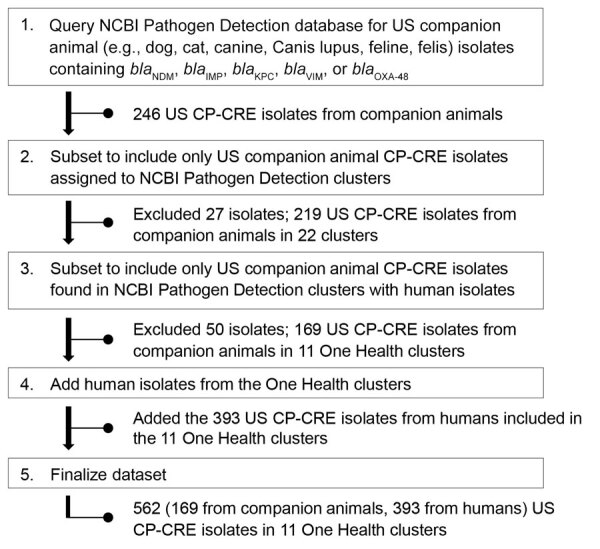 Figure 1
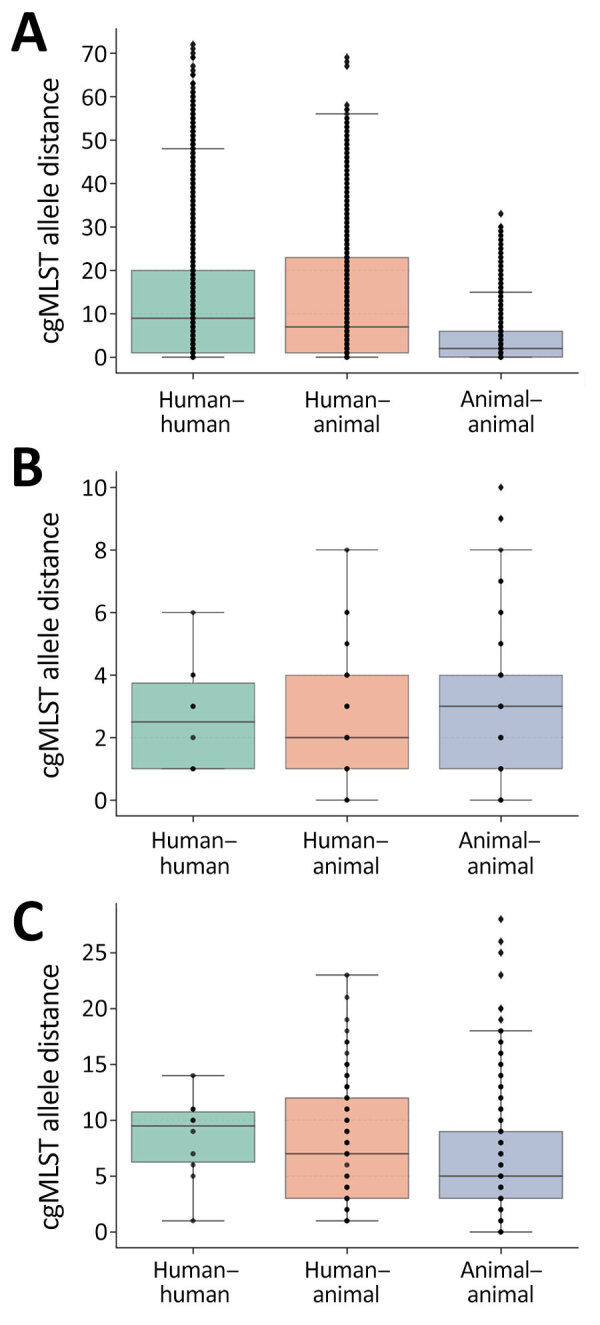 Figure 2
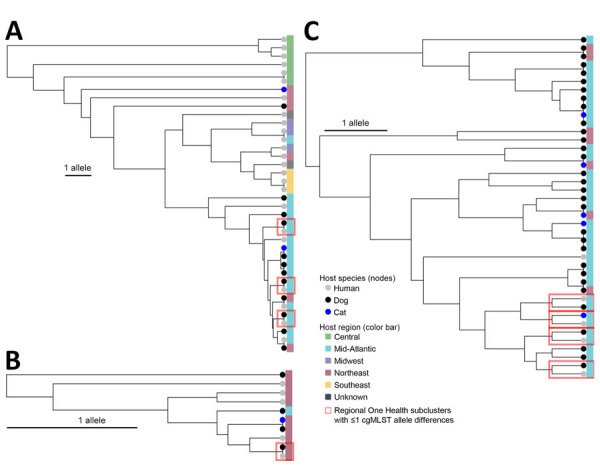 Figure 3
Peer Reviews
No public reviews on file for this paper yet. If you reviewed it on a platform where reviews are public (OpenReview, ICLR, NeurIPS, ICML), you can paste yours below so the community can read it here.
Videos
No videos yet. Explain this paper in a talk, walkthrough, or lecture? Add one.
Taxonomy
TopicsAntibiotic Resistance in Bacteria · Escherichia coli research studies · Salmonella and Campylobacter epidemiology