Natural Hendra Virus Infections in Captive Australian Black Flying Foxes, Queensland, Australia
Victoria Boyd, Anjana Karawita, Jianning Wang, Shawn Todd, Sarah Riddell, Rachel Layton, Grace Taylor, Michael L. Kelly, Teegan Allen, Sarah Caruso, Christopher C. Broder, Richard J. Ploeg, Gough G. Au, Gary Crameri, Anthony W. Purcell, Michelle L. Baker

TL;DR
This study shows that Australian black flying foxes can naturally catch and develop immunity to Hendra virus.
Contribution
The study provides evidence of natural Hendra virus infection cycles in flying foxes.
Findings
Flying foxes showed Hendra virus infections and associated serology.
The findings suggest possible reinfection or recrudescence in flying foxes.
Abstract
We provide evidence for natural Hendra virus infections and associated serology in a cohort of Australian black flying foxes (Pteropus alecto) transferred from Queensland to the Australian Centre for Disease Preparedness in Victoria, Australia. This study supports the likelihood that flying foxes undergo cycles of infection and reinfection and possibly recrudescence.
Genes, proteins, chemicals, diseases, species, mutations and cell lines named across the full text — each resolved to its canonical identifier and authoritative record.
Click any figure to enlarge with its caption.
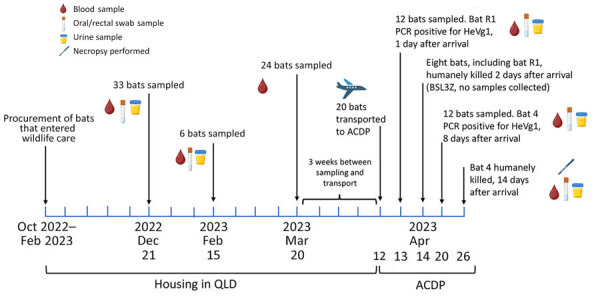 Figure 1
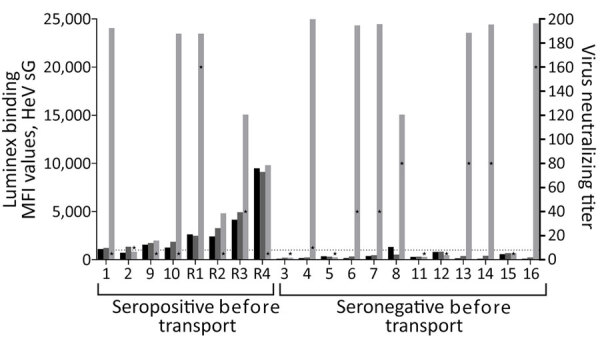 Figure 2
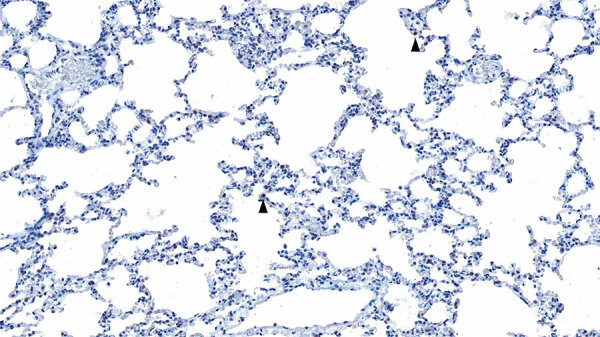 Figure 3
Peer Reviews
No public reviews on file for this paper yet. If you reviewed it on a platform where reviews are public (OpenReview, ICLR, NeurIPS, ICML), you can paste yours below so the community can read it here.
Videos
No videos yet. Explain this paper in a talk, walkthrough, or lecture? Add one.
Taxonomy
TopicsVirology and Viral Diseases · Rabies epidemiology and control · Vector-Borne Animal Diseases