Animal organoids as transformative platforms for viral infections and zoonotic cross-species viral research
Inés García-Rodríguez, Isabel García-Dorival, Covadonga Alonso, Miguel Ángel Cuesta-Geijo

TL;DR
Animal organoids are important for studying zoonotic viruses and improving disease preparedness by enabling species-specific research.
Contribution
The paper highlights the underutilized potential of animal organoids in veterinary virology and zoonotic research.
Findings
Animal organoids replicate native tissue architecture for comparative viral infection studies.
They enable species-specific investigations into host responses to viruses.
Animal organoids can strengthen strategies for zoonotic disease preparedness.
Abstract
Organoids have revolutionized human biomedical research since their development in 2010. However, as nearly 75% of human infectious diseases originate in animals, animal-derived organoids are essential to complement human models, yet their development in veterinary contexts remains scarce. Organoids replicate native tissue architecture, enabling species-specific and comparative studies of viral infection and host response. Thus, animal organoids represent a powerful field in organoid technology, advancing cross-species virology research and strengthening strategies for zoonotic disease preparedness.
Genes, proteins, chemicals, diseases, species, mutations and cell lines named across the full text — each resolved to its canonical identifier and authoritative record.
Click any figure to enlarge with its caption.
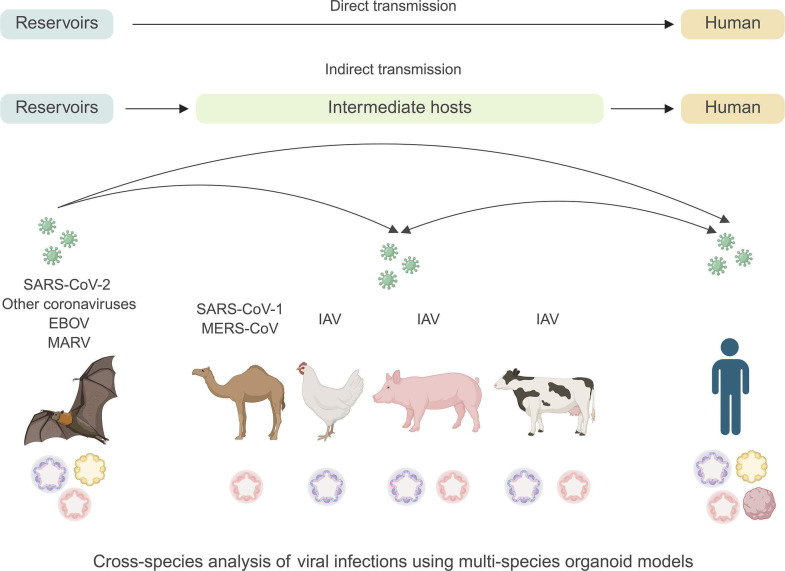 Figure 1
Peer Reviews
No public reviews on file for this paper yet. If you reviewed it on a platform where reviews are public (OpenReview, ICLR, NeurIPS, ICML), you can paste yours below so the community can read it here.
Videos
No videos yet. Explain this paper in a talk, walkthrough, or lecture? Add one.
Taxonomy
TopicsZoonotic diseases and public health · Animal testing and alternatives · Poxvirus research and outbreaks