Calendar Horizon as a Boundary Affordance: An Attempt-Centric Eye-Tracking Analysis of Calendar Scheduling Interfaces
Nina Xie, Yuanyuan Wang, Yujun Liu

TL;DR
This study explores how the visibility of weekends in calendar interfaces affects scheduling behavior and attention patterns.
Contribution
The paper introduces calendar horizon as a boundary affordance and demonstrates its impact on scheduling processes and outcomes.
Findings
Each additional scheduling attempt increased total fixation duration by ~56%.
Personal tasks required more attempts and elicited stronger weekend verification in the Late phase.
Hiding the weekend reduced weekend placements and increased evening scheduling.
Abstract
Digital calendars are interactive representations of time that shape both scheduling outcomes and the micro-process of searching, verifying, and revising candidate placements. We examine calendar horizon—whether weekend time is visible in the default week view—as a boundary affordance in scheduling interfaces. Using eye tracking and interaction logs, we model each scheduling episode as a sequence of placement attempts and align gaze to each attempt, partitioning it into Early/Mid/Late phases and summarizing attention across structural AOIs (task panel, calendar grid, and the weekend column when present). Two experiments used drag-and-drop and dropdown slot-picking; weekend visibility was manipulated within the dropdown interface, while evening slots remained available. Across 105 participants (1018 task episodes), AttemptsCount ranged from 1 to 7. AttemptsCount predicted gaze-based…
Genes, proteins, chemicals, diseases, species, mutations and cell lines named across the full text — each resolved to its canonical identifier and authoritative record.
Click any figure to enlarge with its caption.
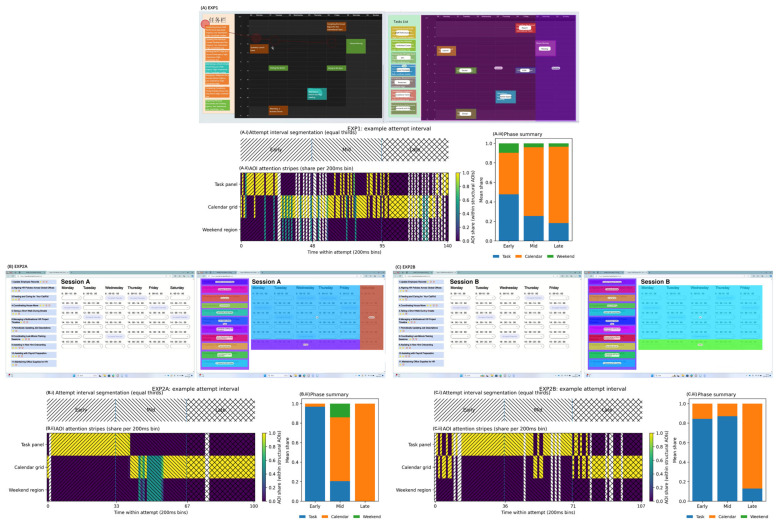 Figure 1
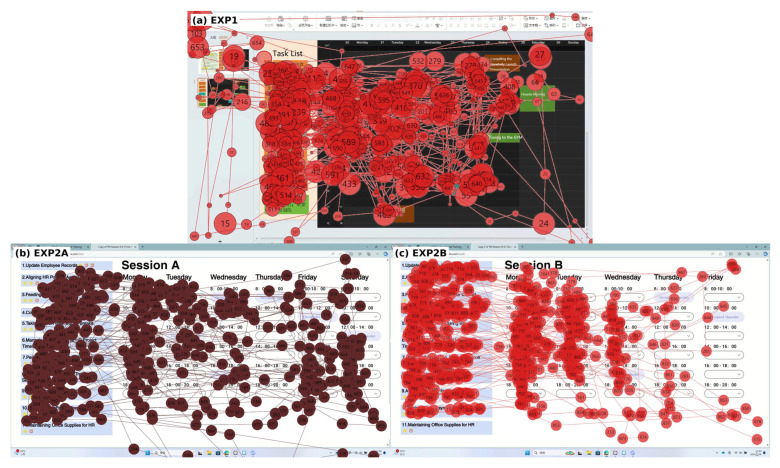 Figure 2
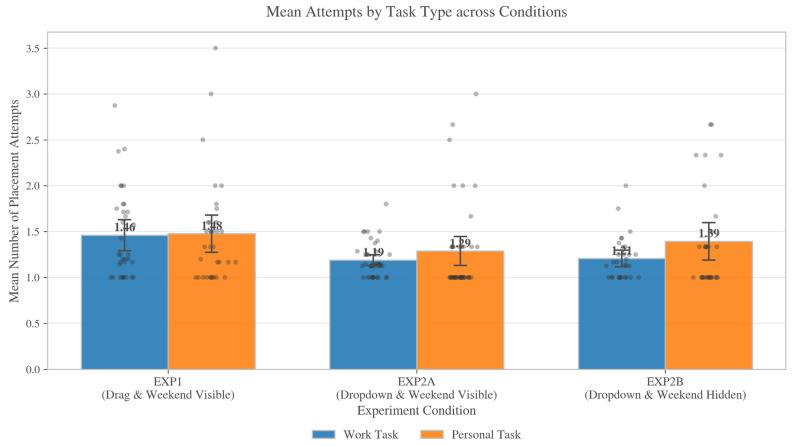 Figure 3
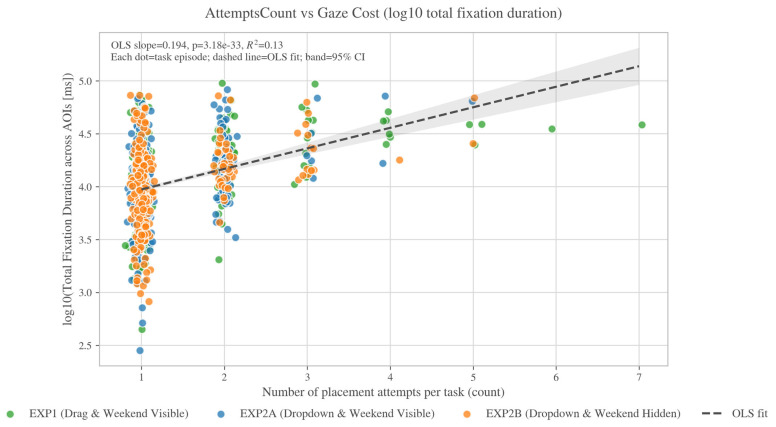 Figure 4
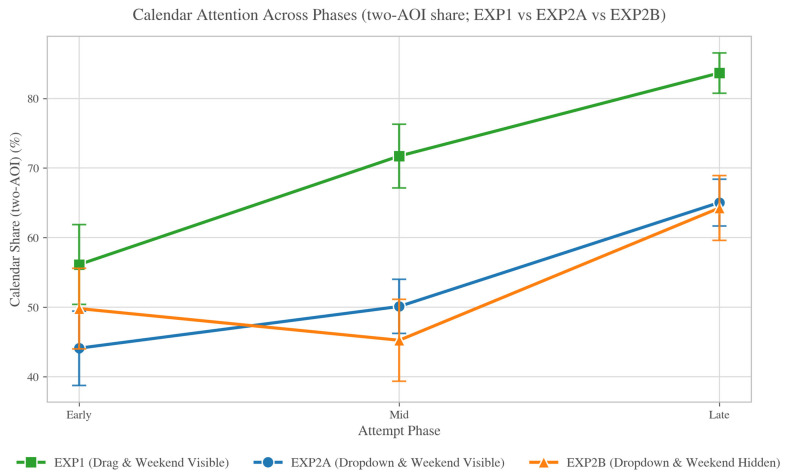 Figure 5
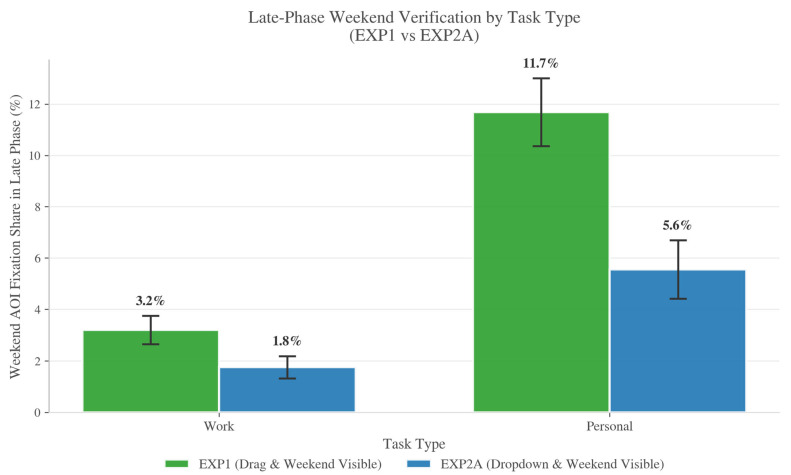 Figure 6
Peer Reviews
No public reviews on file for this paper yet. If you reviewed it on a platform where reviews are public (OpenReview, ICLR, NeurIPS, ICML), you can paste yours below so the community can read it here.
Videos
No videos yet. Explain this paper in a talk, walkthrough, or lecture? Add one.
Taxonomy
TopicsPersonal Information Management and User Behavior · Human-Automation Interaction and Safety · Usability and User Interface Design