Can you read my poker-face? Adapting the still-face paradigm to explore dog’s interspecific communication
Chiara Canori, Giulia Pedretti, Tiziano Travain, Chiara Annoni, Laura Sabbadini, Paola Valsecchi

TL;DR
This study explores how dogs adjust their communication strategies when interacting with humans who are unresponsive, using a modified still-face paradigm.
Contribution
The study introduces a novel 'face-away' phase and confirms the still-face effect in dogs, emphasizing the role of attachment bonds in interspecific communication.
Findings
Dogs displayed more affiliative signals towards their owners compared to a familiar human during initial interactions.
The frequency and duration of communicative behaviors decreased significantly during non-responsive phases.
No differences were found between the still-face and face-away phases, suggesting a carry-over effect.
Abstract
Domestic dogs rely on a sophisticated repertoire of visual displays to regulate social interactions. However, the interpretation of some of these displays, such as facial expressions, remain unclear. In the present study, we investigated the communicative strategies dogs’ employ to re-establish a positive interaction with humans. We adopted a modified version of the classical Still-Face Paradigm and introduced two non-responsive phases: the classical “still-face” phase (human attentive but unresponsive) and a novel “face-away” phase (human turned away and inattentive) to test the flexibility of communicative signals modalities used by dogs. The test was conducted with both the owner (attachment figure) and a familiar human (familiar dog trainer). Results showed that dogs displayed a rich repertoire of visual and facial signals, which may serve affiliative and communicative functions,…
Genes, proteins, chemicals, diseases, species, mutations and cell lines named across the full text — each resolved to its canonical identifier and authoritative record.
Click any figure to enlarge with its caption.
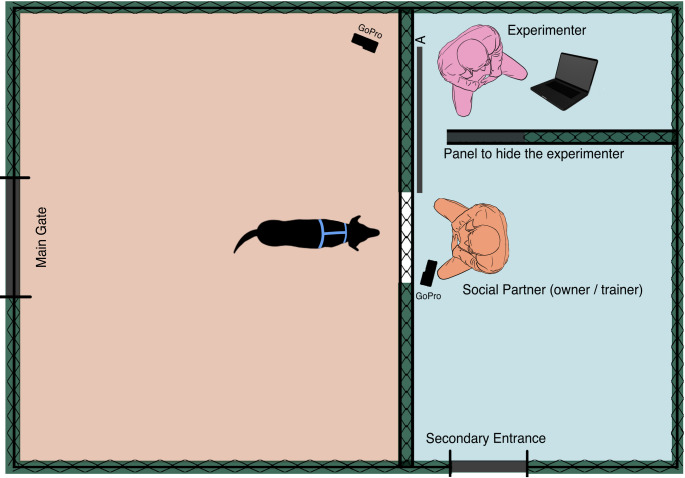 Figure 1
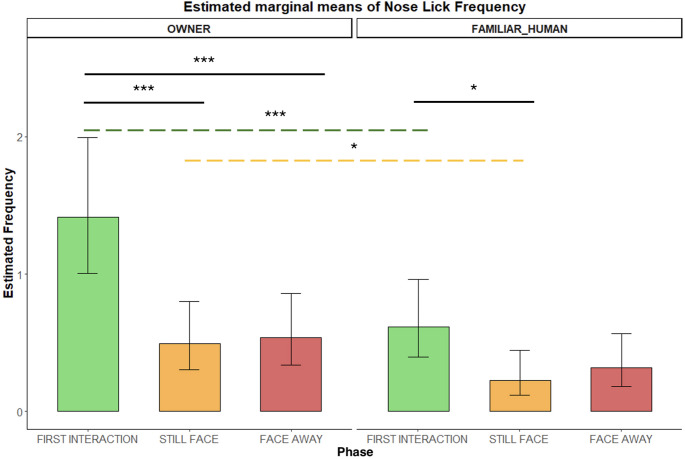 Figure 2
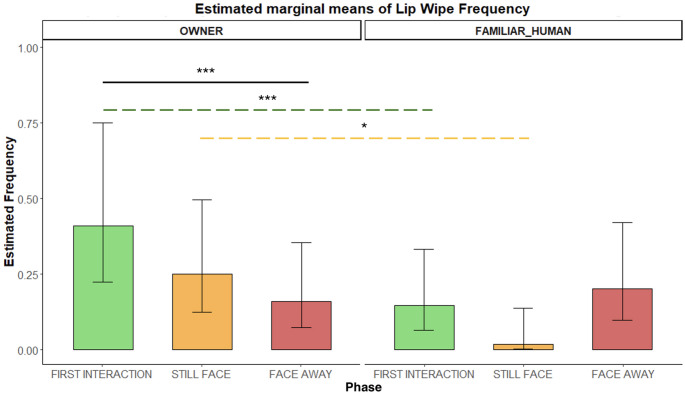 Figure 3
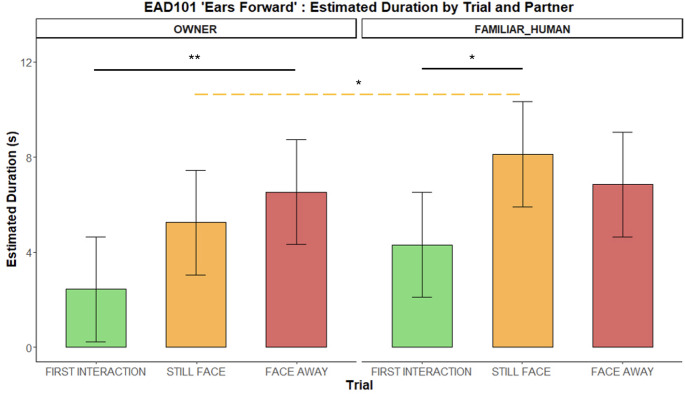 Figure 4
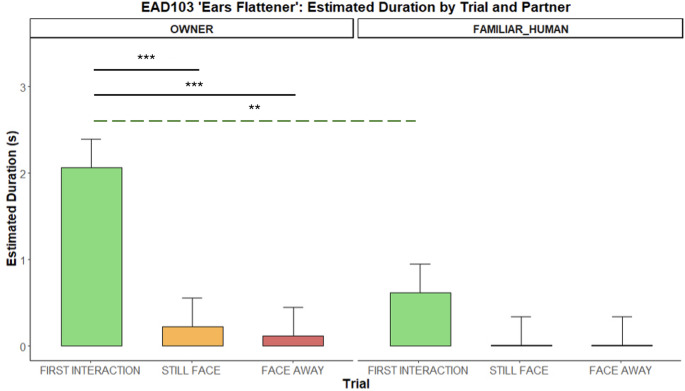 Figure 5
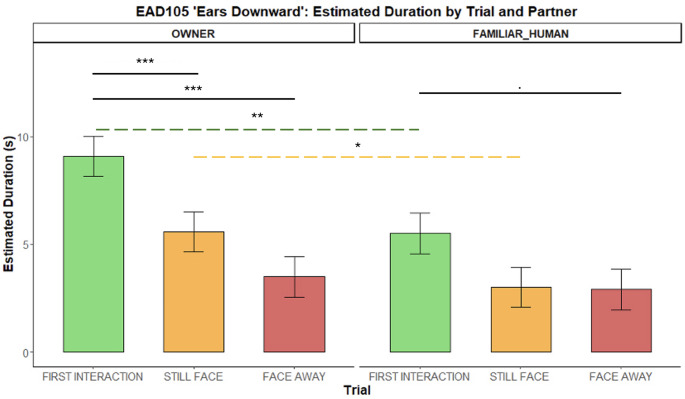 Figure 6
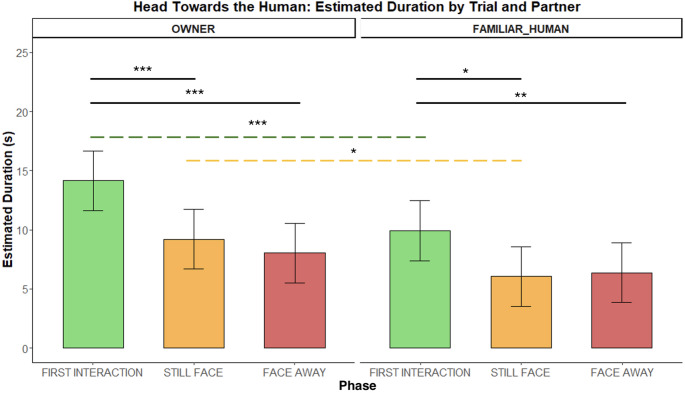 Figure 7
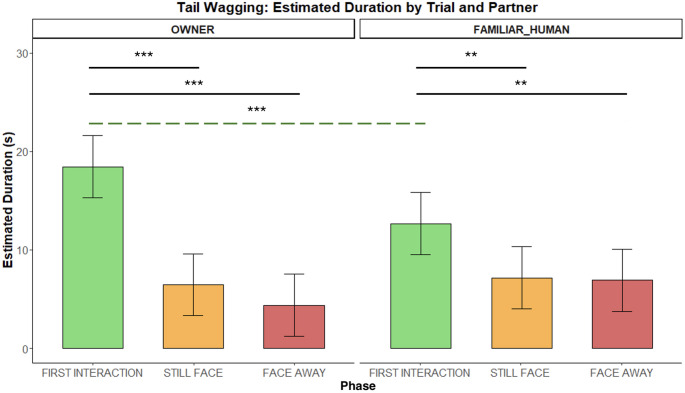 Figure 8
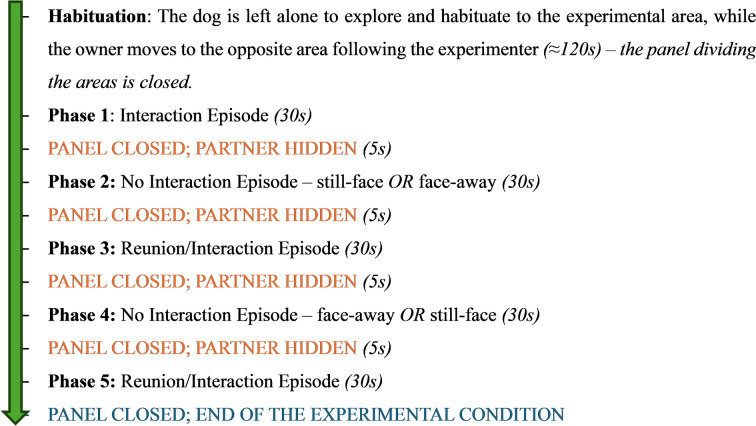 Figure 9
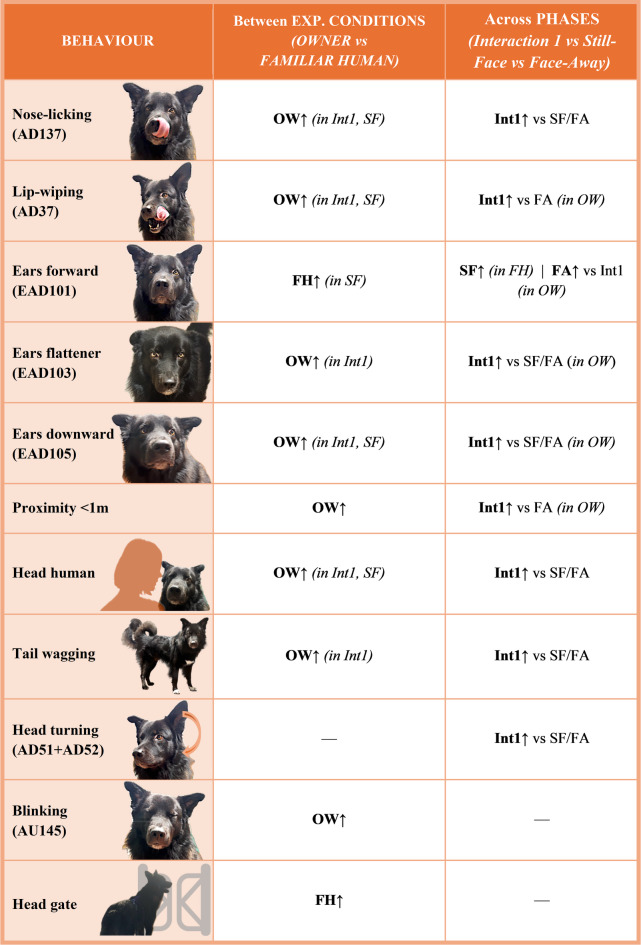 Figure 10
Peer Reviews
No public reviews on file for this paper yet. If you reviewed it on a platform where reviews are public (OpenReview, ICLR, NeurIPS, ICML), you can paste yours below so the community can read it here.
Videos
No videos yet. Explain this paper in a talk, walkthrough, or lecture? Add one.
Taxonomy
TopicsHuman-Animal Interaction Studies · Language, Discourse, Communication Strategies · Geographies of human-animal interactions