The potential of plant-derived triterpenoids as biological nitrification inhibitors
Hugo Ribeiro, Evangelia S. Papadopoulou, Kunyang Zhang, Alexandros E. Kanellopoulos, Kalliope K. Papadopoulou, Dimitrios G. Karpouzas

TL;DR
Plant triterpenoids show strong potential as nitrification inhibitors by targeting archaea, offering a sustainable way to reduce nitrogen losses in agriculture.
Contribution
First experimental evidence of plant-derived triterpenoids as effective biological nitrification inhibitors, particularly against ammonia-oxidizing archaea.
Findings
Six triterpenoids inhibited ammonia-oxidizing archaea by 29–100%, outperforming known inhibitors like sakuranetin.
Triterpenoids showed no inhibition of ammonia-oxidizing bacteria, indicating selectivity for archaea.
In silico models accurately predicted activity on bacteria but underestimated strong archaea inhibition, highlighting the need for improved datasets.
Abstract
Biological nitrification inhibitors (BNIs) present an environmentally friendly approach to reduce nitrogen losses and enhance nitrogen use efficiency, with plant-derived triterpenoids emerging as promising candidates. We evaluated 18 triterpenoids as BNIs using in vitro assays with soil ammonia-oxidizing bacteria (AOB) (Nitrosospira multiformis, Nitrosomonas ureae) and archaea (AOA) (Nitrososphaera viennensis, Nitrosotalea sinensis) at high and low concentrations. A Graph Neural Network framework was applied to predict nitrification inhibition (NI) and identify structural features, including key functional groups, linked to inhibitory patterns. Triterpenoids were more active on AOA, demonstrating higher efficacy than sakuranetin (a known BNI), but did not inhibit AOB. Six triterpenoids showed inhibitory activity on AOA (29–100%), with 3-O-acetyl-11-keto-beta boswellic acid and…
Genes, proteins, chemicals, diseases, species, mutations and cell lines named across the full text — each resolved to its canonical identifier and authoritative record.
Click any figure to enlarge with its caption.
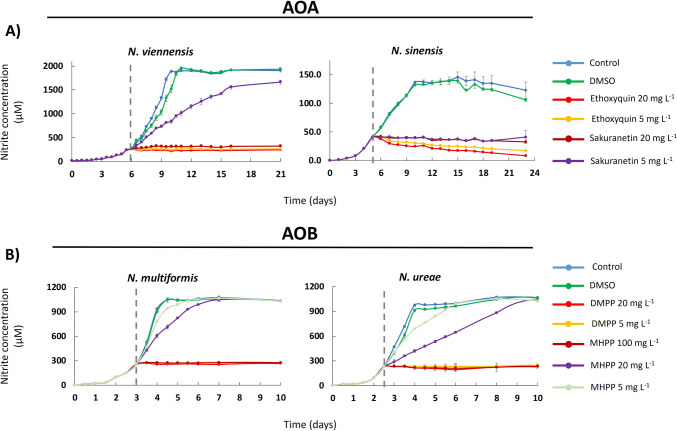 Figure 1
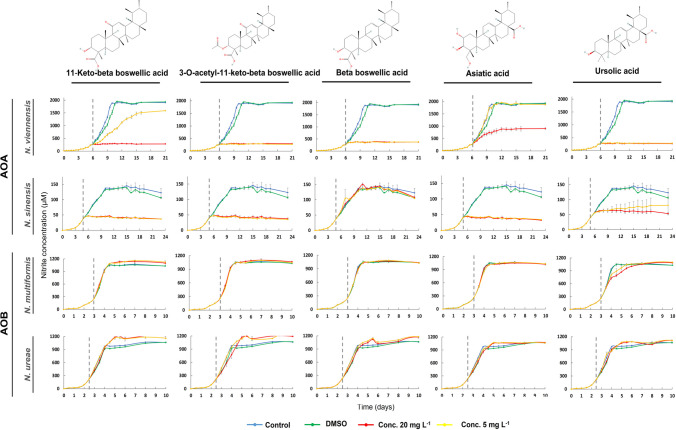 Figure 2
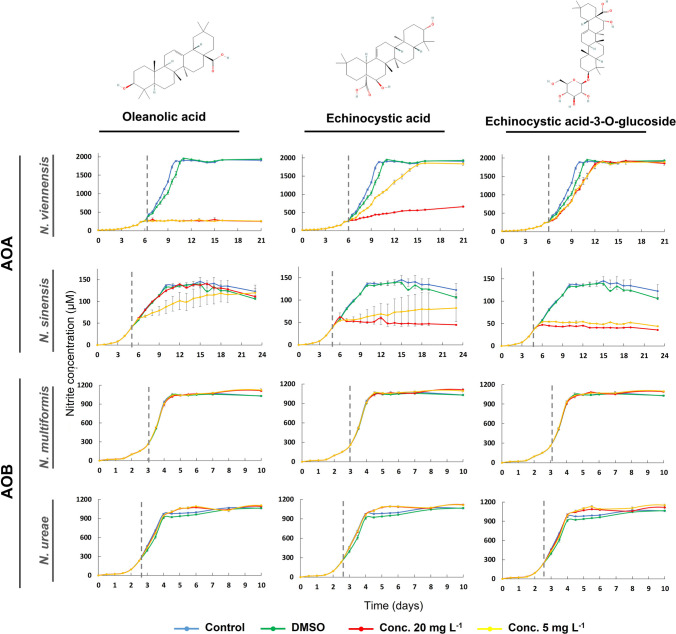 Figure 3
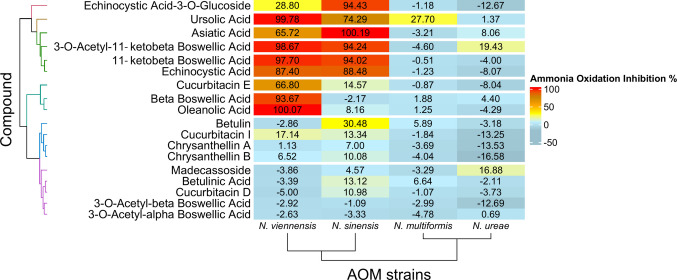 Figure 4
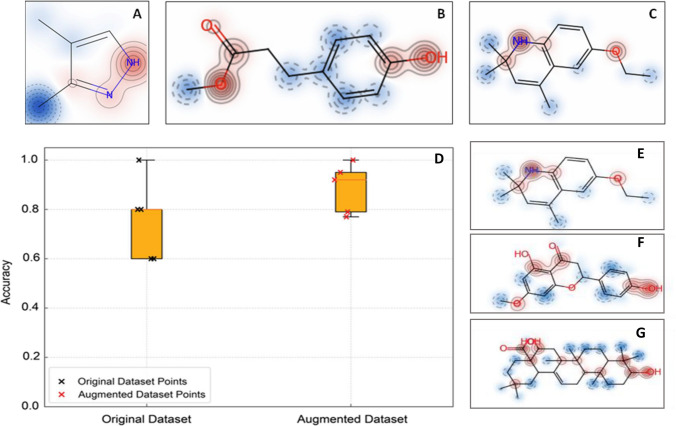 Figure 5
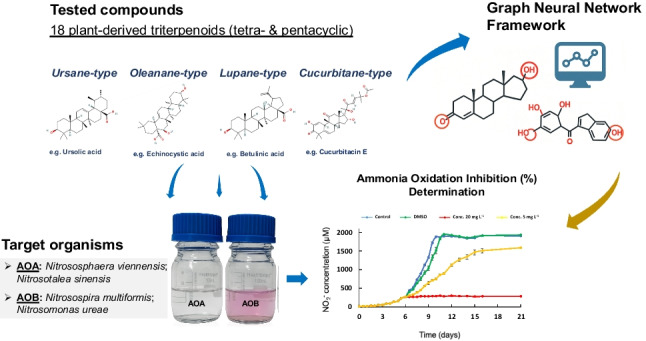 Figure 6
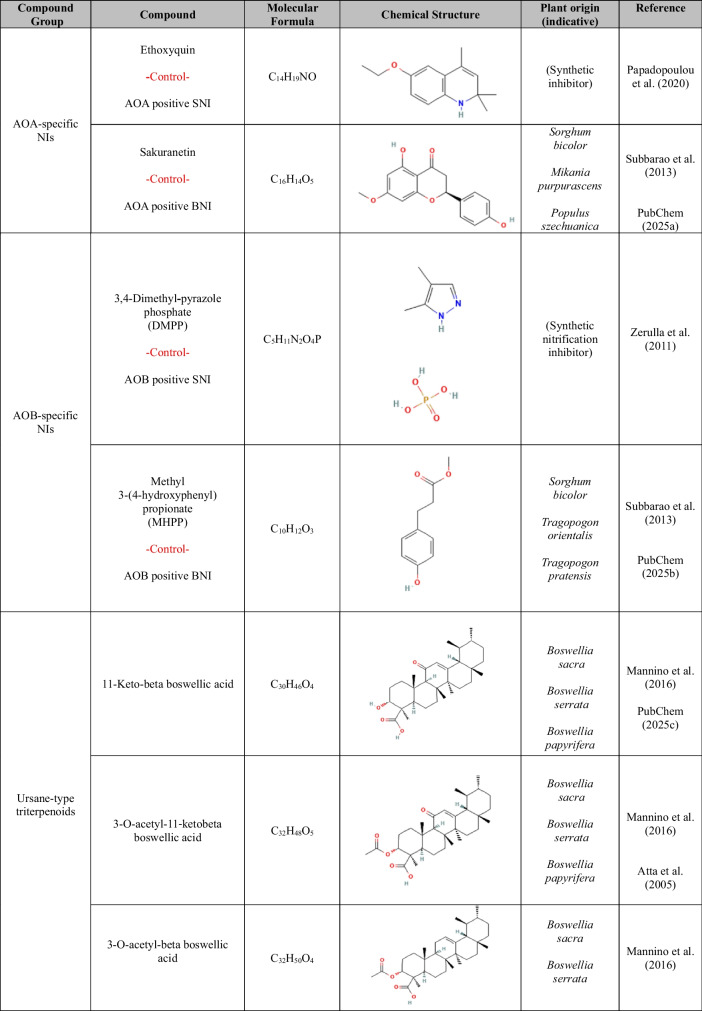 Figure 7
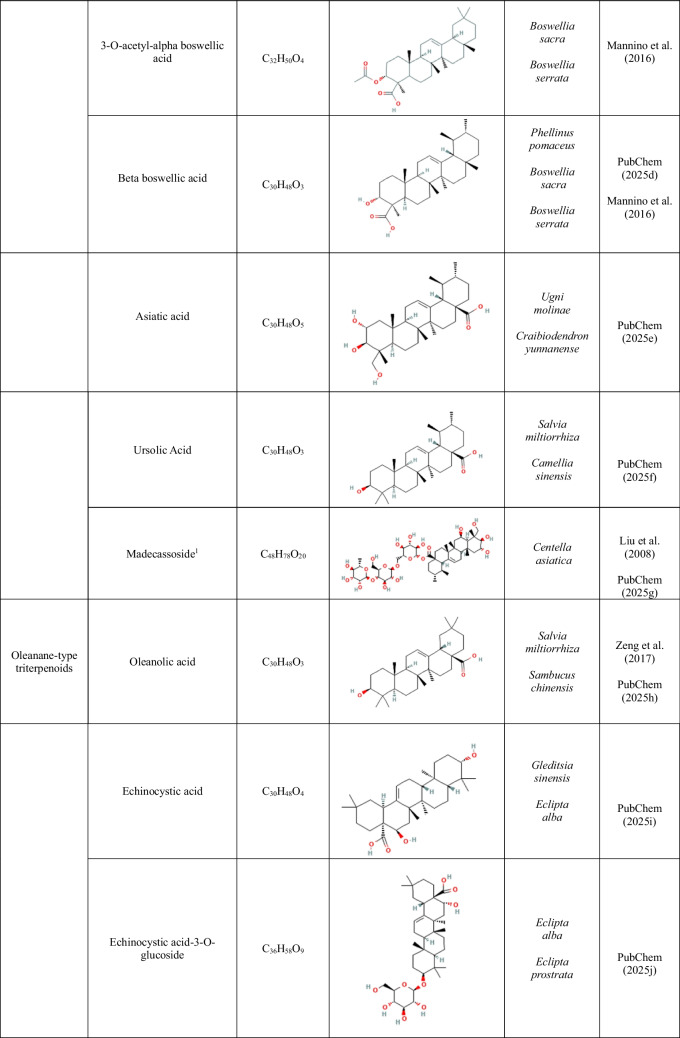 Figure 8
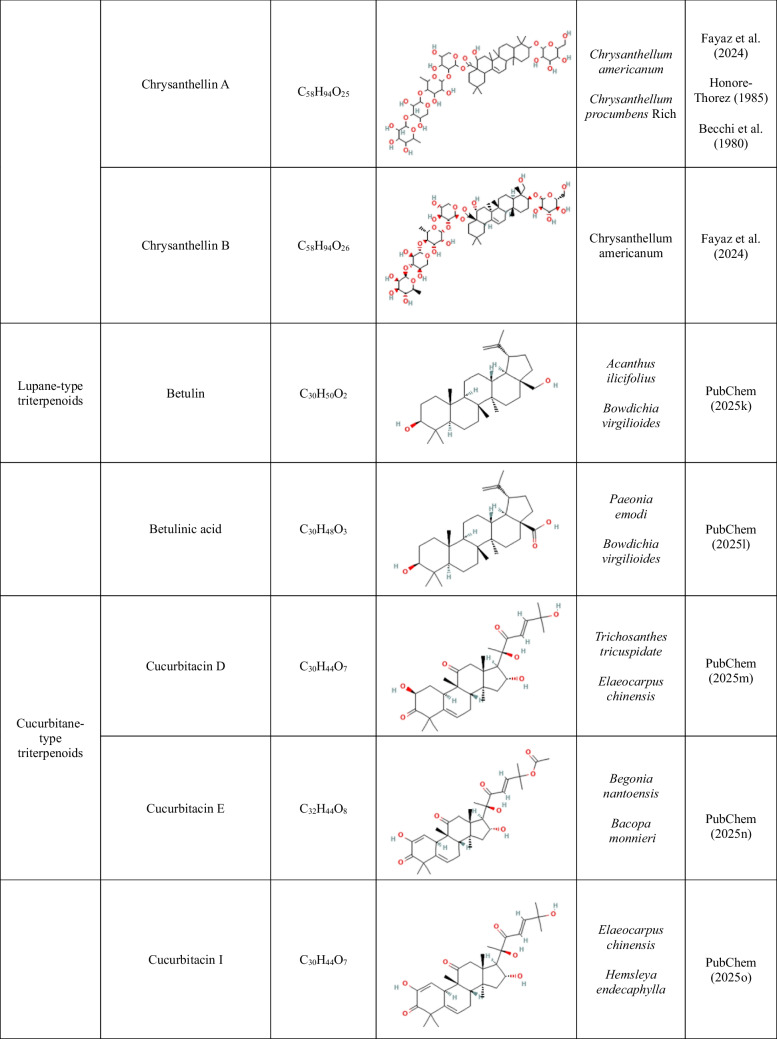 Figure 9
Peer Reviews
No public reviews on file for this paper yet. If you reviewed it on a platform where reviews are public (OpenReview, ICLR, NeurIPS, ICML), you can paste yours below so the community can read it here.
Videos
No videos yet. Explain this paper in a talk, walkthrough, or lecture? Add one.
Taxonomy
TopicsSoil Carbon and Nitrogen Dynamics · Plant-Microbe Interactions and Immunity · Plant Growth Enhancement Techniques