Transcranial stimulation as a possible therapeutic proposal in long COVID
Lidiane Palheta Miranda dos Santos, Julliana Vieira Leão, Ketelen Yasmim Braga de Moraes Silva, Danilo Lameira dos Santos, Chrisllane Nascimento Batista, Jonna Almeida Barros, Alna Carolina Mendes Paranhos, Ápio Ricardo Nazareth Dias, Luiz Fábio Magno Falcão

TL;DR
This paper explores the potential of transcranial stimulation as a treatment for long COVID's neurological symptoms.
Contribution
It critically reviews current evidence on neuromodulation for managing long COVID symptoms.
Findings
Neuromodulation shows promise for treating refractory neurological symptoms in long COVID.
Transcranial stimulation could offer new therapeutic perspectives for affected individuals.
Abstract
The COVID-19 pandemic triggered an unprecedented global health crisis, with significant repercussions on the mental and neurological health of millions of individuals. Long COVID, characterized by persistent and debilitating symptoms, including chronic fatigue, pain, cognitive impairment, and mood swings, represents a substantial therapeutic challenge. In this context, neuromodulation emerges as a promising therapeutic strategy, offering new perspectives for the management of refractory neurological symptoms. This article aims to critically review the current evidence on the use of neuromodulation in patients with long COVID.
Genes, proteins, chemicals, diseases, species, mutations and cell lines named across the full text — each resolved to its canonical identifier and authoritative record.
Click any figure to enlarge with its caption.
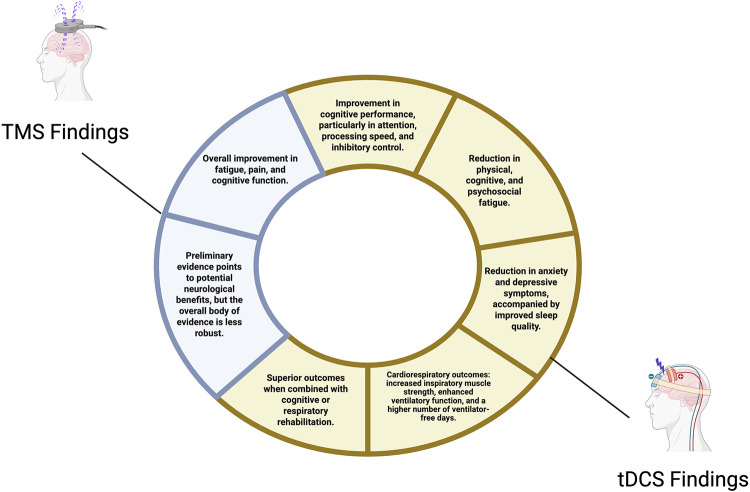 Figure 1
Peer Reviews
No public reviews on file for this paper yet. If you reviewed it on a platform where reviews are public (OpenReview, ICLR, NeurIPS, ICML), you can paste yours below so the community can read it here.
Videos
No videos yet. Explain this paper in a talk, walkthrough, or lecture? Add one.
Taxonomy
TopicsLong-Term Effects of COVID-19 · Vagus Nerve Stimulation Research · Pain Management and Treatment