Novel donor-π-acceptor benzimidazole-based chromophores: synthesis, antitumor assessment, and pharmacokinetics
Salhah D. Al-Qahtani, Ghadah M. Al-Senani, Khaled M. Elattar

TL;DR
Researchers designed and tested new benzimidazole-based chromophores with potential as anticancer and anti-angiogenic agents due to their cytotoxicity and strong VEGFR-2 binding.
Contribution
The study introduces novel donor-π-acceptor benzimidazole hybrids with promising antitumor and pharmacokinetic properties.
Findings
Chromophore 4a showed the highest cytotoxicity with IC50 values of 12.64 µM and 12.19 µM against HepG2 and PC3 cells.
Hybrid 4b exhibited the strongest VEGFR-2 binding score, comparable to the reference drug sorafenib.
Hybrids 2a and 4a demonstrated good pharmacokinetic properties, including high gastrointestinal absorption and blood–brain barrier permeability.
Abstract
Targeted chromophores, 2-(N,N-dialkyl-/diaryl-aminophenyl)benzimidazole hybrids 2a, 2b, 4a, and 4b, were designed and synthesized. The designed hybrids were identified as donor-π-acceptor (D-π-A) structures, incorporating N,N-dialkyl/diarylamino groups as the donor moiety and nitro or pyridinyl Schiff-base groups as the acceptor moiety. The hybrids were found to exhibit significant solvent-dependent properties, especially in polar solvents such as DMSO, which enhanced their fluorescence properties. Conjugate 2a exhibited absorbance and fluorescence maxima at 390 and 528 nm, respectively, in DMSO, while hybrid 2b demonstrated absorbance and fluorescence maxima at 396 and 536 nm, respectively. Hybrids 4a and 4b exhibited similar solvent-dependent activity. The cytotoxicity of all the synthesized chromophores was tested against several human cancer cell lines using an MTT assay, and their…
Genes, proteins, chemicals, diseases, species, mutations and cell lines named across the full text — each resolved to its canonical identifier and authoritative record.
Click any figure to enlarge with its caption.
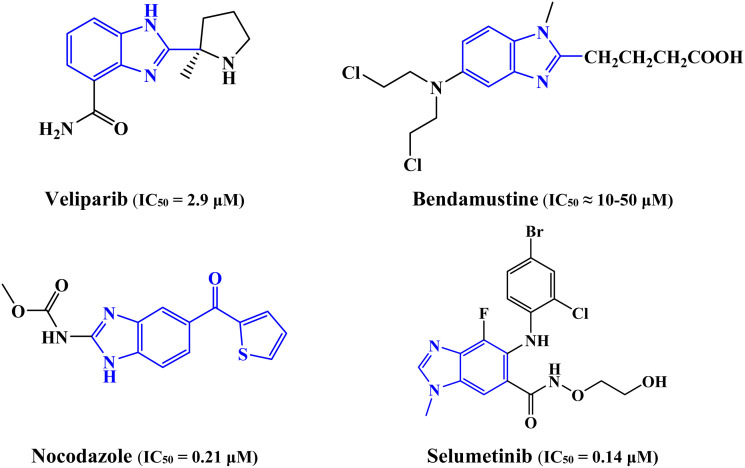 Figure 1
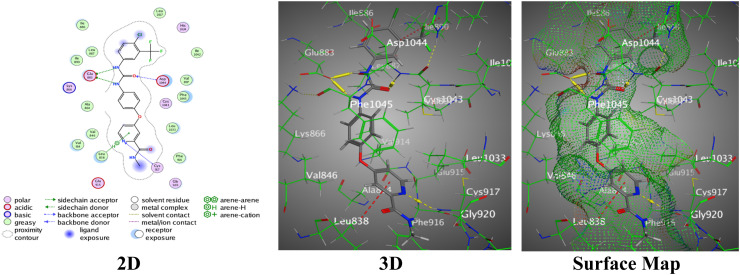 Figure 2
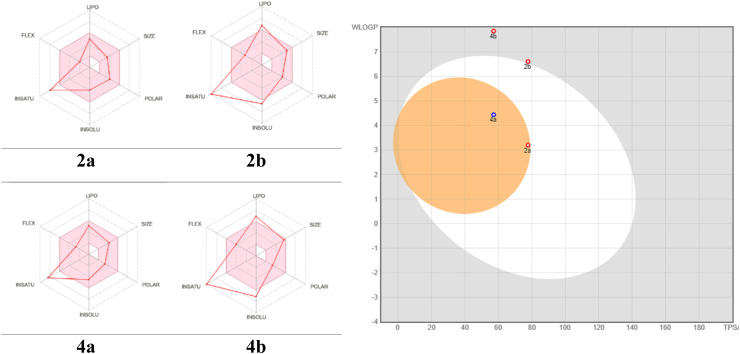 Figure 3
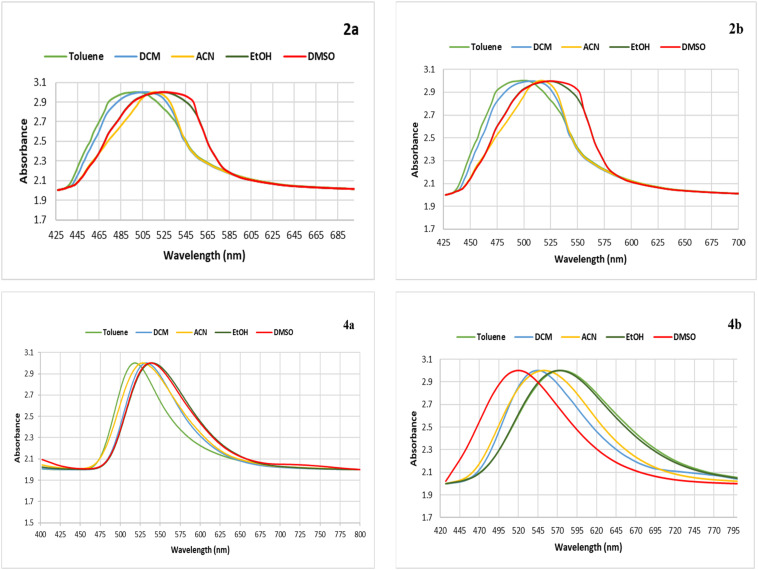 Figure 4
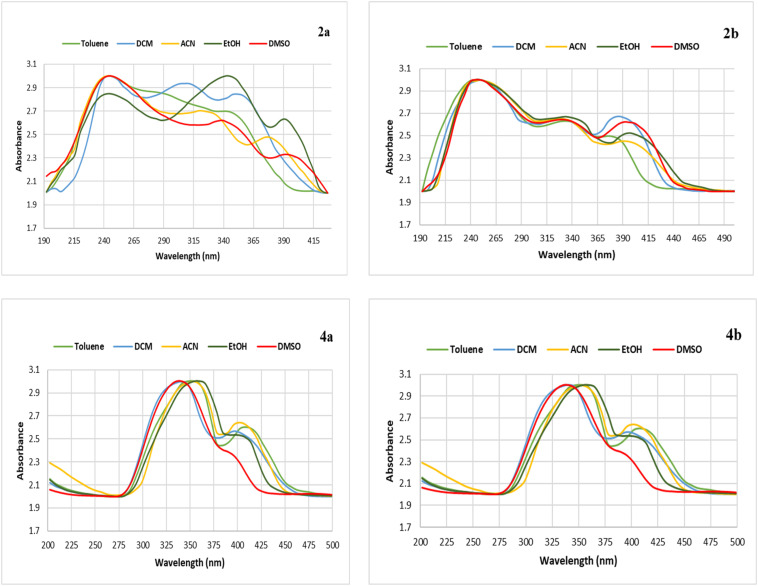 Figure 5
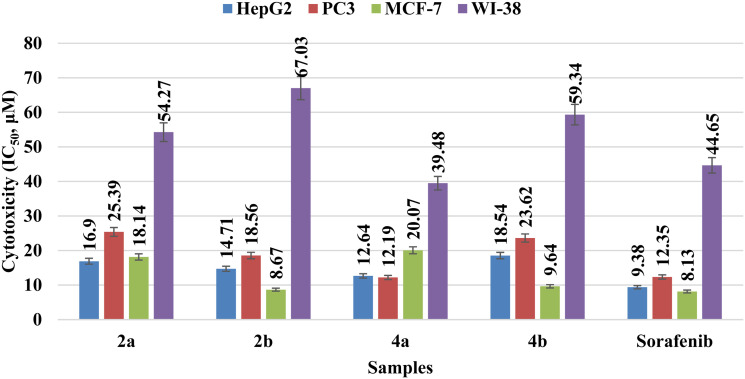 Figure 6
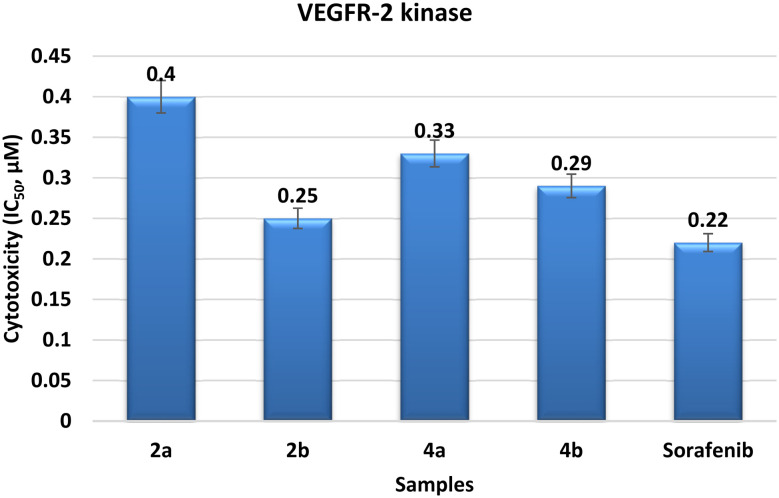 Figure 7
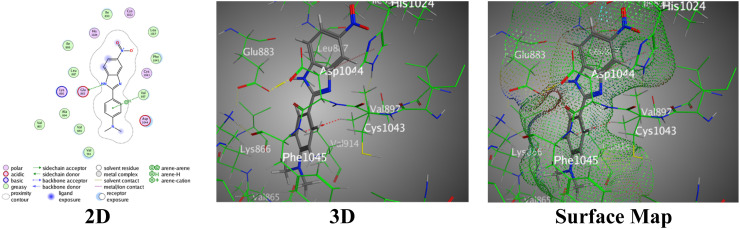 Figure 8
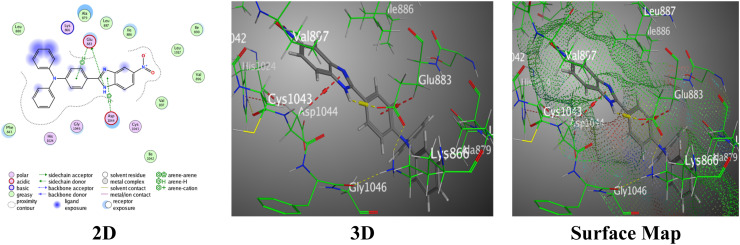 Figure 9
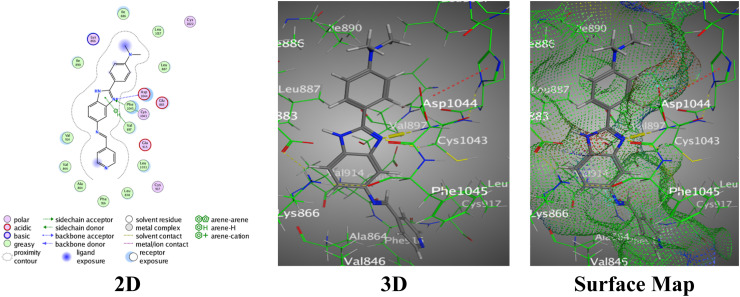 Figure 10
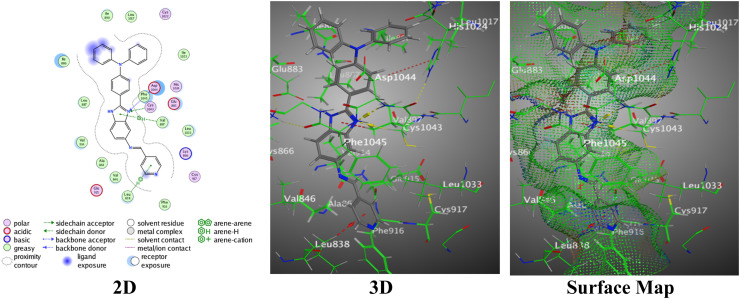 Figure 11
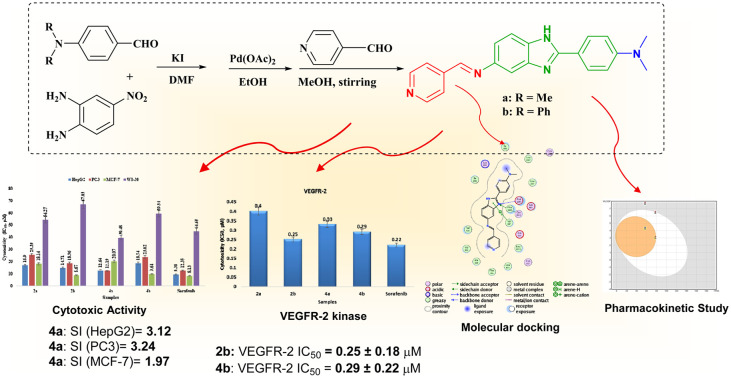 Figure 12
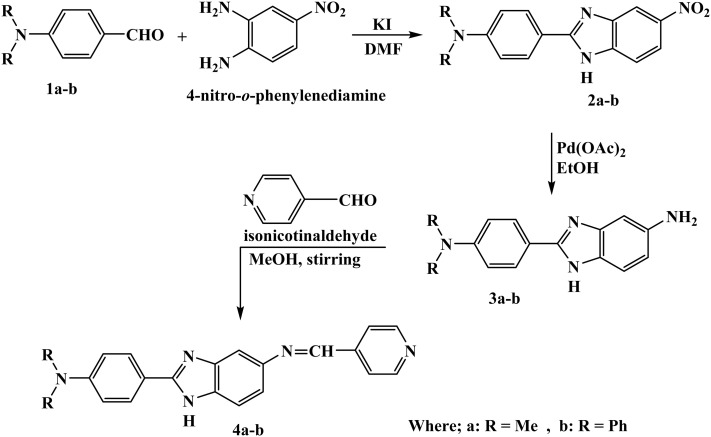 Figure 13
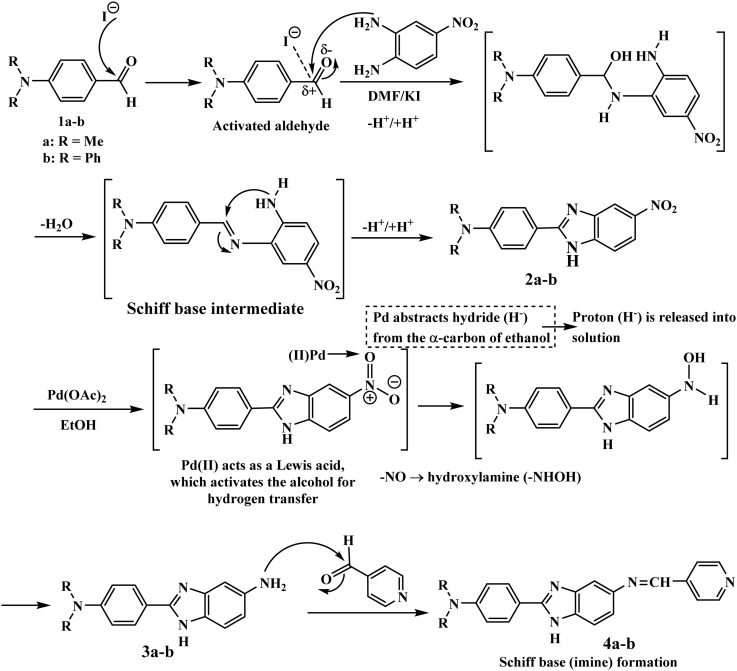 Figure 14
Peer Reviews
No public reviews on file for this paper yet. If you reviewed it on a platform where reviews are public (OpenReview, ICLR, NeurIPS, ICML), you can paste yours below so the community can read it here.
Videos
No videos yet. Explain this paper in a talk, walkthrough, or lecture? Add one.
Taxonomy
TopicsNonlinear Optical Materials Research · Synthesis and biological activity · Multicomponent Synthesis of Heterocycles