Evolutive acid-base derangements in critically ill patients: epidemiological aspects, association with mortality and metabolic acidosis prediction
Carine Carrijo de Faria, Caterina Lure Nema Paiva, Luiz Marcelo Almeida de Araujo, Luis Carlos Maia Cardozo, Marcelo Park

TL;DR
This study examines acid-base imbalances in ICU patients, finding that metabolic acidosis is most common and linked to higher mortality, while certain improvements in acid-base levels correlate with better survival.
Contribution
The study provides new insights into the evolution of acid-base disturbances and their association with ICU mortality and metabolic acidosis prediction.
Findings
Metabolic acidosis was the most prevalent acid-base disorder at ICU admission.
Lower standard base excess levels were associated with increased mortality.
Improvement in standard base excess during prolonged ICU stays correlated with improved survival.
Abstract
To assess the prevalence and evolution of acid-base disturbances at intensive care unit admission and throughout hospitalization and their association with intensive care unit mortality. A retrospective epidemiological study was conducted, analyzing consecutive patients admitted to a single intensive care unit. Metabolic acidosis, either isolated or combined with other disturbances, was the most prevalent disorder (58.0%), followed by respiratory alkalosis (37.6%), respiratory acidosis (25.7%), and metabolic alkalosis (12.8%). Multivariate analysis demonstrated that metabolic alkalosis combined with respiratory alkalosis was independently associated with reduced mortality (OR 0.427, 95%CI 0.194 - 0.869). Higher standard base excess at intensive care unit admission was correlated with lower mortality (OR 0.973, 95%CI 0.956 - 0.990). Maximum pCO2 variation during hospitalization showed…
Genes, proteins, chemicals, diseases, species, mutations and cell lines named across the full text — each resolved to its canonical identifier and authoritative record.
Click any figure to enlarge with its caption.
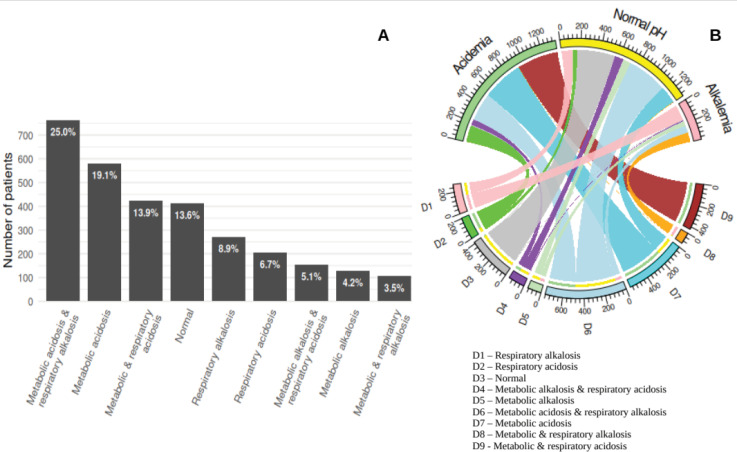 Figure 1
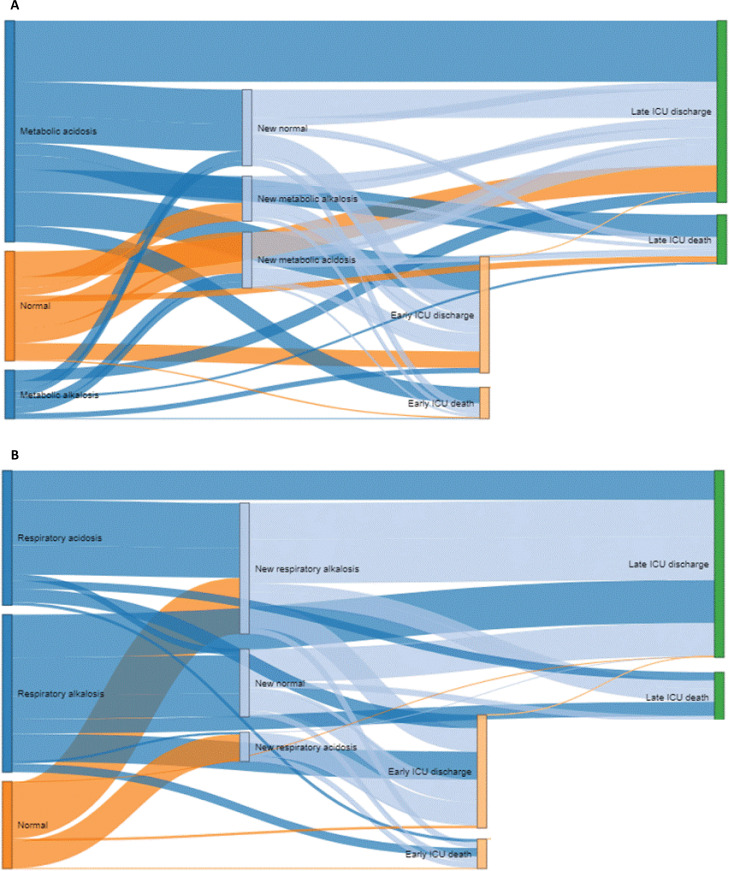 Figure 2
Peer Reviews
No public reviews on file for this paper yet. If you reviewed it on a platform where reviews are public (OpenReview, ICLR, NeurIPS, ICML), you can paste yours below so the community can read it here.
Videos
No videos yet. Explain this paper in a talk, walkthrough, or lecture? Add one.
Taxonomy
TopicsRenal function and acid-base balance · Sepsis Diagnosis and Treatment · Hemodynamic Monitoring and Therapy