Glucagon-Like Peptide-1 Receptor Agonist Switching and Treatment Persistence in Adults Without Diabetes
Luyu Xie, Diego Anazco, Azucena Herrera Chancay, M. Sunil Mathew, Jackson M. Francis, Jaime P. Almandoz, Sarah E. Messiah

TL;DR
This study examines how often people without diabetes switch GLP-1 receptor agonists and how long they stick with the treatment.
Contribution
The study provides new insights into treatment persistence and switching behaviors of GLP-1 receptor agonists in non-diabetic adults.
Findings
Switching between GLP-1 receptor agonists is common within 12 months of treatment initiation.
Treatment persistence rates vary significantly depending on the initial GLP-1 receptor agonist prescribed.
Abstract
This cohort study evaluates glucagon-like peptide-1 (GLP-1) receptor agonist switching patterns and 12-month adherence and persistence among adults with overweight or obesity without diabetes.
Genes, proteins, chemicals, diseases, species, mutations and cell lines named across the full text — each resolved to its canonical identifier and authoritative record.
Click any figure to enlarge with its caption.
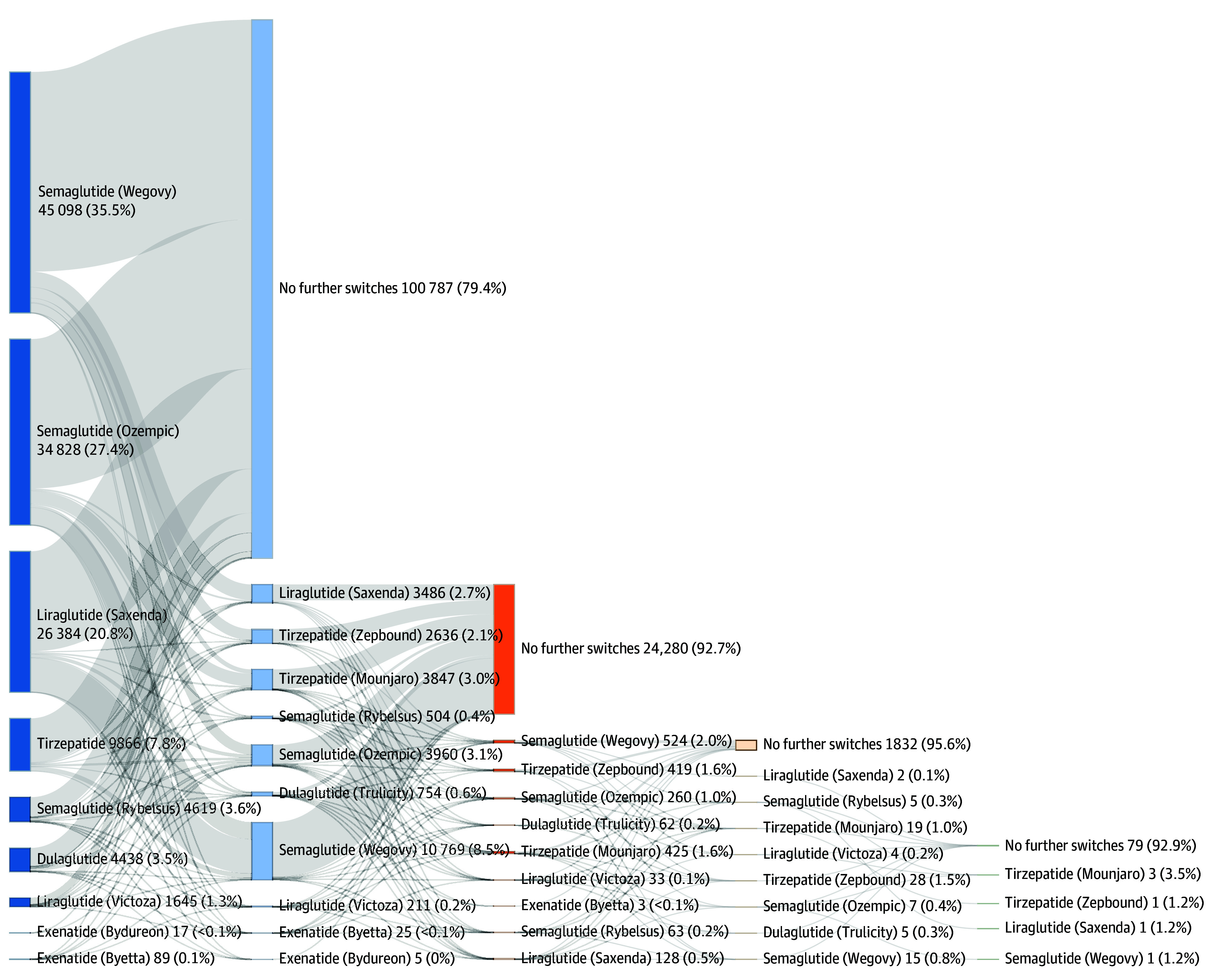 Figure 1
Peer Reviews
No public reviews on file for this paper yet. If you reviewed it on a platform where reviews are public (OpenReview, ICLR, NeurIPS, ICML), you can paste yours below so the community can read it here.
Videos
No videos yet. Explain this paper in a talk, walkthrough, or lecture? Add one.
Taxonomy
TopicsDiabetes Treatment and Management · Medication Adherence and Compliance · Bariatric Surgery and Outcomes