Resting Oxygen Consumption Estimates in Scleroderma Can Lead to Underestimation of Cardiac Output
Oscar Cullen, Laura Ross, Jessica L. Fairley, Luke W. Spencer, Amy M. Mitchell, Stephanie J. Rowe, Kristel Janssens, Youri Bekhuis, Stephen J. Foulkes, Paolo D'Ambrosio, Margarita Calvo‐Lopez, Kaitlin Newcomb, Andre La Gerche, Andrew T. Burns

TL;DR
This study shows that estimating resting oxygen consumption in scleroderma patients can lead to incorrect cardiac output measurements.
Contribution
The study compares prediction equations with direct measurements in systemic sclerosis patients, highlighting diagnostic inaccuracies.
Findings
Prediction equations for rVO2 showed significant discrepancies compared to direct measurements in systemic sclerosis patients.
These inaccuracies may lead to underestimation of cardiac output, affecting clinical assessments.
Abstract
Accurate resting oxygen consumption (rVO2) quantification is critical for Fick‐derived cardiac output calculations. Yet, clinical practice predominantly uses empirical estimations, which can be inaccurate. We evaluated the established rVO₂ prediction equations against direct metabolic cart measurements in systemic sclerosis patients, revealing significant discordances with potential diagnostic implications.
Genes, proteins, chemicals, diseases, species, mutations and cell lines named across the full text — each resolved to its canonical identifier and authoritative record.
Click any figure to enlarge with its caption.
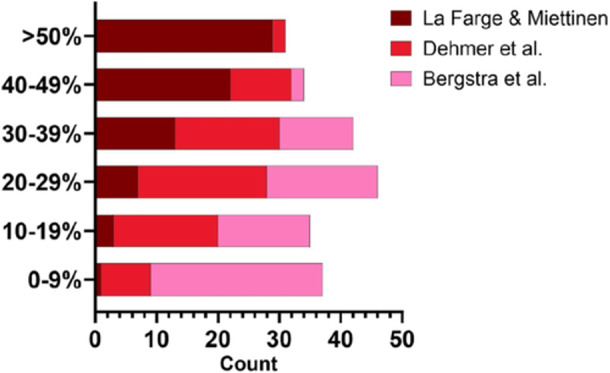 Figure 1
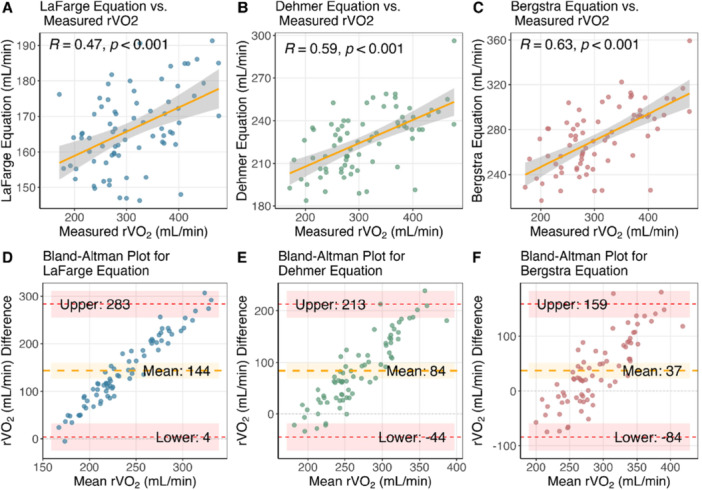 Figure 2
Peer Reviews
No public reviews on file for this paper yet. If you reviewed it on a platform where reviews are public (OpenReview, ICLR, NeurIPS, ICML), you can paste yours below so the community can read it here.
Videos
No videos yet. Explain this paper in a talk, walkthrough, or lecture? Add one.
Taxonomy
TopicsSystemic Sclerosis and Related Diseases · Cardiovascular Function and Risk Factors · Multiple Sclerosis Research Studies