The field situation heuristics effect in online emergencies: the formation mechanism and differences of audience cognitive bias
Peng Liu, Changzheng Yang, Jin Gao

TL;DR
This study explores how situational heuristics in online emergencies lead to audience cognitive biases, affecting public opinion and social stability.
Contribution
The study introduces a novel theoretical framework integrating field theory and heuristic processing to explain cognitive bias formation in online emergencies.
Findings
Anchoring, representativeness, and availability heuristics significantly influence cognitive biases through adaptive expectations and implicit attributions.
Representativeness heuristics have the strongest impact on cognitive biases, followed by availability and anchoring heuristics.
The effect of heuristics on cognitive biases varies significantly across demographic groups.
Abstract
In the contemporary digital communication environment, online emergencies often trigger cognitive biases among audiences, affecting the health of public opinion ecosystems and potentially threatening social stability. While existing research has largely focused on the manifestations and consequences of cognitive biases, the formation mechanisms, particularly the role of contextual factors in the online environment, remain understudied. This study examines how field situational heuristics influence cognitive biases in online emergencies through the mediating pathways of adaptive expectations and implicit attributions. This research integrates field theory and heuristic information processing theory to construct a theoretical framework. Using anchoring heuristics, representativeness heuristics, and availability heuristics as independent variables, cognitive bias as the dependent…
Genes, proteins, chemicals, diseases, species, mutations and cell lines named across the full text — each resolved to its canonical identifier and authoritative record.
Click any figure to enlarge with its caption.
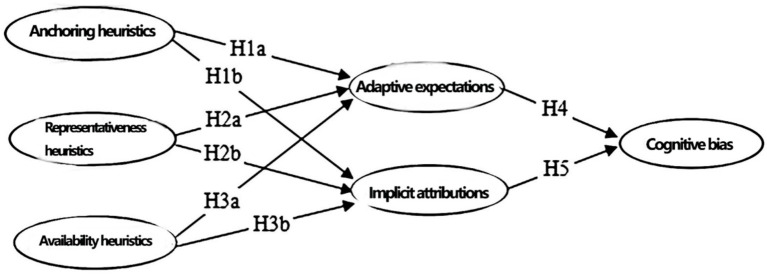 Figure 1
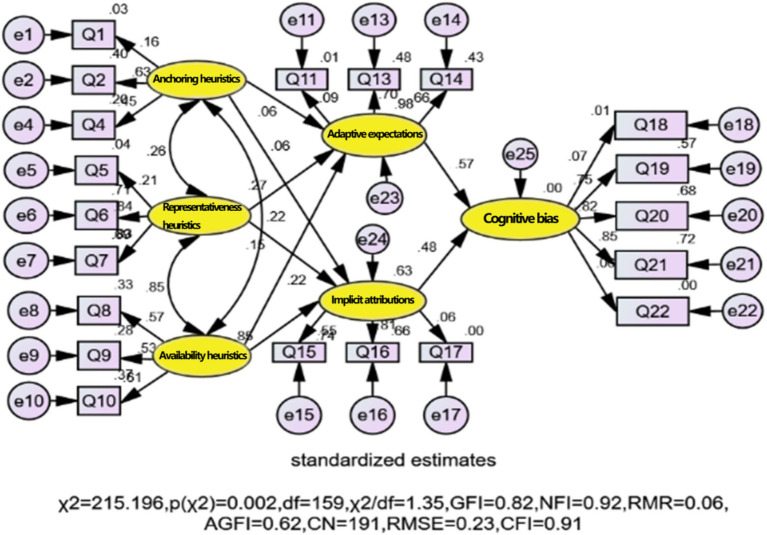 Figure 2
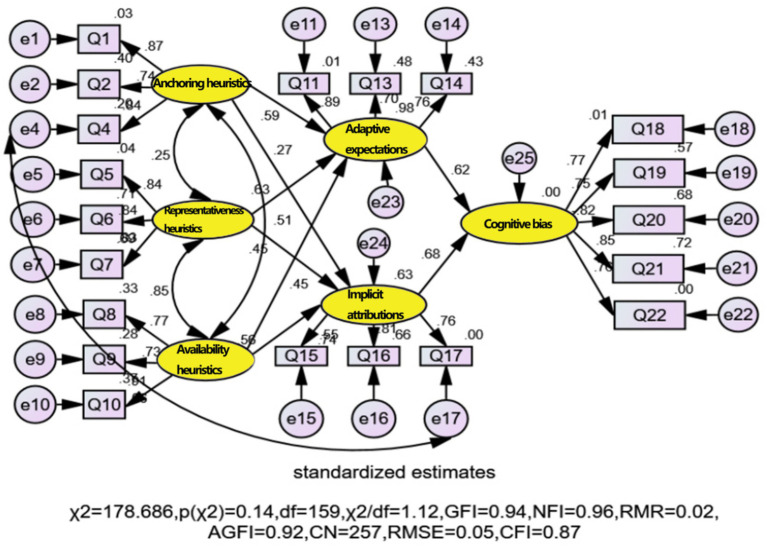 Figure 3
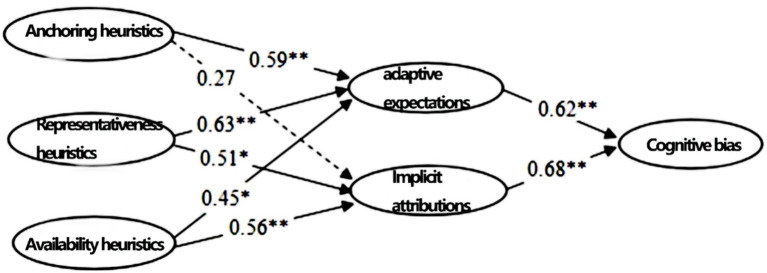 Figure 4
Peer Reviews
No public reviews on file for this paper yet. If you reviewed it on a platform where reviews are public (OpenReview, ICLR, NeurIPS, ICML), you can paste yours below so the community can read it here.
Videos
No videos yet. Explain this paper in a talk, walkthrough, or lecture? Add one.
Taxonomy
TopicsSocial Media and Politics · Public Relations and Crisis Communication · Social and Intergroup Psychology