Navigating the boundary between ‘normative’ and ‘non‐normative’ collective action: A British case study of the removal of a public statue associated with racism
John Dixon, Magi Young, Shelley McKeown, Paul Stenner, Sofia Stathi, Gian Antonio Di Bernardo, Loris Vezzali

TL;DR
The paper examines a 2020 event in Bristol where a statue of a historical slaver was removed during a protest, exploring how actions are labeled as normative or non-normative in collective action.
Contribution
The study contributes a qualitative analysis of protest actions that challenges the binary classification of normative and non-normative collective action.
Findings
The event in Bristol highlights the fluid and context-dependent nature of collective action labels.
Courtroom transcripts and walking interviews reveal the situated meanings of protest actions.
The analysis emphasizes the importance of local understandings in conceptualizing collective action.
Abstract
Psychological research typically distinguishes between normative (e.g., peaceful protests, petitions) and non‐normative (e.g., property destruction, riots) collective action. This binary framework has proved useful in exploring the psychological factors that shape different forms of collective action. However, recent critiques suggest it oversimplifies the fluid, contested, and context‐dependent nature of collective protest. Our paper develops these critiques through qualitative analysis of walking interview accounts and courtroom transcripts of an event occurring at a 2020 Black Lives Matter rally in the city of Bristol, UK. During this event, a public statue of Edward Colston (1636‐1721), a 17th century slaver, was toppled, defaced, and thrown in the River Avon, and four protestors were subsequently charged with, then acquitted of, criminal damage. Implications for conceptualising and…
Genes, proteins, chemicals, diseases, species, mutations and cell lines named across the full text — each resolved to its canonical identifier and authoritative record.
Click any figure to enlarge with its caption.
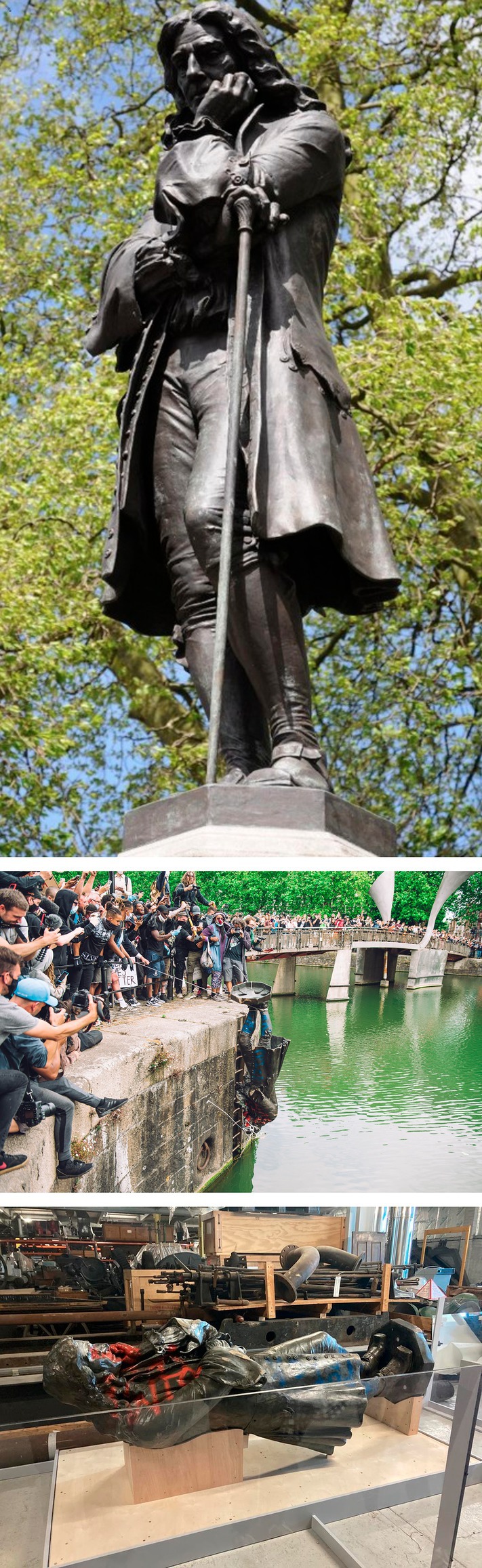 Figure 1
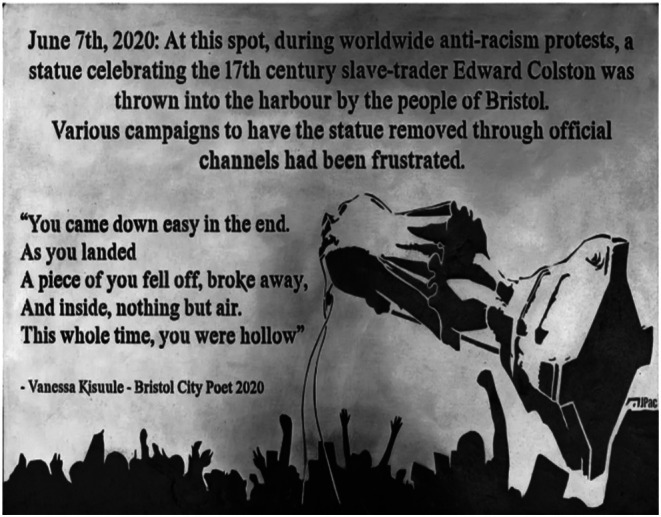 Figure 2
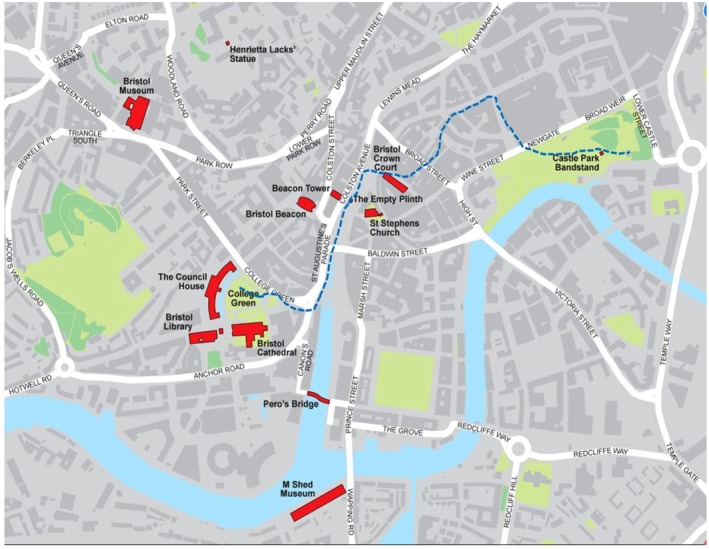 Figure 3
Peer Reviews
No public reviews on file for this paper yet. If you reviewed it on a platform where reviews are public (OpenReview, ICLR, NeurIPS, ICML), you can paste yours below so the community can read it here.
Videos
No videos yet. Explain this paper in a talk, walkthrough, or lecture? Add one.
Taxonomy
TopicsSocial Representations and Identity · Social and Intergroup Psychology · Social Power and Status Dynamics