Bioengineering approaches to dynamic impact analysis for cranial fracture interpretation in arcaheology
Daniel Rodríguez-Iglesias, Ana Pantoja-Pérez, Ángel De La Rosa, Pedro Latorre-Carmona, Nohemi Sala

TL;DR
This study uses controlled experiments to understand how cranial fractures form, helping archaeologists distinguish between violent and non-violent events in the past.
Contribution
The study introduces a dynamic fracture-mechanics framework for interpreting archaeological cranial fractures using impact energy and bone thickness.
Findings
Impact energy is the most reliable parameter for assessing fracture severity, with a threshold of around 2000 N.
Bone thickness significantly influences cranial resistance to impact.
Focal surfaces produce depressed and comminuted fractures, while broad surfaces generate linear fractures.
Abstract
Cranial fractures are widely documented in archaeological contexts, yet the application of fracture mechanics to differentiate traumatic events remains limited. This study analyses a dataset of 234 human cadavers subjected to 329 experimentally controlled blunt-impact tests, examining mechanical variables and fracture patterns that could be relevant to archaeological interpretation. The results show substantial methodological variability across the analysed studies. Analysis of these studies indicates that impact energy is the most reliable parameter for assessing fracture severity, suggesting a preliminary fracture threshold of around 2000 N, and that bone thickness is a major determinant of cranial resistance. Clear differences in fracture morphology according to impact surface were also observed: focal surfaces frequently produce depressed and comminuted fractures, whereas broad…
Genes, proteins, chemicals, diseases, species, mutations and cell lines named across the full text — each resolved to its canonical identifier and authoritative record.
Click any figure to enlarge with its caption.
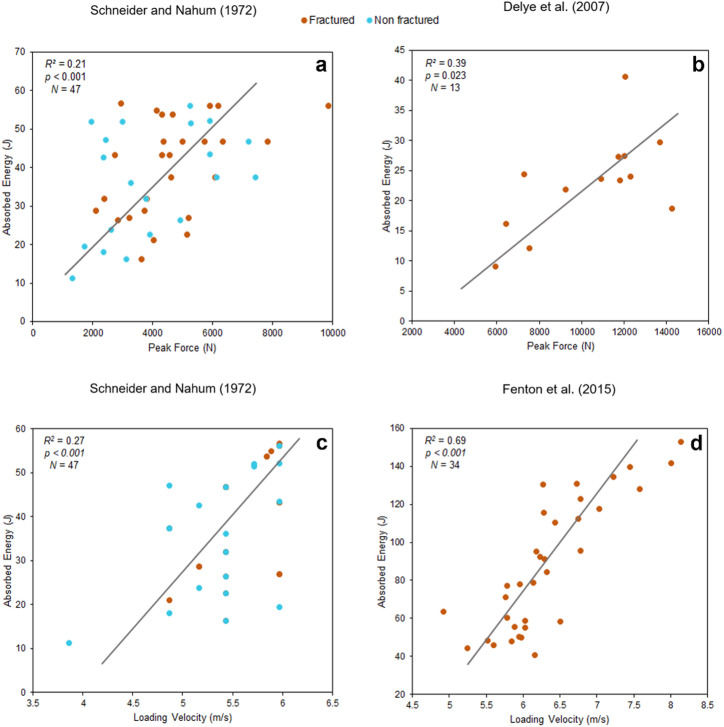 Figure 1
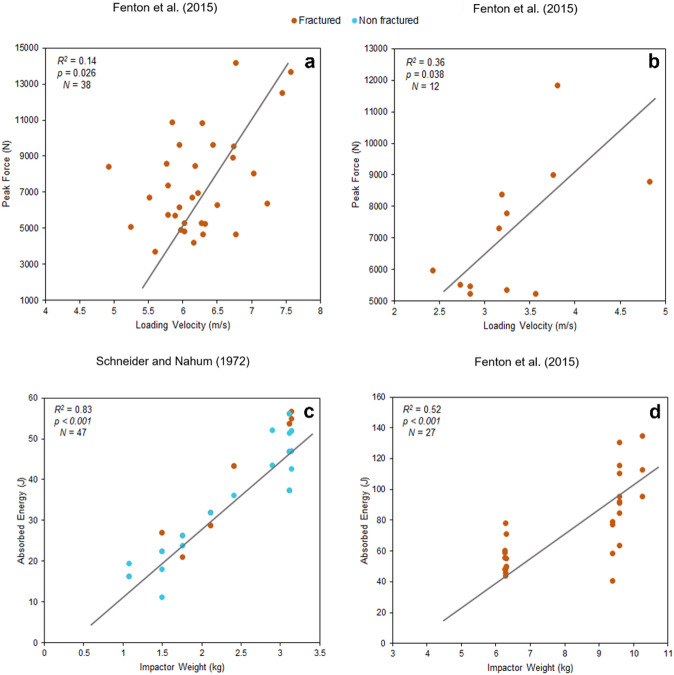 Figure 2
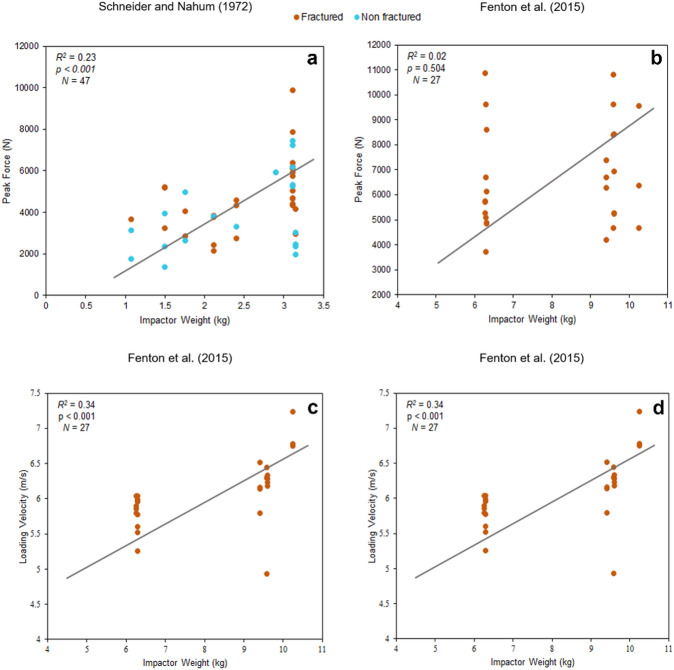 Figure 3
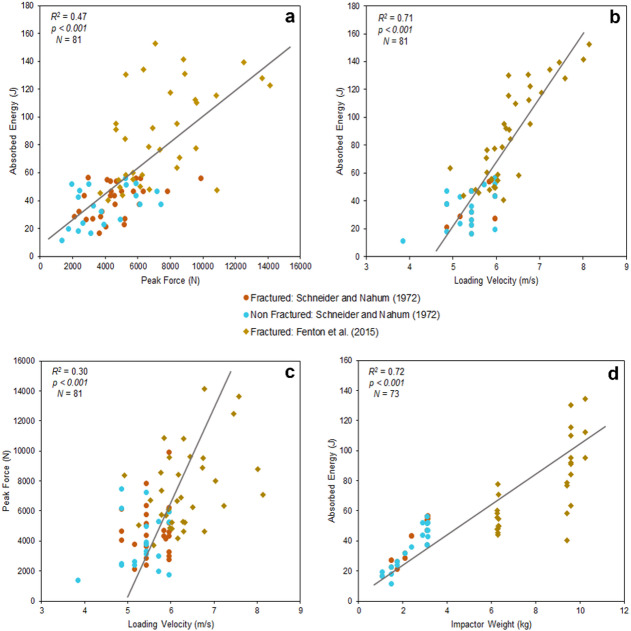 Figure 4
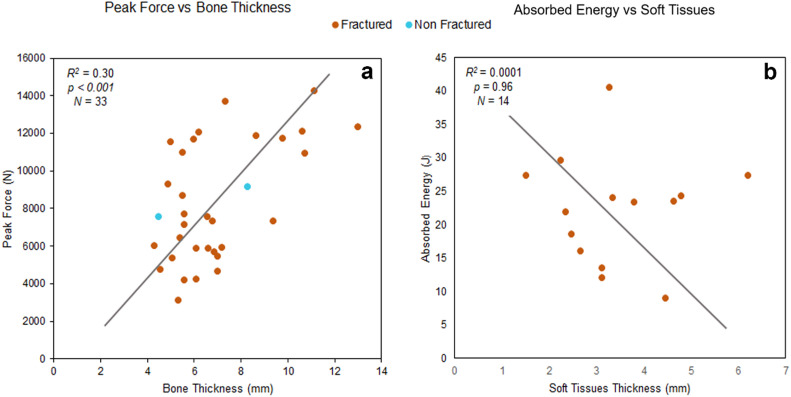 Figure 5
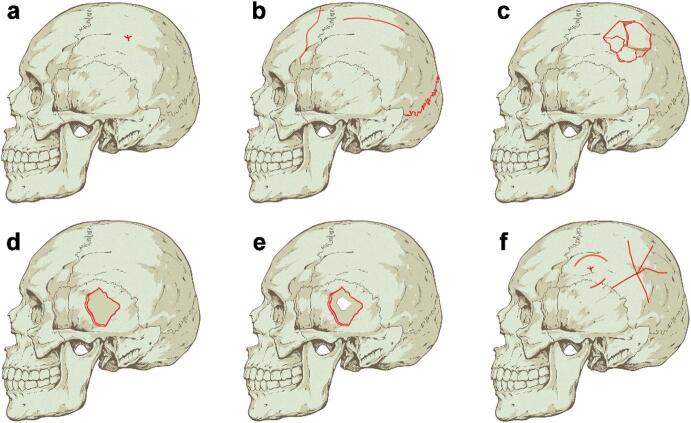 Figure 6
Peer Reviews
No public reviews on file for this paper yet. If you reviewed it on a platform where reviews are public (OpenReview, ICLR, NeurIPS, ICML), you can paste yours below so the community can read it here.
Videos
No videos yet. Explain this paper in a talk, walkthrough, or lecture? Add one.
Taxonomy
TopicsForensic Anthropology and Bioarchaeology Studies · Automotive and Human Injury Biomechanics · Bone health and osteoporosis research