From tests to truth: A misclassification-aware machine learning framework for estimating brucellosis seroprevalence in wild canids
Nahal Sarvestani, Farzane Shams, Armin Mirshahi, Mobina Pato, Aria Javani Farbod, Armina Khayatderafshi, Mobina Payami, Arman Abdous, Ana LTO Nascimento, Ana LTO Nascimento, Ana LTO Nascimento

TL;DR
Wild canids show modest but widespread exposure to Brucella bacteria, but confirmed infections are rare, with significant regional gaps in surveillance.
Contribution
A misclassification-aware machine learning framework is introduced to correct for diagnostic test imperfections in estimating Brucella seroprevalence in wild canids.
Findings
Global misclassification-adjusted seroprevalence in wild canids is 8.2%.
Confirmed active infection based on PCR or culture is rare at 3.9%.
Exposure levels vary regionally, with higher rates in South America and lower in Europe and North America.
Abstract
Brucellosis is an important zoonotic disease affecting humans, livestock, and wildlife, yet prevalence estimates in wild species are often underestimated due to limited attention to surveillance, as well as insufficient and biased sampling. To clarify exposure patterns in wild canids, we searched PubMed, Scopus, Web of Science, SciELO, and Google Scholar (1962–2025) for primary prevalence studies of Brucella species (spp.) in free-ranging canids. Serological data were analyzed using a misclassification-aware, multi-assay model that corrects for imperfect test sensitivity and specificity. Confirmatory polymerase chain reaction (PCR) and culture results were considered separately from serological data, as each offers a different perspective on disease status. Across 48 wild serology populations (n = 3,925 animals), the global misclassification-adjusted true seroprevalence was 8.2% (95%…
Genes, proteins, chemicals, diseases, species, mutations and cell lines named across the full text — each resolved to its canonical identifier and authoritative record.
Click any figure to enlarge with its caption.
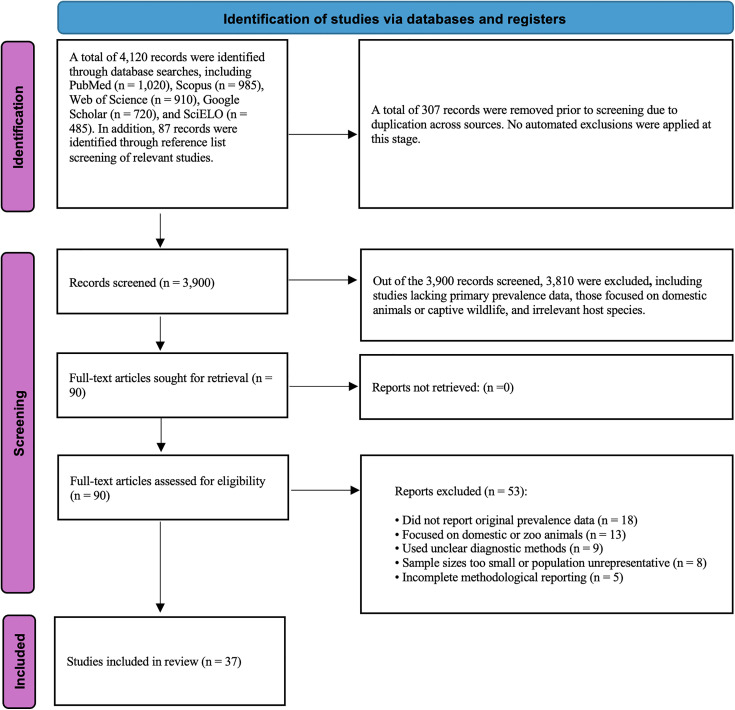 Figure 1
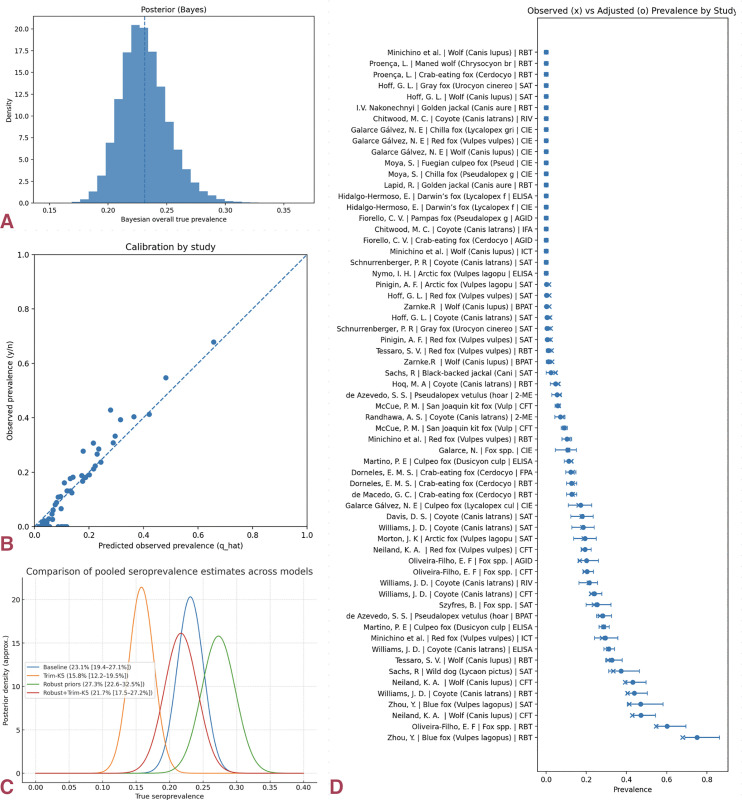 Figure 2
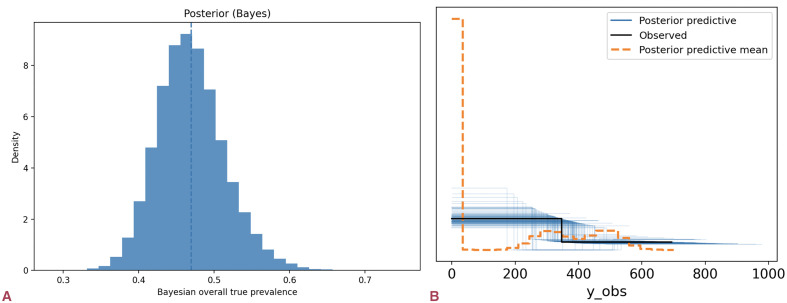 Figure 3
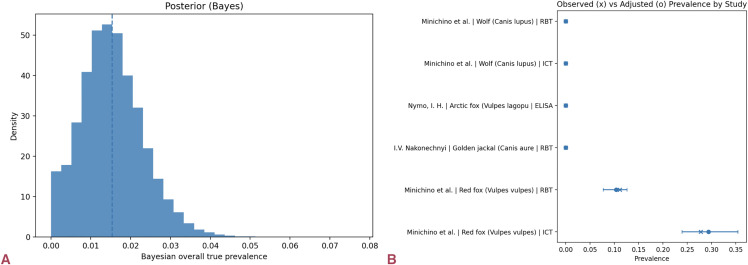 Figure 4
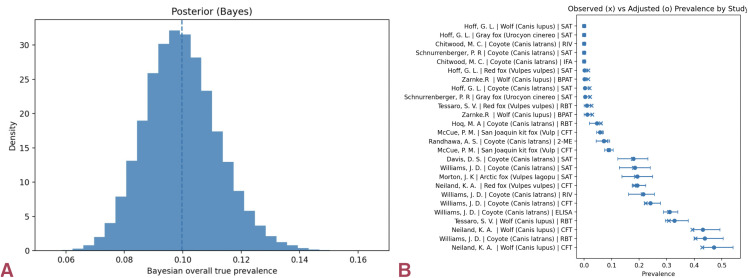 Figure 5
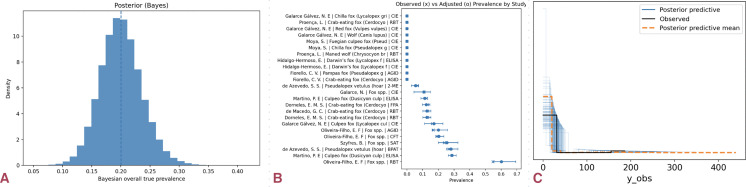 Figure 6
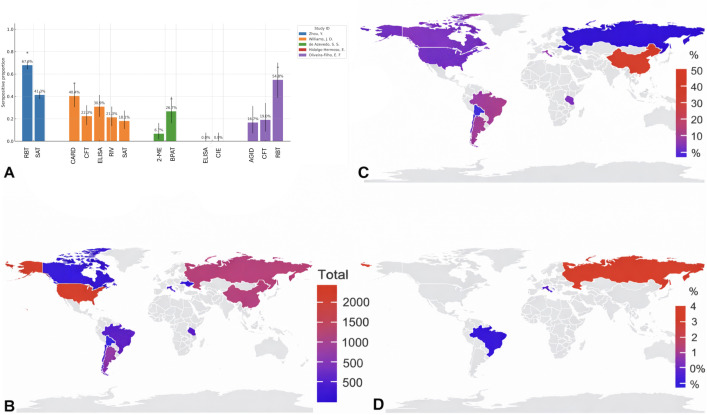 Figure 7
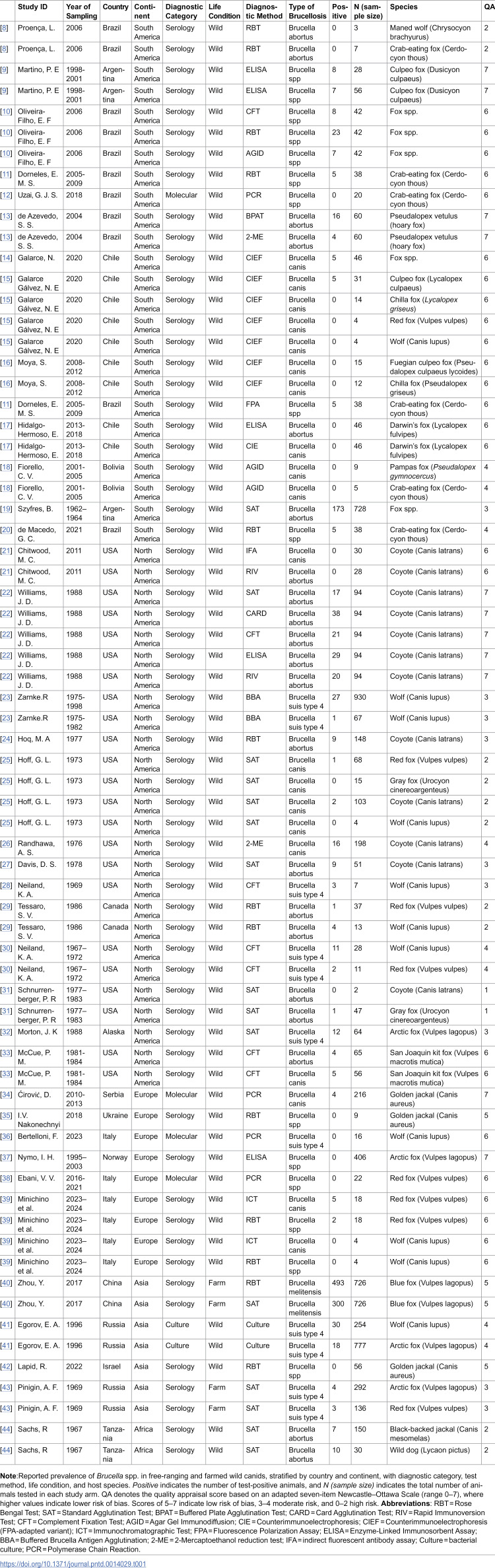 Figure 8
Peer Reviews
No public reviews on file for this paper yet. If you reviewed it on a platform where reviews are public (OpenReview, ICLR, NeurIPS, ICML), you can paste yours below so the community can read it here.
Videos
No videos yet. Explain this paper in a talk, walkthrough, or lecture? Add one.
Taxonomy
TopicsBrucella: diagnosis, epidemiology, treatment · Zoonotic diseases and public health · Animal Diversity and Health Studies