Structural basis of diadinoxanthin-Chl a/b–binding proteins in the photosystem I supercomplex of Euglena gracilis
Tianyu Bai, Zhiyuan Mao, Dapeng Sun, Yang Tang, Ziqiu Lu, Fei Ma, Bingxin Ma, Jinghua Chen, Weiwei Wang, Yuelin Li, Shufang Liu, Yi Yang, Yumei Wang, Lirong Tian

TL;DR
This study reveals the high-resolution structure of a photosystem I complex in Euglena gracilis, showing how it evolved through secondary endosymbiosis.
Contribution
The paper presents the first detailed structure of the PSI-LHCI supercomplex in E. gracilis, highlighting unique pigment-binding features and evolutionary adaptations.
Findings
The PSI-LHCI supercomplex has 8 core subunits and 16 LHCIs arranged in a two-layered configuration.
The LHCIs include 4 diadinoxanthin-Chl a/b-binding and 12 diadinoxanthin-Chl a-binding antennae.
The structure provides insights into light-harvesting mechanisms and evolutionary changes in green-lineage organisms.
Abstract
Euglena gracilis is a phototrophic flagellate that has evolved through secondary endosymbiotic events and belongs to green-lineage organisms. We report a unique structure of photosystem I-light harvesting complex I (PSI-LHCI) supercomplex from E. gracilis at a 2.23-angstrom resolution by cryo–electron microscopy. The supercomplex is composed of 8 core subunits and 16 LHCIs and exhibits distinctive structural features compared to its counterparts in green algae and plants. The LHCI subunits encircle the core complex, forming a two-layered arrangement that comprises six pairs of tightly packed heterodimers. Specifically, the 16 LHCIs consist of 4 diadinoxanthin-chlorophyll (Chl) a/b–binding antennae (Lhcbm) and 12 diadinoxanthin-Chl a–binding antennae (Lhca), and they exhibit characteristic pigment compositions combining features of green- and red-lineage organisms. These findings provide…
Genes, proteins, chemicals, diseases, species, mutations and cell lines named across the full text — each resolved to its canonical identifier and authoritative record.
Click any figure to enlarge with its caption.
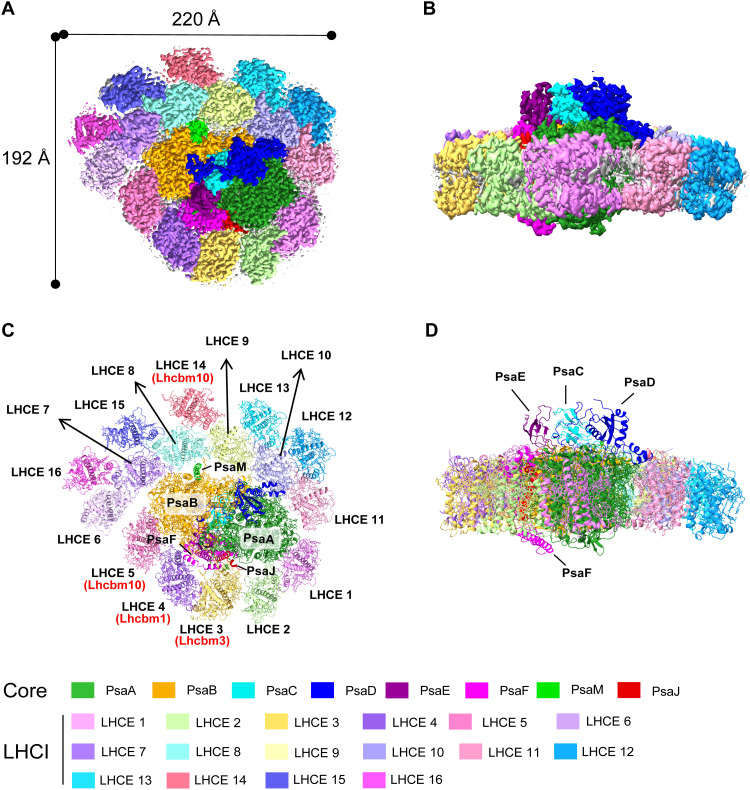 Figure 1
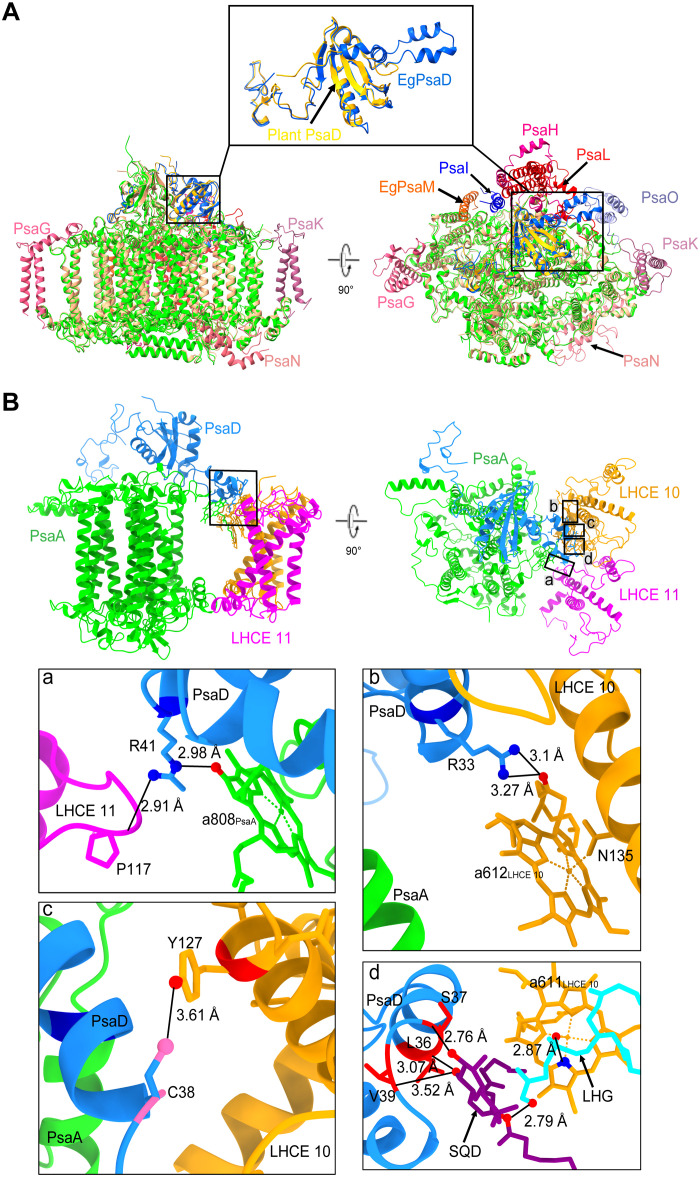 Figure 2
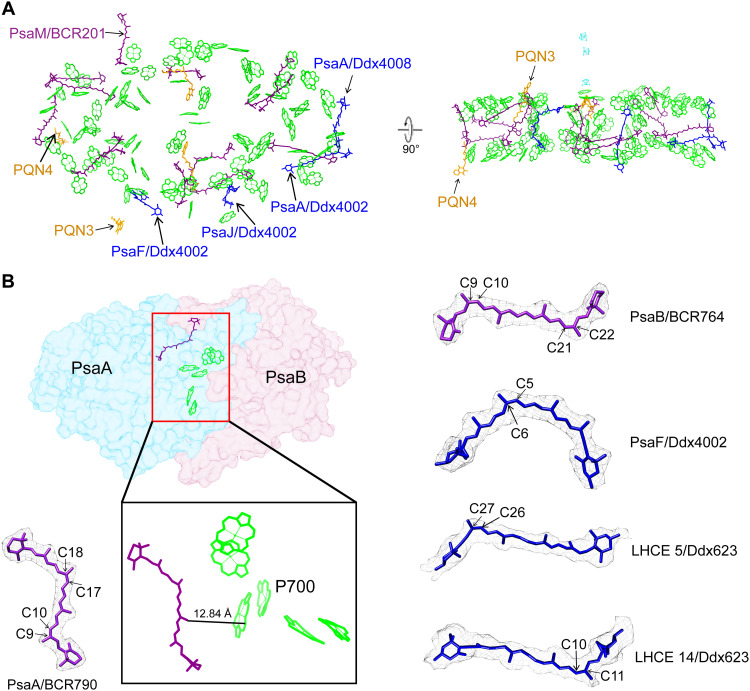 Figure 3
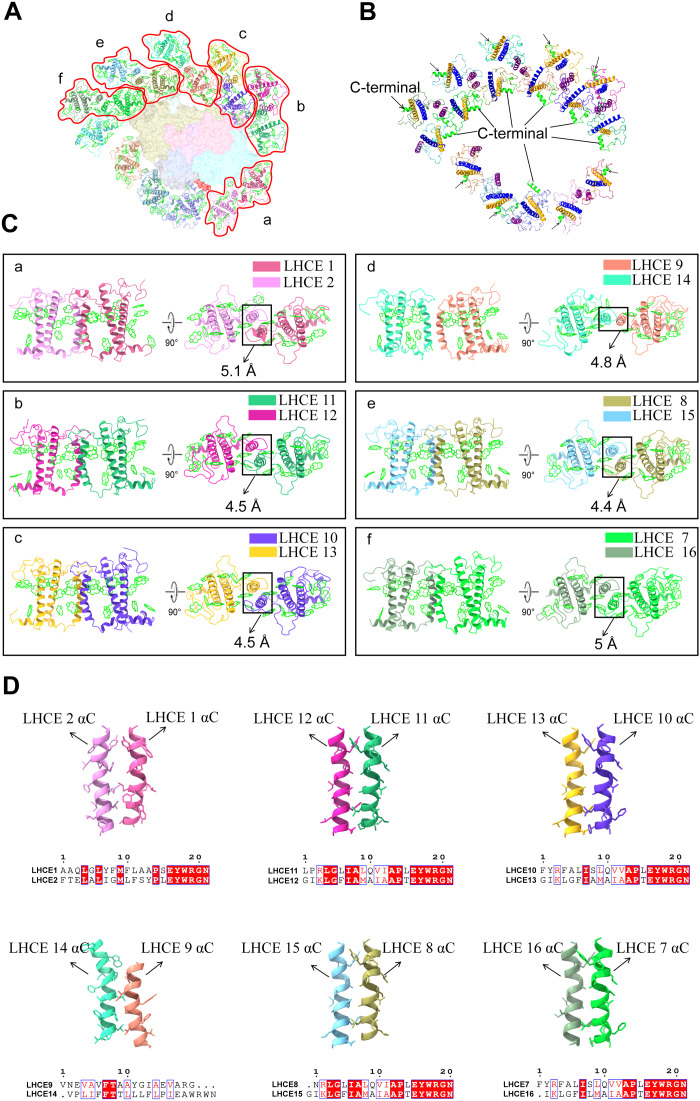 Figure 4
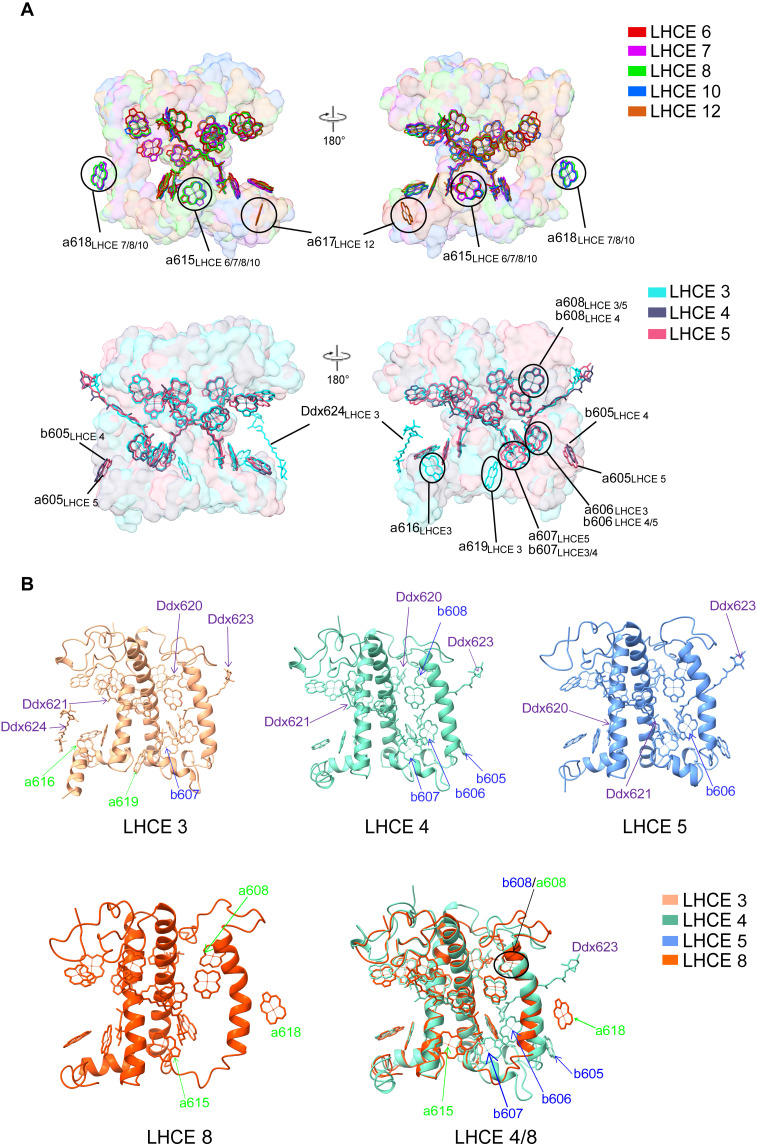 Figure 5
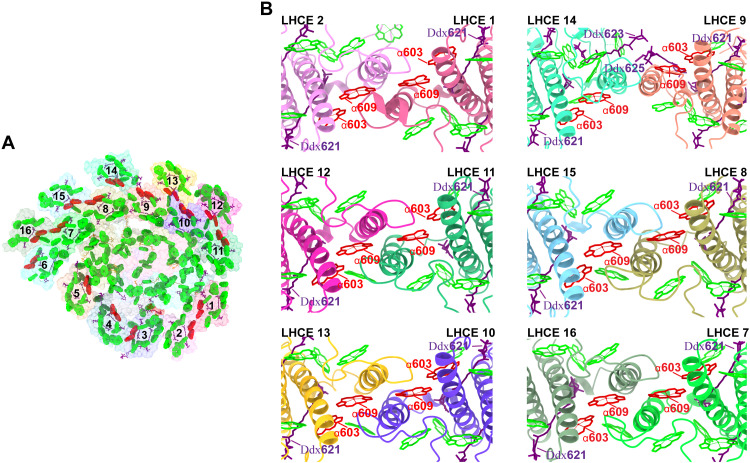 Figure 6
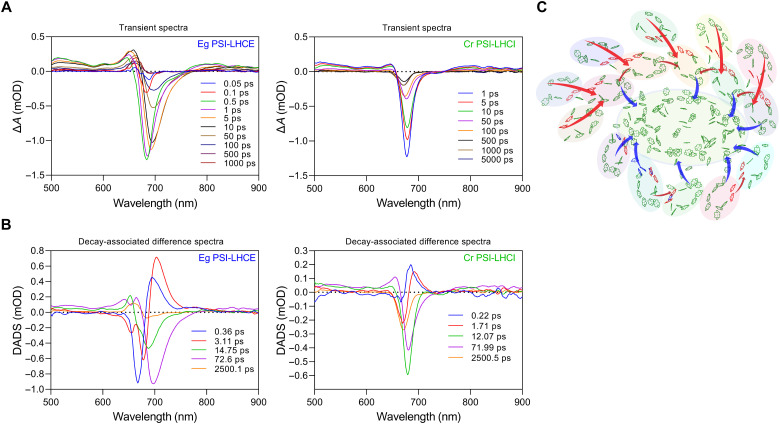 Figure 7
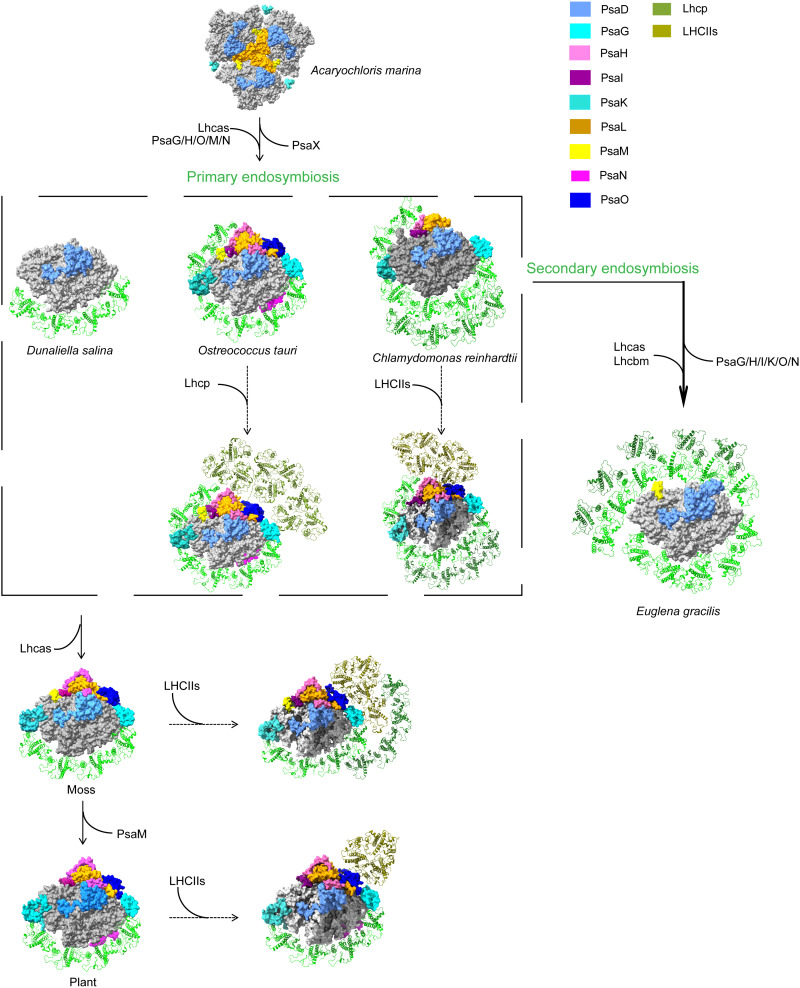 Figure 8
Peer Reviews
No public reviews on file for this paper yet. If you reviewed it on a platform where reviews are public (OpenReview, ICLR, NeurIPS, ICML), you can paste yours below so the community can read it here.
Videos
No videos yet. Explain this paper in a talk, walkthrough, or lecture? Add one.
Taxonomy
TopicsPhotosynthetic Processes and Mechanisms · Photoreceptor and optogenetics research · Protist diversity and phylogeny