Boosting PVC reactivity through iodination for CO2-derived functionalization
Juliette Delcorps, Emna Ben Ayed, Olivier Coulembier

TL;DR
This paper introduces a sustainable method to modify PVC using iodination and CO2-based reactions, making the process greener and more efficient.
Contribution
The novel contribution is a fourfold improvement in CO2 incorporation into PVC through iodination and SN2 substitution using CO2BAM.
Findings
Iodination of PVC occurs efficiently under mild and sustainable conditions using phase-transfer catalysis.
SN2 substitution with CO2BAM improves CO2 incorporation into PVC fourfold compared to prior methods.
The modified PVC remains fully soluble, indicating a practical and effective structural modification approach.
Abstract
Aqueous phase-transfer catalysis enables selective iodination of PVC under mild and sustainable conditions. Subsequent reaction with a DBU-based CO2-binding amine (CO2BAM) achieves efficient SN2 substitution at CH–X centers, improving CO2 incorporation fourfold relative to previous CO2BAL strategies. The polymer remains fully soluble, demonstrating a greener, safer, and effective approach to PVC structural modification. PVC iodination via phase-transfer catalysis and subsequent reaction with CO2BAMs opens new possibilities for simultaneous PVC and CO2 upcycling
Genes, proteins, chemicals, diseases, species, mutations and cell lines named across the full text — each resolved to its canonical identifier and authoritative record.
Click any figure to enlarge with its caption.
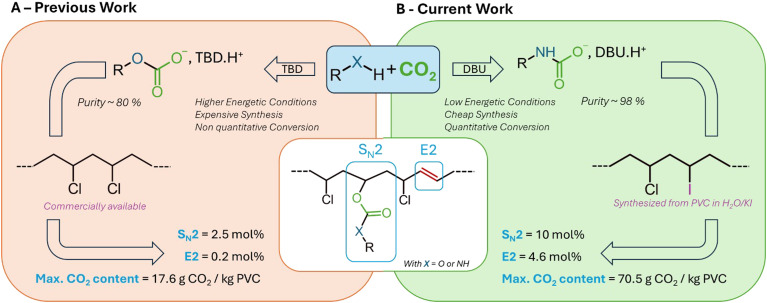 Figure 1
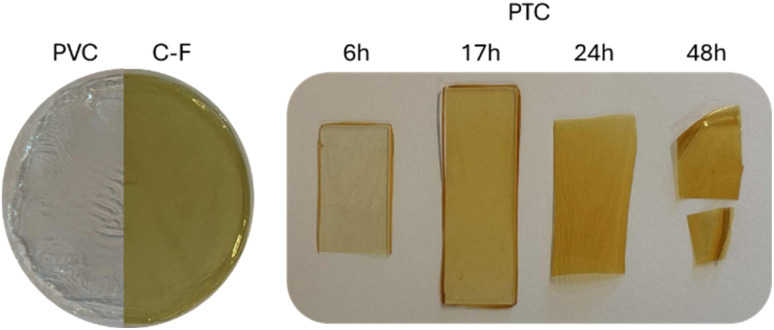 Figure 2
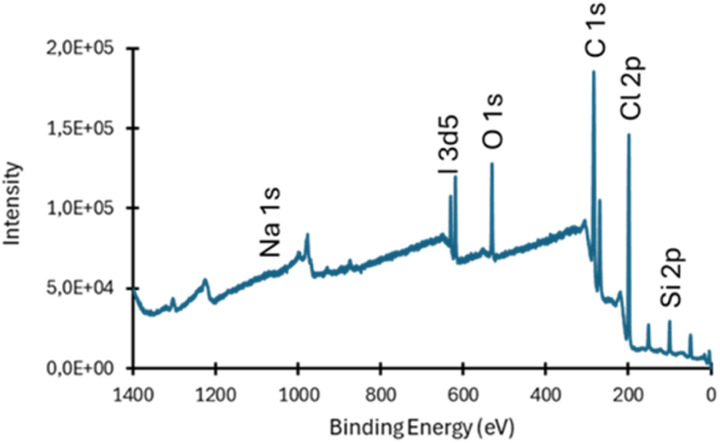 Figure 3
 Figure 4
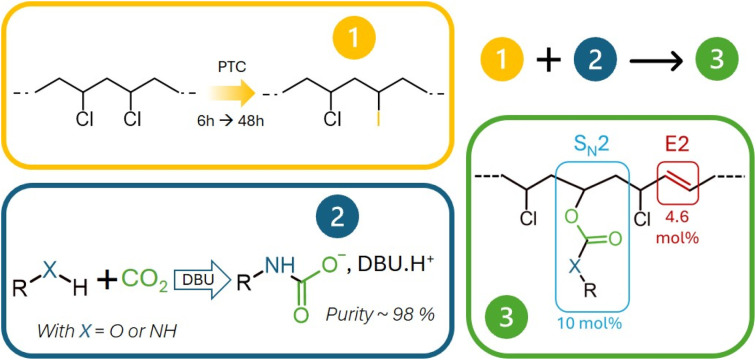 Figure 5
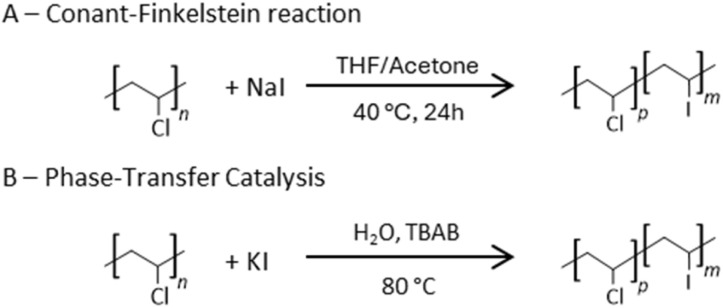 Figure 6
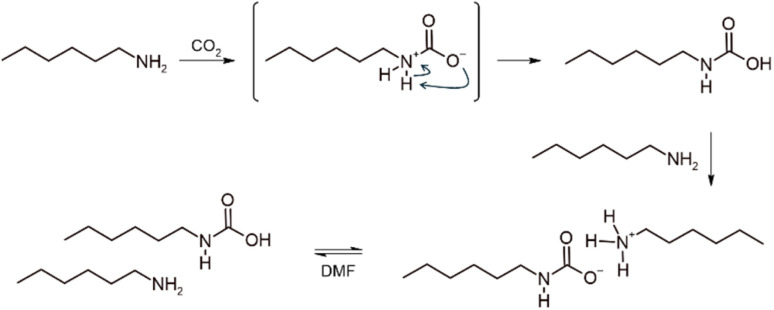 Figure 7
Peer Reviews
No public reviews on file for this paper yet. If you reviewed it on a platform where reviews are public (OpenReview, ICLR, NeurIPS, ICML), you can paste yours below so the community can read it here.
Videos
No videos yet. Explain this paper in a talk, walkthrough, or lecture? Add one.
Taxonomy
TopicsPolymer Science and PVC · Vanadium and Halogenation Chemistry · Oxidative Organic Chemistry Reactions