Rewiring Receptor Activation: Mechanistic Insights into Toggle Switch Modulation by 25CN-NBx Compounds
Vito F. Palmisano, Micaela Vidal−Sánchez, Juan J. Nogueira

TL;DR
This study uses simulations to show how 25CN-NBx compounds affect the 5-HT2A receptor, revealing how their structure influences receptor activation and signaling.
Contribution
The study provides mechanistic insights into how bulky substitutions on 25CN-NBx compounds modulate the toggle switch residue W336 in the 5-HT2A receptor.
Findings
Bulky substitutions on the N-benzyl ring shift the position of W336, a key toggle switch residue in the 5-HT2A receptor.
25CN-NB-2-OH-3-Me has the highest affinity for the 5-HT2A receptor, while 25CN-NB-2-OH-5-MeO has the lowest.
The negative dihedral state of W336 strengthens van der Waals interactions with F332 and I163, stabilizing receptor activation.
Abstract
The development of new treatments for neuropsychiatric disorders relies on a deeper understanding of the molecular mechanisms behind psychedelic compounds, particularly how they differentiate between hallucinogenic and antidepressant effects. In this study, we explore by molecular dynamics simulations a series of 25CN-NBx compounds bound to the 5-HT2A receptor. The simulations uncover that bulky substitutions on the N-benzyl ring cause a significant shift in the position of W336, a key toggle switch residue known to influence receptor activation and thought to play a crucial role in mediating psychedelic signaling. This result is confirmed through potential of mean force calculations along the toggle switch’s dihedral angle. End-state free energy calculations align closely with experimental data, showing that 25CN-NB-2-OH-3-Me and 25CN-NB-2-OH-5-MeO have the highest and lowest…
Genes, proteins, chemicals, diseases, species, mutations and cell lines named across the full text — each resolved to its canonical identifier and authoritative record.
Click any figure to enlarge with its caption.
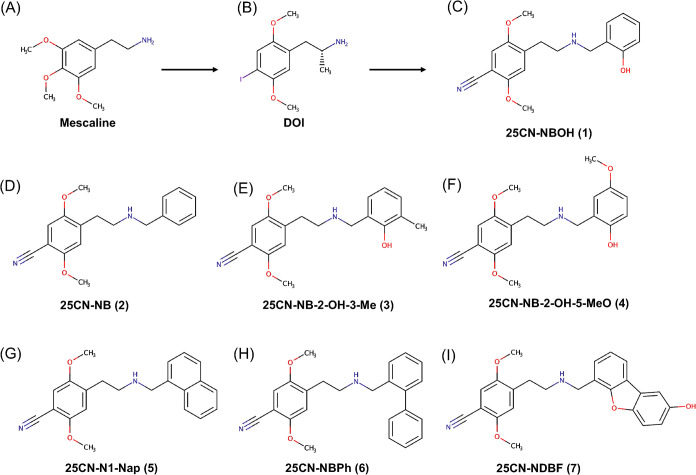 Figure 1
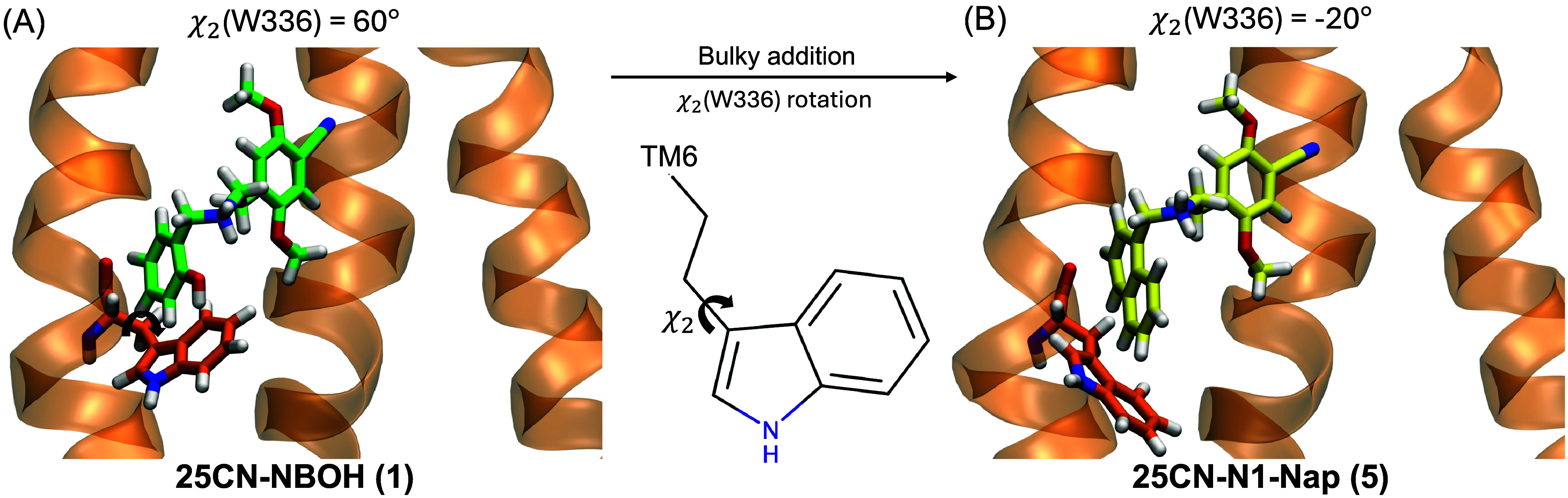 Figure 2
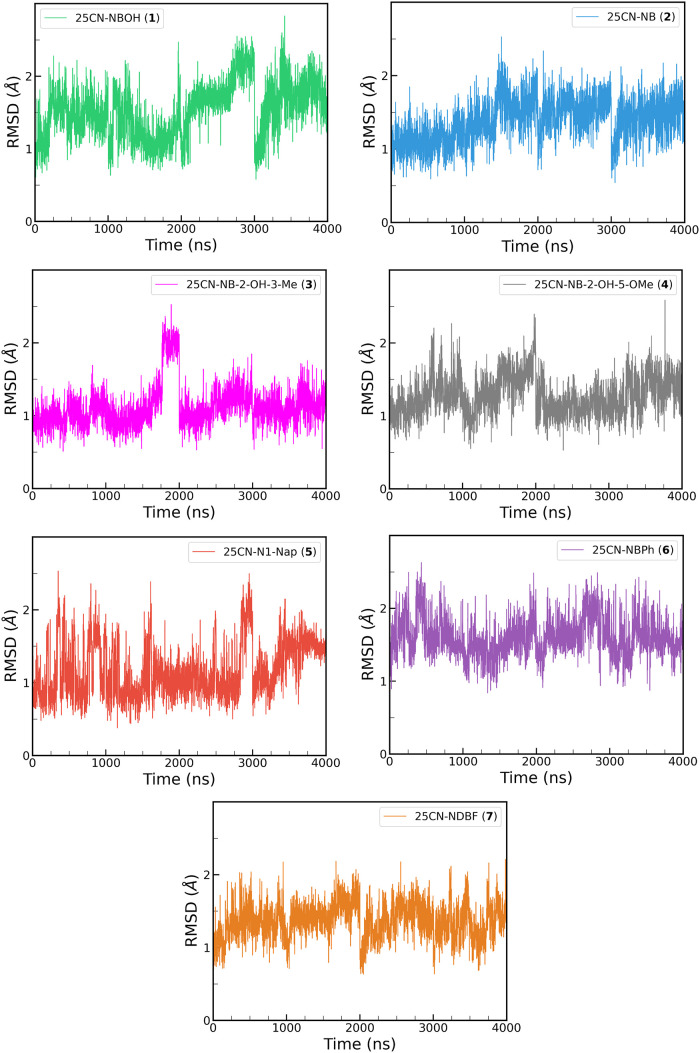 Figure 3
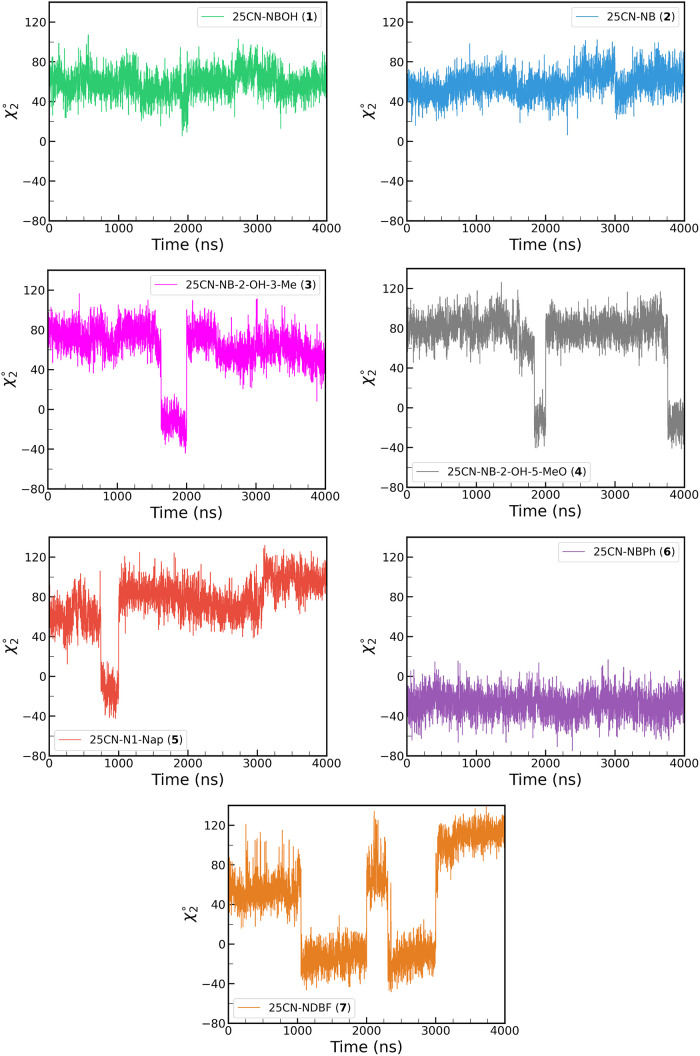 Figure 4
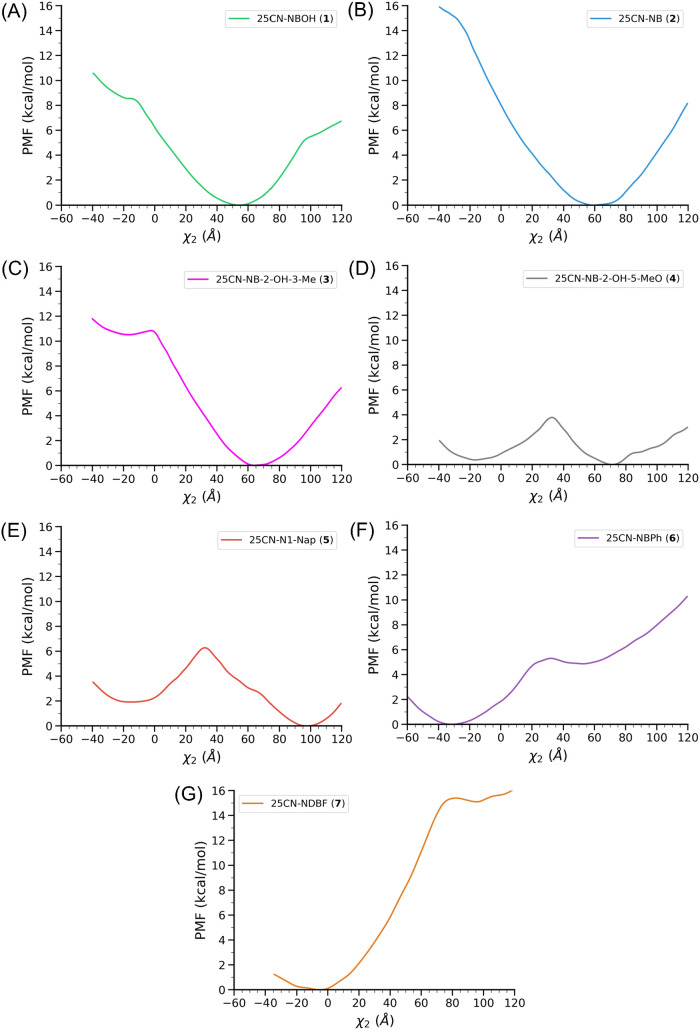 Figure 5
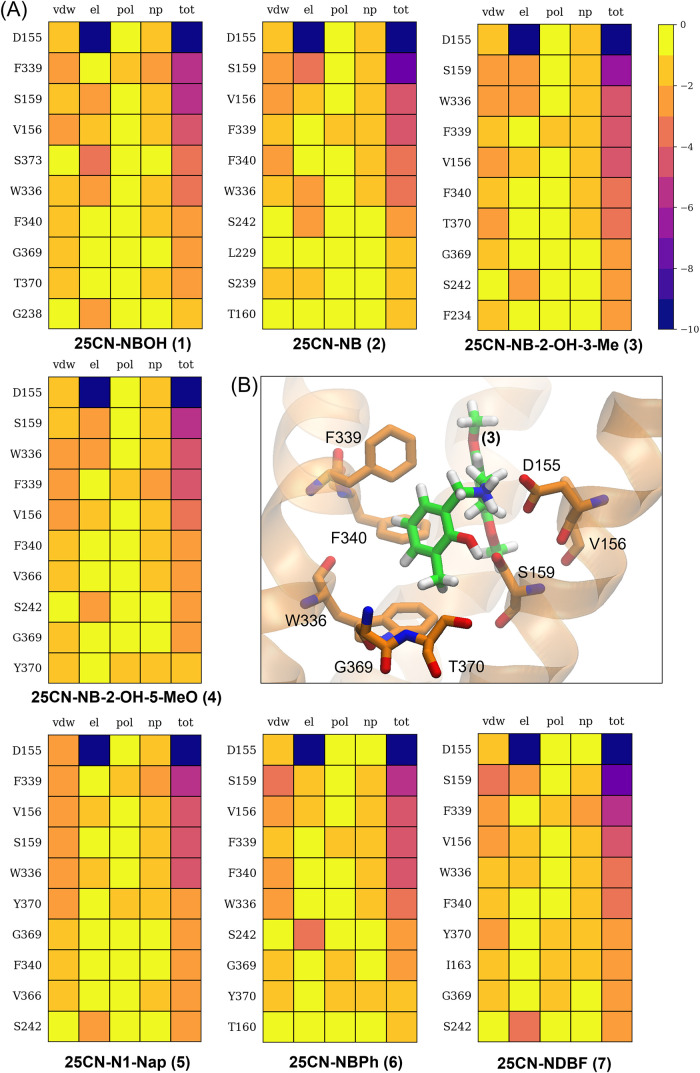 Figure 6
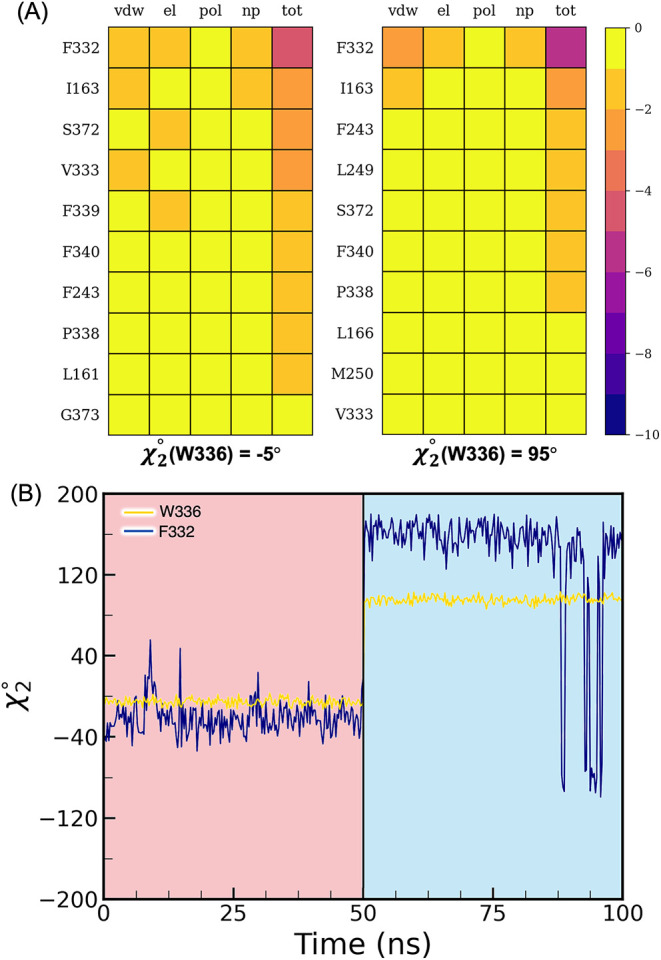 Figure 7
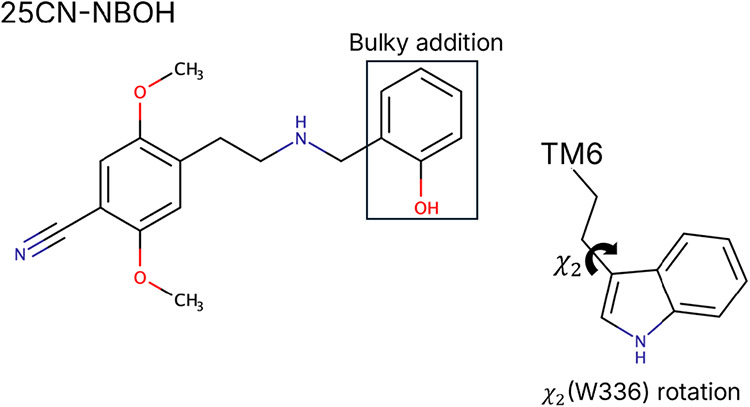 Figure 8
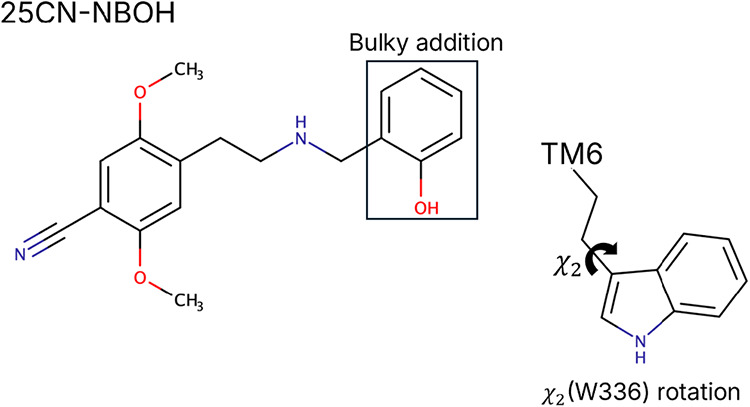 Figure 9
Peer Reviews
No public reviews on file for this paper yet. If you reviewed it on a platform where reviews are public (OpenReview, ICLR, NeurIPS, ICML), you can paste yours below so the community can read it here.
Videos
No videos yet. Explain this paper in a talk, walkthrough, or lecture? Add one.
Taxonomy
TopicsPsychedelics and Drug Studies · Nicotinic Acetylcholine Receptors Study · Receptor Mechanisms and Signaling