Population structure and phylogenetic analysis of Vibrio cholerae non-O1/O139 by whole genome sequencing
Taylor Wells, Elizabeth González-Durán, Anthony M. Smith, Swapan K. Banerjee, Sandeep Tamber, Natalie Knox, Celine Nadon, Rahul Mandal, Rahul Mandal, Rahul Mandal, Rahul Mandal

TL;DR
This study uses whole genome sequencing to analyze the genetic relationships and population structure of non-O1/O139 Vibrio cholerae isolates in Canada, identifying new lineages and their potential to cause disease.
Contribution
The study identifies eight new NOVC lineages in Canada and reveals their genetic diversity and potential pathogenicity.
Findings
Eight new NOVC lineages (CAD1–8) were identified from Canadian isolates.
Some NOVC lineages spanned multiple years and regions, including one linked to a 2018 outbreak.
Virulence genes varied between clinical and environmental isolates, indicating differing pathogenic potential.
Abstract
Toxigenic Vibrio cholerae serogroups O1 and O139 are well known for causing excessive diarrhea leading to devastating cholera epidemics and pandemics. Over 200 other serogroups, usually lacking the cholera toxin, are denoted non-O1/O139 V. cholerae (NOVC), and cause vibriosis leading to sporadic gastroenteritis and other extraintestinal infections. NOVC infections are not a notifiable disease in Canada and thus underreported. From 2010 to 2023, 160 cases and a small 2018 outbreak were reported in Canada caused by NOVC, provoking considerable public health concern. In this study, 242 Canadian V. cholerae isolates were sequenced, characterized and compared with over 1500 other V. cholerae isolates from around the world to determine their genetic relationships. All Canadian NOVC and two O139 isolates lacked the cholera toxin-producing genes typically harbored by pathogenic O1 and O139. All…
Genes, proteins, chemicals, diseases, species, mutations and cell lines named across the full text — each resolved to its canonical identifier and authoritative record.
Click any figure to enlarge with its caption.
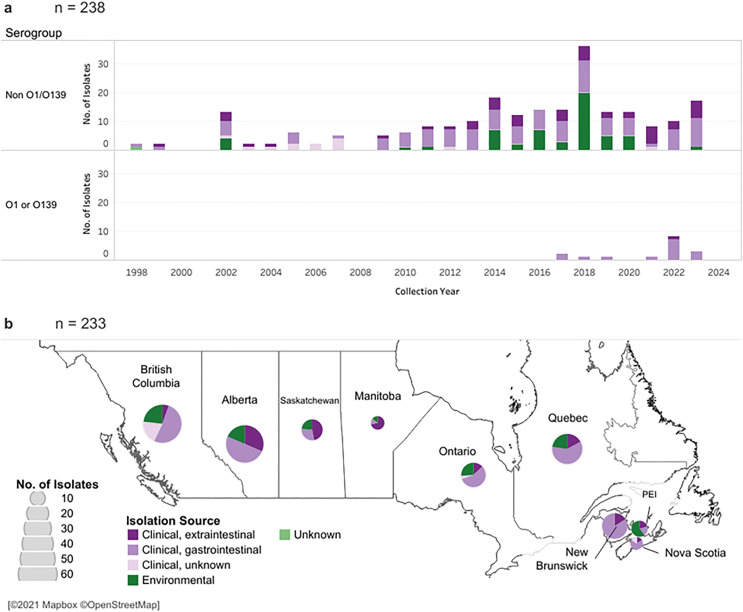 Figure 1
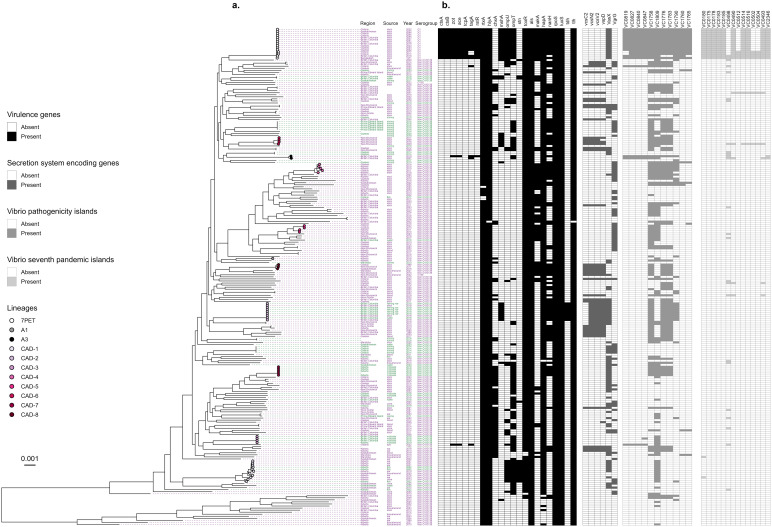 Figure 2
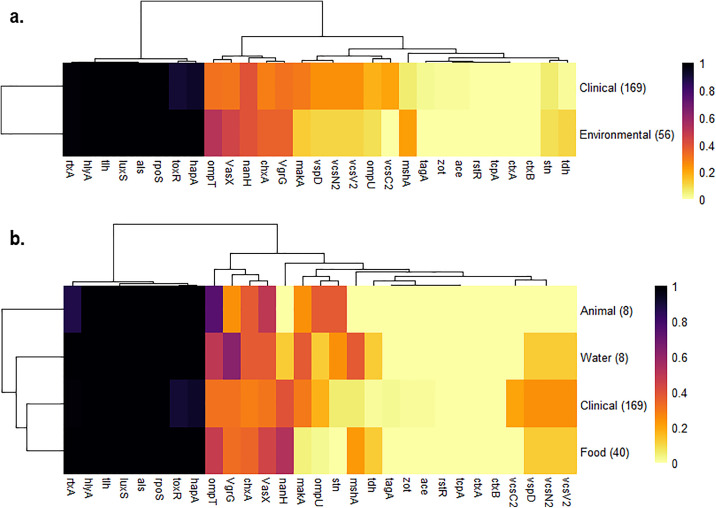 Figure 3
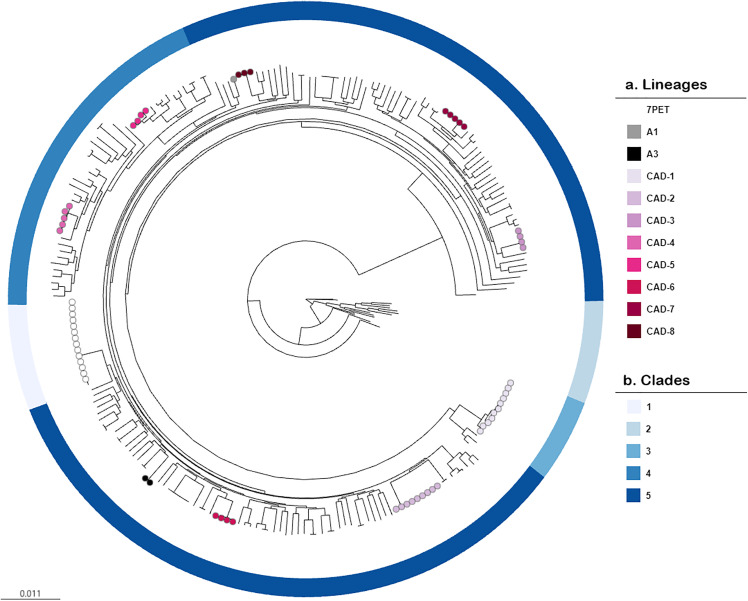 Figure 4
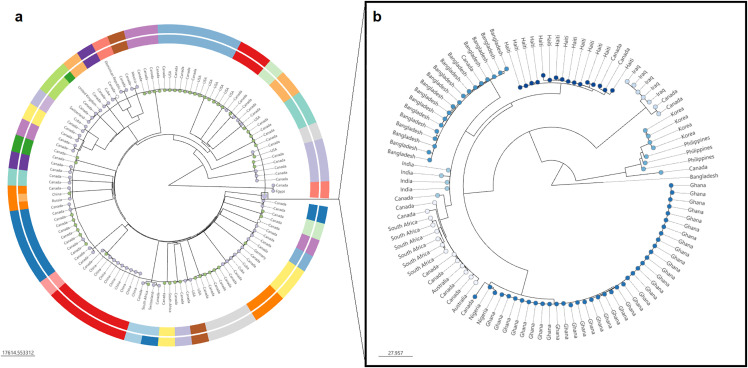 Figure 5
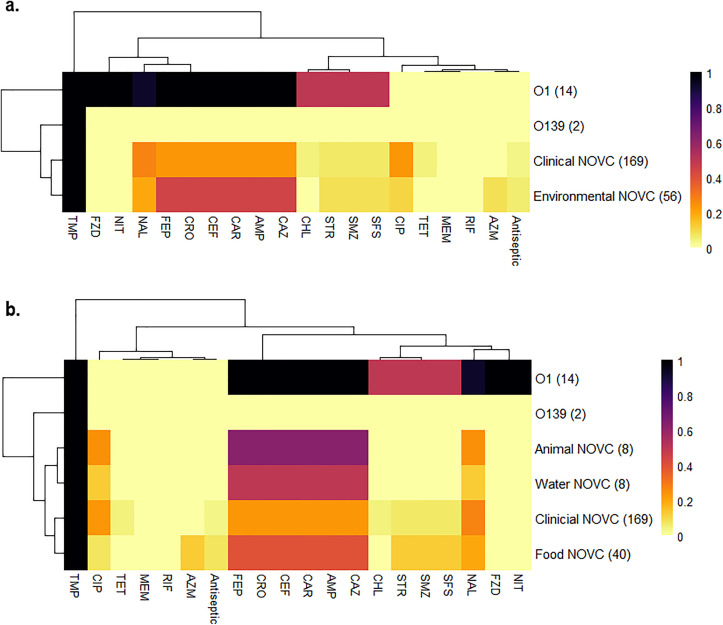 Figure 6
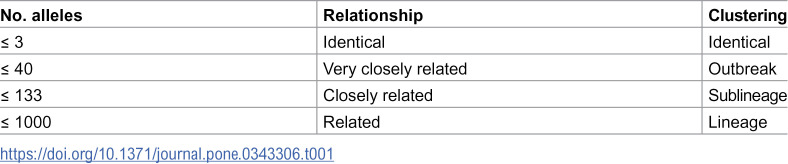 Figure 7
Peer Reviews
No public reviews on file for this paper yet. If you reviewed it on a platform where reviews are public (OpenReview, ICLR, NeurIPS, ICML), you can paste yours below so the community can read it here.
Videos
No videos yet. Explain this paper in a talk, walkthrough, or lecture? Add one.
Taxonomy
TopicsVibrio bacteria research studies · Aquaculture disease management and microbiota · Escherichia coli research studies