Cost-effectiveness analysis of artificial intelligence-assisted risk stratification of indeterminate pulmonary nodules
Caroline M. Godfrey, Ashley A. Leech, Kevin C. McGann, Jinyi Zhu, Hannah N. Marmor, Sophia Pena, Lyndsey C. Pickup, Fabien Maldonado, Evan C. Osmundson, Stacie B. Dusetzina, Eric L. Grogan, Stephen A. Deppen

TL;DR
This study shows that using AI to help assess lung nodules is cost-effective when cancer risk is above 5%, improving outcomes and reducing unnecessary procedures.
Contribution
The study quantifies the cost-effectiveness of AI-assisted risk stratification for indeterminate pulmonary nodules.
Findings
AI-assisted evaluation increased life years gained by 0.03 compared to clinician assessment alone.
At 65% malignancy prevalence, AI had an ICER of $4,485 per life-year gained, indicating cost-effectiveness.
AI becomes cost-ineffective when malignancy prevalence drops below 5%.
Abstract
Artificial intelligence-based radiomic approaches have been shown to accurately evaluate indeterminate pulmonary nodules. With the expansion of lung cancer screening and utilization of computed tomography imaging, indeterminate pulmonary nodules requiring diagnostic evaluation are increasingly common. Accurate non-invasive characterization may reduce time to cancer diagnosis and decrease invasive procedures for benign disease, but the cost-effectiveness of AI-based methods has not been quantified. We sought to evaluate the cost-effectiveness of AI-assisted clinician evaluation compared to clinician evaluation alone for the cancer risk stratification of patients with indeterminate pulmonary nodules. We constructed a decision model assuming guideline-based care from a payer perspective with a lifetime horizon. The base case is a 1.1 cm incidentally discovered IPN in a 60-year-old…
Genes, proteins, chemicals, diseases, species, mutations and cell lines named across the full text — each resolved to its canonical identifier and authoritative record.
Click any figure to enlarge with its caption.
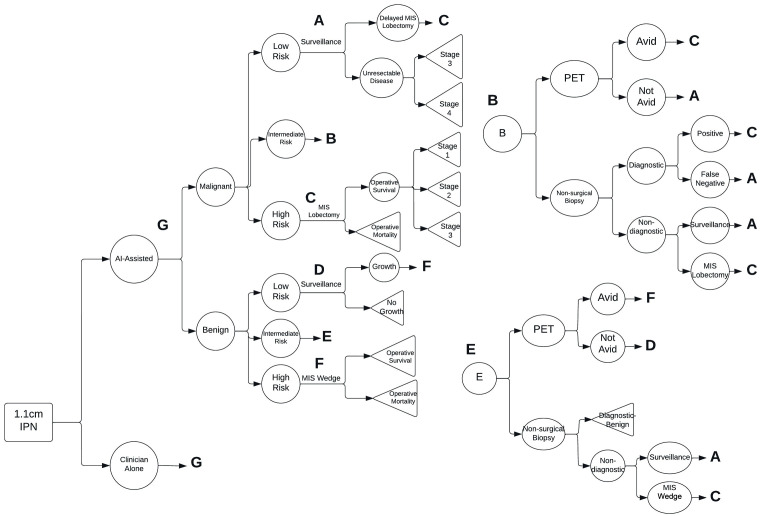 Figure 1
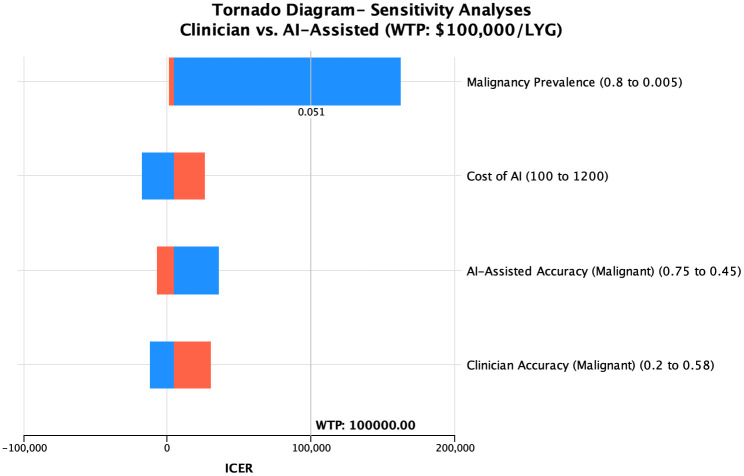 Figure 2
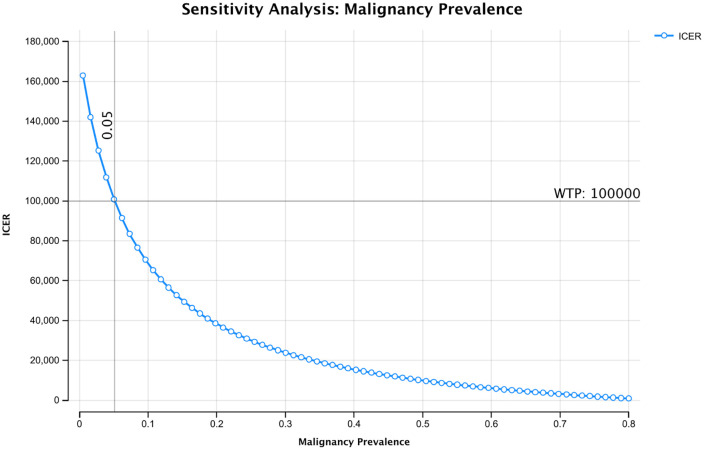 Figure 3
 Figure 4
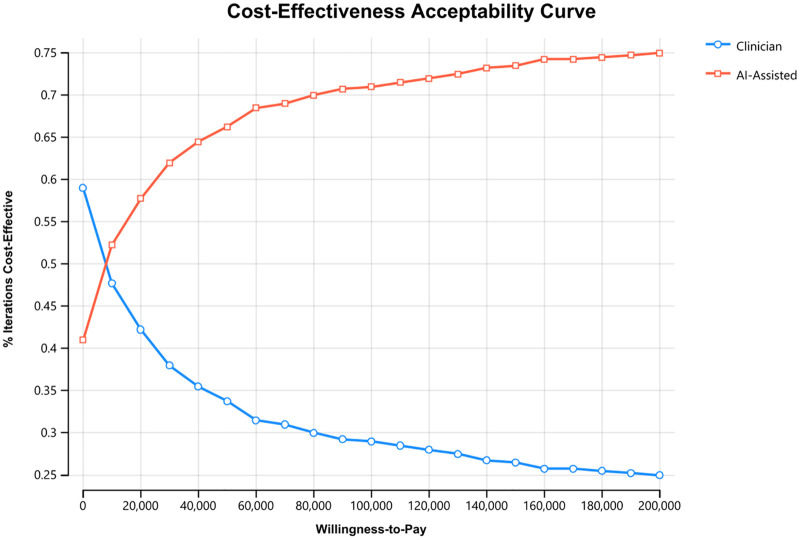 Figure 5
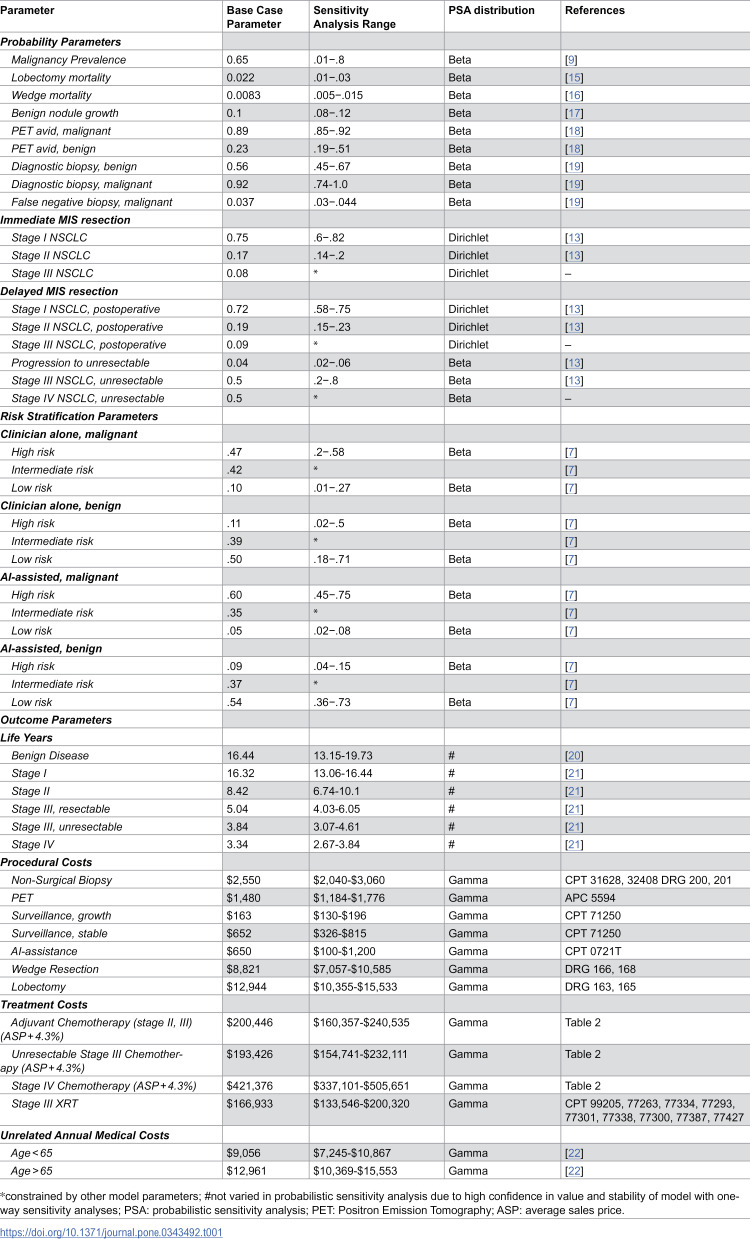 Figure 6
 Figure 7
 Figure 8
Peer Reviews
No public reviews on file for this paper yet. If you reviewed it on a platform where reviews are public (OpenReview, ICLR, NeurIPS, ICML), you can paste yours below so the community can read it here.
Videos
No videos yet. Explain this paper in a talk, walkthrough, or lecture? Add one.
Taxonomy
TopicsRadiomics and Machine Learning in Medical Imaging · Lung Cancer Diagnosis and Treatment · AI in cancer detection