A Case of Common Iliac Artery Pseudoaneurysm Formation, Rupture, and Rectal Fistula Caused by Escherichia coli
Xiaojie Zhao, Ling Zhang, Aiqin Liu

TL;DR
A rare case shows how an Escherichia coli infection can cause a life-threatening artery rupture and rectal fistula, which can be treated with surgery and infection control.
Contribution
Highlights a rare clinical scenario linking E. coli infection to pseudoaneurysm rupture and rectal fistula.
Findings
Escherichia coli infection can lead to common iliac artery pseudoaneurysm formation and rupture.
Combining surgery with anti-infection strategies can be life-saving in such cases.
Abstract
When septic shock is combined with acute lower gastrointestinal bleeding, the rupture and bleeding of a common iliac artery pseudoaneurysm caused by Escherichia coli infection should not be missed. Active surgery combined with strict anti‐infection strategies can save lives.
Genes, proteins, chemicals, diseases, species, mutations and cell lines named across the full text — each resolved to its canonical identifier and authoritative record.
Click any figure to enlarge with its caption.
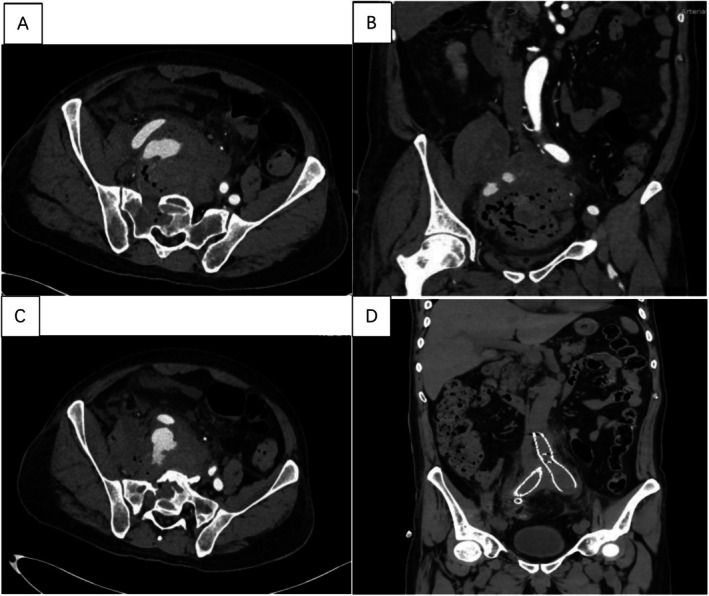 Figure 1
Peer Reviews
No public reviews on file for this paper yet. If you reviewed it on a platform where reviews are public (OpenReview, ICLR, NeurIPS, ICML), you can paste yours below so the community can read it here.
Videos
No videos yet. Explain this paper in a talk, walkthrough, or lecture? Add one.
Taxonomy
TopicsInfectious Aortic and Vascular Conditions · Aortic aneurysm repair treatments · Abdominal vascular conditions and treatments