The complete mitochondrial genome of Dunaliella salina CS-265: insights into gene content and phylogenetic placement
A. K. Lisa, W. G. Reeve, D. W. Laird, A. Chopra, N. R. Moheimani

TL;DR
This paper presents the full mitochondrial genome of a salt-tolerant alga from Australia, revealing insights into its gene structure and evolution.
Contribution
The study provides the first complete mitochondrial genome of Dunaliella salina CS-265 and highlights its unique gene content and fragmentation.
Findings
The genome is a 30,073 bp circular DNA molecule encoding seven protein-coding genes, nine rRNAs, and three tRNAs.
Four core genes are fragmented by multiple introns, while ATP synthase and ribosomal protein genes are absent.
The genome reflects reductive evolution in Dunaliella mitochondria and adds to understanding of halotolerant green algae.
Abstract
We report the complete mitochondrial genome of the halotolerant green alga Dunaliella salina CS-265, isolated from a hypersaline lake in central Australia. The genome is a circular DNA molecule of 30,073 bp, encoding seven protein-coding genes, nine rRNAs, and three tRNAs. Four core genes (cox1, cob, nad1, and nad5) are fragmented by multiple introns, whereas others remain intact. The absence of ATP synthase subunits and ribosomal protein genes reflects ongoing reductive evolution in Dunaliella mitochondria. This genome adds a new organellar resource from an Australian isolate, complementing previous studies and providing further insight into mitochondrial genome dynamics in halotolerant green algae.
Genes, proteins, chemicals, diseases, species, mutations and cell lines named across the full text — each resolved to its canonical identifier and authoritative record.
Click any figure to enlarge with its caption.
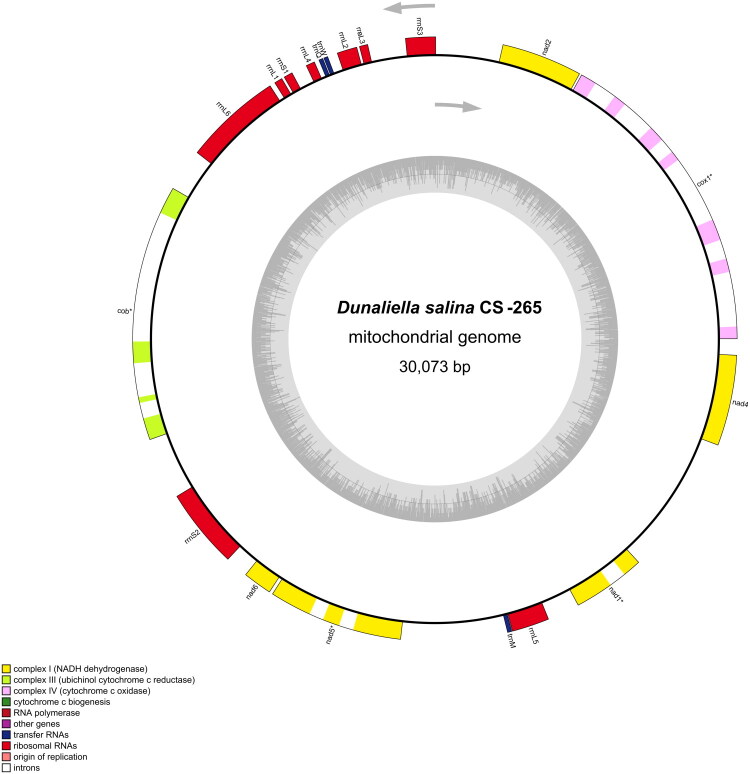 Figure 1
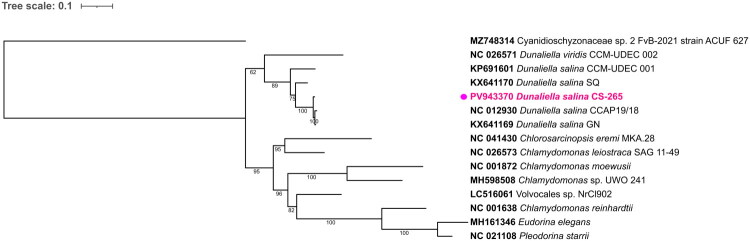 Figure 2
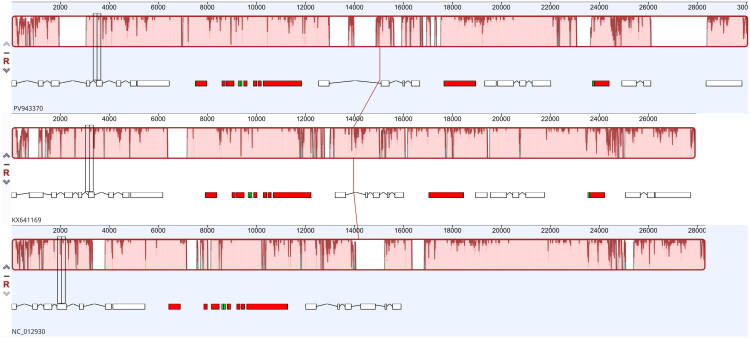 Figure 3
- —Australian Government Research Training Program (RTP) Scholarship
Peer Reviews
No public reviews on file for this paper yet. If you reviewed it on a platform where reviews are public (OpenReview, ICLR, NeurIPS, ICML), you can paste yours below so the community can read it here.
Videos
No videos yet. Explain this paper in a talk, walkthrough, or lecture? Add one.
Taxonomy
TopicsGenomics and Phylogenetic Studies · Algal biology and biofuel production · Protist diversity and phylogeny
Introduction
Dunaliella salina Teodoresco 1905 is a halotolerant green alga widely recognized for its remarkable ability to survive in extreme saline conditions and for its capacity to produce high levels of β-carotene, particularly under environmental stress (Félix-Castro et al. 2023; Olmos 2024). These traits have positioned D. salina as a model organism for studying salt adaptation, oxidative stress response, and carotenoid biosynthesis in microalgae (Oren 2014).
While several mitochondrial genomes of Dunaliella salina have been published, including the Chilean strain CCM-UDEC 001 (KP691601, partial), the GN strain (KX641169), the Baja California strain SQ (KX641170), and the Western Australian Hutt Lagoon strain CCAP 19/18 (NC_012930), these sequences represent only a small fraction of the species’ global genetic diversity (Smith et al. 2010; Del Vasto et al. 2015; Magdaleno et al. 2017). Despite their environmental distinctness, their limited number, variable completeness, and inconsistent annotation quality highlight the need for more high-quality mitogenomes from well-characterized D. salina strains.
To address this, we present the complete mitochondrial genome of D. salina CS-265, isolated from a hypersaline lake in central Australia. This genome expands the available Dunaliella mitochondrial genome sequences, complementing previously published genomes and providing new context for comparative and evolutionary studies within the genus.
Materials and methods
Sample collection and culturing
Dunaliella salina CS-265 was obtained from the Australian National Algae Culture Collection (ANACC), CSIRO, Hobart, Australia (https://www.csiro.au/Research/Collections/ANACC). The strain was originally isolated by Murray Barton from Lake Suzie, Erldunda Station, Northern Territory, Australia (25.3385° S, 132.8270° E) on 1 January 1992 and is catalogued under voucher number CS-265 (contact: [email protected]).
Cultures were maintained in 3.5% F2 medium (Guillard 1975) at 25 °C (pH 7.5; 12:12 h light:dark) under 60 μmol photons m⁻^2^ s⁻^1^. For single-colony isolation, cells were plated on 1% agar F2 medium under 120 μmol photons m⁻^2^ s⁻^1^ and transferred to liquid culture for biomass propagation.
DNA extraction and sequencing
Genomic DNA was extracted from stationary-phase cultures using the 2% CTAB method (Porebski et al. 1997). Whole-genome sequencing was carried out on a PromethION 2 platform (Oxford Nanopore Technologies, Oxford, UK) using the SQK-RBK114.24 kit and FLO-PRO114M flow cell (De Coster et al. 2018; Wang et al. 2021), with the assistance of the IIID, Medical Genomics Core Laboratory, Murdoch University, Murdoch, Australia. Basecalling was performed using the Super Accuracy mode in Dorado v0.7.4.14 (Oxford Nanopore Technologies 2023), the current standard ONT basecaller, to generate long-read data for mitochondrial genome assembly.
Genome assembly and annotation
ONT long reads were mapped to three published Dunaliella salina mitochondrial genomes (KX641169, KX641170, NC_012930) using Minimap2 (Li 2018). Mapped reads were extracted, and duplicates were removed using Dedupe from the BBTools suite to eliminate redundancy (Bushnell 2014; Lantz et al. 2018). Error correction and normalization were performed using BBNorm (also from BBTools) to improve sequence quality and coverage uniformity (Bushnell 2014; Lantz et al. 2018). The curated dataset was assembled de novo using Flye v2.9.2 (Kolmogorov et al. 2019), resulting in a single circular contig of 30,073 bp with an average coverage of 197.07× and a GC content of 33.76% (Supplementary Figure S1). All genome mapping and assembly steps were conducted in Geneious Prime (v2025.1.2) (GraphPad Software LLC, La Jolla, CA). Assembly quality was assessed using QUAST v5.0.2 (Gurevich et al. 2013) via the Galaxy platform (The Galaxy Community 2022), using the D. salina GN mitochondrial genome (KX641169) as a reference. A detailed sequencing depth and coverage map is provided in Supplementary Figure S1.
Gene annotation was performed using GeSeq and annotation tools in Geneious Prime (GraphPad Software LLC 2025), guided by a reference D. salina mitochondrial genome (Tillich et al. 2017). Annotations were manually curated and validated with BLAST.
Phylogenetic analysis
Phylogenetic relationships were inferred using a maximum-likelihood approach based on seven conserved mitochondrial protein-coding genes (PCGs) (cob, cox1, nad1, nad2, nad4, nad5, nad6) shared across 15 taxa, including a red algal outgroup. Genes were retrieved from GenBank, aligned with MAFFT (Katoh and Standley 2013), trimmed using trimAl (Capella-Gutiérrez et al. 2009), and concatenated. Maximum-likelihood analysis was performed in IQ-TREE v2.2.6 (Nguyen et al. 2015) under the GTR + F + G4 substitution model, which was automatically selected by the integrated ModelFinder algorithm (Kalyaanamoorthy et al. 2017).
Synteny and genome rearrangement analysis
Comparative synteny was examined in progressiveMauve (Darling et al. 2004) by aligning the CS-265 mitochondrial genome with related Dunaliella salina genomes (KX641169, NC_012930).
Results
The complete mitochondrial genome of Dunaliella salina CS-265 is a circular DNA molecule of 30,073 bp (Figure 1) with an A + T bias of 66.24% (GC content 33.76%). Seven PCGs were identified, including five NADH dehydrogenase subunits (nad1, nad2, nad4, nad5, nad6) and two cytochrome genes (cob and cox1). Four genes (cox1, cob, nad5, nad1) contain introns and are divided across multiple exons: cox1 (seven exons, six introns), cob (four exons, three introns), nad5 (three exons, two introns), and nad1 (two exons, one intron). The remaining genes are uninterrupted (nad2, nad4, nad6) (Supplementary Figure 2).
Mitochondrial genome map of Dunaliella salina strain CS-265. Circular representation of the complete mitochondrial genome of D. salina CS-265 generated using OGDRAW v1.3.1 (Greiner et al. 2019). Genes containing introns are indicated with an asterisk ().*
The genome also encodes nine rRNA genes (including rrnL and rrnS, collectively >4000 bp) and three tRNAs – trnM, trnQ, and trnW (73–76 bp). The concatenated phylogenetic alignment was 7468 bp in length, including 3843 parsimony-informative sites. Phylogenetic analysis placed Dunaliella salina CS-265 within a well-supported Dunaliella clade, clustering with other D. salina mitogenomes and most closely with the SQ (KX641170) and CCAP 19/18 (NC_012930) strains (bootstrap ≥95%; Figure 2). D. viridis formed a separate but closely related lineage.
Phylogenetic tree of Dunaliella salina Teodoresco 1905 CS-265 and related taxa. The maximum-likelihood tree was constructed from concatenated mitochondrial protein-coding genes (cob, cox1, nad1, nad2, nad4, nad5, nad6). The newly assembled D. salina CS-265 (highlighted in magenta) clusters within the Dunaliella salina clade. Bootstrap values (1000 replicates) are shown at the nodes. The following sequences were used: Dunaliella salina CCAP 19/18 (NC_012930; Smith et al. 2010), D. salina SQ (KX641170; Magdaleno et al. 2017), D. viridis CCM-UDEC 002 (NC_026571.1; Del Vasto et al. 2015), D. salina CCM-UDEC 001 (KP691601; Del Vasto et al. 2015), D. salina GN (KX641169; unpublished), Chlamydomonas reinhardtii (NC_001638.1; Vahrenholz et al. 1993), Chlamydomonas moewusii (NC_001872.1; Lee et al. 1991), Chlamydomonas leiostraca strain SAG 11-49 (NC_026573.1; Del Vasto et al. 2015), Chlamydomonas sp. UWO 241 (MH598508.1; unpublished), Volvocales sp. NrCl902 (LC516061.1; unpublished), Pleodorina starrii (NC_021108.1; Smith et al. 2013), Eudorina elegans (MH161346.1; unpublished), Cyanidioschyzonaceae sp. 2 FvB-2021 strain ACUF 627 (MZ748314.1; unpublished), and Chlorosarcinopsis eremi strain MKA.28 (NC_041430.1; unpublished).
Comparative synteny analysis showed that the CS-265 mitochondrial genome is largely collinear with the mitogenomes of closely related D. salina strains (CCAP19/18 and GN), exhibiting only small inversions and minor block shifts within conserved regions (Figure 3).
Mauve alignment of Dunaliella salina mitochondrial genomes. Whole-mitochondrial genome alignment of D. salina CS-265 (PV943370), D. salina GN (KX641169), and D. salina CCAP19/18 (NC_012930) showing conserved locally collinear blocks (LCBs) and structural rearrangements among strains.
Discussion
The mitochondrial genome of Dunaliella salina CS-265 is characterized by a compact architecture and a reduced gene set, consistent with mitochondrial streamlining observed across the Chlorophyta (Del Vasto et al. 2015; Smith and Keeling 2015). The marked A + T bias (66.24%) aligns with compositional trends reported in Chlamydomonas reinhardtii and other green algae, where organellar genomes are similarly dominated by A + T-rich regions (Smith et al. 2010; Massoz et al. 2014).
The presence of intron-rich genes – particularly cox1, cob, nad1, and nad5 – reflects conserved patterns of gene fragmentation commonly mediated by group I and II introns in chlorophyte mitochondria (Smith et al. 2010; Fučíková et al. 2014; Del Vasto et al. 2015; Magdaleno et al. 2017). In contrast, intronless genes such as nad2, nad4, and nad6 may indicate evolutionary intron loss or retention of structurally stable forms. This pattern is consistent across published D. salina genomes, except that the SQ strain retains a single intron in nad4. The absence of mitochondrial ATP synthase subunits and ribosomal proteins further supports gene reduction through endosymbiotic transfer or functional replacement by nuclear-encoded counterparts (Smith et al. 2010; Magdaleno et al. 2017).
The identification of only three tRNA genes suggests a reliance on cytosolic tRNA import or post-transcriptional editing, a strategy previously proposed for Dunaliella species (Smith et al. 2010; Smith and Keeling 2015; Magdaleno et al. 2017). Together, these features highlight a reductive and specialized mitochondrial genome, shaped by both evolutionary pressure and metabolic constraints in hypersaline environments.
Conclusions
The mitochondrial genome of Dunaliella salina CS-265 adds new insight into the diversity and structural evolution of chlorophyte mitochondria. Its compact size, high A + T content, and intron-rich genes reflect key features of adaptation and genome reduction in halotolerant green algae.
Supplementary Material
updated_Supplementary file.docx
Track changes.docx
The reference list from the paper itself. Each links out to its DOI / PubMed record.
- 1Bushnell B. 2014. BB Map/BB Tools [software]. DOE Joint Genome Institute, Lawrence Berkeley National Laboratory. https://jgi.doe.gov/data-and-tools/bbtools/
- 2Capella-Gutiérrez S, Silla-Martínez JM, Gabaldón T. 2009. trim Al: a tool for automated alignment trimming in large-scale phylogenetic analyses. Bioinformatics. 25(15):1972–1973. 10.1093/bioinformatics/btp 34819505945 PMC 2712344 · doi ↗ · pubmed ↗
- 3Darling ACE, Mau B, Blattner FR, Perna NT. 2004. Mauve: multiple alignment of conserved genomic sequence with rearrangements. Genome Res. 14(7):1394–1403. 10.1101/gr.228970415231754 PMC 442156 · doi ↗ · pubmed ↗
- 4De Coster W, D’Hert S, Schultz DT, Cruts M, Van Broeckhoven C. 2018. Nano Pack: visualizing and processing long-read sequencing data. Bioinformatics. 34(15):2666–2669. 10.1093/bioinformatics/bty 14929547981 PMC 6061794 · doi ↗ · pubmed ↗
- 5Del Vasto M et al. 2015. Massive and widespread organelle genomic expansion in the green algal genus Dunaliella. Genome Biol Evol. 7(3):656–663. 10.1093/gbe/evv 02725663488 PMC 5322560 · doi ↗ · pubmed ↗
- 6Félix-Castro MB, Arredondo-Vega BO, Rojas M, Gómez-Anduro GA. 2023. Synthesis of β-carotene in Dunaliella: from genome analysis to metabolic engineering. Algal Res. 72:103135. 10.1016/j.algal.2023.103135 · doi ↗
- 7Fučíková K, Lewis PO, González-Halphen D, Lewis LA. 2014. Gene arrangement convergence, diverse intron content, and genetic code modifications in mitochondrial genomes of Sphaeropleales (Chlorophyta). Genome Biol Evol. 6(8):2170–2180. 10.1093/gbe/evu 17225106621 PMC 4159012 · doi ↗ · pubmed ↗
- 8Graph Pad Software LLC. 2025. Geneious Prime (Version 2025.1.2) [software]. https://www.geneious.com