Pharmacogenomics of Antineoplastic Therapy in Children: Genetic Determinants of Toxicity and Efficacy
Zaure Dushimova, Timur Saliev, Aigul Bazarbayeva, Gaukhar Nurzhanova, Ainura Baibadilova, Gulnara Abdilova, Ildar Fakhradiyev

TL;DR
This review explores how genetic differences affect children's responses to cancer drugs, aiming to personalize treatment for better outcomes and fewer side effects.
Contribution
The paper synthesizes current evidence on pharmacogenetic variants influencing pediatric cancer therapy and discusses emerging technologies for clinical translation.
Findings
Genetic variants like TPMT, NUDT15, and DPYD significantly influence drug response in children.
Multi-omics and AI can accelerate pharmacogenomic data translation into clinical practice.
Population-specific variability and ethical issues remain barriers to clinical implementation.
Abstract
Over the past decades, remarkable progress in multimodal therapy has significantly improved survival outcomes for children with cancer. Yet, considerable variability in treatment response and toxicity persists, often driven by underlying genetic differences that affect the pharmacokinetics and pharmacodynamics of anticancer drugs. Pharmacogenomics, the study of genetic determinants of drug response, offers a powerful approach to personalize pediatric cancer therapy by optimizing efficacy while minimizing adverse effects. This review synthesizes current evidence on key pharmacogenetic variants influencing the response to major classes of antineoplastic agents used in children, including thiopurines, methotrexate, anthracyclines, alkylating agents, vinca alkaloids, and platinum compounds. Established gene–drug associations such as TPMT, NUDT15, DPYD, SLC28A3, and RARG are discussed…
Genes, proteins, chemicals, diseases, species, mutations and cell lines named across the full text — each resolved to its canonical identifier and authoritative record.
Click any figure to enlarge with its caption.
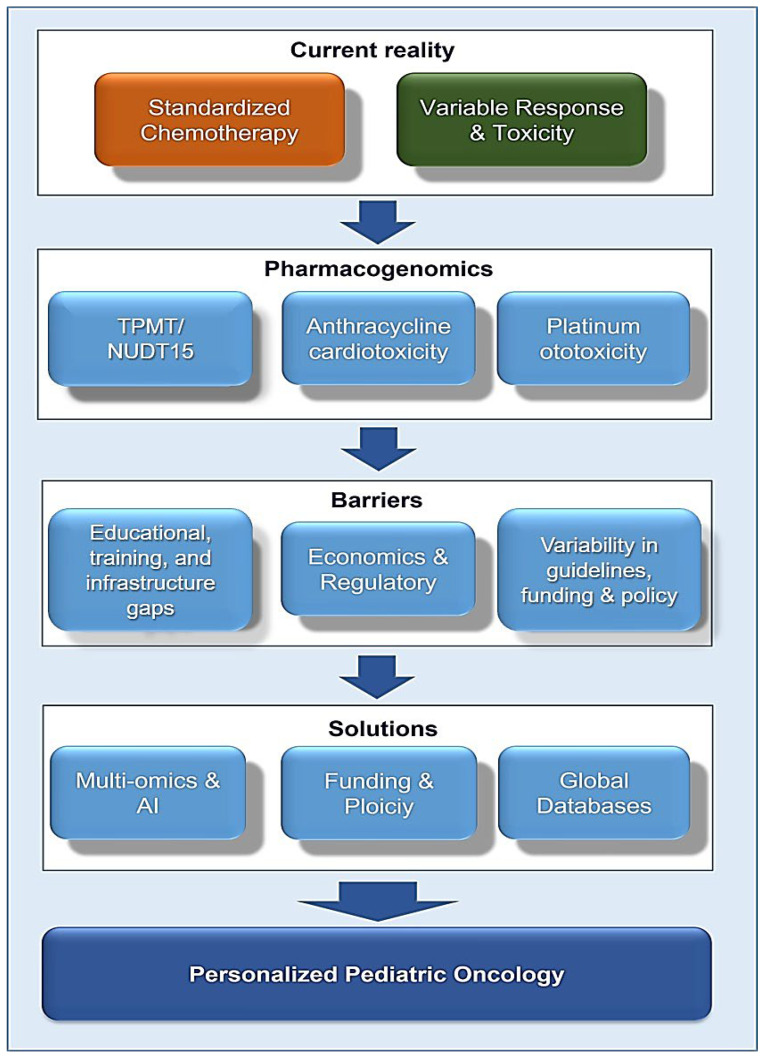 Figure 1
Peer Reviews
No public reviews on file for this paper yet. If you reviewed it on a platform where reviews are public (OpenReview, ICLR, NeurIPS, ICML), you can paste yours below so the community can read it here.
Videos
No videos yet. Explain this paper in a talk, walkthrough, or lecture? Add one.
Taxonomy
TopicsAcute Lymphoblastic Leukemia research · Pharmacogenetics and Drug Metabolism · Pharmaceutical studies and practices