Cedarwood Oils: The Wood Essential Oil Compositions from Trees Known as “Cedar”
William N. Setzer, Prabodh Satyal

TL;DR
This paper summarizes the chemical compositions of cedarwood oils from various tree species known as 'cedar', highlighting their use in fragrance and medicine.
Contribution
The study provides a comprehensive overview of the chemical profiles of cedarwood oils from multiple genera, comparing them with commercial samples.
Findings
Cedrus wood oils are dominated by himachalenes and atlantones.
Sesquiterpenoids like cedrol and thujopsene are abundant in Cupressus and Juniperus species.
Monoterpenoids are dominant in Calocedrus species, contributing to their fragrance.
Abstract
In addition to the true cedars (Cedrus species), there are several genera of trees commonly called “cedar”, including species of Callitropsis, Calocedrus, Cedrela, Chamaecyparis, Cryptomeria, Cupressus, Juniperus, Thuja, and Widdringtonia. The wood essential oils (cedarwood oils) of these trees have been used as flavor and fragrance materials, as well as in medicinal applications. In this study, we present summaries of the wood essential oils from trees known as “cedar”. A literature search was carried out on cedarwood oils and, when available, compared with commercial wood essential oils from the Aromatic Plant Research Center (APRC) collection. Cedrus wood oils are generally dominated by the himachalenes and atlantones. Sesquiterpenoids are abundant in other cedarwood oils, including cedrenes, cedrol, and thujopsene in Cupressus funebris, Juniperus ashei, and Juniperus virginiana.…
Genes, proteins, chemicals, diseases, species, mutations and cell lines named across the full text — each resolved to its canonical identifier and authoritative record.
Click any figure to enlarge with its caption.
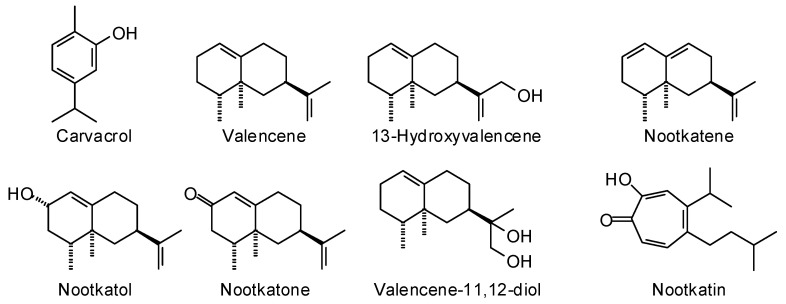 Figure 1
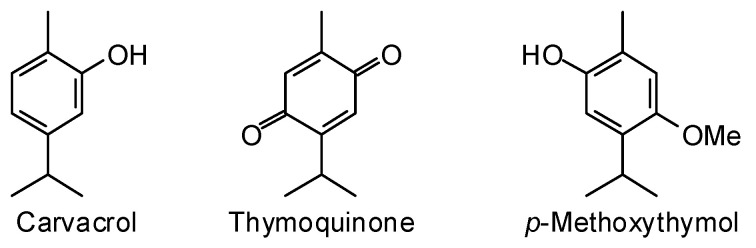 Figure 2
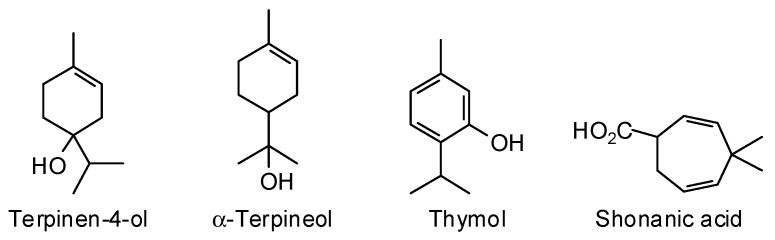 Figure 3
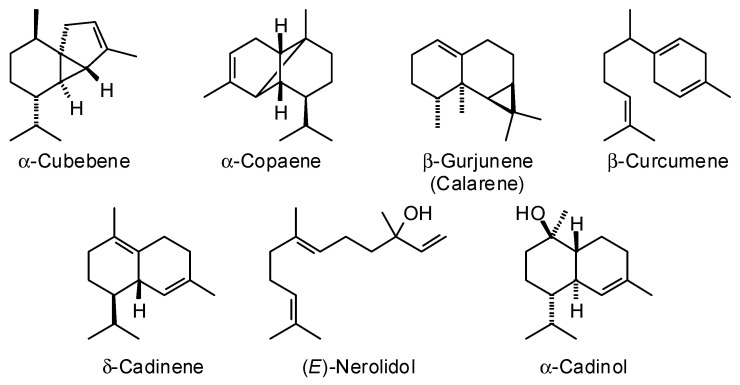 Figure 4
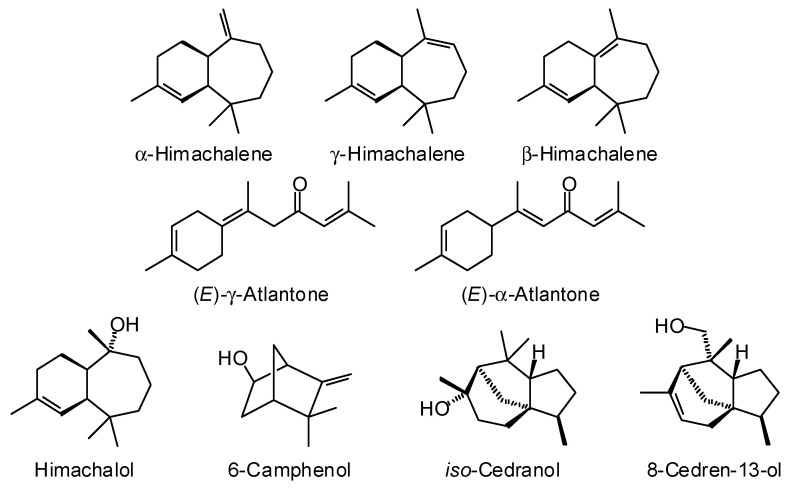 Figure 5
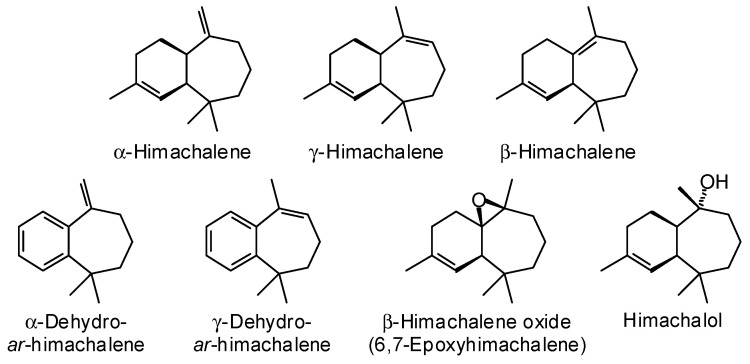 Figure 6
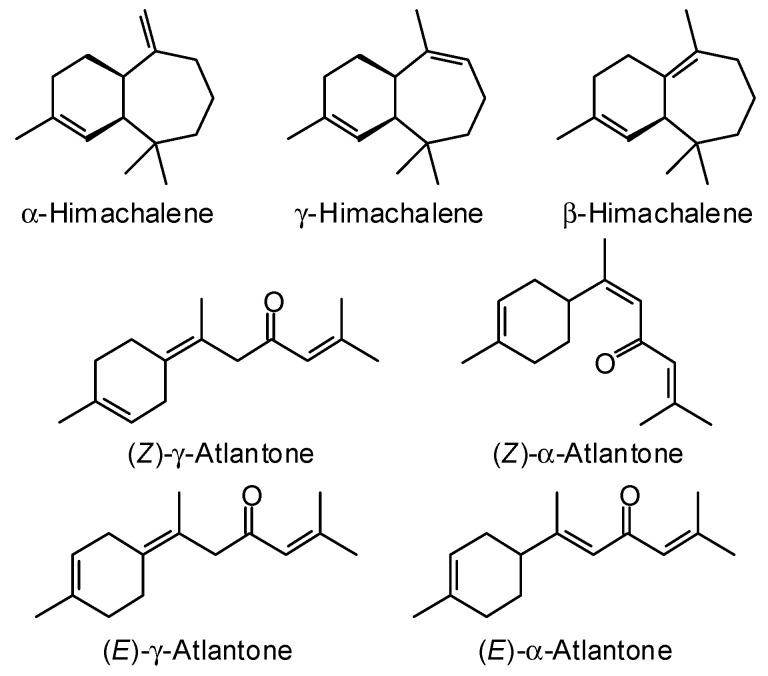 Figure 7
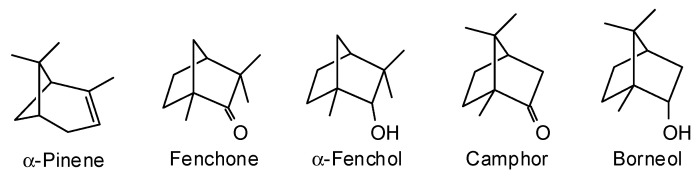 Figure 8
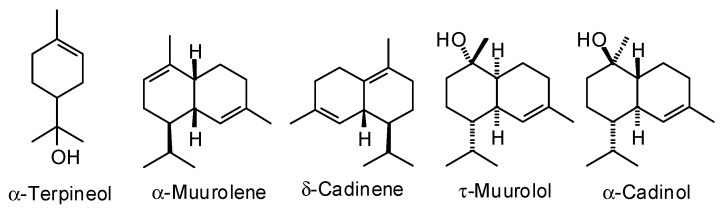 Figure 9
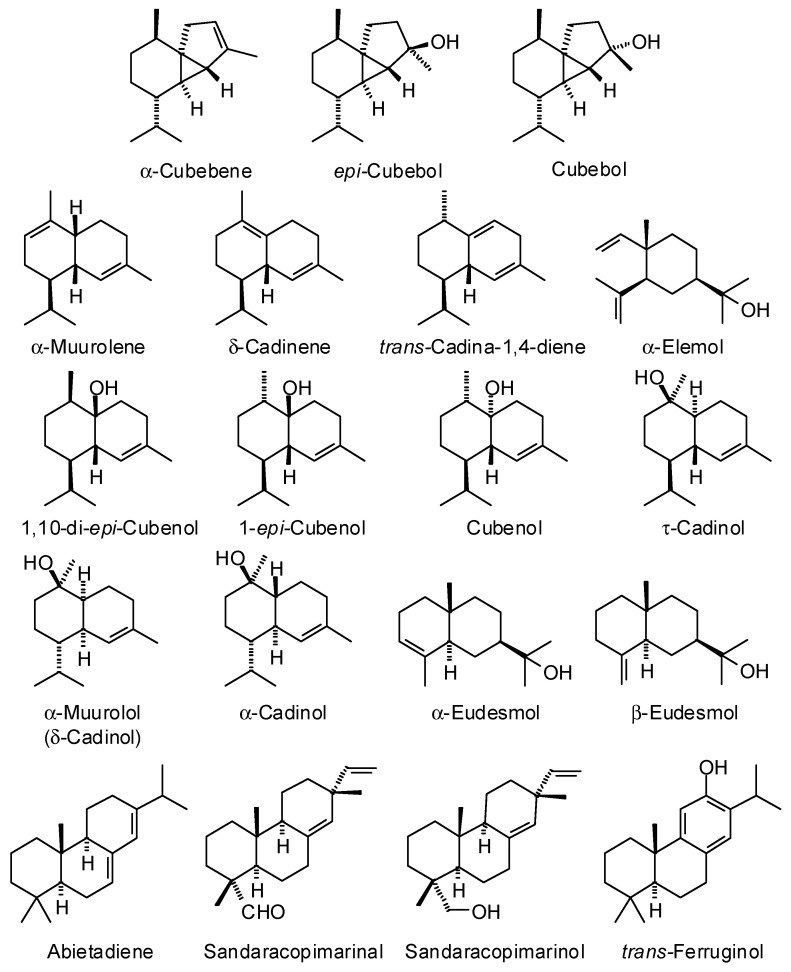 Figure 10
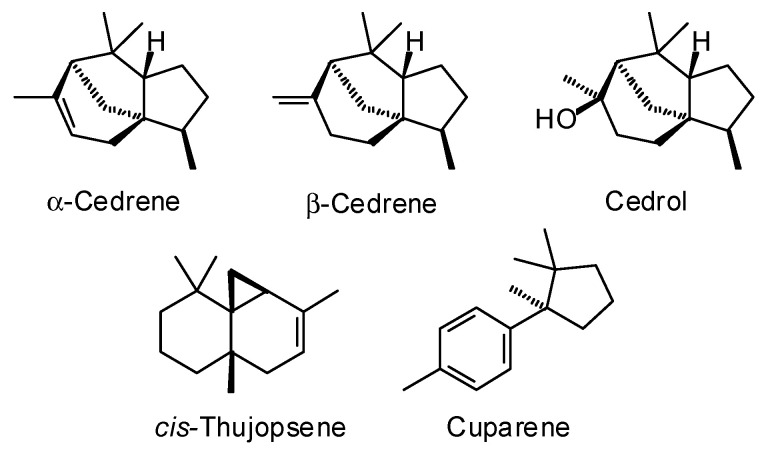 Figure 11
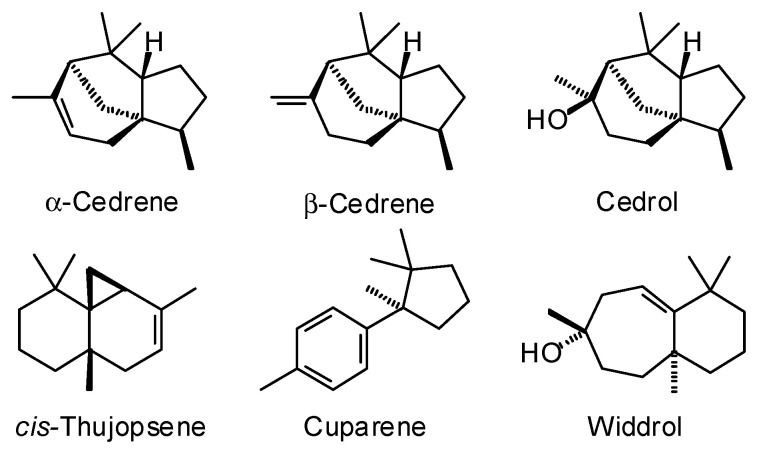 Figure 12
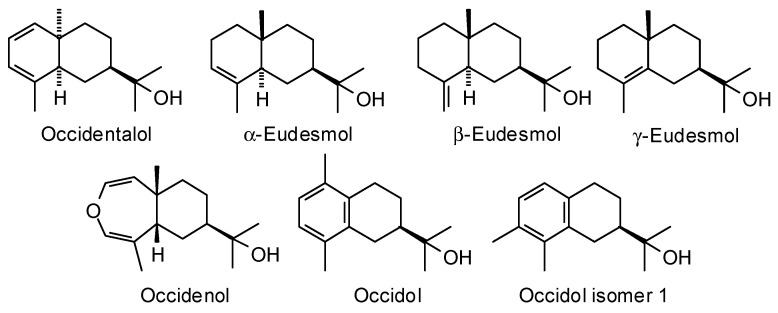 Figure 13
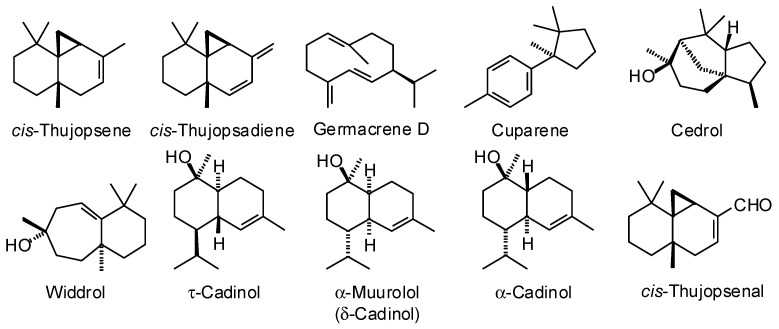 Figure 14
Peer Reviews
No public reviews on file for this paper yet. If you reviewed it on a platform where reviews are public (OpenReview, ICLR, NeurIPS, ICML), you can paste yours below so the community can read it here.
Videos
No videos yet. Explain this paper in a talk, walkthrough, or lecture? Add one.
Taxonomy
TopicsBiological Activity of Diterpenoids and Biflavonoids · Natural product bioactivities and synthesis · Synthesis and bioactivity of alkaloids