Redox–Genomic Crosstalk: Linking Oxidative Stress, Sperm DNA Fragmentation, and Epigenetics in Personalized Management of Male Infertility
Pallav Sengupta, Sulagna Dutta, Mohamed AlaaEldein Elsuity, Ramadan Saleh

TL;DR
This paper explores how oxidative stress, DNA damage in sperm, and epigenetic changes are linked and how they can be used to personalize treatments for male infertility.
Contribution
The paper synthesizes evidence on the interplay between oxidative stress, sperm DNA fragmentation, and epigenetics to guide personalized infertility management.
Findings
Oxidative stress and sperm DNA fragmentation are strongly associated with poor fertility outcomes in assisted reproductive technologies.
Testicular sperm use in cases of high sperm DNA fragmentation may improve ART outcomes, though safety data are limited.
Advances in redox and genomic diagnostics offer new opportunities for precision-based interventions in male infertility.
Abstract
Male infertility is increasingly recognized as a complex, multifactorial disorder that extends beyond abnormalities in conventional semen parameters. A growing body of evidence highlights oxidative stress, sperm DNA fragmentation (SDF), and epigenetic alterations as tightly interconnected mechanisms contributing to sperm dysfunction and impaired fertility. Reactive oxygen species, though vital for sperm maturation and signaling, can inflict extensive genomic and chromatin damage when their levels exceed the antioxidant capacity of the testis and seminal plasma. These redox-driven lesions not only compromise fertilization potential but may also influence embryonic development and offspring health. Clinical studies and meta-analyses consistently report that elevated SDF and redox imbalance are associated with reduced pregnancy and live birth rates, particularly in assisted reproductive…
Genes, proteins, chemicals, diseases, species, mutations and cell lines named across the full text — each resolved to its canonical identifier and authoritative record.
Click any figure to enlarge with its caption.
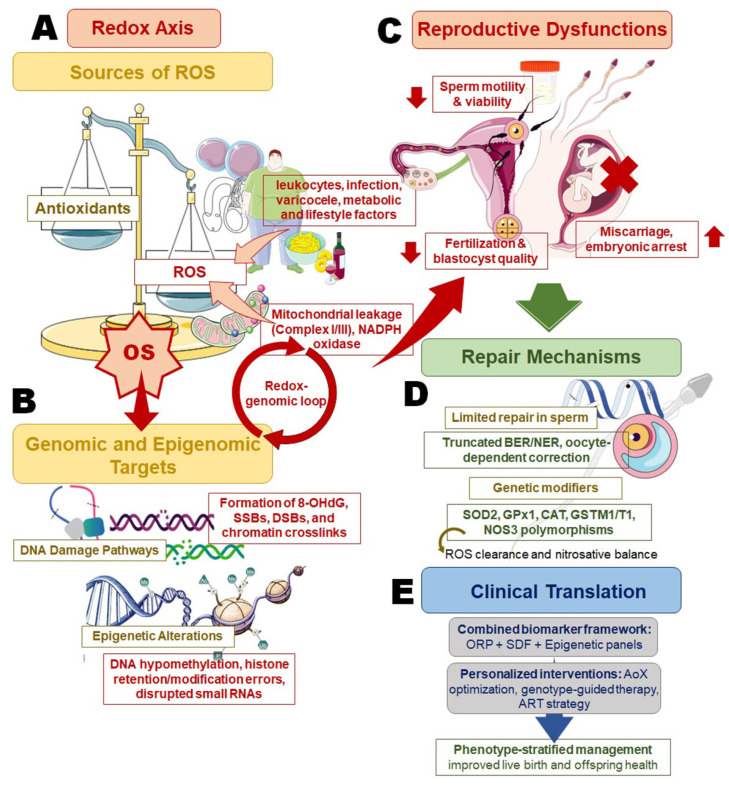 Figure 1
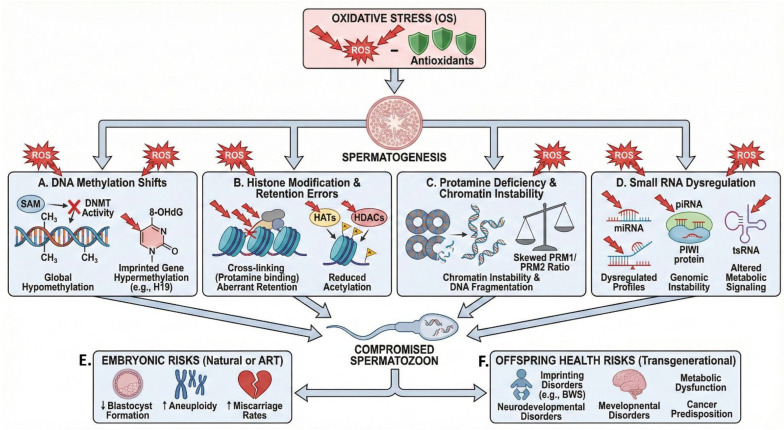 Figure 2
Peer Reviews
No public reviews on file for this paper yet. If you reviewed it on a platform where reviews are public (OpenReview, ICLR, NeurIPS, ICML), you can paste yours below so the community can read it here.
Videos
No videos yet. Explain this paper in a talk, walkthrough, or lecture? Add one.
Taxonomy
TopicsSperm and Testicular Function · Reproductive Biology and Fertility · Reproductive biology and impacts on aquatic species