Preparation and Identification of the Novel Umami Peptides from Sea Cucumber Viscera Hydrolysate
Xinmiao Ren, Yiling Zhong, Changyun Wang, Qingping Liang, Shuang Li, Rongqiang Chen, Dongyu Li, Changliang Zhu, Xiaodan Fu, Haijin Mou

TL;DR
Researchers identified new umami peptides from sea cucumber viscera that could enhance flavor naturally without high sodium.
Contribution
The study introduces novel umami peptides from sea cucumber viscera by-products with potential as low-sodium flavor enhancers.
Findings
Synergistic dual-enzyme hydrolysis produced a hydrolysate with a 1.75-fold higher umami signal than single-enzyme methods.
Thirty-three umami peptides were identified, with two (DFLDDGPG and SDTGNFGF) showing strong binding to the umami receptor T1R1/T1R3.
Peptide DFLDDGPG enhanced umami flavor in salty systems, validated by sensory panels and statistical analysis.
Abstract
Sea cucumber viscera by-products are abundant but remain underutilized. Although the development of umami peptides from marine by-products has been well-reported, sea cucumber viscera have received less attention. In this study, an umami-rich hydrolysate was prepared from sea cucumber viscera through synergistic dual-enzyme hydrolysis. Under optimal conditions, the co-hydrolysis using Flavourzyme and aminopeptidase yielded extraction rates of 69.38% for solids, 67.29% for protein, and 66.96% for total sugar, and produced a 1.75-fold higher umami signal intensity (electronic tongue) than the single-enzyme (Flavourzyme) hydrolysate. The target umami fraction was enriched through sensory-guided separation combined with ultrafiltration and ion-exchange chromatography. Thirty-three umami peptides, predominantly derived from actin hydrolysis, were identified in this fraction via peptidomics…
Genes, proteins, chemicals, diseases, species, mutations and cell lines named across the full text — each resolved to its canonical identifier and authoritative record.
Click any figure to enlarge with its caption.
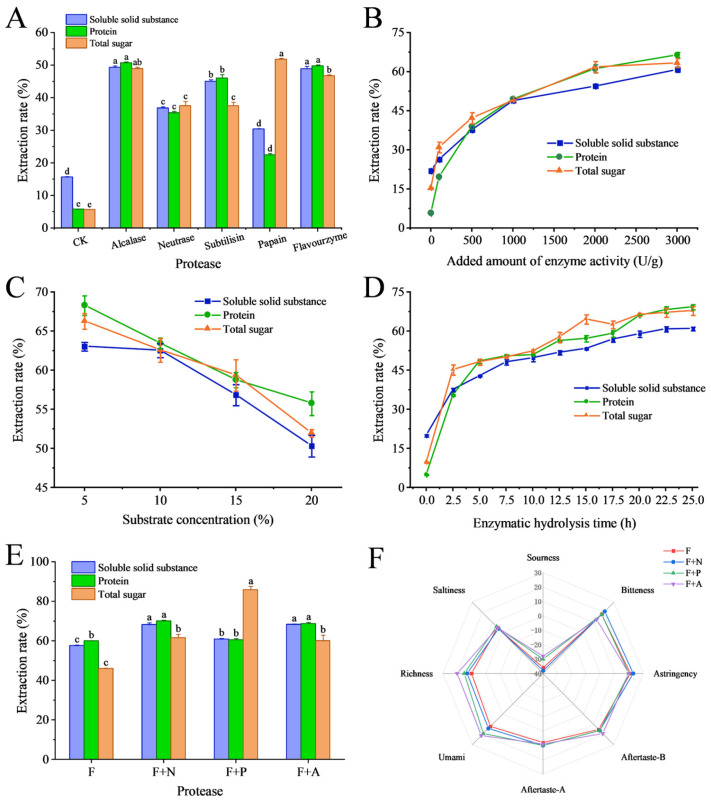 Figure 1
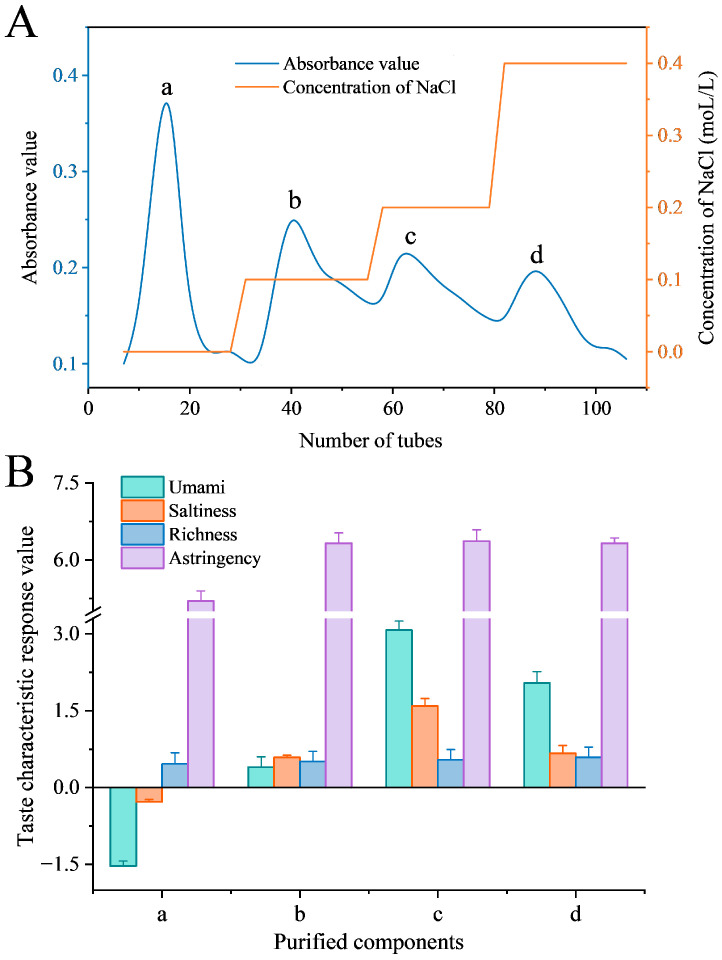 Figure 2
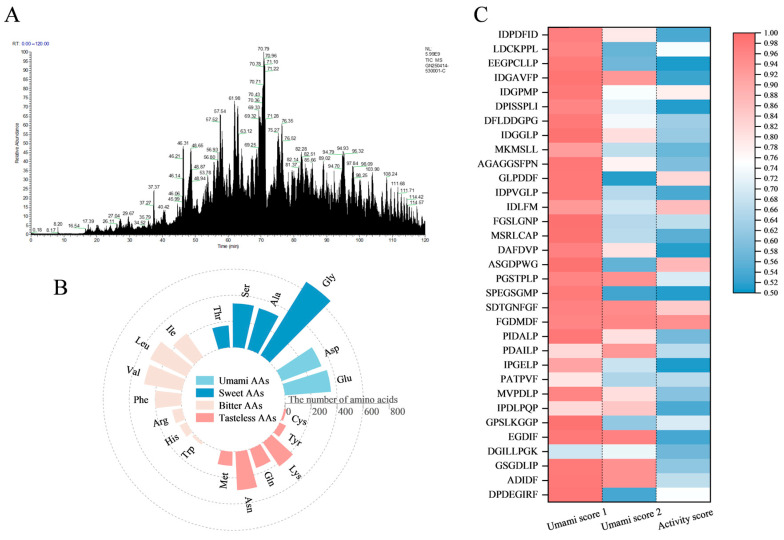 Figure 3
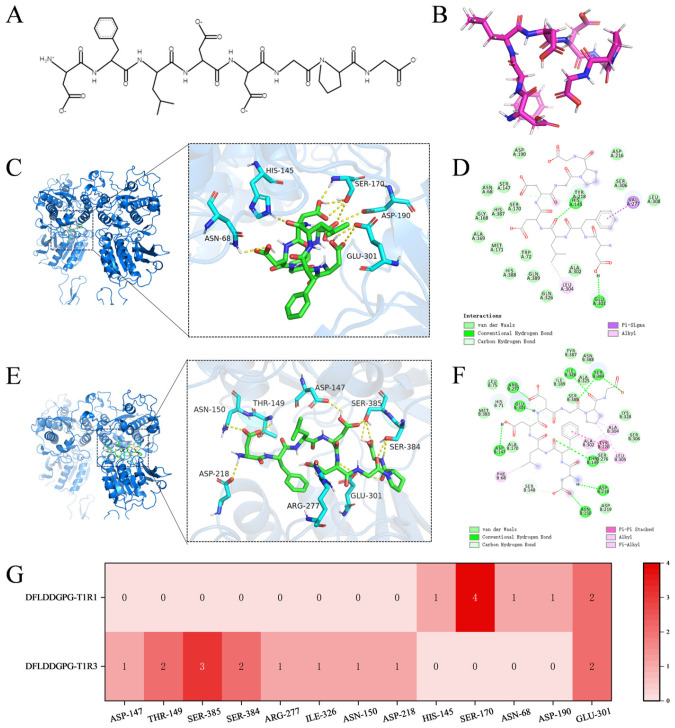 Figure 4
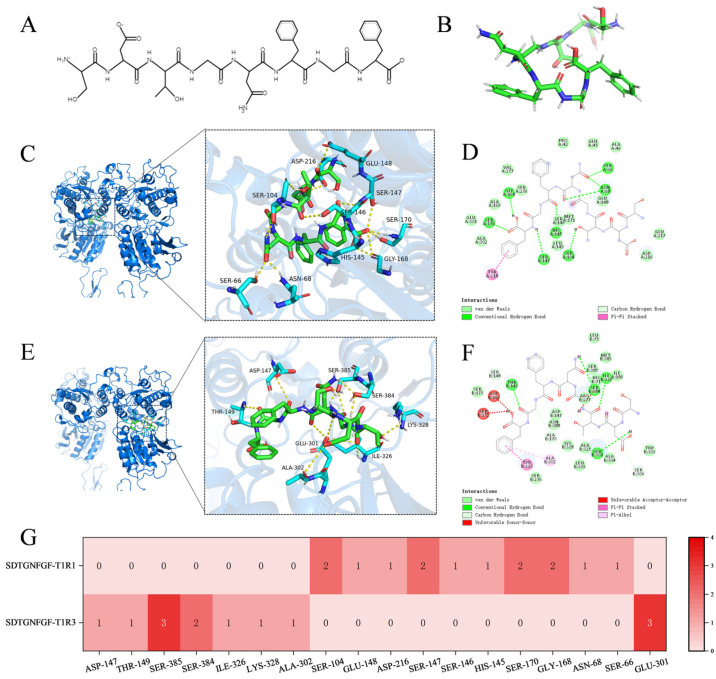 Figure 5
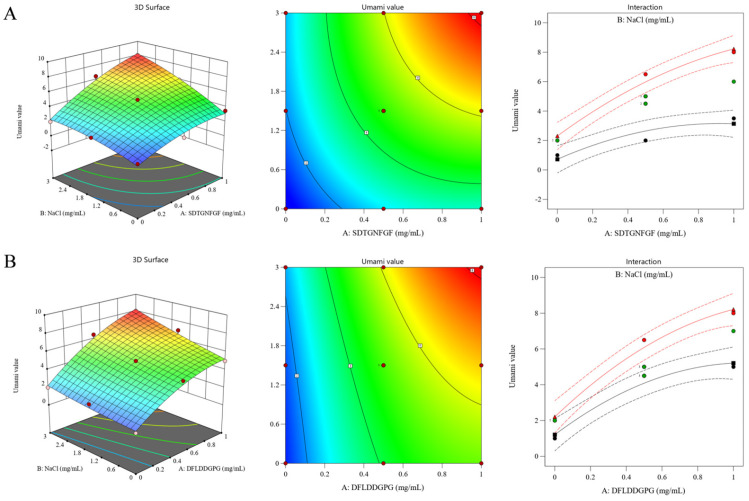 Figure 6
Peer Reviews
No public reviews on file for this paper yet. If you reviewed it on a platform where reviews are public (OpenReview, ICLR, NeurIPS, ICML), you can paste yours below so the community can read it here.
Videos
No videos yet. Explain this paper in a talk, walkthrough, or lecture? Add one.
Taxonomy
TopicsProtein Hydrolysis and Bioactive Peptides · Biochemical Analysis and Sensing Techniques · Seaweed-derived Bioactive Compounds