Resveratrol protects against isoflurane-induced testicular injury: a stereological and molecular study in mice
Zahra Mohammadi, Sanaz Alaee, Majid Kamali-Dolat Abadi, Somayyeh Karami-Mohajeri, Zahra Khodabandeh, Saeed Shokri, Sulagna Dutta, Pallav Sengupta, Hesam Kamyab

TL;DR
Resveratrol may protect mouse testicles from damage caused by isoflurane, an anesthetic, by boosting antioxidants and reducing cell death.
Contribution
This study demonstrates resveratrol's protective effects against isoflurane-induced testicular toxicity in mice through stereological and molecular analysis.
Findings
Resveratrol mitigated isoflurane-induced reductions in seminiferous tubule volume and length.
Resveratrol modulated apoptotic genes (Bcl2l1, Bax, Caspase-3) and enhanced antioxidant gene expression (GPX1, Sod1, catalase).
Higher doses of resveratrol showed greater protective effects against isoflurane toxicity in testicular tissues.
Abstract
•Resveratrol studied for protection against isoflurane-induced testicular damage.•Sixty C57BL/6 mice were divided into control, isoflurane, and resveratrol groups.•Isoflurane reduced testicular volume, tubular structures, and altered cells.•Resveratrol modulated apoptotic markers and boosted antioxidant gene expression.•Resveratrol shows potential in preventing isoflurane-induced testicular toxicity. Resveratrol studied for protection against isoflurane-induced testicular damage. Sixty C57BL/6 mice were divided into control, isoflurane, and resveratrol groups. Isoflurane reduced testicular volume, tubular structures, and altered cells. Resveratrol modulated apoptotic markers and boosted antioxidant gene expression. Resveratrol shows potential in preventing isoflurane-induced testicular toxicity. This study examines the therapeutic effects of resveratrol, known for its antioxidant…
Genes, proteins, chemicals, diseases, species, mutations and cell lines named across the full text — each resolved to its canonical identifier and authoritative record.
Click any figure to enlarge with its caption.
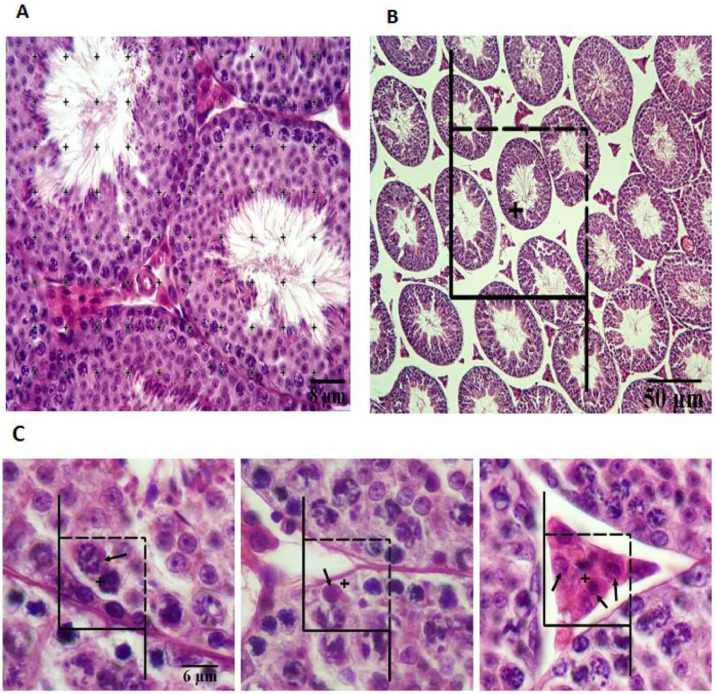 Figure 1
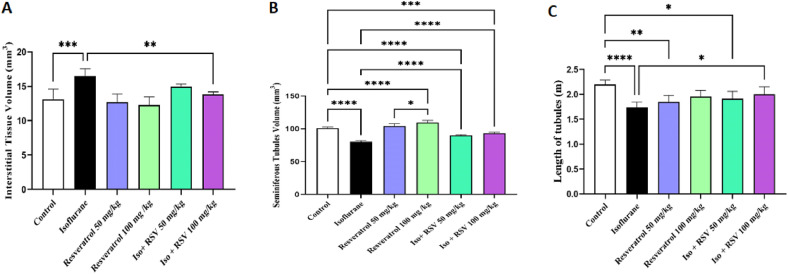 Figure 2
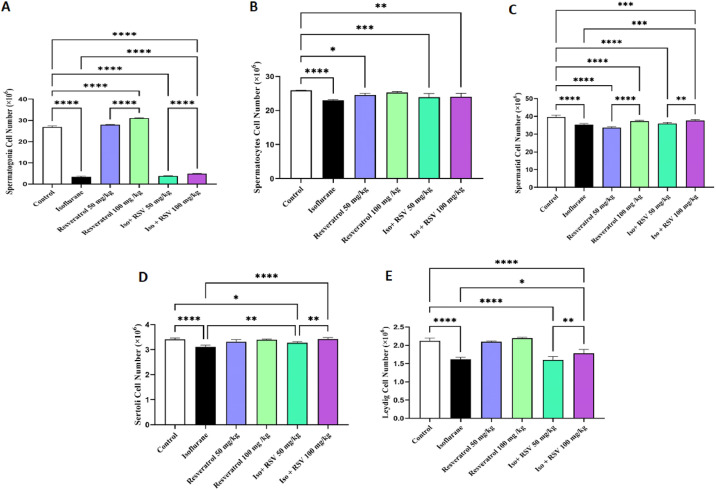 Figure 3
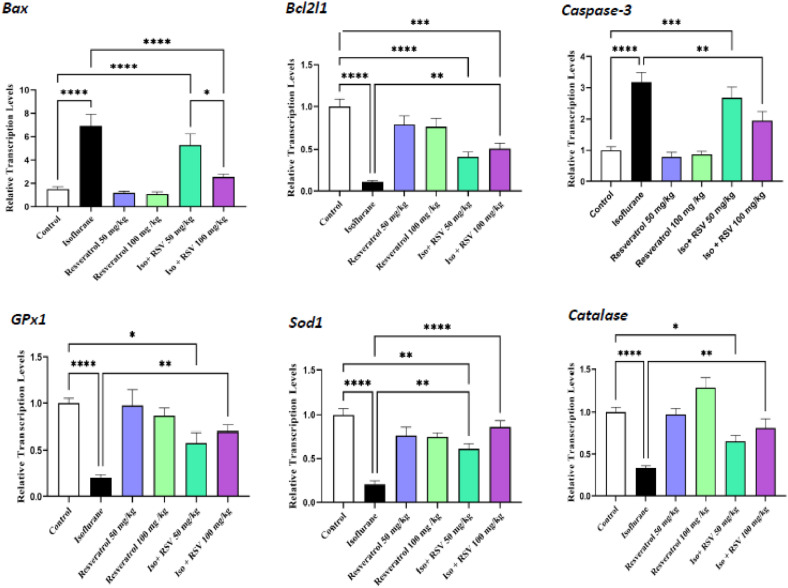 Figure 4
Peer Reviews
No public reviews on file for this paper yet. If you reviewed it on a platform where reviews are public (OpenReview, ICLR, NeurIPS, ICML), you can paste yours below so the community can read it here.
Videos
No videos yet. Explain this paper in a talk, walkthrough, or lecture? Add one.
Taxonomy
TopicsSirtuins and Resveratrol in Medicine · Anesthesia and Neurotoxicity Research · Tissue Engineering and Regenerative Medicine
Introduction
The use of inhalation anesthetics is ubiquitous in anesthesia management. Isoflurane, sold under the brand name Forane and also known as 1‑chloro-2,2,2-trifluoroethyl difluoromethyl ether or isoflurane, is unique among anesthetics because it is administered through inhalation and primarily removed from the body via the respiratory system.1 This stable, non-explosive gas is commonly used in operating rooms, recovery areas, and veterinary clinics.2 As a halogenated volatile anesthetic, isoflurane is favored in surgical environments for its ability to control the depth of anesthesia, producing amnesia, sedation, and hypnosis in a dose-dependent manner.1 In contrast to intravenous anesthetics, inhalation anesthetics like isoflurane act on multiple critical sites within the central nervous system and other body systems.3 Occupational exposure to anesthetic gases has been associated with genetic damage. Even minute concentrations of waste anesthetic gases can elevate genetic damage risks.4 Isoflurane has been implicated in impairing seminiferous tubules and spermatogenesis due to disruptions in sexual hormone balance.5
Isoflurane exposure has been linked to oxidative stress due to its ability to generate Reactive Oxygen Species (ROS).5 ROS initiate pathways that contribute to oxidative damage. These ROS can induce damage to lipids, proteins, and DNA, which may result in cell damage and programmed cell death, known as apoptosis.6 Therefore, oxidative stress is considered a significant mechanism underlying isoflurane's adverse effects. Therefore, mitigating oxidative stress may hold promise in reducing the toxicity associated with isoflurane exposure.7
Male infertility can result from low sperm production, poor sperm motility, abnormal sperm shape, or blockages in the reproductive tract. Hormonal imbalances, genetic factors, infections, lifestyle habits, and environmental toxins also play a role.8^,^9
Natural antioxidants derived from plants have shown promise in ameliorating the toxic effects of various compounds on the reproductive system and infertility-related conditions.10, 11, 12 Studies have demonstrated that plant-based antioxidants, such as flavonoids, polyphenols, and vitamins, possess potent antioxidant properties, effectively scavenging ROS and reducing oxidative stress in reproductive tissues.13, 14, 15 This is particularly significant as oxidative stress has been implicated in the pathogenesis of reproductive disorders and infertility by damaging sperm, oocytes, and reproductive organs.16 It is suggested that harnessing the antioxidant potential of plant compounds may offer therapeutic strategies for mitigating the adverse effects of toxins on the reproductive system and addressing infertility issues.10
The phytoalexin polyphenol resveratrol (trans-3,4,5-trihydroxystilbene) is found in plants such as grapes, mulberries, peanuts, and rhubarb. In the body, resveratrol is readily absorbed, rapidly metabolized, and mainly eliminated through urination.17 As well as having antioxidant and anti-inflammatory properties, resveratrol is also anticancer, antimicrobial, anti-neurodegenerative, and estrogenic.18 It is known that resveratrol has anti-oxidant properties in that it scavenges ROS such as hydroxyl radicals, superoxide radicals, and metal-induced radicals.19 The antioxidative properties of resveratrol are attributed to its high redox properties, which help scavenge free radicals. The antioxidant properties of resveratrol are activated by many enzymes, including catalase and superoxide dismutase.20 Resveratrol appears to be beneficial to both human and animal reproduction, according to a large amount of research. Research indicates that resveratrol enhances mitochondrial membrane potential, sperm motility, and viability, and protects spermatocytes from lipid peroxidation.21 A notable property of resveratrol is its capacity to inhibit the formation of Reactive Oxygen Species (ROS) and protect normal cells from DNA damage and apoptosis by modulating antiapoptotic mediators (Bcl2l1) and suppressing proapoptotic mediators (Bax, cytochrome C, and caspases 3/9).22
According to the established protective properties of resveratrol, this study aims to investigate the adverse effects of isoflurane on male reproductive health by assessing its impact on testicular morphology, specifically interstitial and seminiferous tubule volume and length, cellular composition, and the expression of apoptosis and antioxidant-related genes. A central objective is to evaluate the efficacy of both high and low-dose resveratrol in mitigating this toxicity, thereby elucidating its potential as a therapeutic intervention against isoflurane-induced testicular damage.
Materials and methods
Study animals
This research involved 60 C57BL/6 mice, each weighing between 25 g and 30 g, obtained from the laboratory animal center at Shiraz University of Medical Sciences. The mice were kept under controlled humidity and temperature conditions, with unrestricted access to food and water. All experimental procedures involving animals were approved by the Animal Ethics Committee of Shiraz University of Medical Sciences (Approval ID: IR.SUMS.AEC.1402.060) and conducted in compliance with the ARRIVE guidelines (Animal Research: Reporting of In Vivo Experiments) to ensure rigorous reporting, transparency, and reproducibility.
Treatments
After a two-week acclimatization period, the mice were randomly divided into six experimental groups (n = 10). The control group received daily injections of normal saline. The isoflurane group was exposed to 1.5 % isoflurane for one hour daily in an adjustable inhalation chamber. Two groups served as resveratrol controls and received either a low (50 mg/kg/day) or a high (100 mg/kg/day) dose intraperitoneally. The final two groups received combined treatments, being administered either the low or high dose of resveratrol intraperitoneally and one hour of isoflurane exposure. The regimen was administered for five consecutive days per week over a total experimental period of 35 days.
Stereological study of the testis
Under anesthesia with a CO_2_ chamber, the left testis was removed on the last day of the experiment. To evaluate the tubular and interstitial tissue volume of the testis, the primary volume of the testis was measured using the immersion method,23 and the final volume was estimated after tissue staining and processing. Sections were obtained isotropically and uniformly at random by employing the Orientator method. With the tissue oriented, eight to ten slabs were collected. The diameter and area of the testis were determined by punching a circular piece from a slab with a trocar. The cut surfaces of the slabs and circular pieces were embedded in paraffin blocks. Sections of 5 µm and 20 µm thickness were obtained by advancing the microtome. The number density of different types of cells was calculated using 20 µm sections, while 5 µm-thick sections were utilized for volume estimation of specific items. Staining was performed using hematoxylin and eosin. Following staining, the surface area of the circular piece was measured again, and volume shrinkage24 was calculated by using the formula: ; where AA and AB denote the areas of the circular piece after and before processing, sectioning, and staining, respectively. Volume shrinkage is the proportional decrease in tissue volume caused by the histological processing. The final volume of the testis was estimated using the formula: ; Vfinal is the corrected total testis volume after accounting for tissue shrinkage. The densities of the structural parameters were estimated, and the total amount of each parameter was obtained by multiplying the density by “V_final_”. Microscopic analysis was conducted using video microscopy, which involved a microscope (E-200, Nikon, Japan) connected to a video camera, a computer, and a flat-screen monitor. In each testis, 10 to 14 microscopic fields were examined to estimate each parameter. Microscopic fields were selected using systematic random sampling. An X- and Y-axis stage micrometer was used to move the slide at equal intervals. The relevant grids (test probes) were overlaid on the monitor by the stereology software developed at the Morphometry and Stereology Research Centre, Shiraz University of Medical Sciences, Shiraz, Iran.
Measurement of tubular and interstitial tissue volume
To calculate the total volume of the seminiferous tubules and interstitial tissue, five-micrometer sections were analyzed. To determine the volume density, represented as “Vv (structure/testis)” of either a tubule or interstitial tissue, a technique called point counting, as shown in Fig. 1A, was utilized at 160 × magnification using the formula: . Here, P(structure) indicates the count of grid points covering the tubules or interstitial tissue, and P(testis) indicates the points covering the entire testis.25 Vv (structure/testis), or volume density, is the proportion of the testis volume occupied by a specific structure (e.g., tubules). From these counts and knowing the final volume of the testis, the absolute volume of the structure can be calculated using: ; V(structure) is the absolute three-dimensional volume of a structure (e.g., total tubule volume) within the testis.Fig. 1(A) An estimation of the volume density of the structures has been made using a point-counting technique. (B) An unbiased counting frame has been applied to the images to estimate the length of the seminiferous tubules. Six tubule profiles are counted here, which are inside the counting frame completely or partially, but only touching the top and right lines of the counting frame. The tubule profiles that touch the bottom and left lines, as well as their extensions, are not considered. (C) By using an optical dissector method, an unbiased counting frame is superimposed on the images to estimate the numerical density of different cells.Fig. 1 dummy alt text
Estimation of seminiferous tubular length
To determine the length density of the seminiferous tubules, a random counting frame was used on the monitor at a magnification of 180 × . The length density (Lv) of the tubules was calculated using the formula: . Here, “ΣQ” represents the total number of tubule profiles counted in each mouse testis, “a/f” denotes the area of the counting frame (422 × 422 µm), and “Σf” indicates the total number of frames counted for each animal. Lv, or length density, is the total length of tubules per unit volume of testicular tissue. To find the total length of the tubules (L), the volume of the tubules was multiplied by their length density (Lv). Fig. 1B illustrates the use of a random counting frame on the monitor at 180 × magnification to measure the length of the seminiferous tubules.26^,^27 L is the total summed length of all seminiferous tubules in the testis.
Estimation of cell numbers in testis sections
Slices of tissue were prepared with a thickness of 20 micrometers, and various types of cells, such as Leydig cells, Sertoli cells, spermatogonia, spermatocytes, and round spermatids, were examined using an oil immersion lens with a high numerical aperture (NA = 1.4). To ensure accurate cell counting, a stereology software program was employed to overlay a counting frame on the images of testis sections displayed on a monitor. Cell numbers were estimated using a method known as the “optical dissector”, which helps avoid “edge effects” and biased counting (Fig. 1C). This method ensured that all cell nuclei within the frame had an equal chance of being counted. The optical section was adjusted downward along the z-axis. The top 5 ^µm^ of each section were excluded as a guard zone to prevent bias.
The formula used to calculate the numerical density of cells per testicle (Nv) is given as , where “ΣQ” indicates the total nuclei counted within the dissector height, “ΣA” represents the area covered by the unbiased counting frame in each microscopic field (168 µm^2), and “h” denotes the height of the dissector, set at 5 micrometers. Nv, or numerical density, is the number of cells per unit volume of a reference space (e.g., testis or epithelium). By multiplying the numerical density (Nv) by the volume of the epithelium, the total number of nuclei was calculated.25
Procedures for RNA isolation, cDNA preparation, and quantitative real-time RT-PCR analysis
Total RNA was extracted from testicular tissue using RNX Plus (Cinnagen, Iran), following the manufacturer's instructions. The QuantiTect Reverse Transcription Kit (Qiagen, Germany) was employed for synthesizing the first-strand cDNA as per the guidelines provided by the manufacturer. Quantitative real-time RT-PCR was conducted using an ABI Prism 7500 Sequence Detection System (Applied Biosystems, Foster City, CA, United States). The PCR amplification was carried out in a 25 µL reaction volume that included 1 µL of cDNA template, 1 µL of primer (10 pmoL/μL), and 12.5 µL of RealQ Plus 2 × Master Mix Green Low ROX (Ampliqon, Odense, Denmark). Glyceraldehyde 3-phosphate dehydrogenase (GAPDH) was used to normalize the target gene dosage levels. The study aimed to assess the expression levels of the antioxidant enzymes Glutathione Peroxidase 1 (GPx1), Superoxide dismutase-1 (Sod1), and Catalase (Cat), as well as the levels of Bcl2l1 (an apoptotic inhibitor) and Bax (an apoptotic activator) in testicular samples. Sample analysis was performed using the 2^-ΔΔCt^ method. Table 1 lists the primers that were used for RT-PCR.Table 1A description of the primers used for quantitative real-time RT-PCR.Table 1 dummy alt textGenesPrimer SequencesProduct SizeGPx1F (5′–3′)CAGGAGAATGGCAAGAATGAAGAG136 bpR (5′–3′)GGAAGGTAAAGAGCGGGTGASod1F (5′–3′)GGGTTCCACGTCCATCAGTAT121 bpR (5′–3′)GGTCTCCAACATGCCTCTCTTCatF (5′–3′)CTCAGGTGCGGACATTCTACA206 bpR (5′–3′)AATTGCGTTCTTAGGCTTCTCAGBcl2l1F (5′–3′)GCAGGTATTGGTGAGTCGGA130 bpR (5′–3′)CTCGGCTGCTGCATTGTTCBaxF (5′–3′)TGGAGATGAACTGGACAGCAAT155 bpR (5′–3′)TAGCAAAGTAGAAGAGGGCAACCCaspase3F (5′–3′)TGACTGGAAAGCCGAAACTC122 bpR (5′–3′)AGCCTCCACCGGTATCTTCTGapdhF (5′–3′)TGTTTCCTCGTCCCGTAGA120 bpR (5′–3′)ATCTCCACTTTGCCACTGC
Statistical analysis
The data are reported as mean and standard deviation. The mean and standard deviation are reported for the data. The one-way ANOVA and Tukey test were used to make statistical comparisons between the means of the groups. It was considered to be significant if the “p-value” was less than 0.05.
Results
The total volume of the seminiferous tubules and interstitial tissue
A significant reduction in the seminiferous tubule volume was observed in isoflurane-treated mice compared to controls (p < 0.0001). Co-treatment with resveratrol at 50 mg/kg and 100 mg/kg completely prevented this atrophy, with tubule volumes being significantly higher than in the isoflurane group (p < 0.0001 for both doses) (Fig. 2).Fig. 2Resveratrol mitigates the adverse effects of isoflurane on testicular morphology. Stereological evaluation of (A) interstitial tissue volume, (B) seminiferous tubule volume, and (C) seminiferous tubule length, demonstrating that resveratrol treatment preserves testicular architecture against isoflurane challenge. Data are presented as mean ± SEM. * p < 0.05, ** p < 0.01, *** p < 0.001, and **** p < 0.0001.Fig. 2 dummy alt text
Isoflurane treatment resulted in a significant expansion of the interstitial compartment compared to the control group (p < 0.001). This effect was significantly attenuated by resveratrol with the 100 mg/kg dose (p < 0.01), reducing the interstitial volume relative to the isoflurane-only group (Fig. 2).
Seminiferous tubule length
Isoflurane treatment induced a significant reduction in seminiferous tubular length compared to the control group (p < 0.0001; Fig. 2). Co-treatment with resveratrol demonstrated a dose-dependent amelioration of this effect. While the low dose (50 mg/kg) showed non-significant improvement, the high (100 mg/kg) doses showed the most pronounced protective effect compared to the isoflurane-only group (p < 0.05) (Fig. 2).
Quantification of various cell types in the testis
In the isoflurane-exposed group, a significant reduction in the numbers of spermatogonia, spermatocytes, round spermatids, Leydig cells, and Sertoli cells was observed compared with the control group (p < 0.0001). The adverse effects on cell counts were ameliorated when high doses of resveratrol were combined with isoflurane, leading to an increase in spermatogonia, spermatocytes, round spermatids, Leydig cells, and Sertoli cells (p < 0.0001, p < 0.001, p < 0.0001, and p < 0.05, respectively). No significant differences were found in the number of spermatocytes between the animals treated with both high and low doses of resveratrol and isoflurane and those treated with isoflurane alone (p > 0.05). Notably, a significant elevation in the number of Sertoli cells was recorded in the group receiving a low dose of resveratrol and isoflurane compared to the isoflurane-only group (p < 0.01) (Fig. 3).Fig. 3Resveratrol prevents isoflurane-induced loss of testicular cells. Stereological cell counts showing the population of (A) spermatogonia, (B) spermatocytes, (C) spermatids, (D) Sertoli cells, and (E) Leydig cells. Co-treatment with resveratrol significantly maintained cell numbers compared to the isoflurane-only group. Data are presented as mean ± SEM. * p < 0.05, ** p < 0.01, *** p < 0.001, and **** p < 0.0001.Fig. 3 dummy alt text
Expression of apoptotic and antioxidant genes
Gene expression analysis revealed that isoflurane exposure significantly disrupted the balance of apoptosis-related factors, marked by a decrease in the anti-apoptotic gene Bcl2l1 and an increase in the pro-apoptotic genes Bax and Caspase-3 compared to the control (p < 0.0001). Co-treatment with a high dose of resveratrol (100 mg/kg) significantly counteracted these effects, reducing Bax and Caspase-3 and increasing Bcl2l1 levels relative to the isoflurane-only group (p < 0.0001, p < 0.01, and p < 0.01, respectively)
The transcription levels of GPx1, Sod1, and catalase significantly reduced in the Isoflurane group compared to the control group (p < 0.0001), while combination therapy with high doses of resveratrol increased their expression levels compared to the Isoflurane group (p < 0.01, p < 0.0001, and p < 0.01). It was observed that if 50 mg/kg resveratrol was administered in combination with isoflurane, it was only able to significantly increase the expression level of the Sod1 gene over the isoflurane group (p < 0.01) (Fig. 4).Fig. 4Resveratrol alters the expression of key genes involved in apoptosis and oxidative stress in isoflurane-exposed testes. Relative mRNA expression of (A) pro-apoptotic and anti-apoptotic genes and (B) antioxidant enzymes. Resveratrol treatment reversed the isoflurane-induced gene expression profile. Data are presented as mean ± SEM. * p < 0.05, ** p < 0.01, *** p < 0.001, and **** p < 0.0001.Fig. 4 dummy alt text
Discussion
It is widely acknowledged that oxidative stress is a significant contributing factor to male infertility.28 The accumulation of reactive oxygen species ROS in testicular tissue, which can overwhelm endogenous antioxidant defenses, is a key driver of apoptosis and cellular damage, ultimately compromising reproductive function.29 Natural compounds, such as resveratrol, offer a promising therapeutic approach by targeting oxidative stress, apoptosis, and hormonal balance.30 This study was conducted to investigate the therapeutic role of resveratrol, a compound with known antioxidant and anti-inflammatory properties, against isoflurane-induced testicular toxicity.
These findings demonstrate that isoflurane exposure induces significant testicular injury, characterized by an enhancement of interstitial tissue and a reduction in the volume and length of the seminiferous tubules. These morphological changes are consistent with the authors’ previous reports of testicular weight reduction and germinal epithelial cell atrophy following exposure to isoflurane.31 The authors propose that these structural deficits are a direct consequence of disrupted spermatogenesis, evidenced by a reduction in germ cell populations and increased apoptosis.32^,^33
A key mechanism underlying this damage appears to be the induction of oxidative stress and a shift in the balance towards apoptosis. In the isoflurane group, the authors observed a significant decrease in the gene expression of the anti-apoptotic protein Bcl2l1, alongside an increase in the pro-apoptotic markers Bax and Caspase-3. Concurrently, isoflurane likely disrupts the redox balance, creating a pro-oxidant environment. Resveratrol treatment effectively ameliorated these adverse effects.
The isoflurane-induced decrease in various testicular cell populations was reversed, particularly with high-dose resveratrol, a finding consistent with studies showing resveratrol's ability to improve spermatogenic cell counts.34, 35, 36 According to these results, the protective mechanism of resveratrol is multifaceted. Firstly, it functions as a potent antioxidant, upregulating the gene expression of key antioxidant enzymes such as GPx1, Sod1, and catalase to restore ROS equilibrium. Secondly, it exerts strong anti-apoptotic effects, counteracting the isoflurane-induced expression of Bax and Caspase-3. This aligns with established literature demonstrating that resveratrol can protect against testicular damage by reducing mitochondrial-mediated apoptosis and inflammation.21^,^37
These cellular and molecular improvements translate to enhanced reproductive function. The authors’ previous work has shown that resveratrol mitigates the negative effects of isoflurane on sperm parameters, including motility, viability, and DNA integrity.31 By reducing oxidative stress and apoptosis, resveratrol preserves the integrity of the seminiferous epithelium and supports normal spermatogenesis. This protective role is further supported by evidence that resveratrol can increase testosterone production,35 a hormone critical for maintaining the structural and functional integrity of the seminiferous tubules.
This study has several limitations. Although the authors established a strong association between resveratrol and the amelioration of testicular damage, the precise underlying molecular pathways were not fully elucidated. For instance, the specific signaling cascades responsible for its anti-apoptotic and antioxidant effects remain to be defined. Furthermore, the present study utilized a preventive model, where resveratrol was administered concurrently with isoflurane; thus, its potential as a therapeutic intervention after anesthetic exposure remains unknown. Future studies should incorporate different animal models, more detailed mechanistic investigations, and varied treatment schedules to confirm and expand upon these findings.
Conclusions
In conclusion, isoflurane induces testicular damage through pathways involving oxidative stress and apoptosis, leading to morphological degeneration and impaired spermatogenesis. Resveratrol emerges as a highly effective cytoprotective agent in this model, mitigating this damage through its complementary antioxidant and anti-apoptotic properties. This study provides compelling evidence for the potential of resveratrol as a therapeutic intervention to safeguard male reproductive health against anesthetic-induced injury.
Ethics approval and consent to participate
All experimental procedures involving animals were approved by the Animal Ethics Committee of Shiraz University of Medical Sciences (Approval ID: IR.SUMS.AEC.1402.060) and conducted in compliance with the ARRIVE guidelines (Animal Research: Reporting of In Vivo Experiments) to ensure rigorous reporting, transparency, and reproducibility.
Consent for publication
Not applicable
Authors' contributions
The conceptualization of the project was carried out by Zahra Mohammadi and Sanaz Alaee, while formal analysis was conducted by Majid Kamali-Dolatabadi, Somayyeh Karami-Mohajeri and Zahra Khodabandeh, Saeed Shokri, Sulagna Dutta, and Pallav Sengupta. Funding acquisition was managed by Sanaz Alaee. The writing of the original draft was done by Zahra Mohammadi and Sanaz Alaee, followed by review and editing by Pallav Sengupta and Hesam Kamyab.
Data availability statement
All data generated or analyzed during this study are included in this published article.
Declaration of competing interest
The authors declare no conflicts of interest.
The reference list from the paper itself. Each links out to its DOI / PubMed record.
- 1BrozovićG.OršolićN.Rozgaj R.KneževićF.Horvat KneževićA.MaričićM.Sevoflurane and isoflurane genotoxicity in kidney cells of mice Arh Hig Rada Toksikol 6820172282342897688110.1515/aiht-2017-68-2941 · doi ↗ · pubmed ↗
- 2Hudson A.E.Hemmings H.C Jr Pharmacokinetics of inhaled anesthetics Pharmacology and Physiology for Anesthesia 2019 Elsevier 4469
- 3Hudson A.Hemmings H.Jr Are anaesthetics toxic to the brain?Br J Anaesth 1071201130372161694110.1093/bja/aer 122PMC 3159425 · doi ↗ · pubmed ↗
- 4Rozgaj R.Kašuba V.BrozovićG.Jazbec A.Genotoxic effects of anaesthetics in operating theatre personnel evaluated by the comet assay and micronucleus test Int J Hyg Environ Health 2121200911171802325210.1016/j.ijheh.2007.09.001 · doi ↗ · pubmed ↗
- 5Xu X.-L.Pan C.Hu J.-X.Liu X.-T.Li Y.-F.Wang H.Effects of isoflurane inhalation on the male reproductive system in rats Environ Toxicol Pharmacol 34320126886932311706810.1016/j.etap.2012.09.020 · doi ↗ · pubmed ↗
- 6Bahmyari S.Alaee S.Khodabandeh Z.Talaei-Khozani T.Dara M.Mehdinejadiani S.The effects of Wharton’s jelly MS Cs secretomes for restoring busulfan-induced reproductive toxicity in male mice Human Exp Toxicol 432024960327124126901910.1177/0960327124126901939081119 · doi ↗ · pubmed ↗
- 7Levy R.J.Carbon monoxide and anesthesia-induced neurotoxicity Neurotoxicol Teratol 60201750582761666710.1016/j.ntt.2016.09.002PMC 5344786 · doi ↗ · pubmed ↗
- 8Talaei-Khozani T.Shirazi R.The impacts of noise pollution on sperm quality and The suggestive mechanisms J Infertil Reprod Biol 1142023107114