Deficiency of Werner RecQ-type DNA helicase causes premature malnutrition in zebrafish
Kota Ujibe, Makoto Kashima, Miku Kataoka, Rintaro Shimada, Masashige Okamoto, Isao Kobayashi, Seiji Wada, Hiroki Matsuda, Akira Sakamoto, Hiromi Hirata

TL;DR
Zebrafish lacking the WRN gene show early signs of malnutrition and organ defects, leading to premature death, which can be partially improved with more food.
Contribution
This study identifies early-onset malnutrition and organ defects in zebrafish WRN mutants, revealing new insights into Werner syndrome pathology.
Findings
Severe wrn mutants showed high DNA damage and apoptosis, causing gut and pancreatic defects.
Severe wrn mutants exhibited low glucose, glycogen, and fat levels, indicating malnutrition.
Increased food availability partially rescued the survival of wrn mutant zebrafish.
Abstract
Werner syndrome is a genetic progeria characterized by premature aging symptoms, but its early-onset pathology remains unclear. We generated wrn truncation mutant (wrn-/-) zebrafish using CRISPR/Cas9 and identified two premature mortality phases: 7–21 and 60–90 days post-fertilization (dpf). Time-course transcriptomics revealed two wrn-/- subgroups. One showed the reduced expression of intestinal and pancreatic exocrine genes at 7–9 dpf, while the other maintained normal expression initially but eventually showed reduced pancreatic exocrine genes by 21–35 dpf. The prematurely dying wrn-/- larvae exhibited intestinal villi and pancreatic defects, along with DNA damage, cell-cycle arrest, and apoptosis. They also had lower glycogen, glucose, and fat levels compared to wild-type and late-dying wrn-/- larvae, suggesting malnutrition. Notably, excess feeding partially improved their…
Genes, proteins, chemicals, diseases, species, mutations and cell lines named across the full text — each resolved to its canonical identifier and authoritative record.
Click any figure to enlarge with its caption.
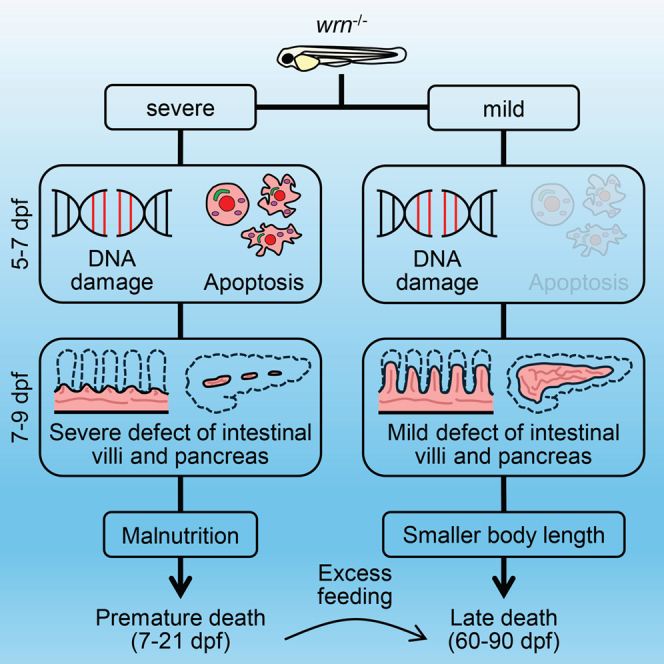 Figure 1
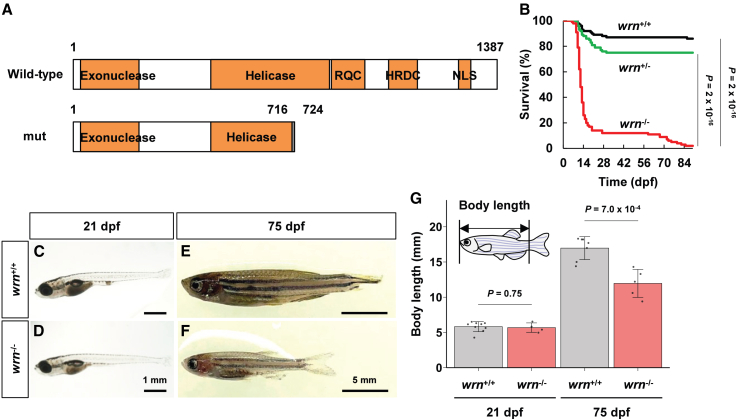 Figure 2
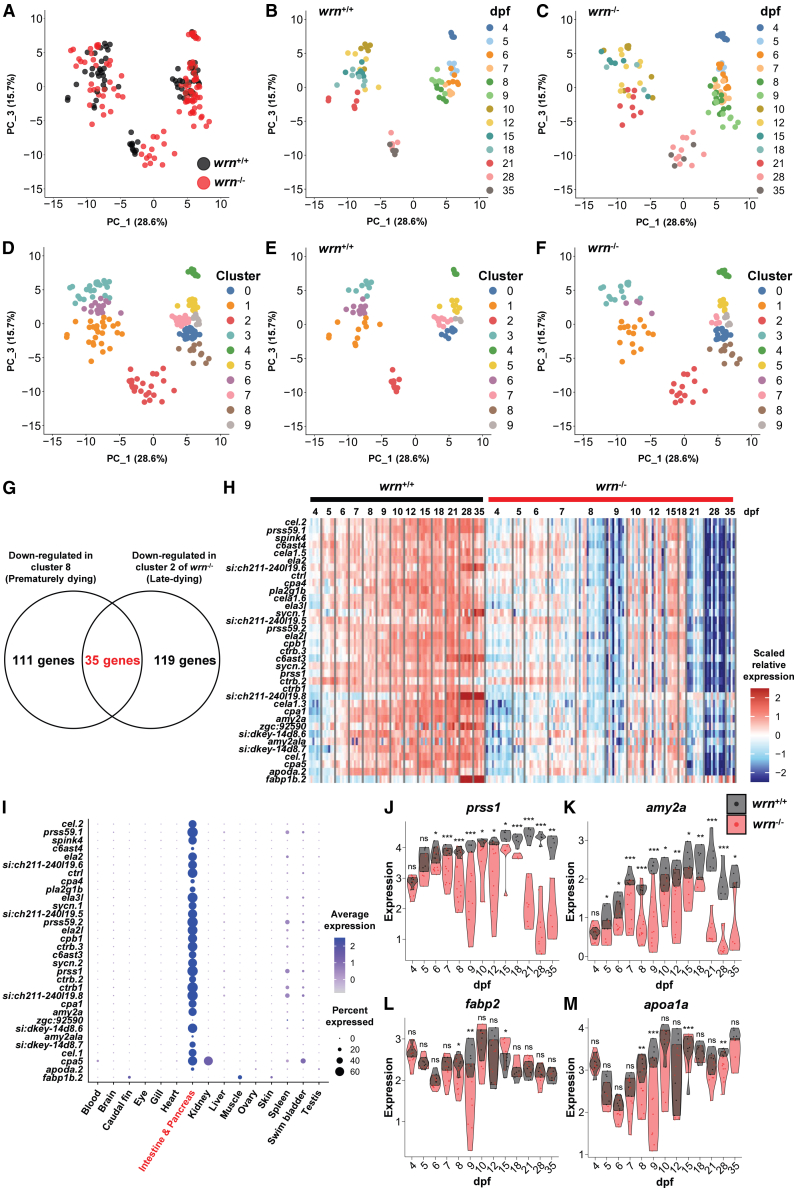 Figure 3
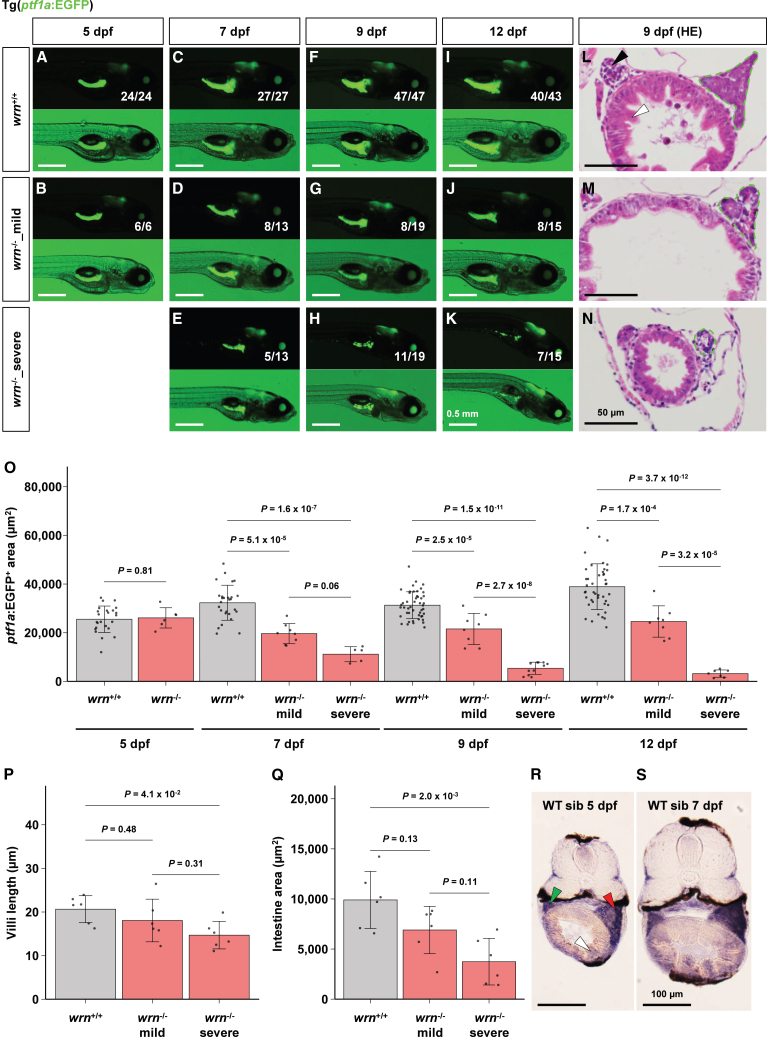 Figure 4
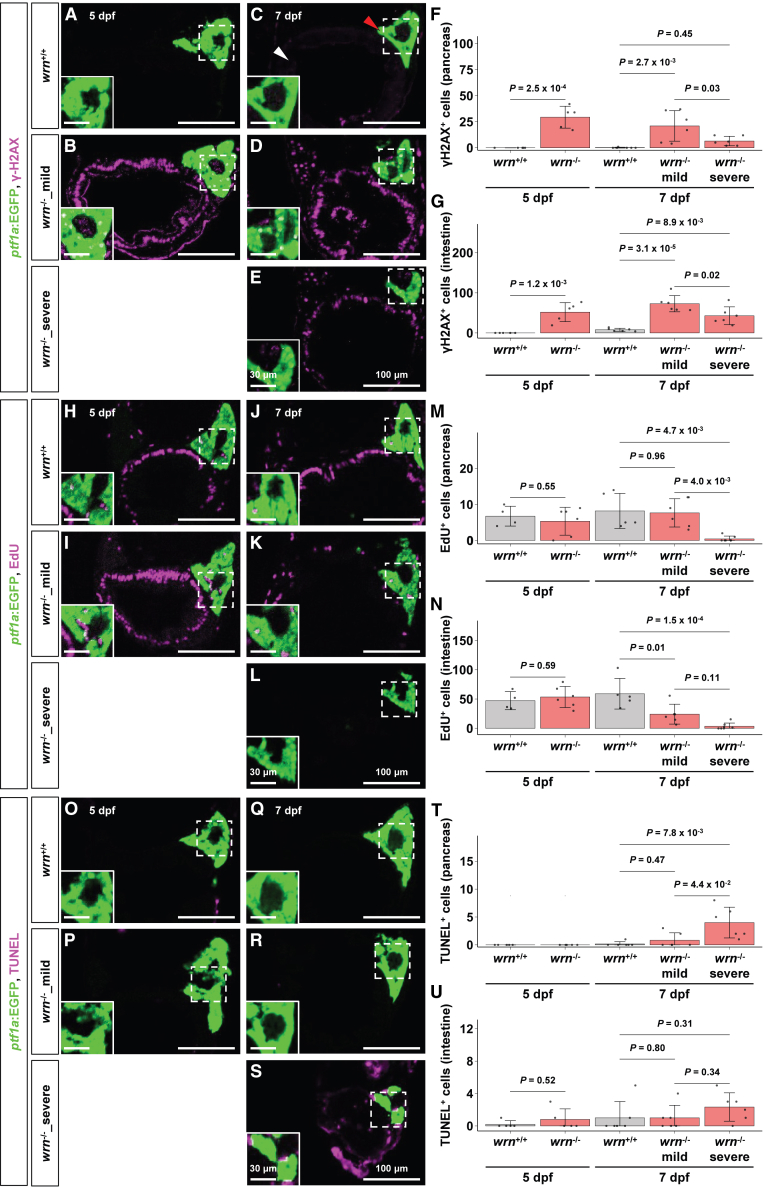 Figure 5
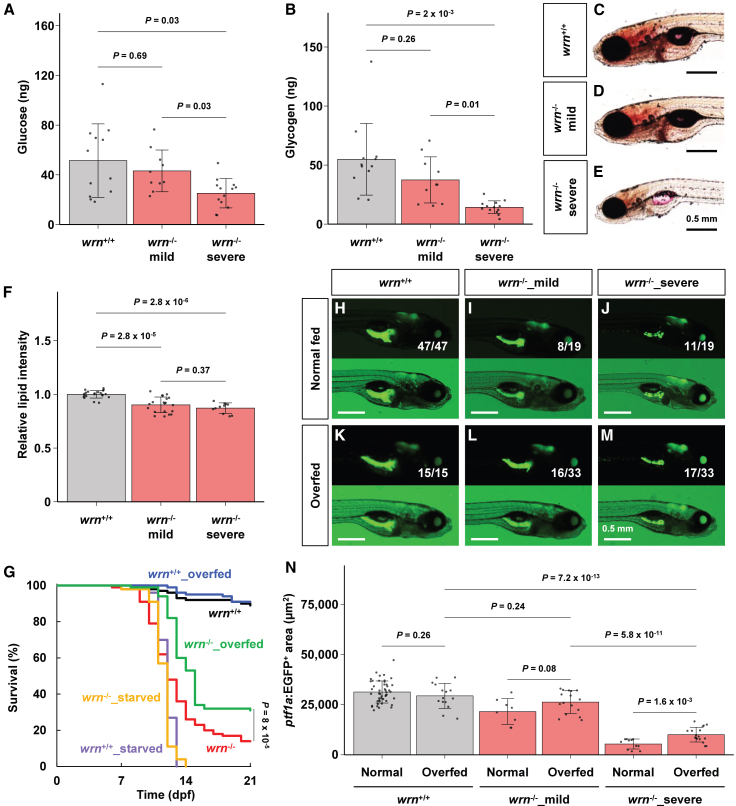 Figure 6
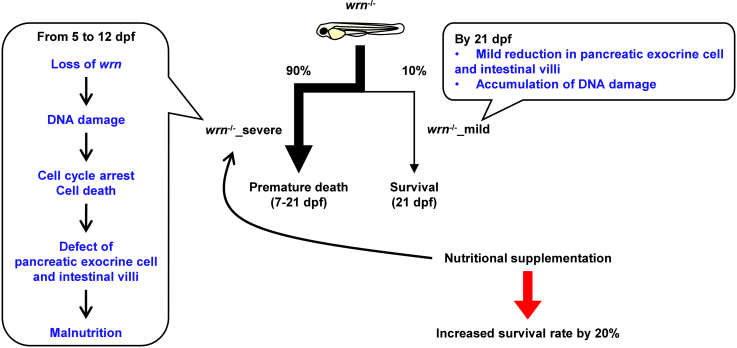 Figure 7
Peer Reviews
No public reviews on file for this paper yet. If you reviewed it on a platform where reviews are public (OpenReview, ICLR, NeurIPS, ICML), you can paste yours below so the community can read it here.
Videos
No videos yet. Explain this paper in a talk, walkthrough, or lecture? Add one.
Taxonomy
TopicsErythrocyte Function and Pathophysiology · Mitochondrial Function and Pathology · DNA Repair Mechanisms