Increased diameter of arteries and veins in the caudal fins of Danio rerio longfin t2 fish is accompanied by fin overgrowth
Jennifer S. Lanni, Benjamin W. Lyon, Stacy V. Nguyen

TL;DR
Zebrafish with long fins have larger blood vessels in their tails, which may help control fin size.
Contribution
The study reveals a link between blood vessel size and fin overgrowth in longfin zebrafish.
Findings
Longfin t2 zebrafish have significantly larger arteries and veins in their caudal fins.
Increased blood vessel diameter correlates with fin overgrowth in these fish.
Abstract
The classic dominant longfin zebrafish strain ( lof t2 ) has long fins due to ectopic expression of the potassium channel Kcnh2a in the fin mesenchyme. Potassium channel function is also known to affect the vasculature, but the fin vasculature has not been characterized in lof t2 fish. Here we show that lof t2 fish contain significantly increased artery and vein diameters in the caudal fin as compared to wildtype fish. Interestingly, these changes in blood vessel size are associated with areas of fin overgrowth, consistent with a possible role for the vasculature in fin size regulation.
Genes, proteins, chemicals, diseases, species, mutations and cell lines named across the full text — each resolved to its canonical identifier and authoritative record.
Click any figure to enlarge with its caption.
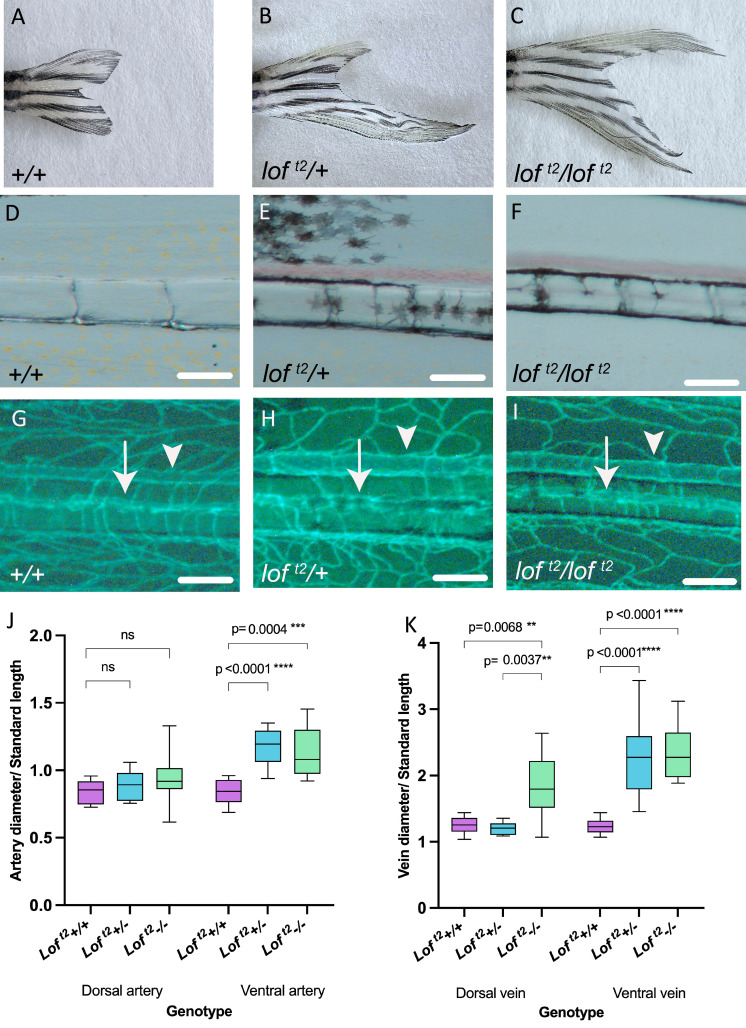 Figure 1
Peer Reviews
No public reviews on file for this paper yet. If you reviewed it on a platform where reviews are public (OpenReview, ICLR, NeurIPS, ICML), you can paste yours below so the community can read it here.
Videos
No videos yet. Explain this paper in a talk, walkthrough, or lecture? Add one.
Taxonomy
TopicsPhysiological and biochemical adaptations · Fish biology, ecology, and behavior · Reproductive biology and impacts on aquatic species