PROTACs for Collateral Degradation: Is It Time to Back Up the Bus?
Zhe Gavin Gao, Kevin Burgess

TL;DR
This paper explores how off-target effects in certain drug-like molecules called PROTACs might actually be beneficial when targeting complex protein interactions.
Contribution
The paper introduces the novel idea that collateral degradation by PROTACs could be advantageous in specific biological contexts.
Findings
Off-target effects in PROTACs may be beneficial when targeting multiprotein complexes.
The functional importance of protein complexes can outweigh the need for single-protein targeting.
Abstract
Off-target effects are usually undesirable in drug development, but for some PROTACs and other degraders, they may be advantageous. Specifically, this can be so when the activities of multiprotein complexes are more important than just the targeted protein of interest.
Genes, proteins, chemicals, diseases, species, mutations and cell lines named across the full text — each resolved to its canonical identifier and authoritative record.
Click any figure to enlarge with its caption.
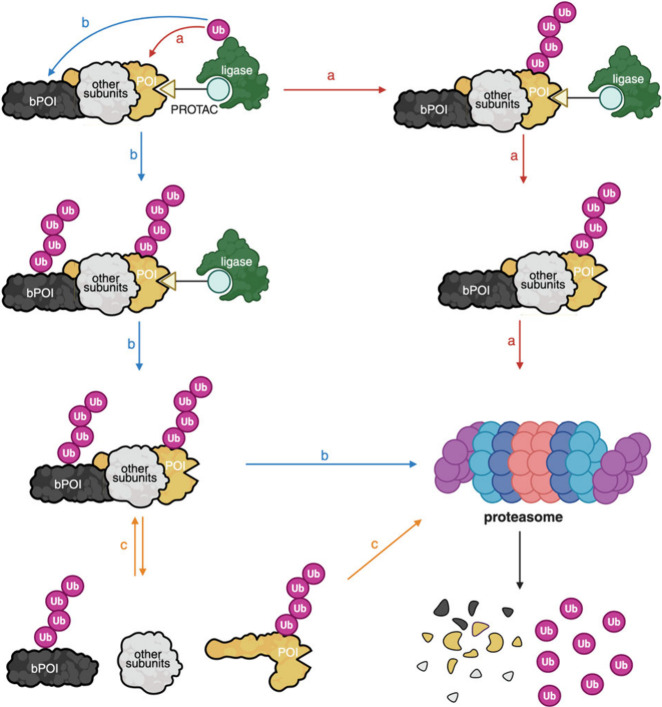 Figure 1
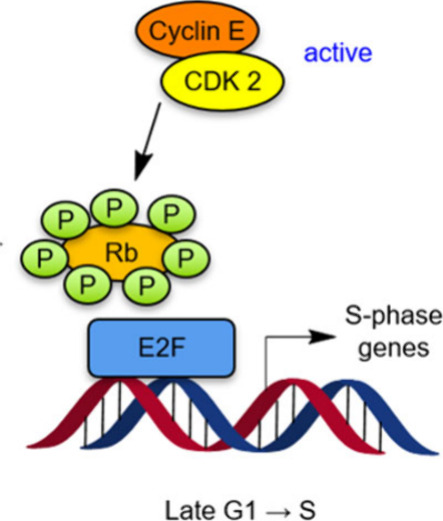 Figure 2
 Figure 3
 Figure 4
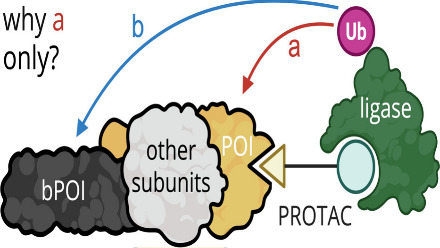 Figure 5
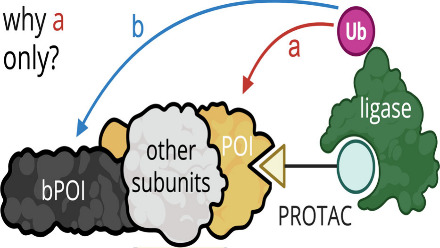 Figure 6
Peer Reviews
No public reviews on file for this paper yet. If you reviewed it on a platform where reviews are public (OpenReview, ICLR, NeurIPS, ICML), you can paste yours below so the community can read it here.
Videos
No videos yet. Explain this paper in a talk, walkthrough, or lecture? Add one.
Taxonomy
TopicsProtein Degradation and Inhibitors · HER2/EGFR in Cancer Research · Receptor Mechanisms and Signaling