Calcium-binding proteins as allergens
Andrea O'Malley, Kriti Khatri, Elaine M. Wright, Rebekka A. Pittsley, Krzysztof Kowal, Maksymilian Chruszcz

TL;DR
This review explores calcium-binding proteins that act as allergens, causing both inhaled and food allergies.
Contribution
The paper reviews various calcium-binding protein families that are allergenic and their roles in allergic reactions.
Findings
Calcium-binding proteins like parvalbumin and troponin C are common allergens.
These allergens show significant IgE reactivity and cross-reactivity.
They are difficult to avoid due to their widespread presence in nature.
Abstract
Calcium-binding proteins, particularly those in the EF-hand family, are found ubiquitously in nature, primarily for calcium transport and storage in the body. In this review, we discuss allergens in the parvalbumin, polcalcin, sarcoplasmic calcium-binding protein, and troponin C families, as well as additional allergens. Allergens from these protein families display a wide range of IgE reactivity and cross-reactivity. They are implicated in both inhaled and food allergies, and, due to their common presence, they are difficult to avoid.
Genes, proteins, chemicals, diseases, species, mutations and cell lines named across the full text — each resolved to its canonical identifier and authoritative record.
Click any figure to enlarge with its caption.
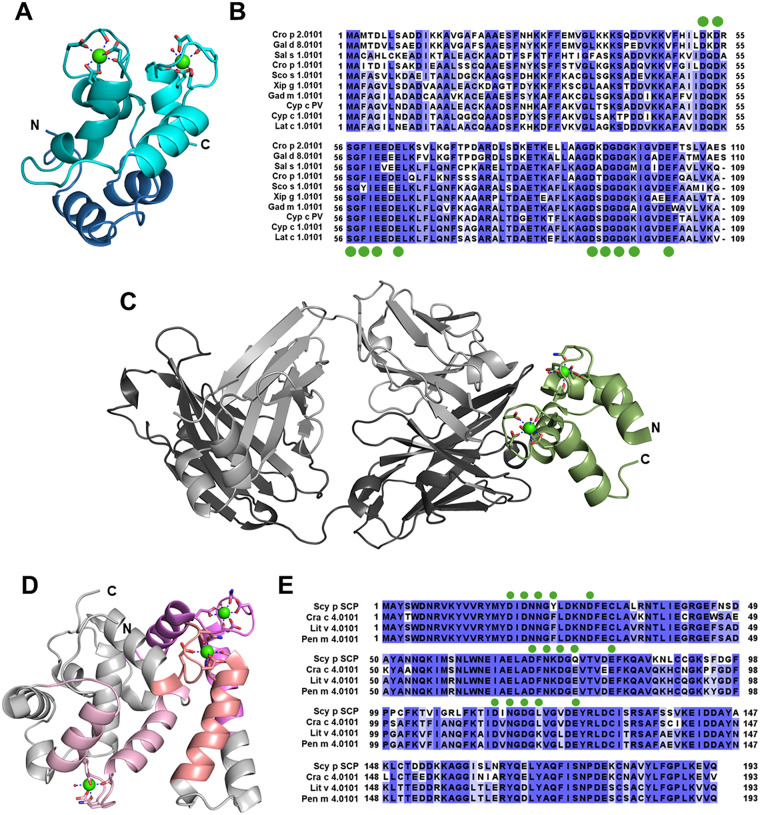 Figure 1
Peer Reviews
No public reviews on file for this paper yet. If you reviewed it on a platform where reviews are public (OpenReview, ICLR, NeurIPS, ICML), you can paste yours below so the community can read it here.
Videos
No videos yet. Explain this paper in a talk, walkthrough, or lecture? Add one.
Taxonomy
TopicsFood Allergy and Anaphylaxis Research · Asthma and respiratory diseases · Occupational exposure and asthma