Factors influencing the proliferation of keratinocytes in psoriasis
Nannan Liang, Kaiming Zhang

TL;DR
This paper reviews factors that cause skin cells to grow abnormally in psoriasis, aiming to improve understanding and treatment of the disease.
Contribution
The paper systematically reviews multiple factors influencing keratinocyte proliferation in psoriasis.
Findings
Inflammatory cytokines and immune microenvironment significantly affect keratinocyte proliferation.
Epigenetics, metabolism, and autophagy also play roles in abnormal skin cell growth in psoriasis.
The microbiome contributes to the complex pathogenesis of the disease.
Abstract
The pathogenesis of psoriasis is extremely complex, and abnormal proliferation of keratinocytes (KCs) is one of its key pathological features. During the disease process, multiple factors can induce KC proliferation. This article reviews the mechanisms by which inflammatory cytokines, immune microenvironment, microbiome, epigenetics, metabolism, and the autophagy influence KC proliferation, aiming to provide insights for further research into the pathogenesis of psoriasis and the development of precise clinical treatments. Health sciences
Genes, proteins, chemicals, diseases, species, mutations and cell lines named across the full text — each resolved to its canonical identifier and authoritative record.
Click any figure to enlarge with its caption.
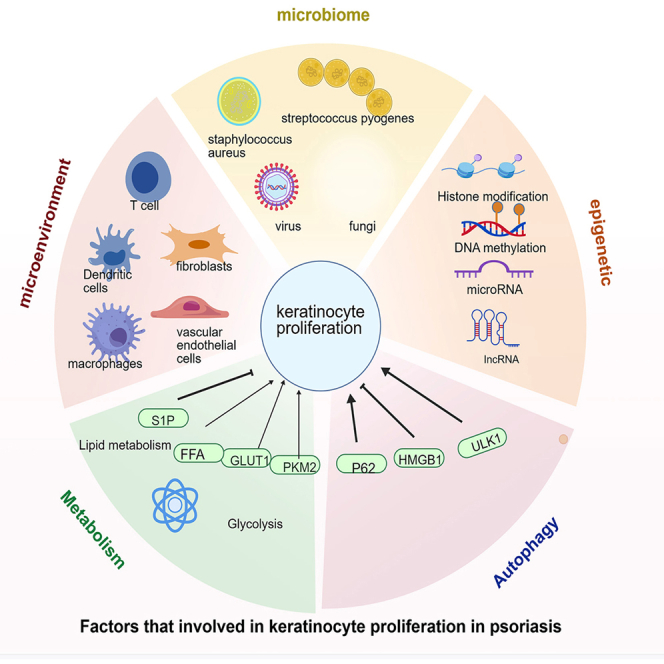 Figure 1
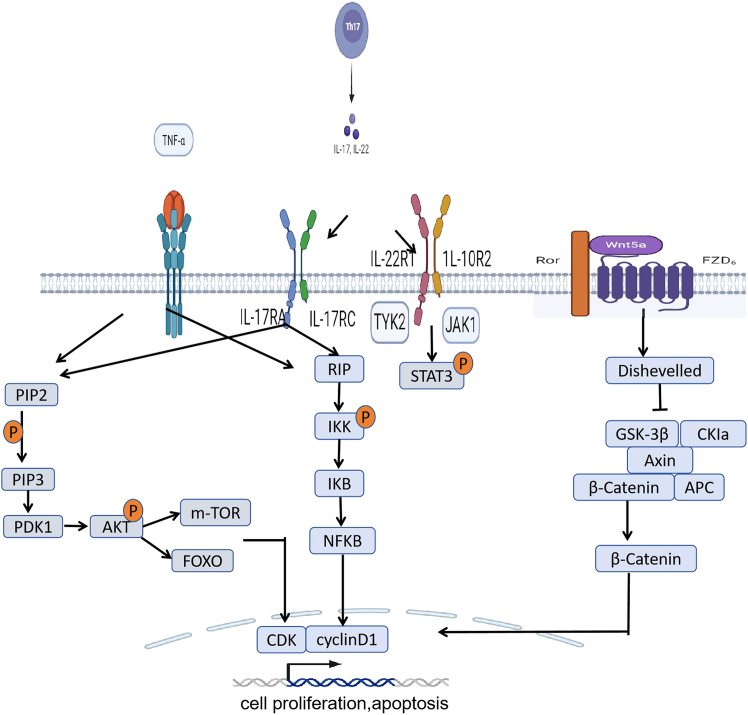 Figure 2
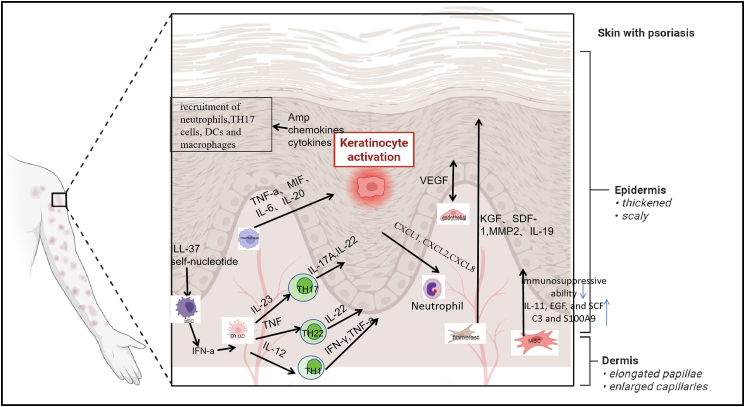 Figure 3
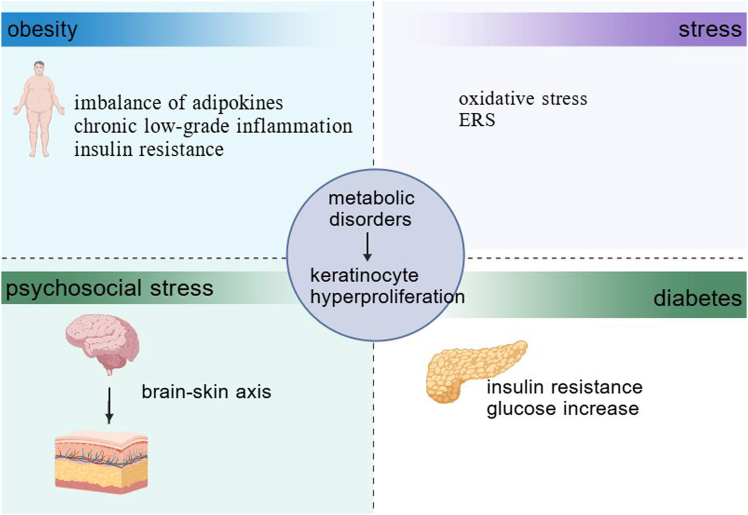 Figure 4
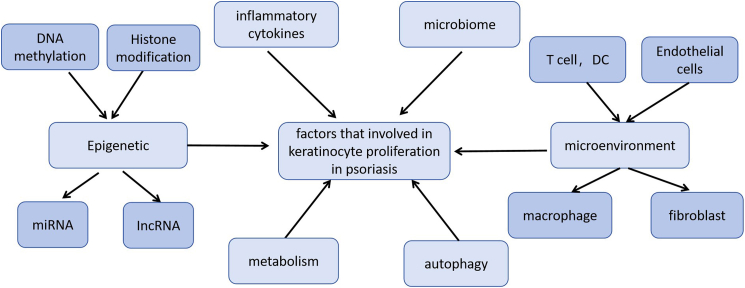 Figure 5
Peer Reviews
No public reviews on file for this paper yet. If you reviewed it on a platform where reviews are public (OpenReview, ICLR, NeurIPS, ICML), you can paste yours below so the community can read it here.
Videos
No videos yet. Explain this paper in a talk, walkthrough, or lecture? Add one.
Taxonomy
TopicsPsoriasis: Treatment and Pathogenesis · Dermatology and Skin Diseases · Autophagy in Disease and Therapy