Phosphazene-Based Porous Polymer as Electrode Material for Electrochemical Applications
Ekaterina A. Karpova, Alexander A. Sysoev, Ilya D. Tsvetkov, Alexey L. Klyuev, Oleg A. Raitman, Mikhail A. Soldatov

TL;DR
A new porous polymer made from phosphazene is shown to be a promising material for electrochemical devices like supercapacitors and fuel cells.
Contribution
The synthesis of a phosphazene-based porous polymer and its conversion into a heteroatom-doped carbon material with high electrochemical performance is presented.
Findings
The synthesized polymer has a mesoporous structure and a surface area of 76.9 m2/g.
After carbonization, the material achieves a surface area of 177 m2/g and a specific capacitance of 155.6 F/g.
The carbon material shows catalytic activity for oxygen electroreduction at 15.9 A/g.
Abstract
Porous highly cross-linked polymer (PIP) was synthesized by a polycondensation reaction between hexachlorocyclotriphosphazene and piperazine. The obtained polymer has a surface area of 76.9 m2/g and a mesoporous structure. After carbonization, the obtained product (PIP-C) has a surface area of 177 m2/g. The obtained carbon product contained nitrogen and phosphorus heteroatoms, which leads to a higher specific capacitance (155.6 F/g) and catalytical activity in the electroreduction of oxygen (15.9 A/g). This work shows the possibility of the use of such porous phosphazene polymers as precursors for heteroatom-doped carbon materials, which might be used in electrochemical devices like electrodes for supercapacitors or metal-free electrocatalysts in fuel cells.
Genes, proteins, chemicals, diseases, species, mutations and cell lines named across the full text — each resolved to its canonical identifier and authoritative record.
Click any figure to enlarge with its caption.
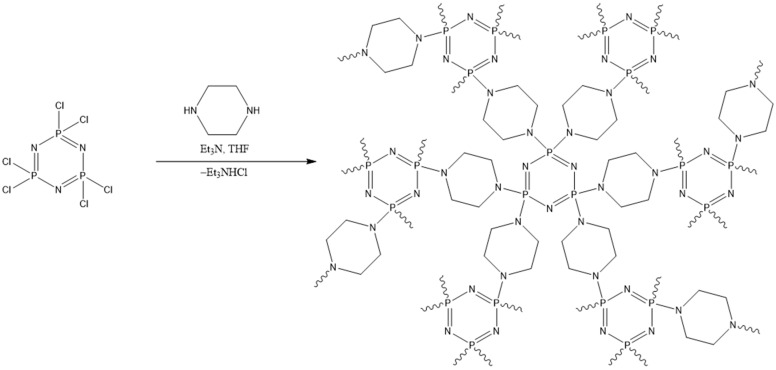 Figure 1
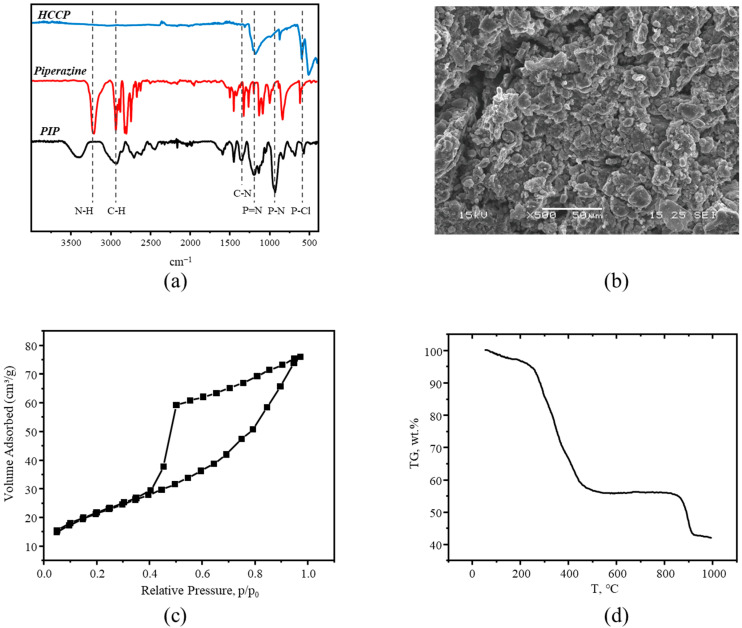 Figure 2
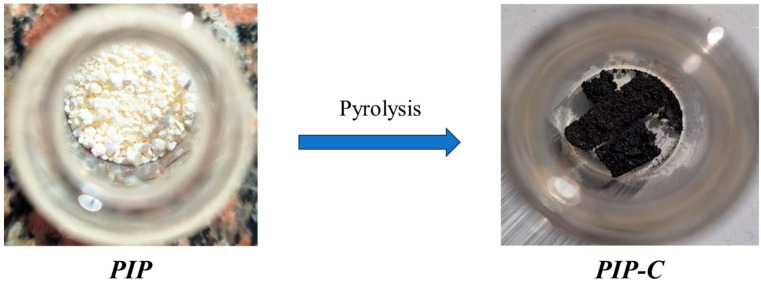 Figure 3
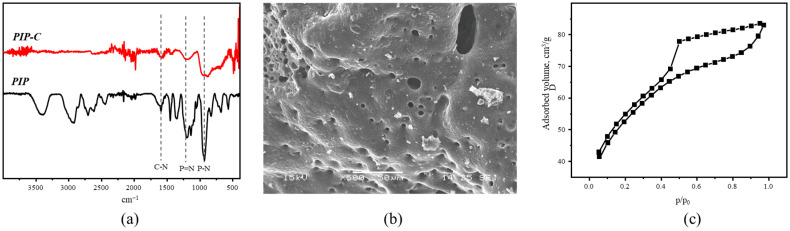 Figure 4
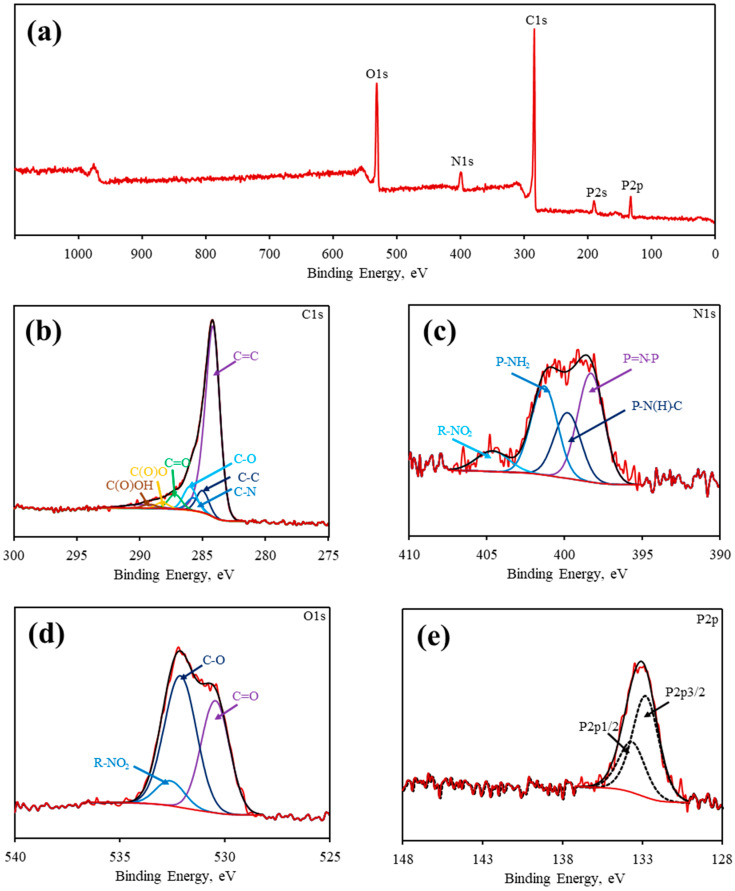 Figure 5
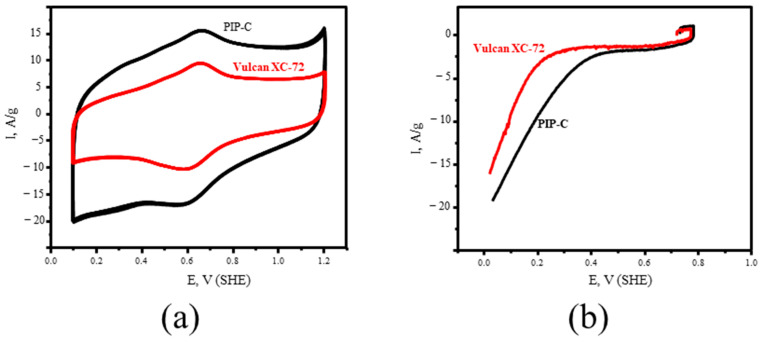 Figure 6
- —Ministry of Science and Higher Education of the Russian Federation
Peer Reviews
No public reviews on file for this paper yet. If you reviewed it on a platform where reviews are public (OpenReview, ICLR, NeurIPS, ICML), you can paste yours below so the community can read it here.
Videos
No videos yet. Explain this paper in a talk, walkthrough, or lecture? Add one.
Taxonomy
TopicsCovalent Organic Framework Applications · Synthesis and properties of polymers · Flame retardant materials and properties
1. Introduction
Currently, various carbon materials like activated carbons, graphite, or pyrolytic carbon can be used as electrode materials for modern power sources such as Li-ion batteries, supercapacitors, fuel cells, etc. [1,2,3]. These materials possess advantages such as high surface area, porosity, good electrical conductivity, and light weight [4,5]. However, they also suffer from shortcomings such as capacity losses when voltage sweep rate increases, low wettability at high concentrations of polymer, high degradability after long usage, etc. [6,7,8]. One of the popular approaches to solve these problems involves doping of the carbon materials with heteroatoms [1,9]. In general, the introduction of heteroatoms such as phosphorus and nitrogen leads to an increase in functional centers, the formation of additional defects in material, changing of charge density, and expansion of operating voltages [10,11,12,13,14,15]. Phosphorus may therefore lead to an increase in graphitization and surface area. It also decreases undesirable oxidative processes, which in turn improves the electro-chemical properties of the carbon electrode material [16,17,18]. On the other hand, nitrogen atoms improve wettability with electrolyte solution, which in turn leads to an increase in pseudocapacitance as the electrolyte ions may interact with active nitrogen atoms of the carbon electrode [19,20,21]. The currently known methods for doping usually have low efficiencies due to their technological complexity, the use of hazardous reactants, and high cost [22,23,24]. The use of highly cross-linked porous polymers based on cyclophosphazenes might be a promising approach for the preparation of electrode materials doped with phosphorus and nitrogen heteroatoms [25,26,27,28,29,30,31,32]. In [33], a heteroatom-doped carbon material was prepared from hexachlorocyclotriphosphazene (HCCP) and DOPO-HQ. The obtained material possessed a high surface area, a microporous structure, and good electrochemical properties. In [34], doped porous carbon was prepared by carbonization of cross-linked polyphenoxyphosphazene. This material exhibited quite high specific capacitance in two-electrode and three-electrode cells. All these works show high perspectives in the use of phosphazene polymers as precursors for heteroatom-dope carbon materials with improved electrochemical activity. Here, we have synthesized a phosphazene-based porous polymer through polycondensation of HCCP with piperazine, which was subsequently carbonized to obtain a heteroatom-doped carbon material with high specific capacitance and catalytical activity in electrochemical reactions. Despite piperazine-phosphazene polymers being synthesized previously, we are not aware of any works where such polymers were studied in terms of porosity and where these polymers were used as precursors for the preparation of carbon materials. These experiments also show the possibility of the use of this material as a metal-free (especially Pt-free) electrocatalyst for low-temperature oxygen reduction in fuel cells [35].
2. Materials and Methods
2.1. Materials
Unless otherwise noted, all the used chemicals were purchased from commercial suppliers and were used as received. Piperazine (99%), triethylamine (99%), and hexachlorocyclotriphosphazene (98%) were purchased from Macklin (Shanghai, China). Tetrahydrofuran (THF) was dried with sodium and benzophenone and was freshly distilled before use.
2.2. Synthesis of PIP
PIP was synthesized according to the previously reported procedure [36]: 1.485 g (17.25 mmol) of piperazine and 2.5 mL (5.75 mmol) of triethylamine (TEA) were dissolved in 60 mL of THF in three-necked flask, equipped with reflux condenser and magnetic stirrer. Then, 2 g (5.75 mmol) of HCCP dissolved in 60 mL of THF was added dropwise. Then, the temperature was raised to 60 °C and the reaction mixture was stirred for 72 h in an argon atmosphere. The solid polymer was filtered, washed, and extracted with chloroform for 5 h and dried under vacuum at 50 °C for 6 h. PIP was obtained as a white powder with a yield of 3.34 g.
2.3. Preparation of Carbonization Product PIP-C
Thermal treatment of PIP was carried out in a tube furnace under nitrogen flow. The rate of nitrogen flow was 50–60 cm^3^/s. The heating mode was performed according to Table 1.
2.4. Electrode Preparation
The PIP-C grinding was carried out for 1 h at 800 rpm in an agate mortar with agate balls on a Pulverisette 7 Ball mill from Fritsch (Fellbach, Germany).
Catalytic ink was used to prepare a thin layer of material deposited on a disk electrode. To prepare the ink, 2 mg of the sample was weighed in an Eppendorf tube, 300 µL of water was added and subjected to ultrasonic dispersion for 30 min. A solution of Nafion suspension was prepared in a separate Eppendorf tube: 1 mL of 10% Nafion suspension was added to 200 mL of water and subjected to ultrasonic dispersion for 5 min. The Nafion suspension solution was then transferred to a sample suspension and subjected to ultrasonic dispersion for 30 min. A micropipette of 3.15 µL of the mixture was taken from the resulting suspension and applied to a surface (0.126 cm^2^) of the rotating disk electrode (RDE), which corresponds to 100 µg/cm^2^ (12.6 µg of carbon material on the entire electrode). The rotating disk electrode is made of isotropic pyrolytic graphite with a surface area of 0.126 cm^2^ pressed into Teflon.
3. Results and Discussion
The phosphazene-based porous polymer (PIP) was synthesized by a polycondensation reaction between HCP and piperazin in THF solution (Figure 1). Previously, we have shown that such reaction conditions in combination with Soxhlet extraction can lead to highly porous polymer formation [36]. Here, TEA was used as an acceptor of HCl. The choice of the monomers was explained by their cyclic rigid structure, which might provide porosity to the final polymer.
FTIR spectra of the obtained polymer are given in Figure 2a. On the spectrum of PIP, one can see that the signals at 3220 and 510 cm^−1^, corresponding to stretching vibrations of N-H and P-Cl bonds respectively, are almost absent. Also, one can observe peaks at 1180, 1380, and 2920 cm^−1^, corresponding to P=N, C-N, and C-H bonds, respectively [37,38,39]. Peaks at 2710 cm^−1^ might correspond to a side product of the reaction (triethylammonium hydrochloride).
SEM analysis (Figure 2b and Figure S1) shows that the synthesized polymer consists of flake-like particles with a size of about 5 μm. Powder X-ray analysis (Figure S2) shows that PIP has an amorphous structure in comparison with initial monomers.
The porosity and pore size distribution of the PIP were determined by low-temperature nitrogen adsorption (Figure 2c, Figures S3 and S4). As one can see, the adsorption–desorption isotherm curve can be defined as IV type according to IUPAC nomenclature, with a clear hysteresis loop, which indicates a mesoporous character of the polymer with a mean pore size of mesopores of about 3.9 nm. The surface area calculated by the BET method was 76.9 m^2^/g. Total pore volume was 0.11 cm^3^/g and micropore volume calculated by the t-plot method was 0.003 cm^3^/g.
The TGA curve shows that the polymer decomposes in two steps (Figure 2d). On the first stem it starts to decompose at a temperature of 240 °C with the formation of a carbon structure doped with nitrogen and phosphorus atoms. On the second step, it decomposes at temperatures higher than 800 °C which might be due to side reactions of the carbonized product with nitrogen gas used in the analysis and other oxidation processes. From the TGA analysis the following carbonization mode was chosen: (1) fast heating till 140 °C; (2) heating from 140 to 520 °C with rate of 1 °C·min^−1^; (3) heating from 520 to 800 °C with a rate of 2.5·°C min^−1^. After that, the product was cooled naturally until reaching room temperature. The carbonized product PIP-C was obtained as a black powder (Figure 3) with the use of tube furnace under nitrogen flow with a yield of 30 wt.% relative to the initial porous polymer.
From the FTIR spectrum (Figure 4a) one can see that the obtained carbon product contains C-N and P-N bonds, which are also present in the initial porous polymer (1380 and 1180 cm^−1,^ respectively). Also, one can see the full disappearance of the signal of C-H and N-H bonds (2920 and 3220 cm^−1^) which indicates successful pyrolysis. SEM images show that the PIP-C has a sponge-like morphology (Figure 4b and Figure S1). XRD analysis (Figure S2) shows that the PIP-C has two broad peaks at ~23° and ~45°, which correspond to (002) and (100) planes of carbon materials [40].
Low-temperature nitrogen adsorption shows that the PIP-C possesses higher porosity in comparison with initial PIP due to the formation of pyrolysis gaseous products. The adsorption–desorption isotherm curve (Figure 4c) can also be defined as IV type according to IUPAC nomenclature, as well as the initial PIP polymer. The surface area calculated by the BET method was 177 m^2^/g. Total pore volume was 0.129 cm^3^/g and micropore volume calculated by the t-plot method was 0.07 cm^3^/g. Based on these obtained data of pore size distribution (Figures S3 and S4), PIP-C can be defined as a mesoporous material with a mean size of mesopores of about 3.8 nm and a higher content of micropores in comparison with the initial PIP precursor.
XPS was carried out for a deeper study of the chemical structure of the carbon material. Wide scan XPS spectrum exhibits clear peaks at 133, 284, 399, and 532 eV, corresponding to P2p, C1s, N1s, and O1s atoms, respectively (Figure 5a), indicating that all heteroatoms were successfully incorporated into the structure of carbon material. Content of N and P was 7.5 and 7%, respectively (Figure S1). Chemical states of P2p, C1s, N1s, and O1s were studied as well (Figure 5b–e). The XPS spectrum of C1s (Figure 5b) can be deconvoluted into five main peaks at 284.2, 285.0, 285.7, 286.0, and 287.2 eV, corresponding to C=C, C-C, C-N, C-O, and C=O units, respectively [24,40]. Deconvolution of XPS spectrum of N1s (Figure 5c) exhibits four main peaks at 398.3, 399.8, 401.3, and 404.6 eV corresponding to P=N-P, P-N(H)-C, P-NH_2_, and R-NO_2_, respectively. The XPS spectrum of O1s (Figure 5d) confirms the presence of previously mentioned units, while the P2p spectrum (Figure 5e) shows that phosphorus atoms are mostly in a phosphazene ring state [33]. Here, one can see that PIP-C mostly contains fragments of C=C, C=O, and P-N=P. We suppose that the presence of oxygen might be due to partial hydrolysis of residual P-Cl bonds, leading to the formation of P-OH and P=O units in the initial cross-linked polymer. These units in turn might oxidize organic substituents during pyrolysis.
In the next step, the PIP-C was studied in terms of its specific capacitance and electrochemical activity in a reaction of oxygen electroreduction. A commercially available carbon material widely used for electrochemical devices with the trademark Vulcan XC-72 was used for comparison of electrochemical properties. Cyclic voltammetry (CVA) curves for the studied samples in 0.5 M H_2_SO_4_ in an argon atmosphere are shown in Figure 6a. Here, one can see that PIP-C has higher values of charging current, i.e., higher double layer capacitance in comparison with Vulcan XC-72 (Table 2). Also, PIP-C’s measured specific capacitance (155 F/g) is close to that obtained for other carbon material types for supercapacitors (200–250 F/g) [41,42]. To achieve higher values of capacitance, optimal conditions are needed for electrolyte, binder/carbon ratio, etc., which is planned for future works. According to polarization curves of oxygen electroreduction (Figure 6b), PIP-C also exhibits higher catalytical activity.
Moreover, it should be noted that PIP-C, according to CVA and polarization curves, possesses a more electrochemically active surface despite the lower real surface area in comparison with Vulcan XC-72. The higher electrochemical properties can be explained by the presence of nitrogen and phosphorus heteroatoms.
4. Conclusions
In summary, a novel heteroatom-doped carbon material was prepared by the carbonization of a phosphazene-based porous polymer. Due to the highly rigid structure of the initial monomers, the PIP possesses porosity, as does the final PIP-C carbonization product. As the PIP-C material contains N and P heteroatoms in its structure, it exhibits good electrochemical properties in the oxygen reduction reaction and shows higher electrochemical activity in the double-layer applications (like supercapacitors) in comparison with commercial carbon material. This work opens perspectives in the simple preparation of porous carbon materials doped with phosphorus and nitrogen heteroatoms, which in turn might be potentially used as metal-free electrode materials for chemical power sources (fuel cells, metal-ion batteries, etc.) as well. In future, we plan to study various factors in more depth, like chemical structure and reaction conditions, which might influence the electrochemical properties of the final carbon materials. We also plan to find optimal conditions for the developed materials to achieve higher values of specific capacitance.
The reference list from the paper itself. Each links out to its DOI / PubMed record.
- 1Yang F. Zhang S. Yang Y. Liu W. Qiu M. Abbas Y. Wu Z. Wu D. Heteroatoms Doped Carbons Derived from Crosslinked Polyphosphazenes for Supercapacitor Electrodes Electrochim. Acta 201932813506410.1016/j.electacta.2019.135064 · doi ↗
- 2Song P. Shen X. He X. Feng K. Kong L. Ji Z. Zhai L. Zhu G. Zhang D. Cellulose-Derived Nitrogen-Doped Hierarchically Porous Carbon for High-Performance Supercapacitors Cellulose 2019261195120810.1007/s 10570-018-2115-6 · doi ↗
- 3Rawal S. Kumar Y. Mandal U.K. Kumar A. Tanwar R. Joshi B. Synthesis and Electrochemical Study of Phosphorus-Doped Porous Carbon for Supercapacitor Applications SN Appl. Sci.2021314110.1007/s 42452-021-04187-2 · doi ↗
- 4Sing K.S.W. Reporting Physisorption Data for Gas/Solid Systems with Special Reference to the Determination of Surface Area and Porosity (Provisional)Pure Appl. Chem.1982542201221810.1351/pac 198254112201 · doi ↗
- 5Je S.H. Kim H.J. Kim J. Choi J.W. Coskun A. Perfluoroaryl-Elemental Sulfur SN Ar Chemistry in Covalent Triazine Frameworks with High Sulfur Contents for Lithium–Sulfur Batteries Adv. Funct. Mater.201727170394710.1002/adfm.201703947 · doi ↗
- 6Ghazi Z.A. Zhu L. Wang H. Naeem A. Khattak A.M. Liang B. Khan N.A. Wei Z. Li L. Tang Z. Efficient Polysulfide Chemisorption in Covalent Organic Frameworks for High-Performance Lithium-Sulfur Batteries Adv. Energy Mater.20166160125010.1002/aenm.201601250 · doi ↗
- 7Song Z. Liang Y. Fan M. Zhou F. Liu W. Lithium-Based Ionic Liquids Functionalized by Sym-Triazine and Cyclotriphosphazene as High Temperature Lubricants Tribol. Int.20147013614110.1016/j.triboint.2013.09.025 · doi ↗
- 8Xue R. Zheng Y.-P. Qian D.-Q. Xu D.-Y. Liu Y.-S. Huang S.-L. Yang G.-Y. A 2-D Microporous Covalent Organic Framework for High-Performance Supercapacitor Electrode Mater. Lett.202230813122910.1016/j.matlet.2021.131229 · doi ↗