Amplicon sequencing of ice and water phytoplankton and bacterial communities during an extreme winter in a central Canadian great lake
Mark J. Rozmarynowycz, Katelyn M. Brown, J. D. Gantz, Richard E. Lee, Arthur Zastepa, Sue Watson, R. Michael L. McKay

TL;DR
The study analyzed ice and water microbes in Lake Winnipeg during an extreme winter to understand community patterns.
Contribution
It reveals how specific microbes partition into ice during cold periods in a central Canadian lake.
Findings
Diatoms, cyanobacteria, and Xanthomonadales showed distinct partitioning into ice fractions.
Cold temperatures influenced microbial community distribution in Lake Winnipeg's ice and water.
Abstract
Ice and water microbial communities from Lake Winnipeg were explored through V4 region 16S rRNA gene sequencing during a pronounced period of cold temperatures over North America’s Great Plains and Great Lakes regions. Diatoms, cyanobacteria, and Xanthomonadales (Gammaproteobacteria) displayed patterns of partitioning into ice fractions.
Genes, proteins, chemicals, diseases, species, mutations and cell lines named across the full text — each resolved to its canonical identifier and authoritative record.
Click any figure to enlarge with its caption.
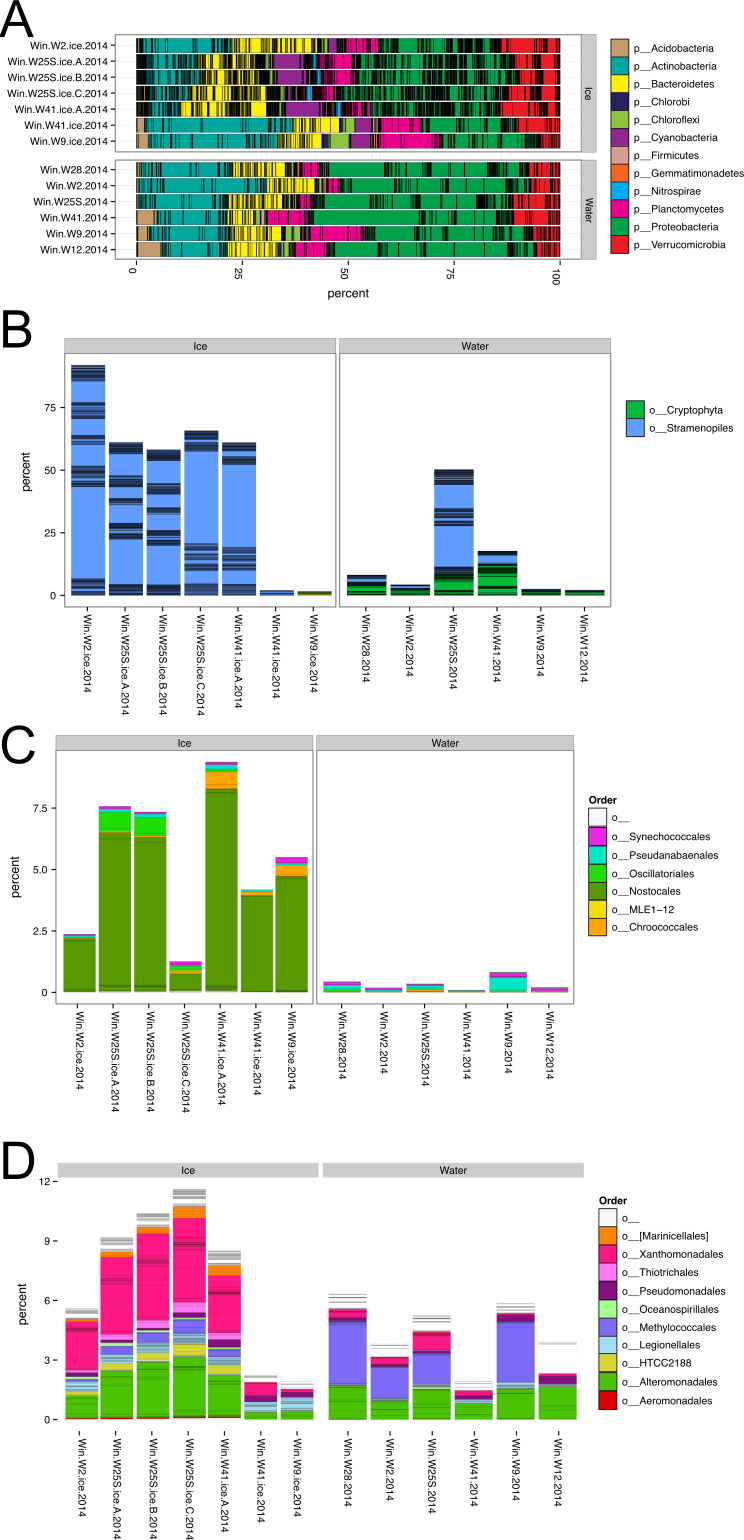 Figure 1
Peer Reviews
No public reviews on file for this paper yet. If you reviewed it on a platform where reviews are public (OpenReview, ICLR, NeurIPS, ICML), you can paste yours below so the community can read it here.
Videos
No videos yet. Explain this paper in a talk, walkthrough, or lecture? Add one.
Taxonomy
TopicsPolar Research and Ecology · Microbial Community Ecology and Physiology · Marine and coastal ecosystems