From domination to partnership: Lab-trained microorganisms for environmental bioremediation
Victor de Lorenzo

TL;DR
The paper argues for a new approach to using engineered microbes for cleaning up the environment, moving away from strict control to a more collaborative and responsible strategy.
Contribution
The paper introduces a conceptual shift from containment to stewardship in the use of engineered microorganisms for bioremediation.
Findings
Current regulatory frameworks for bioremediation are based on outdated containment principles.
A care-based and culturally adjusted approach is proposed to better align biotechnology with ecological and societal needs.
This shift is seen as essential for advancing responsible bioremediation practices.
Abstract
Despite advances in synthetic biology and ecological understanding, the deployment of engineered microorganisms for bioremediation remains stalled due to outdated containment-centric narratives and regulatory frameworks. A shift from a logic of control to one of care and stewardship, is needed for a more responsible, culturally adjusted and scientifically grounded path toward leveraging biotechnology for planetary repair.
Genes, proteins, chemicals, diseases, species, mutations and cell lines named across the full text — each resolved to its canonical identifier and authoritative record.
Click any figure to enlarge with its caption.
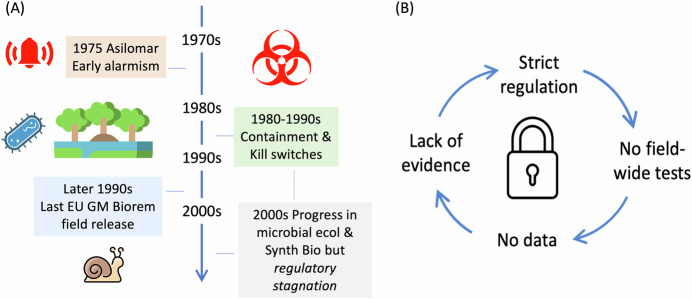 Figure 1
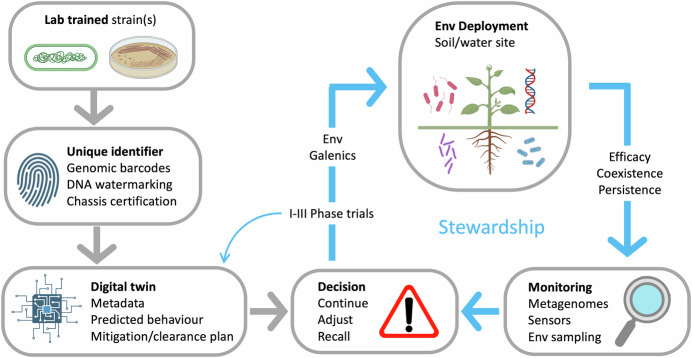 Figure 2
 Figure 3
Peer Reviews
No public reviews on file for this paper yet. If you reviewed it on a platform where reviews are public (OpenReview, ICLR, NeurIPS, ICML), you can paste yours below so the community can read it here.
Videos
No videos yet. Explain this paper in a talk, walkthrough, or lecture? Add one.
Taxonomy
TopicsGenetically Modified Organisms Research · CRISPR and Genetic Engineering · Transgenic Plants and Applications