Preparation, identification and molecular characterization of umami peptides from skipjack tuna meat: Insights from sensory evaluation and molecular dynamics simulations
Fang-Fang Huang, Zhe Zhang, Yang-Yan Jin, Yu-Hui Zeng, Qi Zeng, Chang-Feng Chi, Bin Wang

TL;DR
Researchers identified umami peptides from skipjack tuna that are more potent than monosodium glutamate and explained how they interact with taste receptors.
Contribution
Novel umami peptides with lower taste thresholds than MSG and insights into their molecular interactions with taste receptors.
Findings
Fourteen umami peptides were identified, with seven showing lower umami thresholds than monosodium glutamate.
DFDNA and DVPAE formed stable complexes with the T1R1/T1R3 receptor during molecular dynamics simulations.
Peptide-receptor binding was enhanced by acidic and aromatic residues, leading to strong hydrogen bonds and π interactions.
Abstract
In this study, novel umami peptides were identified from skipjack tuna protein hydrolysates using enzymatic hydrolysis, purification, sensory evaluation, and molecular modeling. A hydrolysate with a high degree of hydrolysis was prepared using papain and flavor protease, and the most umami-active fraction was obtained through ultrafiltration and chromatographic separation. Fourteen peptides were identified, among which HAHA, QEYGGG, YD, DFDNA, DVPAE, EADH, and EYF showed lower umami thresholds than monosodium glutamate. Molecular docking and 100 ns molecular dynamics simulations revealed that DFDNA and DVPAE displayed low RMSD values, while key residues in the T1R1 and T1R3 subunits remained structurally stable. High-affinity peptides formed persistent hydrogen bonds and π interactions with the receptor complex. Short peptide length and the presence of acidic and aromatic residues were…
Genes, proteins, chemicals, diseases, species, mutations and cell lines named across the full text — each resolved to its canonical identifier and authoritative record.
Click any figure to enlarge with its caption.
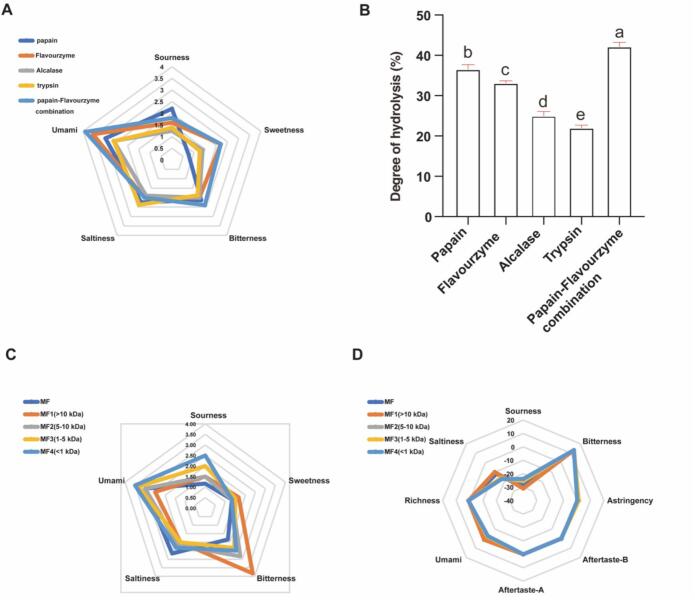 Figure 1
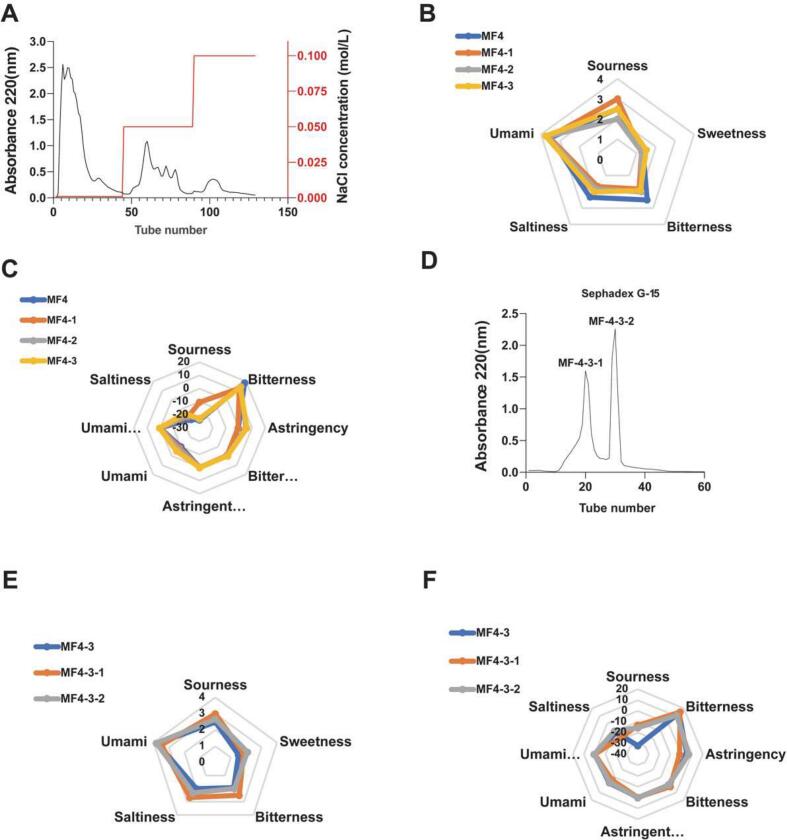 Figure 2
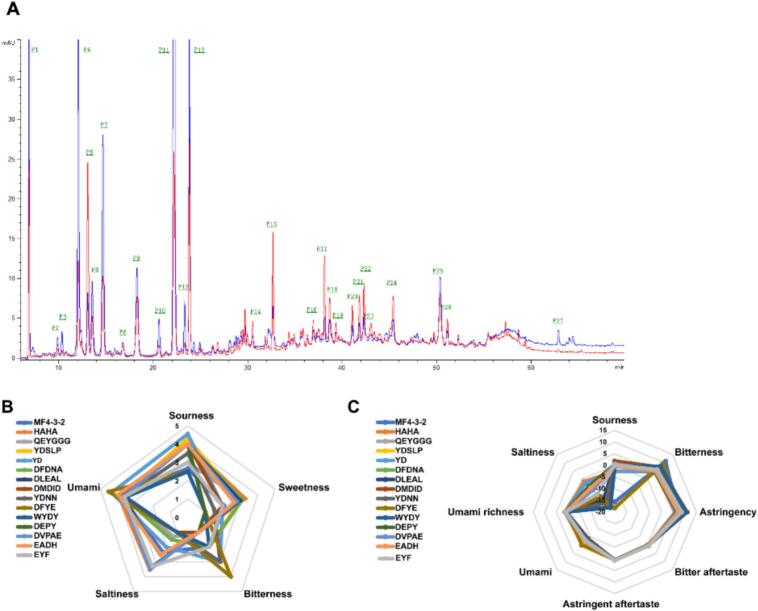 Figure 3
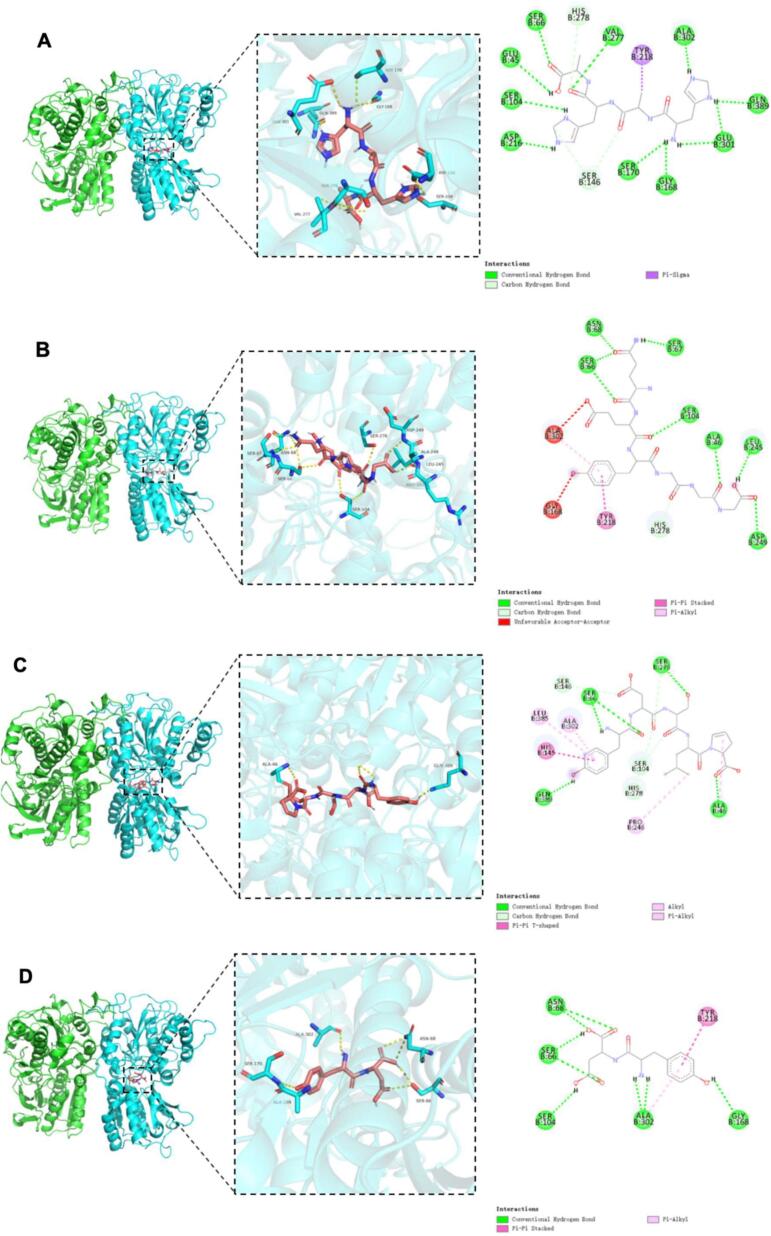 Figure 4
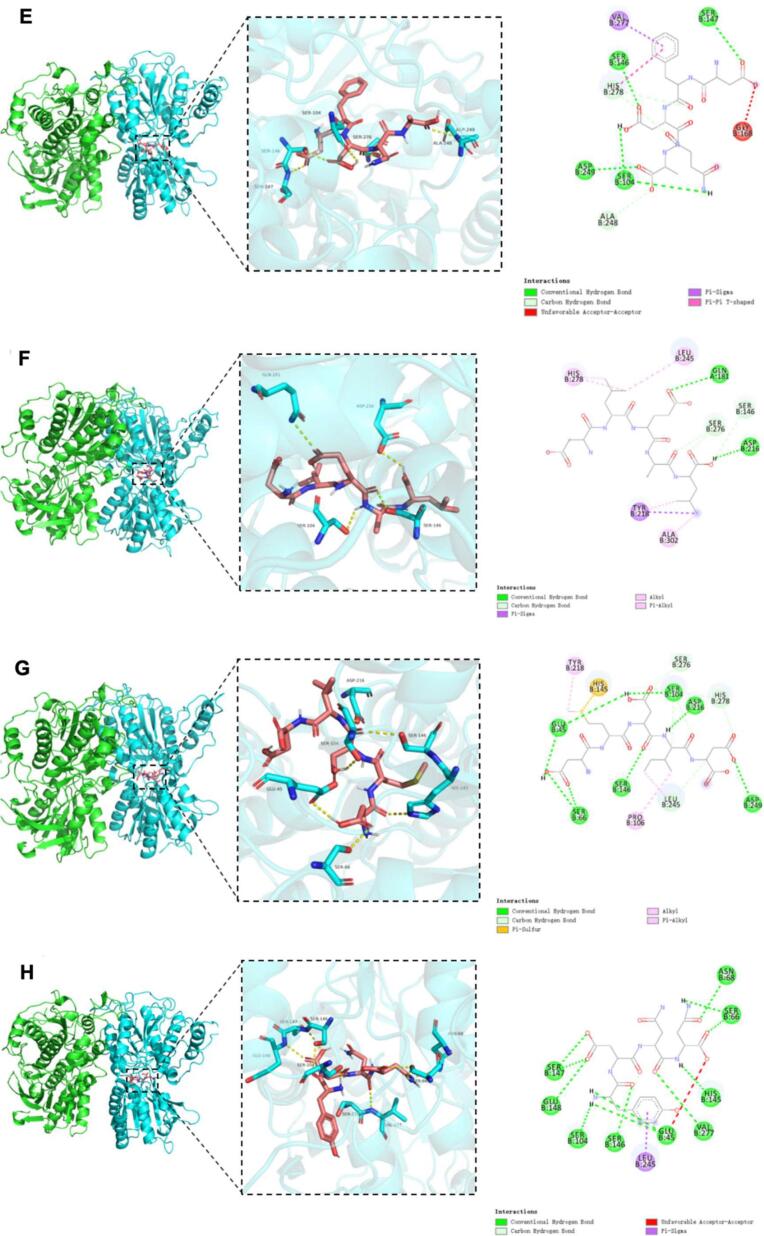 Figure 5
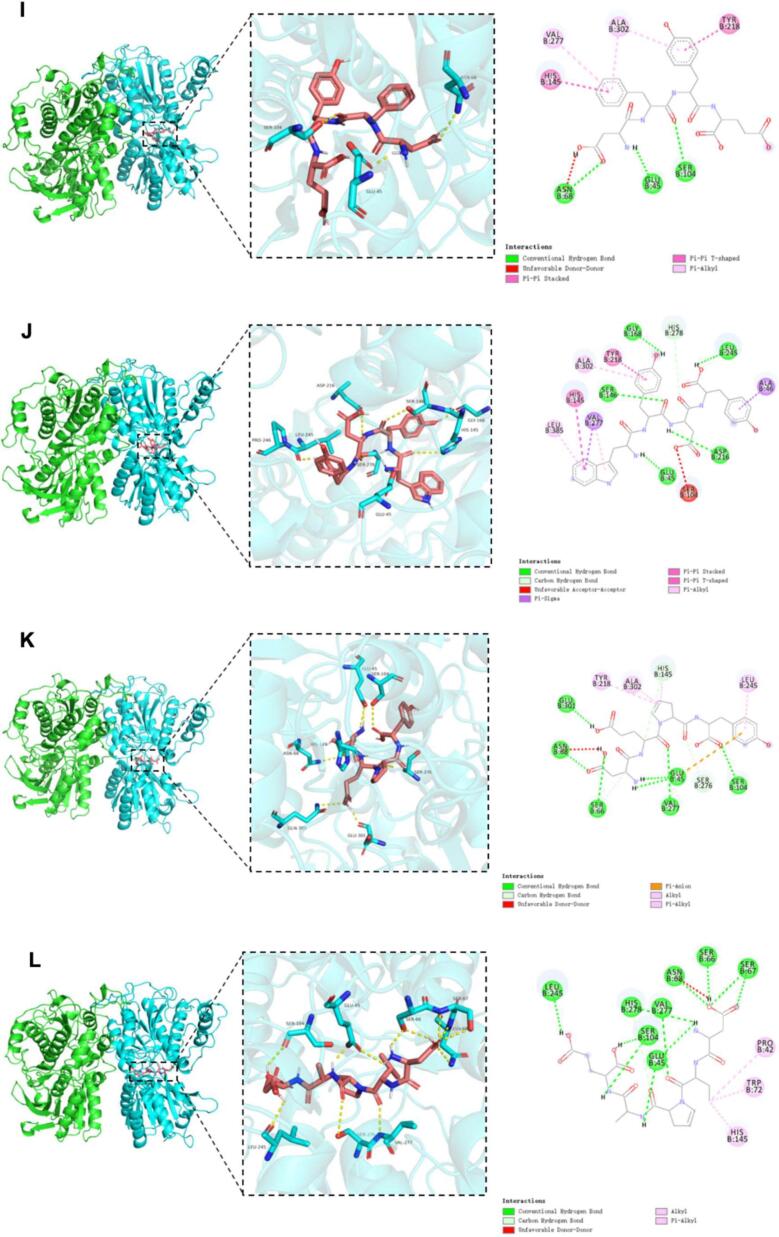 Figure 6
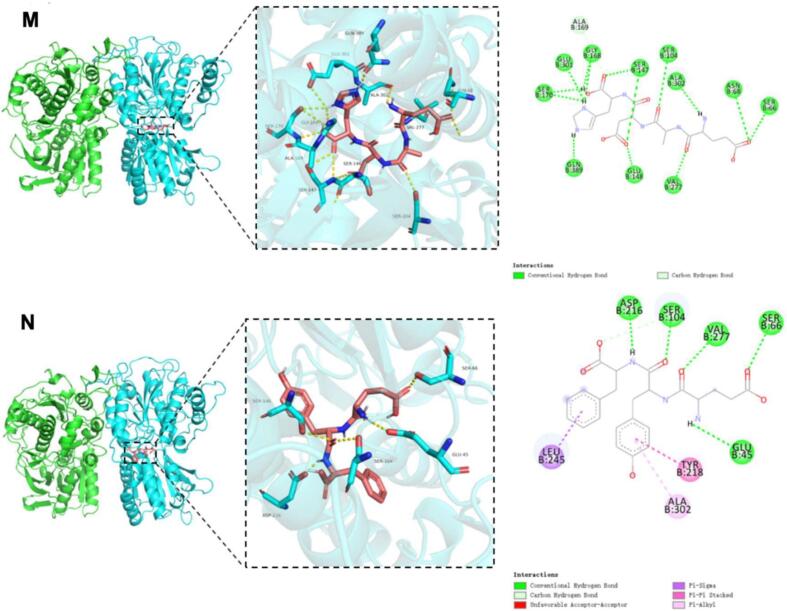 Figure 7
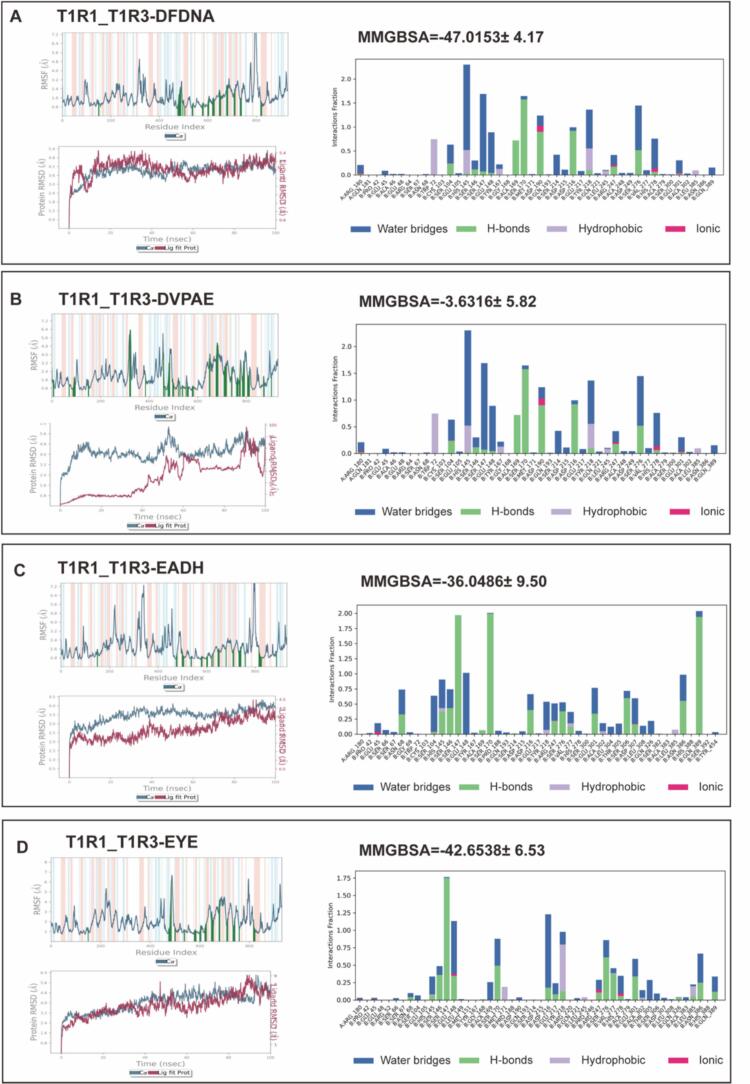 Figure 8
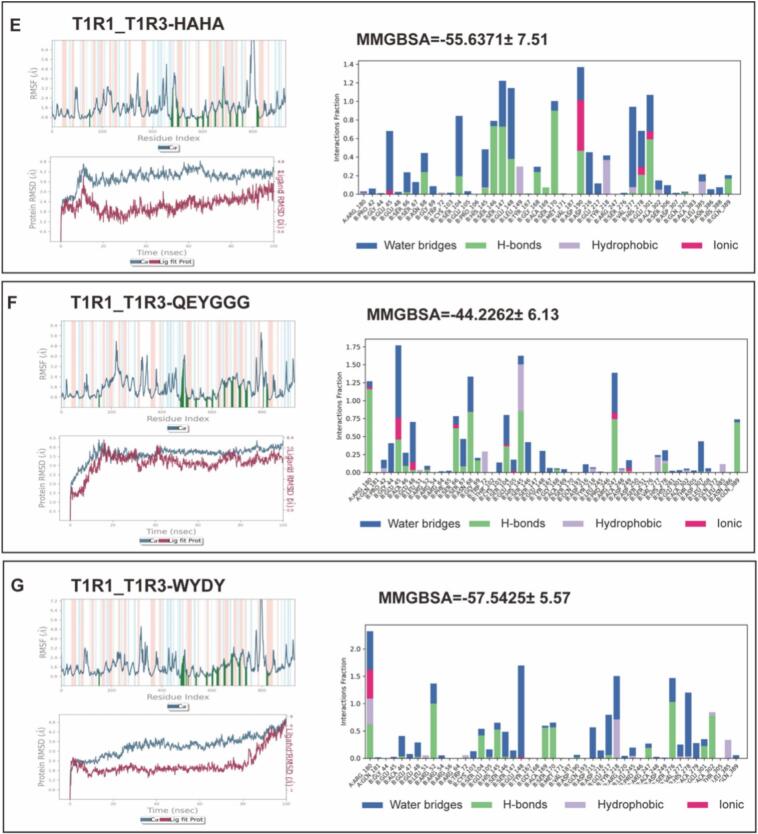 Figure 9
Peer Reviews
No public reviews on file for this paper yet. If you reviewed it on a platform where reviews are public (OpenReview, ICLR, NeurIPS, ICML), you can paste yours below so the community can read it here.
Videos
No videos yet. Explain this paper in a talk, walkthrough, or lecture? Add one.
Taxonomy
TopicsBiochemical Analysis and Sensing Techniques · Protein Hydrolysis and Bioactive Peptides · Olfactory and Sensory Function Studies